The rhythm of traditional drums, the movement of dancers in elaborate costumes and the energy of a live performance make Kandyan dancing one of Sri Lanka’s most memorable cultural experiences.
Rooted in the traditions of the central highlands, Kandyan dance continues to hold an important place in Sri Lanka’s cultural heritage. For visitors spending time in Kandy, attending a traditional dance performance offers an engaging introduction to the island’s performing arts.
What Is Traditional Kandyan Dance?
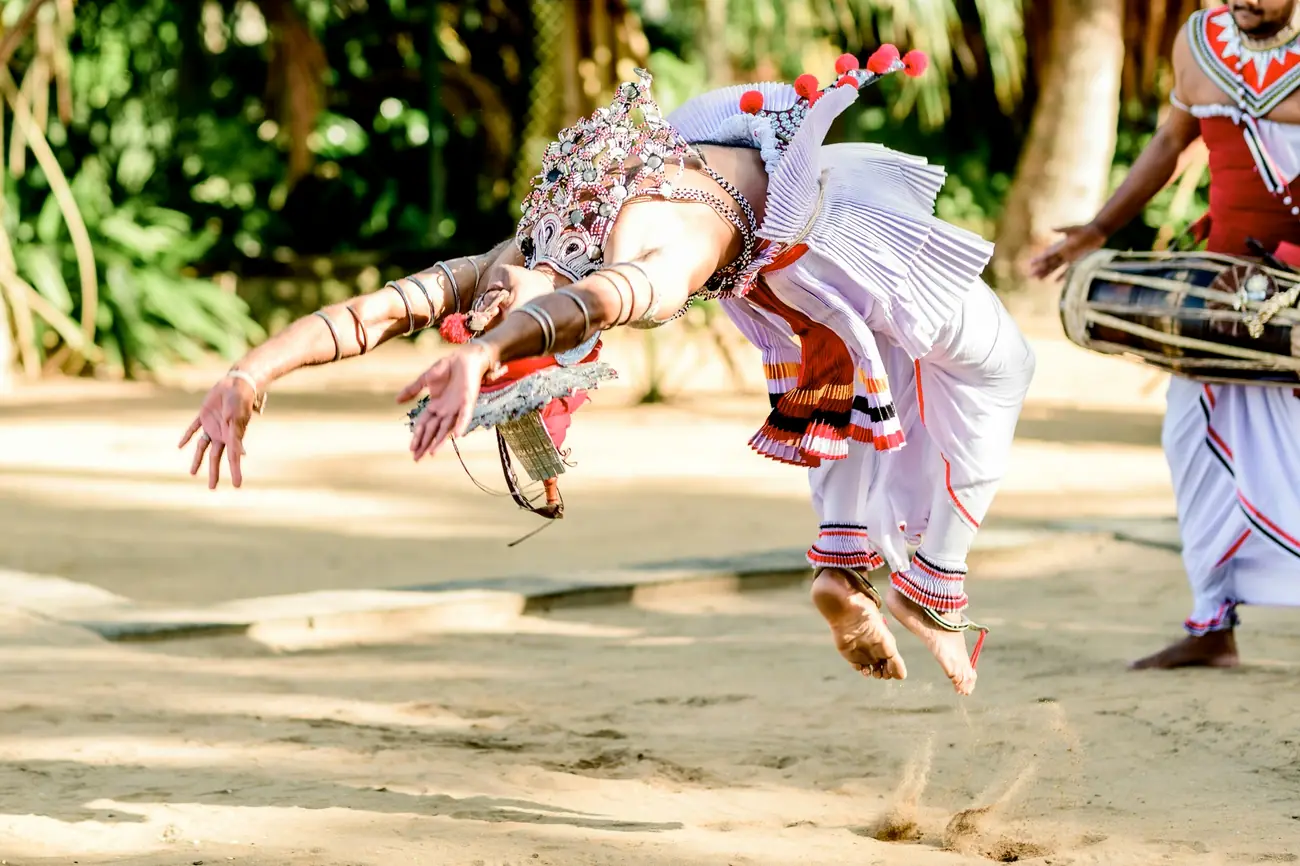
Kandyan dance, known as Udarata Natum, developed in Sri Lanka’s central highlands and has strong historical connections with religious ceremonies and traditional rituals.
It is recognised for its energetic movements, intricate footwork, expressive gestures and distinctive costumes. Traditional drumming plays a central role, guiding the rhythm and movement of the dancers.
What to Expect During a Cultural Show
A traditional cultural show in Kandy usually brings together several styles of Sri Lankan dancing, accompanied by live drumming.
Performers take to the stage wearing colourful costumes, moving through a series of dances inspired by history, folklore and ceremonial traditions. The programme may include dance styles from different regions of Sri Lanka, rather than Kandyan dancing alone.
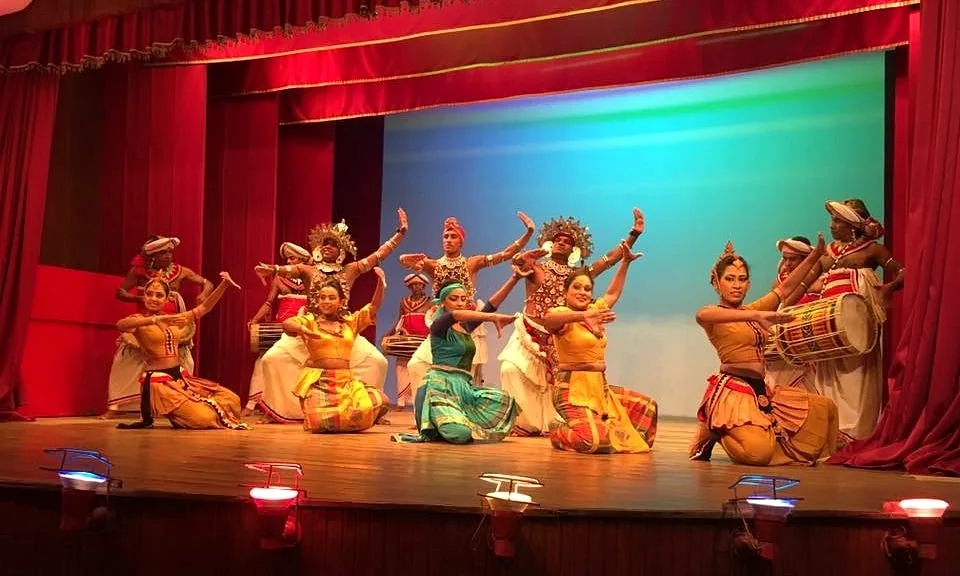
The performances are designed to introduce visitors to different aspects of the island’s artistic heritage. Even without understanding the history behind every dance, the music, movement and costumes make the experience enjoyable.
Traditional Costumes, Drumming and Fire
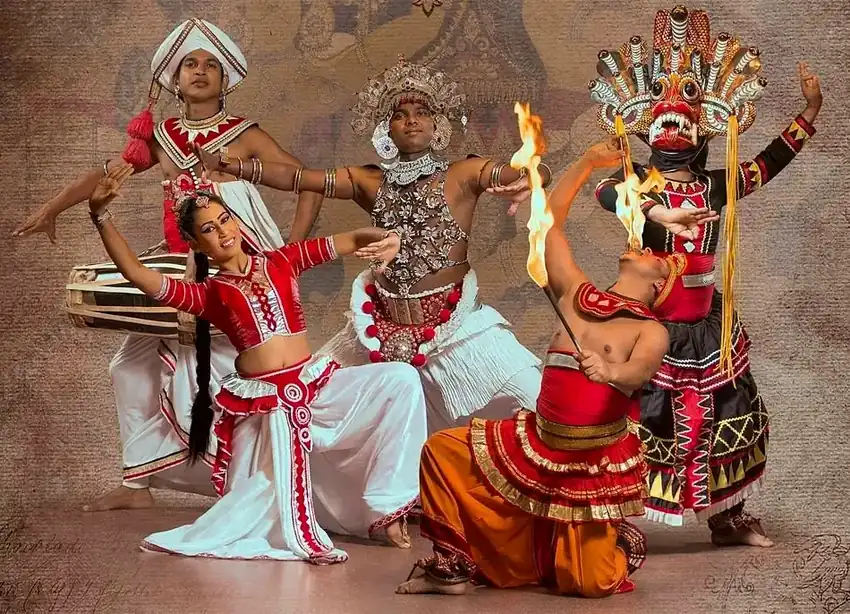
One of the most distinctive features of Kandyan dancing is the traditional Ves costume, worn by male dancers in certain classical performances.
Elaborate headpieces, silver-coloured ornaments and decorative clothing create a striking appearance, while the movements follow the rhythm of traditional drums such as the Geta Bera.
Many cultural shows also feature masked dances and fire performances drawn from other Sri Lankan traditions. These may include fire dancing or fire walking as part of the closing programme.
Where to Watch Kandyan Dancing in Kandy
Kandy is one of the best places to experience traditional Sri Lankan dancing. Several cultural venues present organised performances for visitors.
One established venue is the Kandy Lake Club Cultural Show, which has hosted performances since 1982. Its programme combines Kandyan and other regional dance traditions, live drumming and fire displays.
Kandy Lake Club Cultural Show
Address: No. 7, Sangamitta Mawatha, Kandy
Show Time: Normally 5:00 pm – 6:00 pm
Duration: Approximately one hour
Tickets: Paid admission. Ticket prices vary by venue and booking arrangement. Budget several thousand Sri Lankan rupees per person.
Official Website: Kandy Lake Club Cultural Show
The venue is close to Kandy Lake and can be reached on foot from parts of central Kandy or by a short tuk-tuk journey.
Tips for Attending a Cultural Performance
- Arrive Early: Allow around 20–30 minutes before the performance to find the venue and settle into your seat.
- Reserve Your Seat: Booking in advance is useful during busy travel periods, especially for groups and families.
- Dress Comfortably: There is generally no need for formal clothing at a cultural show. If you are also visiting the Temple of the Sacred Tooth Relic, follow its modest dress requirements.
- Be Considerate With Photography: Follow the venue’s photography policy, and avoid using flash during performances.
- Allow Enough Time: Plan for the full show so you can enjoy the dancing, drumming and any closing performances.
Walk Sri Lanka Tip: A cultural show is a convenient evening activity after exploring Kandy’s main sights. Leave time for travel and dinner afterwards.
Frequently Asked Questions
Is Kandyan dance suitable for children?
Yes. Cultural shows can be enjoyable for families, although traditional drumming may be loud and fire performances may be intense for younger children.
Do I need to understand Sinhala to enjoy the show?
No. Much of the experience is expressed through movement, music and costumes. Some venues also provide programme information explaining the dances.
Are cultural dance performances held indoors?
Many organised performances in Kandy take place in covered venues or auditoriums. This makes them a convenient option during rainy weather.
Can visitors take photographs during the show?
Photography rules depend on the venue. Ask permission before recording or using flash, and avoid obstructing other audience members.
Are cultural shows accessible to wheelchair users?
Accessibility varies between venues. Contact your chosen performance venue beforehand to discuss seating, entrances and any mobility requirements.
Is a Kandyan dance show the same as the Esala Perahera?
No. A cultural dance show is a staged performance, while Kandy’s Esala Perahera is a major annual religious procession involving traditional performers and ceremonial activities.
A traditional Kandyan dance performance offers more than an evening of entertainment. It is an opportunity to appreciate the artistry, rhythm and cultural traditions that remain an important part of Sri Lankan heritage.
If your journey takes you through Kandy, spending an evening at a cultural show is a memorable way to discover another side of the island.