Discover one of Sri Lanka’s most rewarding wildlife experiences with an elephant safari from Sigiriya. The surrounding dry-zone landscape is home to wild Asian elephants that move between national parks, ancient reservoirs, grasslands and protected forests in search of food and water.
Three of the most popular safari destinations are Minneriya National Park, Kaudulla National Park and Hurulu Eco Park near Habarana. All three can provide memorable encounters with wild elephants, but the best choice depends on where the animals are moving, seasonal water conditions and the quality of wildlife viewing.
This complete guide compares the three safari areas, explains Minneriya’s famous Elephant Gathering, covers permits, jeep bookings and transport, and provides practical advice for choosing a safe, responsible wildlife experience.
Location: Sigiriya and Habarana region, Sri Lanka’s Cultural Triangle
Best for: Wild Asian elephants, nature photography and dry-zone wildlife
Main safari options: Minneriya National Park, Kaudulla National Park and Hurulu Eco Park
Accommodation bases: Sigiriya or Habarana
Safari type: Guided jeep safari
Typical duration: Around 3–4 hours, with additional time depending on transfers
Popular time: Afternoon, when conditions favour open-area elephant activity
Most important advice: Choose according to recent elephant movements and responsible viewing conditions
Wild elephants across ancient reservoir grasslands
Discover Elephant Safaris Near Sigiriya
Sigiriya is famous for its ancient rock fortress, but the surrounding region is also one of Sri Lanka’s most important landscapes for wild Asian elephants.
Within a relatively short drive of the village are several protected areas where elephants move between forests, grasslands and large reservoirs.
Minneriya, Kaudulla and Hurulu are particularly well known for jeep safaris that allow visitors to observe elephants in their natural environment.
Unlike an elephant attraction where animals are kept in captivity, these safaris take place in landscapes where wild elephants move freely.
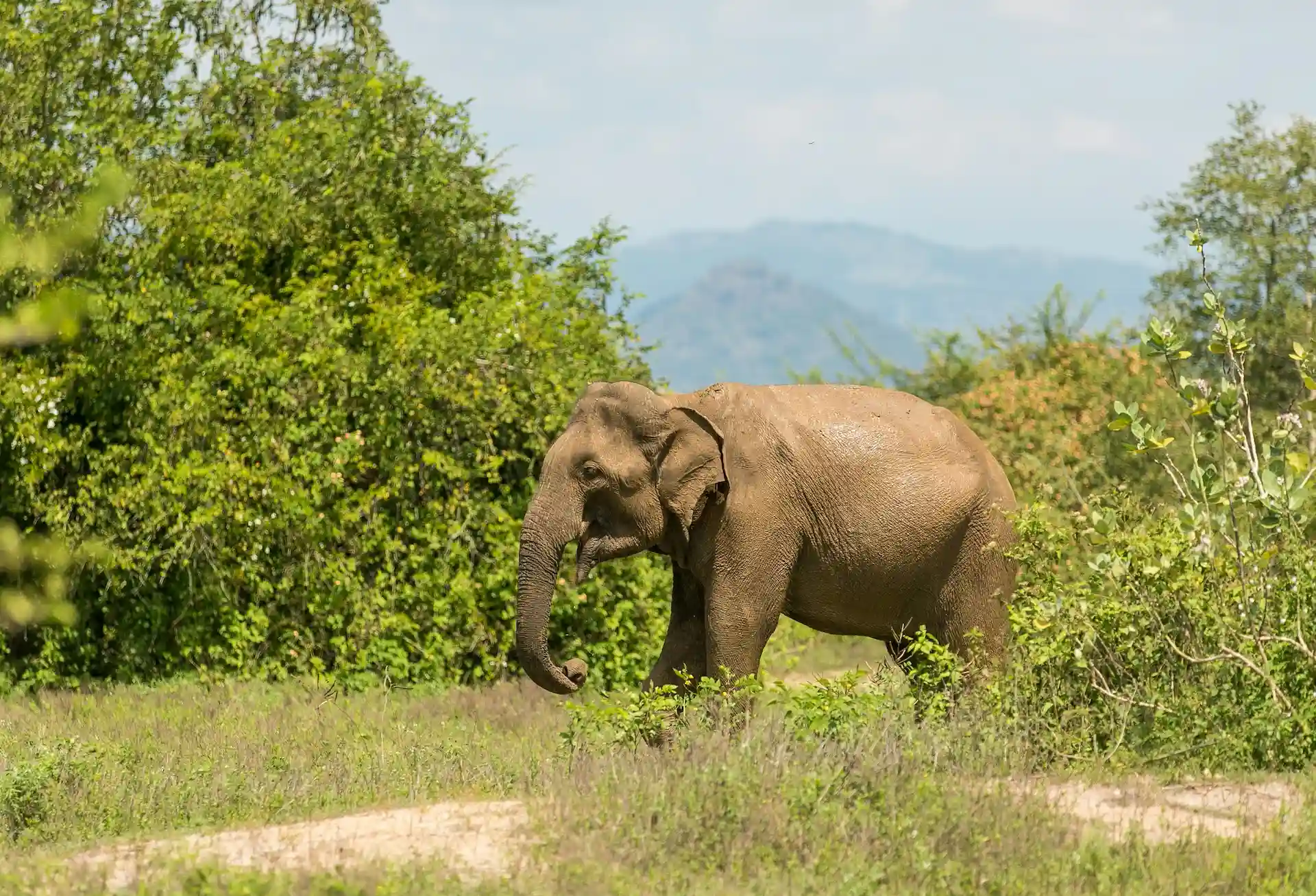
Visitors may see elephants grazing, drinking, walking through vegetation, dust bathing or interacting within family groups.
However, because the animals are wild and regularly move between habitats, choosing the right safari area is an important part of planning the experience.
Why Sigiriya Is an Excellent Safari Base
Sigiriya is conveniently located near the interconnected protected landscapes of Minneriya, Kaudulla and Hurulu.
The region forms part of Sri Lanka’s dry zone, where ancient reservoirs, seasonal grasslands and forest corridors provide important habitat for elephants.
Travellers staying around Sigiriya village can generally reach these safari areas through a road transfer organised by their accommodation or a local operator.
Habarana is another convenient base because of its central position within the wider elephant landscape.
Both locations offer access to safari operators, accommodation and transport services familiar with the movements of elephants in the surrounding area.
The greatest advantage is flexibility: visitors are not limited to one national park when recent wildlife activity suggests another protected area may offer a better experience.
Understanding Minneriya, Kaudulla and Hurulu
Although all three are popular elephant-viewing locations, they have different landscapes and management arrangements.
Minneriya National Park is best known for its ancient reservoir, open grasslands and famous seasonal elephant concentration known as the Gathering.
Kaudulla National Park protects another important reservoir and surrounding habitats used by elephants moving through the wider region.
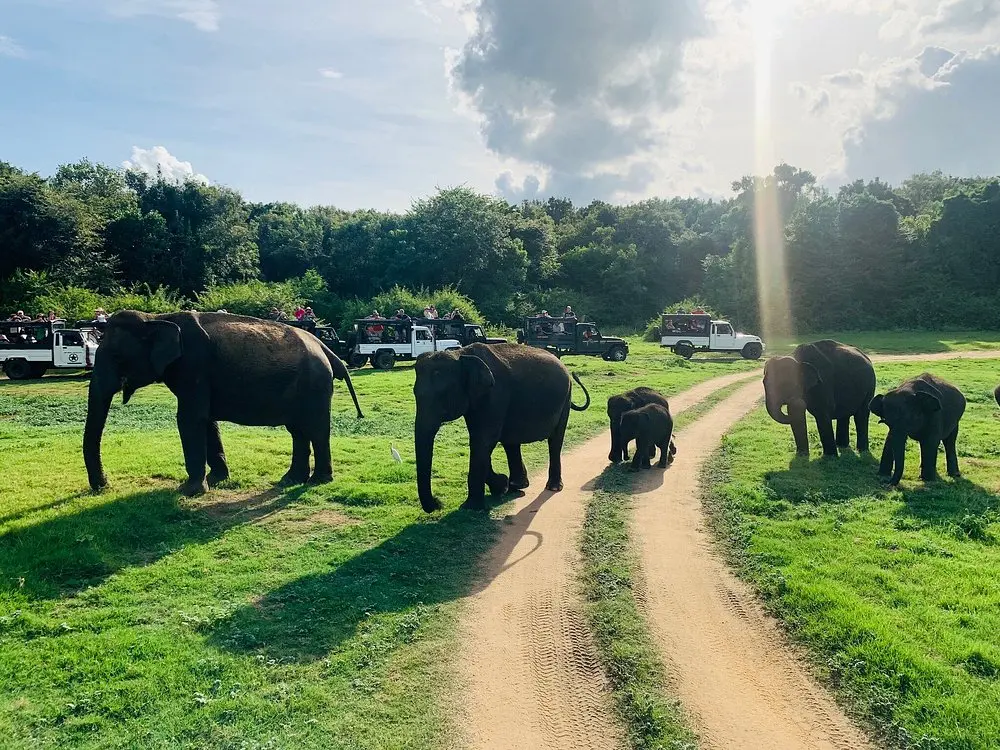
Hurulu Eco Park is located within the Hurulu Conserved Forest near Habarana, with a landscape that includes more wooded and enclosed habitats.
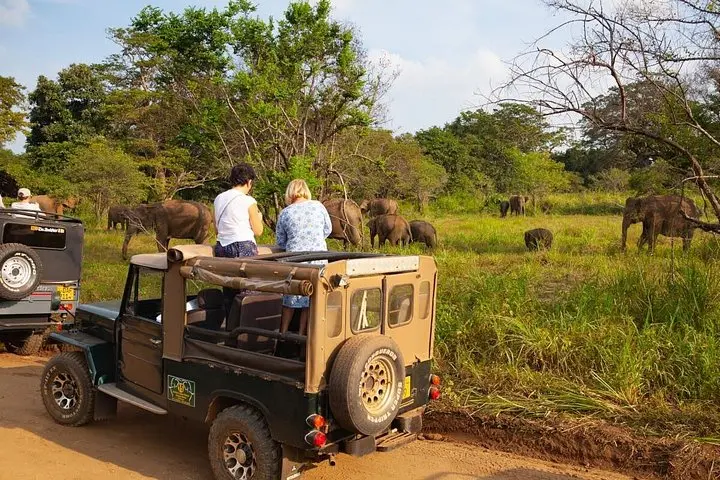
Minneriya and Kaudulla are national parks administered by Sri Lanka’s Department of Wildlife Conservation.
Hurulu Eco Park is administered by the Department of Forest Conservation and should not be confused with a Department of Wildlife Conservation national park.
These distinctions matter when arranging entrance permits and choosing an operator familiar with the correct protected-area rules.
Why Wild Elephants Move Between the Parks
The elephants around Sigiriya do not remain permanently within one protected area.
They move through a connected landscape according to the availability of water, grazing, shade and suitable habitat.
During drier periods, elephants may seek out the grasslands that become exposed when reservoir water levels fall.
At other times, rainfall and changes in vegetation encourage animals to use different forests and feeding areas.
The Minneriya–Kaudulla wildlife corridor plays an important role in maintaining connections between protected habitats.
These movements are a natural part of elephant ecology and help explain why sightings can vary considerably between neighbouring safari areas.
A national park that offered excellent elephant viewing one week may be much quieter after the herds move elsewhere.
How Reservoir Water Levels Affect Elephant Sightings
Water management plays an important role in the elephant landscape around Minneriya and Kaudulla.
Sri Lanka’s ancient reservoirs, locally known as tanks or wewa, were developed to store water for agriculture and nearby communities.
They also provide important habitats for wildlife.
When reservoir levels recede, grasslands can become exposed around the water’s edge.
These areas provide valuable grazing opportunities for elephants, sometimes attracting large groups.
When water levels remain high, however, some of those grasslands may be submerged.
This can affect how many elephants gather in a particular area, even during months traditionally associated with good wildlife viewing.
The connection between reservoir management and elephant habitat is one of the most important reasons to consider current conditions rather than relying exclusively on seasonal predictions.
Minneriya National Park
Minneriya National Park is one of the most famous elephant-viewing destinations in Sri Lanka.
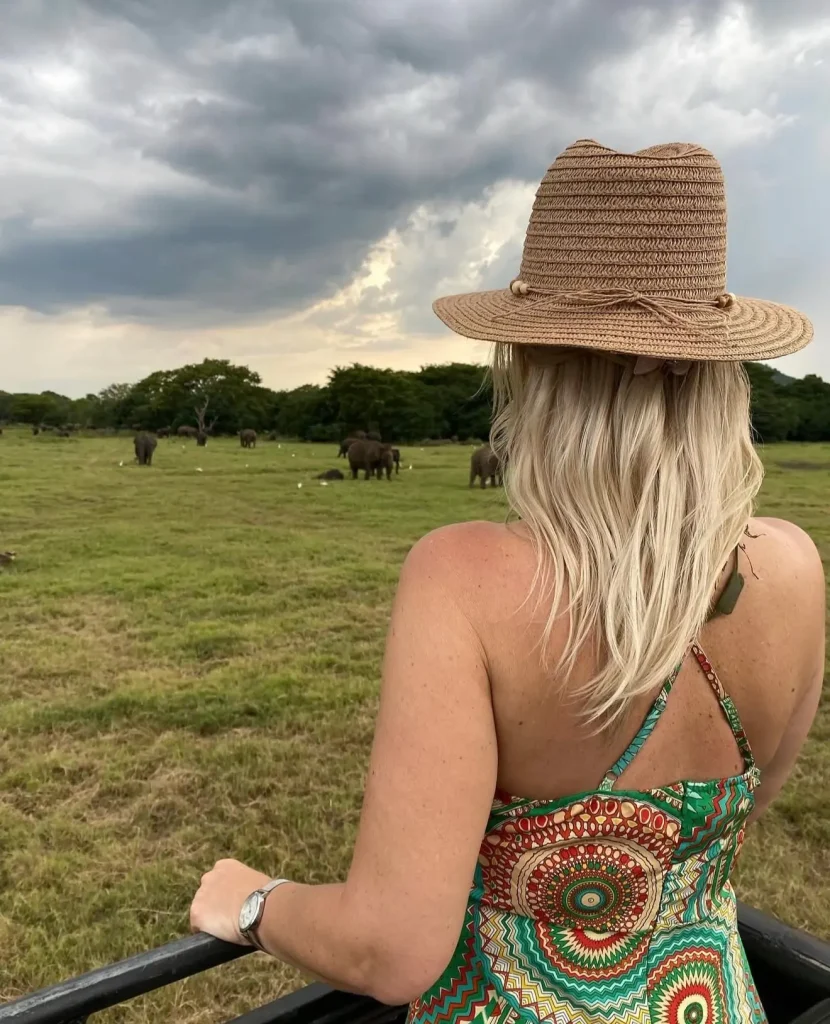
Located between Habarana and Polonnaruwa, the park protects a landscape of dry-zone forest, grassland, scrub and wetlands surrounding the historic Minneriya reservoir.
The reservoir was constructed during the reign of King Mahasena in the third century CE and remains important to agriculture and the wider environment.
For wildlife visitors, the reservoir’s changing water levels are particularly significant.
During suitable dry-season conditions, exposed grasslands attract elephants that gather to feed near the water.
Minneriya is also an attractive destination for observing waterbirds and appreciating Sri Lanka’s dry-zone landscape.
Its international reputation, however, means the park can become busy when large elephant herds are present.
What Is the Minneriya Elephant Gathering?
The Elephant Gathering is the name commonly given to the seasonal concentration of wild Asian elephants around the Minneriya reservoir.
During favourable conditions, elephants move towards exposed grasslands near the water, creating opportunities to observe substantial groups within one landscape.
The Gathering is widely recognised as one of the most remarkable natural elephant concentrations in Asia.
Visitors may observe different family groups feeding, walking and interacting across open grassland.
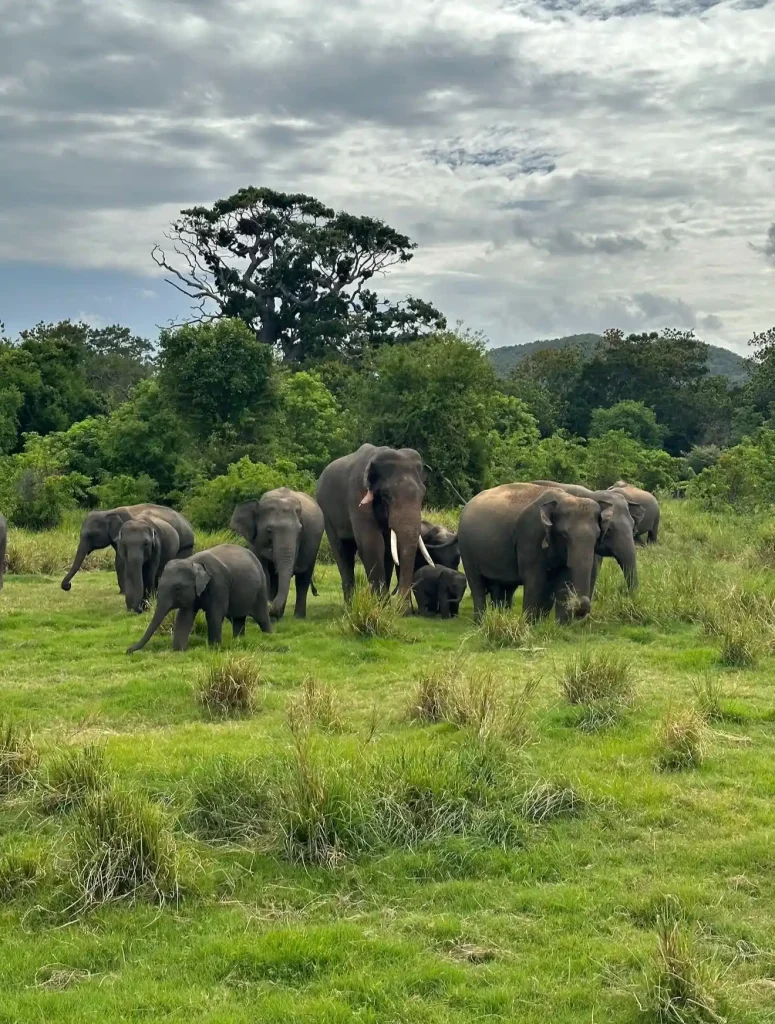
Watching elephants behave naturally within these large groups can be an extraordinary experience.
However, the Gathering is not a scheduled event and does not occur with the same number of elephants on a fixed date every year.
Its scale depends on rainfall, water levels, habitat conditions and elephant movement across the wider region.
When Does the Minneriya Gathering Happen?
The Gathering is generally associated with Sri Lanka’s dry season, particularly when water levels fall and grasslands become exposed around Minneriya Tank.
The period from approximately July to September is historically well known for major elephant concentrations.
However, these months should be treated as a broad seasonal reference rather than a guarantee.
Changes in reservoir management and rainfall can alter the amount of grazing available.
Elephants may consequently concentrate in different areas or move towards neighbouring habitats.
For travellers, the most useful information is where elephants have recently been observed and whether current conditions allow responsible wildlife viewing.
Why Minneriya Is Not Always the Best Choice
Minneriya’s reputation makes it a popular first choice for travellers booking an elephant safari.
However, name recognition alone does not determine the quality of a wildlife experience.
If elephants have moved towards Kaudulla or Hurulu, choosing Minneriya solely because it is famous may result in a quieter safari.
Even when many elephants are present, excessive jeep congestion can reduce the enjoyment of the experience and disturb wildlife.
A responsible safari operator should consider animal movements, viewing distances and vehicle numbers rather than automatically directing every visitor to Minneriya.
Kaudulla National Park
Kaudulla National Park is another important elephant habitat within Sri Lanka’s Cultural Triangle.
Located north-east of Minneriya, the park contains dry-zone forest, grassland and the large Kaudulla reservoir.
The reservoir and surrounding habitats provide valuable grazing and water resources for elephants moving through the region.
When conditions become favourable, sizeable elephant groups may gather near the exposed grasslands around Kaudulla Tank.
The national park also supports birds, deer, reptiles and other wildlife associated with Sri Lanka’s dry-zone environments.
For visitors staying in Sigiriya or Habarana, Kaudulla offers an attractive alternative to Minneriya when recent elephant movements favour this part of the landscape.
When Should You Choose Kaudulla?
Kaudulla is particularly worth considering when elephants are concentrating around its reservoir or surrounding grasslands.
These conditions can develop as animals move between the connected protected areas in response to rainfall and feeding opportunities.
The best reason to choose Kaudulla is therefore evidence of recent wildlife activity, not simply a month on the calendar.
Ask your operator about recent sightings, the approximate number of elephants observed and whether vehicles have been able to maintain responsible viewing distances.
A relatively uncrowded Kaudulla safari can provide an excellent opportunity to observe natural elephant behaviour without the pressure associated with a heavily congested sighting.
Hurulu Eco Park Near Habarana
Hurulu Eco Park is the third major elephant safari option for visitors staying around Sigiriya and Habarana.
It forms part of the wider Hurulu Conserved Forest, an important dry-zone forest landscape supporting wild elephants and other animals.
Unlike Minneriya and Kaudulla, Hurulu Eco Park is not administered as a national park by the Department of Wildlife Conservation.
Its management falls under the Department of Forest Conservation.
The safari environment includes forest, scrub and more enclosed vegetation, creating a different atmosphere from the expansive reservoir grasslands associated with Minneriya and Kaudulla.
Elephants may be encountered moving through vegetation or using open areas within the forest landscape.
When Is Hurulu Eco Park a Good Choice?
Hurulu is particularly useful when recent elephant movements favour the forests and surrounding open habitats near Habarana.
Its location makes it convenient for travellers based in the wider Sigiriya region.
Because the landscape can be more wooded than the open reservoir margins of Minneriya, sightings may have a different character.
Visitors might observe elephants moving through forest clearings or along suitable habitat edges.
However, dense vegetation can sometimes limit visibility, and the number of animals present varies naturally.
Choose Hurulu when current reports indicate suitable elephant activity and when the operator can provide a responsible, well-managed safari.
Is Hurulu Eco Park a National Park?
No. Hurulu Eco Park forms part of the Hurulu Conserved Forest, which is administered by Sri Lanka’s Department of Forest Conservation.
This is different from Minneriya and Kaudulla, which are national parks managed by the Department of Wildlife Conservation.
The distinction affects management responsibilities and visitor admission arrangements.
Hurulu is an established wildlife tourism destination, but it should be correctly described as an eco park within a conserved forest rather than as a national park.
Minneriya vs Kaudulla vs Hurulu: Which Is Best?
There is no single park that is always the best choice for an elephant safari from Sigiriya.
Choose Minneriya when elephants are using its reservoir grasslands and viewing conditions are suitable.
Choose Kaudulla when recent sightings indicate that elephants are concentrated around its reservoir or nearby habitats.
Choose Hurulu when elephants are using the forest landscape near Habarana and the safari conditions are appropriate.
The number of vehicles already observing the animals should also influence your decision.
A smaller herd observed peacefully with fewer jeeps can be more enjoyable than a large gathering surrounded by dozens of vehicles.
For the best experience, choose according to current wildlife conditions and the quality of responsible observation.
How to Choose the Right Park Before Your Safari
One of the most useful steps is to ask a knowledgeable local operator about elephant sightings during the previous one or two days.
Recent observations provide a better indication of current wildlife movement than an old seasonal recommendation.
Ask which protected area elephants have been using and whether the sightings involved natural behaviour in suitable conditions.
It is also worth asking about vehicle congestion.
If a particular location has attracted an excessive number of safari jeeps, another area may provide a more enjoyable experience.
The best operators should be able to explain why they recommend one park rather than another.
Do not assume the easiest entrance for the driver is automatically the best option for wildlife viewing.
Can You See Elephants Throughout the Year?
Wild elephants live within the wider Sigiriya–Habarana landscape throughout the year.
However, their presence within individual safari areas changes as they move between feeding grounds, forests and water sources.
Some periods produce large groups in open grassland, while other conditions may result in smaller groups using wooded habitats.
The changing landscape is what makes flexibility so valuable.
Even in a region well known for elephants, sightings depend on natural movement and cannot be guaranteed on every safari.
Approaching the experience with realistic expectations allows visitors to appreciate the wildlife and scenery without expecting a staged encounter.
Morning or Afternoon Elephant Safari?
Both morning and afternoon safaris can provide rewarding wildlife experiences.
Afternoon safaris are particularly popular around Minneriya and Kaudulla because elephants may become more visible around open feeding areas later in the day.
As temperatures begin to ease, animals may move out of forest cover towards grasslands or water.
Morning safaris can offer cooler weather and attractive light for observing birds and other wildlife.
However, elephant activity varies between the three safari areas and depends on current conditions.
Ask an experienced operator which session is most suitable for the park being recommended rather than assuming that one time of day is always best.
How Long Does an Elephant Safari Take?
Most visitors choose a half-day elephant safari lasting several hours.
A typical outing allows approximately three to four hours for wildlife observation and associated safari arrangements, although the total experience may be longer depending on transfers and ticketing.
The time spent travelling from your accommodation depends on the park entrance, road conditions and the location of your hotel.
Some wildlife encounters involve long observation stops, while others require moving through different habitats.
A good safari should allow enough time to appreciate natural behaviour without rushing from one reported sighting to another.
Getting to the Parks from Sigiriya
Sigiriya is a convenient starting point for safaris in Minneriya, Kaudulla and Hurulu.
The protected areas can generally be reached within approximately 30–60 minutes by road from the wider Sigiriya accommodation area, depending on the selected entrance and traffic conditions.
Minneriya is accessed towards the Habarana–Polonnaruwa corridor, while Kaudulla is farther along the wider protected landscape.
Hurulu Eco Park is located near Habarana.
Most safari operators can arrange direct pickup from accommodation in Sigiriya village or the surrounding countryside.
Confirm the selected entrance, pickup time and whether transfers are included before accepting a quotation.
Habarana as an Elephant Safari Base
Habarana is particularly convenient for travellers whose main interest is exploring the area’s wildlife.
The town lies close to the principal roads connecting the three elephant safari destinations.
It also has accommodation ranging from smaller guesthouses to larger hotels and nature-focused properties.
Visitors staying in Habarana can arrange safari transport without needing to travel first into Sigiriya village.
For travellers arriving by train, Habarana is also a useful railway stop in the Cultural Triangle.
Safari transport should be arranged separately from the railway journey, with pickup coordinated according to the planned entrance.
Booking a Safari Without Renting a Car
International travellers do not need to rent a car to enjoy an elephant safari near Sigiriya.
Local safari operators commonly provide hotel pickup and return transfers, using vehicles equipped for wildlife viewing.
Accommodation providers in Sigiriya and Habarana can also help arrange transport.
For visitors travelling independently, the main consideration is selecting an experienced operator and confirming the complete cost.
Ask whether the same jeep will collect you from your accommodation or whether a separate road transfer is required.
Always agree the tuk-tuk or driver cost before travelling.
How to Book Minneriya and Kaudulla Permits
Minneriya and Kaudulla are national parks managed by Sri Lanka’s Department of Wildlife Conservation.
Visitors require the applicable national park entrance permit.
The department provides an official Day Visitor ePermit service that allows visitors to select the park and travel date, enter passenger and vehicle information, and complete payment online.
After payment, the booking receipt and QR code are used as part of the entrance process.
Safari operators may also organise permits on behalf of their customers.
Before paying twice, confirm whether park admission is already included in the safari package.
Official national park permits: Department of Wildlife Conservation – Day Visitor ePermit.
Hurulu Eco Park Entrance Arrangements
Hurulu Eco Park is administered through a different protected-forest management system from Minneriya and Kaudulla.
Its entrance arrangements therefore need to be considered separately from the Department of Wildlife Conservation national park permit system.
Many visitors arrange Hurulu admission through a local safari operator who handles the relevant entrance requirements.
Confirm the admission charge, vehicle arrangements and other applicable fees when booking.
This distinction is particularly useful when comparing quotations for safaris across all three areas.
Jeep Hire and Park Entrance Fees Explained
One of the most common misunderstandings when booking an elephant safari concerns the difference between jeep hire and protected-area admission.
A jeep quotation may cover only the vehicle and driver.
National park admission, taxes, applicable guide services and transport from accommodation may be charged separately.
Other operators provide a combined package that includes these costs.
Before booking, request the complete total for your group and ask for a clear explanation of what is included.
The total cost matters more than the headline price advertised for the jeep.
Confirm the currency and any additional charges before departure.
Private Jeep or Shared Elephant Safari?
Both private and shared safari arrangements may be available through local operators.
A private jeep allows greater flexibility for your group, particularly if you enjoy wildlife photography or prefer spending more time observing one group of elephants.
A shared safari can reduce the cost per person and may suit solo travellers or small groups.
However, passengers sharing the same vehicle may have different interests and expectations.
When comparing options, ask how many people will travel in the jeep and whether everyone will have suitable seating and views.
Choose a vehicle and operator that prioritise safety and responsible wildlife viewing.
How to Choose a Responsible Safari Operator
The behaviour of your safari driver can make a greater difference to the experience than the name of the park.
An experienced, responsible driver understands how to observe elephants without causing unnecessary disturbance.
They should follow designated routes, respect protected-area rules and avoid approaching wildlife aggressively.
Ask how the driver responds when elephants are close to a track or when several jeeps have already gathered around one family group.
A responsible operator should be comfortable maintaining distance, allowing animals to move freely and leaving overcrowded sightings.
Avoid operators whose principal selling point is promising the closest possible elephant encounter.
Why Jeep Crowding Matters
Popular elephant-viewing areas can attract large numbers of safari vehicles, particularly when an impressive herd is reported.
Several jeeps surrounding the same animals can interrupt their movement and create stressful conditions.
Blocking a road or forming a ring of vehicles around elephants may prevent them from moving naturally between feeding areas.
These situations also create potential safety risks for passengers and drivers.
A responsible safari prioritises observing animals without forcing them to respond to vehicles.
If a sighting is already heavily congested, moving away to observe other wildlife may be the better decision.
Keeping a Safe Distance from Wild Elephants
Wild Asian elephants are powerful animals and must always be given sufficient space.
Visitors should remain inside the safari jeep and follow the instructions of their driver.
Do not ask the vehicle to move closer merely to obtain a better photograph.
Elephants may change their behaviour when they feel uncomfortable, threatened or unable to move freely.
An experienced driver should recognise warning signs and create additional distance before the situation becomes dangerous.
Never block an elephant’s route or position the vehicle between members of a family group.
Watching Elephant Behaviour
One of the most rewarding aspects of a wild elephant safari is observing natural behaviour.
Elephants communicate through body movements, sounds and interactions with other members of their group.
Visitors may see elephants grazing, using their trunks to gather vegetation, dust bathing or moving together across open ground.
Young elephants sometimes display playful behaviour, while adults maintain contact and awareness within the family group.
Watching these interactions over several minutes can reveal much more than a brief encounter focused only on photography.
A knowledgeable guide can explain what is happening while maintaining a suitable distance.
Elephant Calves and Family Groups
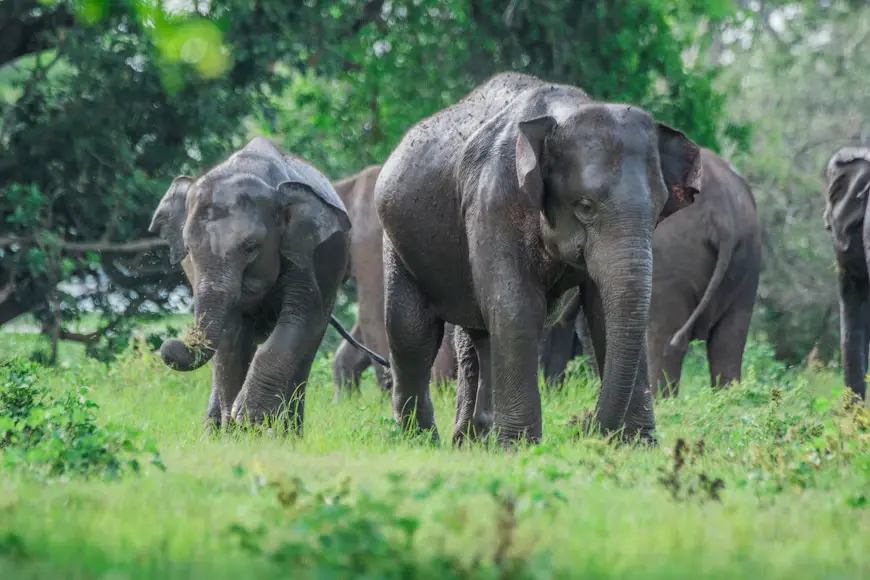
Elephant family groups often include females and younger animals travelling together.
Calves may remain close to adults while feeding, resting or moving through the landscape.
Watching these relationships can be one of the most memorable parts of an elephant safari.
However, family groups with young calves require particular care.
Adult elephants may behave defensively when they perceive a threat to younger members.
Never pressure a driver to approach a calf closely or position the vehicle between an adult and its young.
Allow the group to determine its own movement and remain at a respectful distance.
Never Feed or Touch Wild Elephants
Feeding wild elephants is dangerous and harmful to responsible wildlife management.
Offering fruit, snacks or other food can encourage elephants to associate people and vehicles with feeding opportunities.
Over time, this behaviour can increase dangerous encounters between elephants and people.
It may also contribute to conflicts affecting nearby communities.
Visitors should never leave the jeep to approach an elephant or attempt to touch one.
A wild elephant safari is an opportunity to observe animals living independently in their natural habitat, not an interactive animal encounter.
What Other Wildlife Can You See?
Although elephants are the main attraction, Minneriya, Kaudulla and Hurulu support a wider variety of wildlife.
Depending on the habitat and route, visitors may encounter deer, monkeys, water buffalo, reptiles and numerous bird species.
The reservoirs and surrounding wetlands are particularly interesting for waterbirds.
Open areas and forest edges also provide opportunities to observe birds of prey and peafowl.
Some mammals remain difficult to see because they are naturally elusive or spend much of their time within vegetation.
Allowing time for smaller animals and birds can make the safari more rewarding even when elephant activity is quieter.
Birdwatching Around the Reservoirs
Minneriya and Kaudulla are valuable birdwatching environments as well as elephant habitats.
The combination of open water, exposed mud, grassland and surrounding forest supports different bird species.
Visitors may observe pelicans, cormorants, herons, egrets and birds of prey in suitable habitats.
Binoculars are particularly useful for recognising birds without needing the vehicle to approach.
Travellers interested in birdwatching should mention this when booking so the driver knows that the experience does not need to focus exclusively on elephants.
Wildlife Photography on an Elephant Safari
The open grasslands of Minneriya and Kaudulla can provide beautiful opportunities for photographing elephants within their natural surroundings.
A telephoto or zoom lens is useful for capturing animals at a respectful distance.
Rather than concentrating only on close-up photographs, consider including the surrounding reservoir, grasslands or forest.
These wider compositions help convey the scale of the habitat and the relationship between elephants and their environment.
Afternoon light can be particularly attractive across open landscapes.
Never ask the driver to leave approved tracks, accelerate towards wildlife or block an elephant’s movement for a photograph.
Taking Photos with a Smartphone
A smartphone can capture excellent photographs of elephants, particularly when animals are visible across open ground.
Use a moderate zoom where possible rather than relying on excessive digital magnification.
Wide photographs showing a herd within the landscape can be especially impressive.
Keep your phone secure while travelling along rough tracks, and avoid leaning dangerously outside the vehicle.
Turn off unnecessary camera sounds and do not use flash when photographing wildlife at close range.
What to Wear on an Elephant Safari
Lightweight, breathable clothing is ideal for Sri Lanka’s warm dry-zone climate.
Comfortable trousers or shorts and a practical top are suitable for most visitors.
A hat and sunglasses are useful when travelling through open landscapes exposed to the sun.
A lightweight scarf or buff can provide additional comfort on dusty safari tracks.
During cooler morning departures, a light layer may also be useful.
Specialist safari clothing is not essential, but comfortable clothing that allows you to sit securely in the jeep is recommended.
What Should You Bring?
A small day bag is sufficient for most half-day elephant safaris.
- Drinking water in a reusable bottle.
- Sunscreen and sunglasses.
- A secure hat.
- Binoculars for distant wildlife.
- A camera or charged smartphone.
- A scarf or buff for dust protection.
- A lightweight rain layer.
- Any essential personal medication.
- A small bag for rubbish.
Secure loose belongings so they cannot fall from the jeep while travelling over uneven tracks.
Avoid unnecessary food packaging and never throw anything towards wildlife.
Visiting with Children
An elephant safari near Sigiriya can be an exciting experience for families.
Children may particularly enjoy observing elephant calves, watching adults feed and learning about wildlife in a natural environment.
However, a jeep safari involves travelling over rough tracks and sitting quietly for extended periods.
Younger children may become tired or uncomfortable during a long excursion.
Choose a duration suited to your family and ensure that children remain properly seated and supervised throughout the safari.
Explain beforehand that the elephants are wild animals and must not be fed, touched or approached.
Accessibility and Visitor Comfort
Elephant safaris generally involve travelling through protected areas in specialised vehicles.
These vehicles may have elevated steps and open seating arrangements that can be difficult for travellers with limited mobility.
Road surfaces can be uneven, producing considerable movement during the journey.
Visitors who experience back discomfort, reduced balance or difficulty climbing into vehicles should discuss their requirements with the operator before booking.
A private jeep may provide greater flexibility over seating and the pace of travel, within the applicable park rules.
Responsible Tourism and Elephant Conservation
The elephant landscape surrounding Sigiriya is important not only for tourism but also for wildlife conservation and local communities.
Elephants require large areas of connected habitat to move between feeding grounds and water sources.
Protecting the corridors between forests and national parks helps maintain these natural movements.
Roads, agriculture and human settlement can create challenges when elephant habitats become fragmented.
Responsible tourism should therefore support conservation rather than placing additional pressure on wildlife.
Choose operators who respect protected-area rules, avoid feeding animals and maintain appropriate viewing distances.
A well-managed safari can help visitors appreciate why conserving connected elephant habitats matters for Sri Lanka’s future.
Common Mistakes When Booking an Elephant Safari
One common mistake is choosing Minneriya months in advance because an old travel guide promises large elephant herds during a particular month.
Another is comparing only the jeep-hire price without checking whether park entrance charges are included.
Travellers may also overlook differences in protected-area management when comparing Minneriya, Kaudulla and Hurulu.
Choosing an operator who promises extremely close wildlife encounters is another mistake, as this can encourage unsafe and irresponsible driving.
A better approach is to choose a reputable operator, confirm the complete price and select the protected area using recent wildlife and visitor-management information.
Is an Elephant Safari from Sigiriya Worth It?
Absolutely. An elephant safari from Sigiriya offers one of Sri Lanka’s most rewarding opportunities to observe wild Asian elephants within their natural environment.
Minneriya’s reservoir grasslands, Kaudulla’s connected elephant habitats and Hurulu’s forest landscape each provide a different perspective on the wildlife of the Cultural Triangle.
The experience is particularly memorable when visitors take time to observe elephants feeding, moving and interacting naturally rather than concentrating only on the number of animals seen.
The most important decision is choosing the protected area where current wildlife conditions favour responsible viewing.
With a knowledgeable driver, realistic expectations and respect for the animals, an elephant safari near Sigiriya can become one of the most meaningful wildlife experiences of a Sri Lanka holiday.