Discover Ravana Falls, one of the most beautiful and easily accessible waterfalls near Ella in Sri Lanka’s Hill Country. Located beside the scenic Ella–Wellawaya Road, this impressive cascade tumbles down a rocky mountainside surrounded by lush tropical vegetation, creating one of the region’s most recognisable natural landmarks.
Unlike many waterfalls that require long walks through forests or difficult hiking trails, Ravana Falls can be admired directly from the roadside. Its convenient location makes it particularly appealing to travellers looking for a memorable waterfall experience without undertaking a demanding trek.
The waterfall is also associated with the ancient Ramayana tradition and the legendary King Ravana, adding an interesting cultural dimension to its natural beauty.
This complete visitor guide covers how to reach Ravana Falls, the best time to visit, seasonal water flow, photography, roadside access, swimming safety and the fascinating stories surrounding the waterfall.
Location: Ella–Wellawaya Road, Badulla District, Uva Province
Distance from Ella: Approximately 6 km
Travel time from Ella: Around 15–20 minutes by tuk-tuk or car
Waterfall height: Approximately 25 metres
Best for: Waterfall photography, scenic views and nature
Time needed: Approximately 30–60 minutes
Walking difficulty: Easy for roadside viewing
Best time: Early morning or during suitable daylight conditions
Entrance: No standard admission ticket for the usual roadside viewpoint
Swimming: Not recommended
Important: Avoid wet rocks, fast-flowing water and unsafe roadside stopping
A dramatic cascade in Ella’s hills
Discover Ravana Falls Near Ella
Ravana Falls is one of the best-known natural attractions in Sri Lanka’s Ella region, offering impressive waterfall scenery within easy reach of the town.
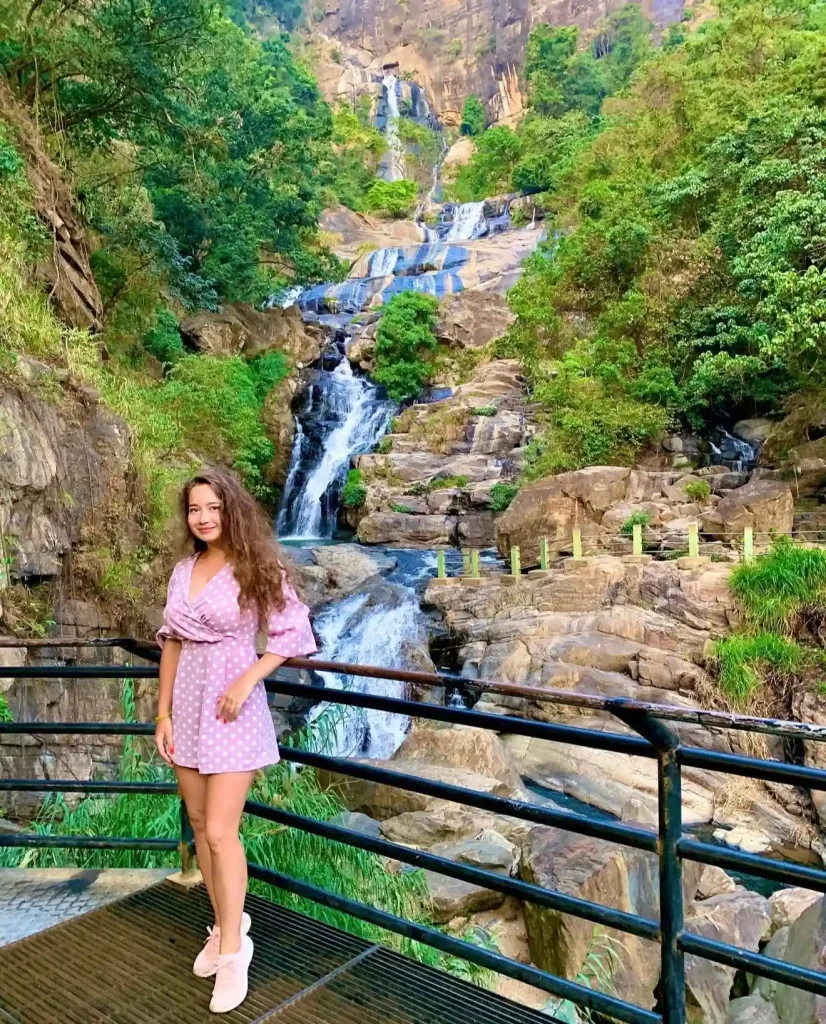
Photography: @vicko_sharm/Instagram
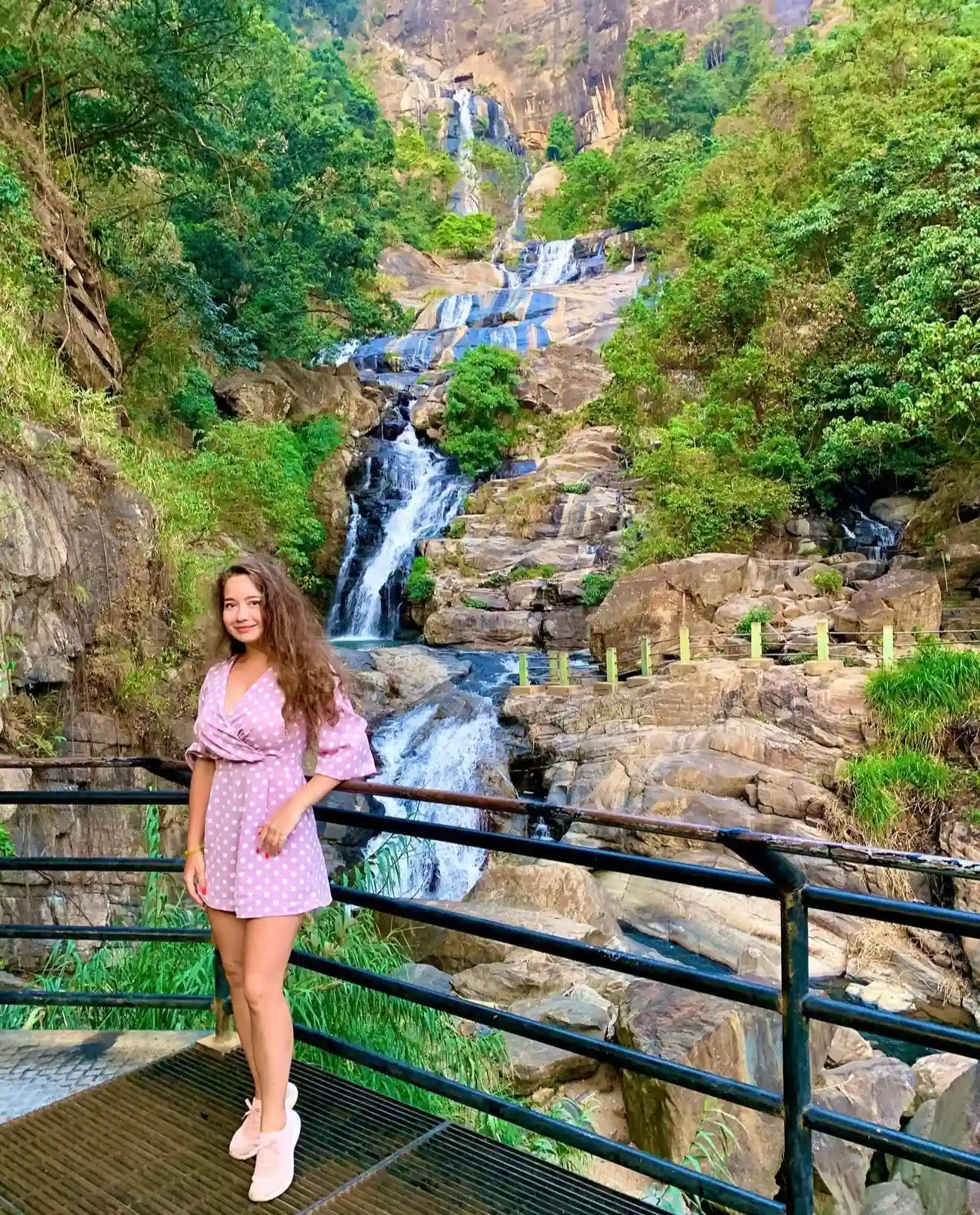
The waterfall descends across a broad, layered rock formation beside the mountain road connecting Ella with Wellawaya.
Surrounded by thick vegetation and steep hillsides, the cascade creates a striking contrast between the dark rock face and the white water flowing over it.
During periods of heavier rainfall, the waterfall becomes particularly dramatic as water spreads across several sections of the rock.
In drier conditions, the flow may become narrower, revealing more of the underlying stone formations.
This changing appearance is part of the attraction. Ravana Falls offers a different experience depending on rainfall, light and surrounding weather conditions.
For travellers exploring Ella, it provides an enjoyable opportunity to appreciate Sri Lanka’s natural mountain scenery without needing specialist hiking equipment.
Why Ravana Falls Is Worth Visiting
Ravana Falls combines natural beauty with exceptional accessibility.
Many waterfalls in Sri Lanka require walking through forests, following steep trails or arranging transport along remote roads.
Ravana Falls is different because the main cascade is clearly visible from the Ella–Wellawaya Road.
Its roadside location allows visitors to admire the waterfall without completing a long or physically demanding walk.
The surrounding mountains and greenery also make the setting particularly attractive for photography.
Another interesting feature is the waterfall’s connection with Sri Lankan folklore, particularly the stories surrounding the legendary King Ravana.
For international visitors, Ravana Falls offers an accessible combination of nature, photography and cultural interest.
Where Is Ravana Falls Located?
Ravana Falls is situated approximately six kilometres south of Ella town in Sri Lanka’s Uva Province.
The waterfall lies directly beside the A23 Ella–Wellawaya Road, which descends from Ella through the surrounding hills towards lower elevations.
This road passes through some of the region’s most attractive mountain scenery, with steep slopes, forested valleys and changing views of the landscape.
The waterfall can be recognised from the road, making it relatively straightforward to locate.
However, the road is winding and carries regular traffic, so vehicles should only stop where it is safe and permitted.
Travellers staying in Ella can reach the area by tuk-tuk, car or a suitable local bus travelling towards Wellawaya.
How Tall Is Ravana Falls?
The well-known roadside cascade at Ravana Falls is approximately 25 metres high.
Although Sri Lanka has many waterfalls that are considerably taller, Ravana Falls is particularly impressive because of its wide, stepped rock formation.
Water flows across different sections of the exposed surface rather than descending as one narrow vertical stream.
After sustained rainfall, several streams may spread across the rock face, creating a broad curtain of flowing water.
During drier conditions, smaller streams can reveal the underlying layers and natural shape of the rock.
The waterfall’s visual appeal therefore comes from the combination of its shape, changing water flow and lush mountain surroundings.
What Makes Ravana Falls Special?
One of Ravana Falls’ most distinctive features is the relationship between the waterfall and the road passing beside it.
Visitors can experience a substantial natural cascade from a convenient location without following a long hiking trail.
The surrounding forest, mountain slopes and exposed rock formations create an impressive natural backdrop.
When water levels are high, the sound of the waterfall and surrounding spray add to the atmosphere.
During quieter periods, visitors can appreciate the detailed patterns of water moving across the rock.
Its combination of easy access, attractive scenery and cultural associations has made Ravana Falls one of the most recognisable natural landmarks around Ella.
Best Time of Year to Visit Ravana Falls
Ravana Falls can be enjoyed throughout the year, although its appearance changes considerably with rainfall.
After sustained rain, the cascade is generally more powerful, with water spreading across the wider rock formation.
During prolonged dry periods, the volume decreases and more of the underlying rock becomes visible.
This means that the best time for dramatic waterfall photography often follows periods of significant rainfall.
However, stronger water flow also creates greater hazards, including slippery rocks, powerful currents and increased spray.
For visitors, the ideal conditions are those that provide an attractive view while allowing safe access to an appropriate roadside viewing position.
Ravana Falls During the Rainy Season
Rainfall can transform Ravana Falls into a powerful cascade.
As rainwater drains from the surrounding highlands, the volume flowing over the rock formation increases.
The waterfall may appear broader, louder and more dramatic than during drier periods.
The surrounding vegetation can also look particularly lush, creating attractive contrasts between the greenery, rocks and flowing water.
However, heavy rainfall increases the risk of slippery surfaces and sudden changes in water movement.
Do not approach the base of the waterfall or climb onto wet rocks simply because the cascade looks especially impressive.
The safest views can often be enjoyed from established roadside positions without moving close to the flowing water.
Ravana Falls During Drier Weather
During drier periods, Ravana Falls may have noticeably less water flowing across its rock face.
The cascade can become narrower, revealing the layered structure of the rocks beneath.
Although the waterfall may appear less dramatic than after heavy rainfall, it remains an attractive natural landmark.
The surrounding mountain landscape and vegetation continue to provide beautiful scenery for visitors and photographers.
Drier conditions may also make the roadside environment more comfortable, with less spray and fewer wet surfaces.
Nevertheless, the rocks immediately around the waterfall can remain slippery even when the overall flow appears reduced.
Best Time of Day to Visit Ravana Falls
Early morning is generally one of the most enjoyable times to visit Ravana Falls.
The temperature is often cooler, and the roadside viewpoint may be less crowded before larger groups arrive.
Morning light can also illuminate the surrounding greenery and reveal attractive details within the waterfall.
Late afternoon offers another opportunity for scenic photography, although changing cloud cover may affect the available light.
Midday visits are convenient, but the road and viewing area may be busier.
A daylight visit is preferable because it allows visitors to see traffic, uneven surfaces and other roadside hazards clearly.
How Long Should You Spend at Ravana Falls?
For most visitors, approximately 30–60 minutes is sufficient to appreciate Ravana Falls.
The waterfall is visible from the road, and there is no lengthy walking route required to reach the main viewpoint.
Visitors can take time to enjoy the scenery, photograph the cascade and observe how water moves across the rock formation.
During quieter periods, the experience may feel more relaxed and allow additional time for photography.
However, if the roadside area becomes crowded or heavy rain makes conditions uncomfortable, a shorter stop may be more sensible.
Ravana Falls is best appreciated as a beautiful natural viewpoint rather than a location requiring several hours of exploration.
How to Get to Ravana Falls from Ella
Ravana Falls is approximately six kilometres south of Ella town, making it one of the area’s easiest natural attractions to reach.
The journey follows the Ella–Wellawaya Road, descending through a scenic mountain landscape.
By tuk-tuk or car, the journey generally takes around 15–20 minutes, depending on road conditions and traffic.
The waterfall is visible directly from the roadside.
Travellers should arrange to stop only in a suitable location where the vehicle does not obstruct passing traffic.
Always agree the tuk-tuk or driver fare before travelling.
Getting to Ravana Falls by Tuk-Tuk
A tuk-tuk is one of the most convenient ways to reach Ravana Falls from Ella.
It allows visitors to travel directly from their accommodation or the town centre without arranging a private car.
Local drivers are generally familiar with the waterfall and the mountain road leading towards Wellawaya.
When arranging the journey, confirm whether the quoted fare includes waiting time and the return to Ella.
It is also worth agreeing on a suitable pickup location before leaving the vehicle.
Because the road can be busy and winding, the driver should use an appropriate stopping area rather than pulling over suddenly beside the waterfall.
Can You Reach Ravana Falls by Bus?
Yes. Local buses travelling between Ella and Wellawaya use the road passing Ravana Falls.
This makes the waterfall accessible to independent travellers who prefer public transport.
From Ella, look for an appropriate bus travelling towards Wellawaya and confirm that it can stop near Ravana Falls.
The journey is short, although waiting times depend on the available service.
When returning towards Ella, use a suitable bus stop and a service travelling in the opposite direction.
Be especially careful when walking near the roadside because the route includes bends, slopes and passing vehicles.
For travellers who prefer more control over stopping time, a tuk-tuk offers greater convenience.
Visiting Ravana Falls Without a Car
Travellers do not need a rental car to see Ravana Falls.
The waterfall’s roadside location makes it accessible by tuk-tuk, local bus or a privately arranged transfer.
Visitors arriving in Ella by train can continue to the waterfall using road transport from the town or station area.
There is no dedicated railway station at Ravana Falls.
A direct tuk-tuk journey is particularly useful for travellers carrying small children, photography equipment or luggage.
The main consideration is making sure the vehicle stops in a safe, permitted position on the mountain road.
Approaching Ravana Falls from Wellawaya
Ravana Falls is also accessible to travellers approaching Ella from the Wellawaya direction.
The A23 road climbs through changing scenery as it approaches the hills around Ella.
The waterfall is located beside this route, making it a recognisable landmark for road travellers.
Drivers should remain alert because the road contains bends, gradients and areas where pedestrians may be gathered near the attraction.
Never stop suddenly when the waterfall first comes into view.
Use a safe roadside stopping area and follow any instructions from local personnel managing traffic or visitors.
Parking and Roadside Safety
Ravana Falls’ roadside location is convenient, but it also creates one of the main safety considerations for visitors.
The Ella–Wellawaya Road is an active mountain road used by buses, cars, tuk-tuks and other vehicles.
Visitors may be distracted by the waterfall while moving close to traffic or stepping backwards for photographs.
Always remain aware of passing vehicles and avoid standing in the carriageway.
When travelling by car or tuk-tuk, use a suitable parking or stopping location.
Do not ask a driver to stop on a blind bend, narrow shoulder or other place where the vehicle could obstruct traffic.
Take particular care when crossing the road, especially if other visitors or parked vehicles restrict visibility.
Do You Need to Hike to Ravana Falls?
No. One of the biggest advantages of Ravana Falls is that the main cascade can be seen without undertaking a long hike.
The waterfall is visible from the Ella–Wellawaya Road, and ordinary sightseeing does not require climbing the surrounding rocks.
This makes Ravana Falls quite different from longer hiking experiences around Ella.
Some visitors attempt to approach the water or climb higher along the rock formation, but those movements are unnecessary for enjoying the waterfall and can be dangerous.
The roadside viewpoint provides an impressive perspective of the cascade while avoiding many of the hazards associated with climbing wet stone.
What Is the Viewpoint Like?
The main viewing experience takes place beside the road, where the waterfall descends across the exposed mountainside.
Visitors can appreciate the shape of the cascade, its surrounding greenery and the way water moves over the layered rock.
During wetter periods, the sound and spray can make the waterfall feel particularly dramatic.
The roadside viewpoint has limited pedestrian space, so visitors should remain alert to traffic and uneven ground.
Roadside congestion, uneven ground and passing vehicles require attention.
Use established, safe viewing positions and remain behind any barriers or warning notices.
Can You Swim at Ravana Falls?
Ravana Falls is best enjoyed as a viewing and photography attraction rather than a swimming destination.
The water flow can change rapidly depending on rainfall in the surrounding highlands.
Natural pools may contain uneven depths, submerged rocks and strong water movement that is difficult to judge from the surface.
Wet rocks around the waterfall can also become extremely slippery.
Even when a section appears calm, currents may be stronger beneath the surface or increase suddenly after rainfall upstream.
Visitors should not enter the water or climb into the waterfall for photographs.
Follow all local safety restrictions and enjoy the cascade from a secure viewpoint instead.
Why Swimming Near Waterfalls Can Be Dangerous
Natural waterfalls create hazards that are not always visible from the shore.
Water falling over rocks can produce unpredictable currents, turbulent pools and areas where footing is difficult.
Submerged stones and changing water depth create additional risks.
Heavy rainfall upstream can increase the amount of water flowing through a waterfall even when the immediate area appears relatively dry.
People standing on wet rocks may also lose their footing before reaching the water itself.
At Ravana Falls, these risks make roadside viewing the more appropriate choice for an ordinary sightseeing visit.
Why You Should Not Climb the Waterfall Rocks
The broad rock formation at Ravana Falls can appear inviting because parts of the surface are visible from the roadside.
However, natural waterfall rocks are often covered with moisture, algae and smooth surfaces worn by flowing water.
These conditions can make even apparently stable stones extremely slippery.
A small loss of balance near a steep slope or powerful water flow can lead to serious injury.
Do not climb beyond safety barriers or warning signs.
Avoid copying visitors who move onto exposed boulders or attempt risky photographs beside the cascade.
There are excellent views of Ravana Falls without needing to stand on wet rocks.
What Happens After Heavy Rain?
Heavy rainfall can make Ravana Falls particularly dramatic, but it can also increase the risks around the attraction.
Water may flow more strongly across the rock face, creating additional spray and reducing visibility near the base.
Surrounding surfaces can become slippery, while runoff may affect paths and roadside areas.
Persistent rain in the mountains can also create hazards on the roads leading to Ella, including poor visibility and localised surface water.
Stay away from the water’s edge during heavy rain and respect any temporary access restrictions.
If conditions are severe, enjoy the view only from a safe location or postpone the stop until the weather improves.
Safety During Thunderstorms and Severe Weather
Ravana Falls is an exposed natural attraction beside a mountain road.
Thunderstorms, heavy rain and strong winds can make the surrounding environment uncomfortable and unsafe.
Do not shelter beneath unstable trees or stand on exposed rocks during lightning.
Heavy rain can also reduce drivers’ visibility along the winding Ella–Wellawaya Road.
Travellers should follow any road restrictions, traffic instructions or safety notices in the area.
Good judgement about weather conditions is just as important as selecting the right viewing position.
Photography at Ravana Falls
Ravana Falls provides excellent opportunities for photographing one of Ella’s most recognisable natural landscapes.
The broad cascade, layered rock formations and surrounding greenery create an attractive combination of natural colours and textures.
A wide-angle photograph can capture much of the waterfall and the vegetation framing it.
During periods of higher flow, the movement of the water becomes the main visual feature.
During drier conditions, the exposed rock layers provide additional detail and contrast.
Try composing photographs from secure positions where the waterfall remains clearly visible without needing to step close to passing vehicles or unstable rocks.
Best Photography Positions
For most visitors, the safest photography opportunities are available from established roadside viewing areas.
A slightly wider composition helps show how the waterfall fits into the surrounding mountainside.
Including nearby vegetation can create a natural frame around the cascade.
If other visitors are present, be patient and allow people room to move.
Do not enter the road for a better angle or climb onto slippery boulders for a more dramatic photograph.
The best image is one captured without risking a fall or interfering with traffic.
Smartphone Photography Tips
A modern smartphone is sufficient for taking attractive photographs of Ravana Falls.
Use the main camera to capture the natural details of the waterfall and surrounding greenery.
A wider setting can help include more of the mountainside when standing at a safe distance.
For flowing water, a short video can be particularly effective because it captures both the movement and sound of the cascade.
Keep the lens clean and protect the phone from spray.
When composing photographs, remain aware of the road and avoid stepping backwards without checking your surroundings.
Protecting Your Camera from Water Spray
Waterfall spray can affect cameras and smartphones, especially when the cascade is flowing strongly.
A small waterproof pouch or protective camera bag is useful for keeping electronic equipment dry.
Wipe moisture from the lens when necessary, and avoid changing camera lenses in heavy spray.
Keep straps and loose accessories secured so they do not interfere with movement near the road.
Expensive photography equipment is not necessary to enjoy Ravana Falls, and a lightweight setup is often easier to manage in the busy roadside environment.
The Legend of King Ravana
Ravana Falls takes its name from the legendary King Ravana, an important figure in the ancient Indian epic known as the Ramayana.
According to the traditional story, Ravana was the ruler of Lanka who abducted Sita, the wife of Prince Rama.
Local traditions connect several locations around Ella with events described in the epic.
The waterfall and nearby caves are among the places associated with these stories.
In some versions of the tradition, Sita is said to have been kept in a cave near the waterfall during her captivity.
These accounts remain an important part of the area’s cultural identity and add an interesting dimension to the natural attraction.
However, they should be understood as religious and literary tradition rather than archaeologically established accounts of historical events.
The Ramayana Connection Explained
The Ramayana is one of South Asia’s most influential ancient epic traditions.
It tells the story of Prince Rama, Sita, Ravana and the events surrounding Sita’s abduction and eventual rescue.
Over time, different locations in Sri Lanka became associated with episodes from the story.
These associations are particularly significant for travellers interested in South Asian religion, mythology and cultural heritage.
Ravana Falls is one of the locations connected with the tradition in Sri Lankan tourism and local storytelling.
The legend enriches the visitor experience by linking the landscape with a narrative that has been passed down through generations.
Ravana Falls and Ravana Cave
Ravana Falls and Ravana Cave are related through local legend but are separate attractions.
Ravana Falls is the well-known roadside waterfall along the Ella–Wellawaya Road.
Ravana Cave is a different site located within the wider Ella landscape, associated with historical and archaeological interest as well as the Ramayana tradition.
Visiting the waterfall does not mean that you have also visited the cave.
The cave involves a different approach and additional physical effort.
Travellers interested in the cave should treat it as a separate attraction, with its own access and safety considerations.
Ravana Ella Ancient Temple
The wider Ella area also contains religious sites associated with the Ravana tradition, including Ravana Ella Ancient Temple.
These locations contribute to the area’s combination of Buddhist heritage, folklore and local cultural identity.
A visit to a religious site is different from viewing the roadside waterfall.
Travellers should dress respectfully, covering shoulders and knees where required, and remove footwear in designated sacred areas.
Respect worshippers and follow instructions displayed within temple premises.
The legendary connections between these sites are culturally meaningful, while their religious and archaeological histories should be appreciated separately.
Is Ravana Falls Free to Visit?
There is generally no standard admission ticket for viewing Ravana Falls from the usual roadside area.
The waterfall is a natural attraction situated beside a public road rather than a conventional ticketed visitor complex.
Visitors can appreciate the cascade from appropriate roadside viewing positions without purchasing a heritage admission ticket.
However, separate costs may apply for transport, parking arrangements or other services.
If using a tuk-tuk or private vehicle, confirm the complete travel cost beforehand.
Visitors should also respect any local signs governing where vehicles may stop and where pedestrians are permitted to stand.
Does Ravana Falls Have Opening Hours?
Ravana Falls is a natural roadside attraction rather than a conventional visitor site with scheduled guided admission.
The waterfall can be appreciated during suitable daylight conditions when roadside access is permitted.
Daylight viewing is preferable because visitors need to remain aware of traffic, uneven ground and slippery surfaces.
Visiting after dark is not recommended for ordinary sightseeing.
The mountain road remains active, and reduced visibility makes both parking and pedestrian movement more challenging.
Facilities and Roadside Stalls
Ravana Falls is a popular roadside attraction, and local stalls may operate near the viewing area.
Depending on the time and season, visitors may find refreshments, snacks or small souvenirs available for purchase.
These services contribute to the local visitor economy and offer convenient options for travellers making a short stop.
However, the area should not be treated as a fully equipped visitor centre.
Travellers should bring any essential supplies, especially drinking water and necessary medication.
When purchasing refreshments or souvenirs, confirm the price before paying and avoid blocking pedestrian or vehicle access.
Monkeys and Wildlife Around Ravana Falls
The forested surroundings near Ravana Falls provide habitat for animals associated with Sri Lanka’s mountain and foothill environments.
Monkeys may occasionally be encountered around the roadside or nearby vegetation.
Although these animals can be interesting to observe, they should be treated as wild animals.
Do not feed monkeys or encourage them to approach for photographs.
Keep food secured and avoid leaving open bags unattended.
Feeding wildlife can change natural behaviour and increase the risk of unpleasant encounters with visitors.
Observe animals quietly and allow them to move without interference.
Visiting Ravana Falls with Children
Ravana Falls can be an enjoyable attraction for families because the waterfall is visible without a long hike.
Children may particularly enjoy watching the water move across the rocks and appreciating the surrounding mountain scenery.
However, the location beside a busy road requires close supervision.
Keep young children away from moving traffic, wet rocks and flowing water.
Do not allow children to climb the waterfall rocks or enter natural pools.
Choose a secure viewing position with sufficient space and remain together throughout the visit.
The accessible roadside view makes it possible for families to enjoy the attraction without undertaking unnecessary risks.
Accessibility and Mobility Considerations
Ravana Falls is one of the easier natural attractions to appreciate around Ella because the cascade is visible from the road.
Visitors who cannot undertake long hikes may still enjoy the scenery from a suitable roadside position.
The roadside viewing area has uneven ground and limited pedestrian space, which may present challenges for visitors with reduced mobility.
Uneven ground, roadside slopes, traffic and limited pedestrian space may create challenges for travellers with reduced mobility.
Those using wheelchairs or mobility aids should arrange a vehicle that can stop in an appropriate location with safe access to the view.
There is no need to approach the rocks or water to appreciate the waterfall.
What Should You Wear?
Comfortable clothing suitable for the weather in Ella is appropriate for visiting Ravana Falls.
Although the waterfall is close to the road, the surrounding ground may be uneven or wet.
Shoes or sandals with reliable grip are more practical than smooth footwear.
A lightweight rain jacket can be useful during unsettled weather or when waterfall spray is particularly strong.
A hat and sunglasses may also be helpful during sunny periods.
Specialist hiking clothing is not necessary for an ordinary roadside visit.
What Should You Bring?
Ravana Falls requires very little equipment for a standard sightseeing visit.
- Comfortable shoes or sandals with good grip.
- A camera or charged smartphone.
- A lightweight rain jacket.
- Drinking water.
- A small bag for personal belongings.
- A waterproof pouch for electronics.
- Sun protection when necessary.
- Sri Lankan rupee cash for transport or refreshments.
Keep your belongings compact, particularly if you are travelling by bus or tuk-tuk.
Secure valuable items before approaching busy or wet roadside areas.
Responsible Tourism at Ravana Falls
Ravana Falls is a beautiful natural attraction within Sri Lanka’s Hill Country and deserves responsible treatment from every visitor.
Do not leave plastic bottles, food wrappers or other rubbish around the waterfall.
Avoid damaging vegetation or removing natural materials from the surrounding area.
Do not feed monkeys or other wildlife.
Respect local vendors and residents while keeping pedestrian and vehicle access clear.
Follow all warning signs, barriers and instructions from local authorities.
Responsible visiting helps preserve the waterfall’s natural setting and maintains a safer environment for everyone.
Common Mistakes to Avoid
The most common mistake at Ravana Falls is assuming that easy roadside access makes every part of the attraction safe.
The waterfall can be viewed without difficulty from suitable locations, but wet rocks and powerful water present serious risks.
Another mistake is treating the waterfall as a guaranteed swimming location.
Visitors should also avoid stopping vehicles on unsafe bends or stepping into the road for photographs.
During heavy rain, the waterfall may look particularly impressive, but the surrounding conditions may also be more hazardous.
Finally, understand the stories of King Ravana as part of the area’s cultural heritage rather than confusing mythology with verified historical events.
Is Ravana Falls Worth Visiting?
Yes. Ravana Falls is one of Ella’s most accessible and attractive natural landmarks, offering impressive waterfall scenery without requiring a difficult hike.
Its layered rock formation, changing water flow and lush surroundings make it particularly appealing for photography and short sightseeing visits.
The waterfall’s association with the legendary King Ravana also adds cultural interest to the natural setting.
Although the experience is relatively brief, it provides a beautiful introduction to the landscapes surrounding Ella.
The most rewarding visit is one that prioritises safe viewpoints, respects the natural environment and appreciates the waterfall without attempting to climb slippery rocks or enter unpredictable water.
For international travellers discovering Sri Lanka’s Hill Country, Ravana Falls remains a memorable natural attraction that combines convenience, beauty and local tradition.