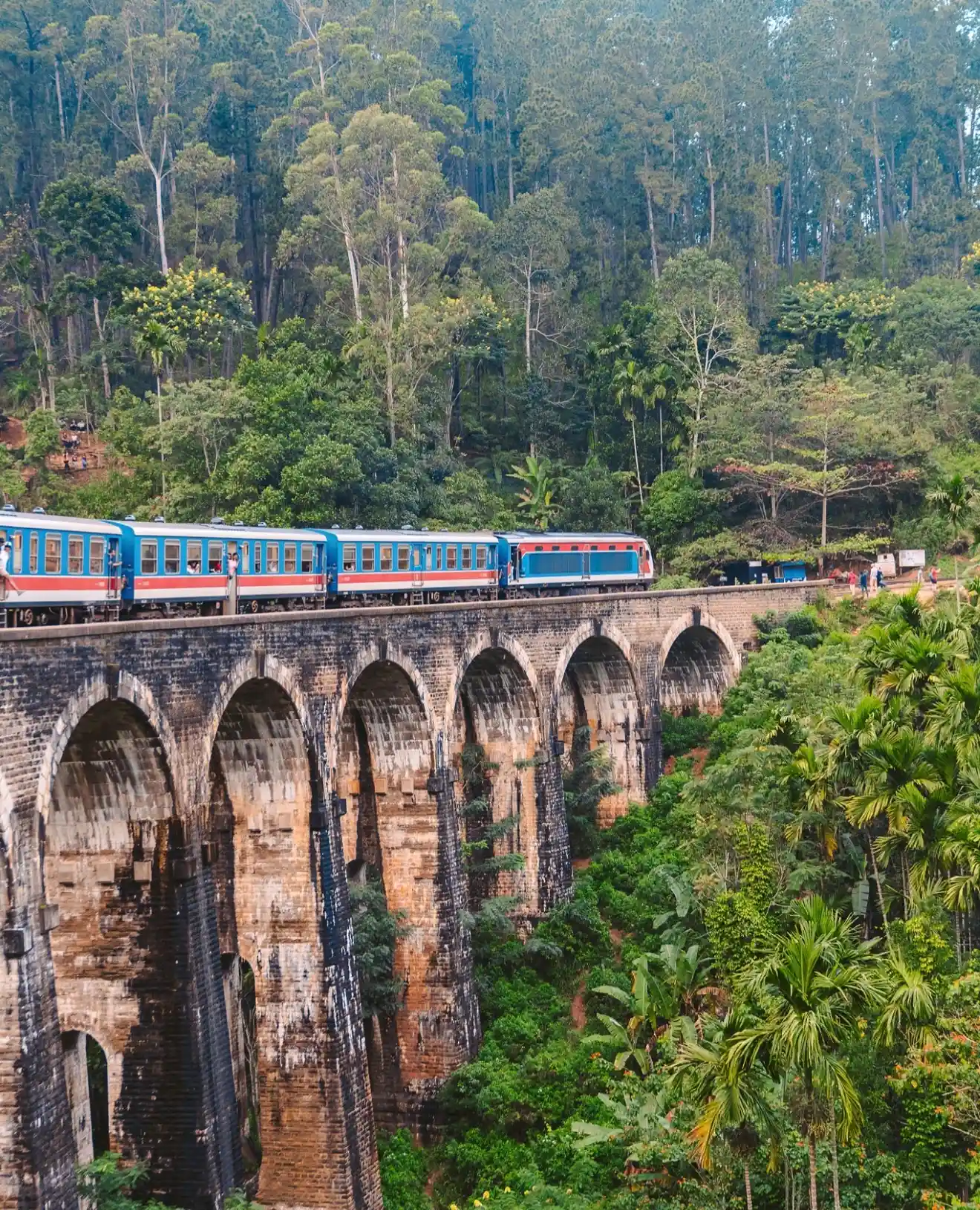
Discover Nine Arch Bridge, one of Sri Lanka’s most beautiful railway landmarks and an essential attraction in the picturesque mountain town of Ella. Surrounded by lush forests, tea-covered hills and a deep green valley, this historic bridge is famous for its elegant stone-and-brick arches and the trains that travel across it.
Built during the British colonial period, Nine Arch Bridge is an extraordinary example of railway engineering. Its graceful curved structure connects two hillsides, creating one of the most recognisable scenes in Sri Lanka’s Hill Country.
Unlike an abandoned monument, Nine Arch Bridge remains part of Sri Lanka’s railway network. Watching a train cross the viaduct is a memorable experience, but the surrounding scenery and impressive architecture make the bridge worth visiting even without a train.
This complete visitor guide explains how to reach Nine Arch Bridge from Ella, where to find the best viewpoints, how to check train times, when to visit, what to expect from the walk and how to explore the area safely.
Location: Between Ella and Demodara, Badulla District, Uva Province
Best for: Railway heritage, scenic photography, nature and walking
Time needed: Approximately 1.5–2.5 hours, including walking and viewing time
Walking difficulty: Easy to moderate, depending on the access path
Best time: Early morning for cooler weather and softer light
Entrance fee: No general admission ticket for the public viewing area
Railway status: Active railway line
Train information: Check current services with Sri Lanka Railways
Access: Established walking paths or tuk-tuk followed by a short walk
Important: Remain clear of the railway tracks and approaching trains
Nine arches above emerald tea hills
Discover Nine Arch Bridge in Ella
Nine Arch Bridge is one of the most photographed attractions in Sri Lanka’s central highlands, combining historic railway architecture with the natural beauty of Ella’s mountain landscape.
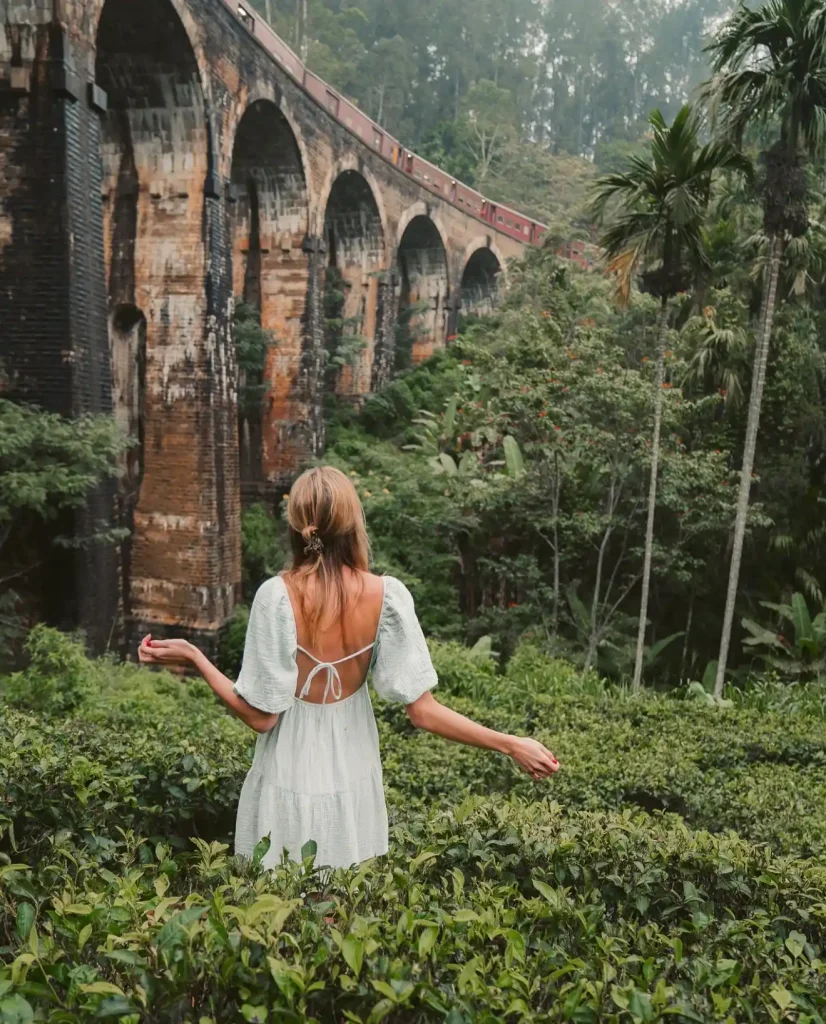
Photography: @its.me.tini/ Instagram
The bridge stretches across a deep valley surrounded by dense vegetation, tea plantations and steep hillsides. Its distinctive curved alignment and nine substantial arches create a striking architectural feature within the countryside.
When a train passes across the bridge, the combination of movement, railway heritage and tropical scenery creates an unforgettable sight.
However, the experience is about more than waiting for a train. Visitors can appreciate the bridge’s craftsmanship, explore suitable viewpoints and enjoy the surrounding landscape.
For international travellers visiting Ella, Nine Arch Bridge provides an excellent opportunity to experience Sri Lanka’s historic railway heritage without undertaking a long mountain hike.
Why Nine Arch Bridge Is Famous
Nine Arch Bridge is famous for its impressive architecture, distinctive curved railway alignment and spectacular natural setting.
The structure has nine large arches supporting the railway across a valley between Ella and Demodara.
Its construction during the early twentieth century represents an important period in the development of Sri Lanka’s railway network.
What makes the bridge particularly remarkable is the way its architecture blends into the surrounding hills and vegetation.
The strong geometric shape of the arches contrasts beautifully with the irregular landscape of trees, tea bushes and mountain slopes.
The arrival of a train adds movement and scale to the scene, highlighting the continued importance of this historic railway structure.
The History of Nine Arch Bridge
Nine Arch Bridge was constructed during the British colonial period in Sri Lanka, when the railway network was expanding through the central highlands.
The mountainous terrain presented significant engineering challenges, requiring bridges, tunnels and carefully planned railway curves to connect settlements across the region.
The bridge dates to the early 1920s and reflects the railway engineering of Sri Lanka’s British colonial period..
Its design makes extensive use of traditional masonry construction rather than the large steel frameworks found on many railway bridges.
The completed viaduct became part of the railway connection towards Badulla and continues to demonstrate the engineering achievements of that period.
Today, the bridge is valued both as functioning railway infrastructure and as an important landmark within Sri Lanka’s cultural and tourism landscape.
How Was Nine Arch Bridge Built?
Nine Arch Bridge is particularly celebrated for its masonry construction and elegant series of arches.
The structure was built using materials including stone, brick and cement, creating a substantial viaduct capable of supporting railway traffic across the valley.
Its design relies on the strength and arrangement of the arches to transfer the weight of the railway and passing trains towards the foundations.
The curved alignment adds to the bridge’s distinctive appearance while accommodating the railway’s route through the mountainous terrain.
For visitors interested in engineering, the most impressive perspective is often from below the structure, where the height and repeated arch shapes are easier to appreciate.
The bridge demonstrates how careful engineering could overcome difficult geography while producing an architectural landmark of lasting beauty.
Why Does the Bridge Have Nine Arches?
The bridge takes its familiar name from the nine large arches supporting the railway across the valley.
These openings create the structure’s distinctive repeated pattern and allow it to span the uneven landscape below.
From a suitable viewpoint, the arches appear to follow the curve of the railway, creating a particularly attractive architectural composition.
The number and arrangement of the arches help make the bridge instantly recognisable in photographs.
When a train crosses above them, visitors can appreciate both the scale of the structure and the engineering required to carry railway traffic through Sri Lanka’s Hill Country.
Where Is Nine Arch Bridge Located?
Nine Arch Bridge is located in the Ella–Demodara area of Badulla District, within Sri Lanka’s Uva Province.
The bridge stands on the Main Line between Ella and Demodara railway stations, east of central Ella.
Its position within a green valley gives it a scenic character quite different from railway bridges found in towns or cities.
Forested hillsides and tea-growing landscapes surround the viaduct, contributing to its peaceful appearance away from the busiest streets of Ella.
The bridge is accessible from several walking approaches, including paths from the town and nearby roads.
Travellers can reach the area on foot or use a tuk-tuk to reduce the distance before continuing along an established path.
How to Get to Nine Arch Bridge from Ella Town
Walking from Ella town is one of the most popular ways to reach Nine Arch Bridge.
Several established approaches pass through local roads, wooded sections and hillside paths towards the valley.
Depending on your accommodation, route and walking speed, the journey commonly takes around 30–45 minutes each way.
Some paths are relatively straightforward, while others involve slopes, uneven surfaces or sections that become muddy after rainfall.
For the safest experience, choose an established public walking path rather than following the operating railway line.
Use a current map and follow local access signs, as footpaths and property boundaries can change.
Walking to Nine Arch Bridge Through the Forest
One of the attractions of visiting Nine Arch Bridge is the walk through Ella’s green hillside environment.
Established forest approaches pass through areas of tall trees and dense vegetation before reaching viewpoints overlooking the railway valley.
The shaded surroundings can make the walk particularly pleasant in the morning.
Some paths contain exposed roots, stones and slopes that require attention, especially when the ground is wet.
The forest setting also offers opportunities to appreciate the natural landscape before arriving at the bridge.
Wear comfortable walking shoes with reliable grip and remain on recognised paths.
Do not take shortcuts through steep vegetation or onto the railway tracks.
Reaching Nine Arch Bridge from Passara Road
Another practical way to approach Nine Arch Bridge is from the Passara Road side of Ella.
Visitors can use local roads and established walking paths leading towards the bridge area.
This approach can be convenient for travellers staying east of Ella town or arriving by tuk-tuk.
Some routes involve a downhill walk through wooded surroundings before reaching the viewing area.
The precise access point depends on your starting location and the public paths currently available.
Follow recognised signs and avoid entering private gardens or accommodation grounds without permission.
Remember that a downhill approach also means an uphill return, which can feel more demanding in warm weather.
Visiting Nine Arch Bridge by Tuk-Tuk
A tuk-tuk is a convenient option for travellers who prefer to avoid walking the entire distance from Ella town.
Local drivers are familiar with the general bridge area and can usually take passengers to an appropriate road access point.
However, vehicle access does not normally eliminate the need for some walking.
The final approach may involve steps, uneven paths or a short descent towards the valley.
Before departing, ask your driver where you will be dropped off and how far you will need to walk.
If arranging a return journey, agree on the pickup point and waiting arrangements.
Always agree the tuk-tuk or driver fare before travelling.
Can You Walk Along the Railway Tracks?
Nine Arch Bridge remains part of an active railway, and the tracks must be treated as operating transport infrastructure rather than a pedestrian walking route.
Although some visitors use railway-side approaches, walking on the tracks or through tunnels creates serious safety risks.
Trains can appear around bends with limited warning, and narrow railway sections may offer little room to move away.
Do not use the track alignment as a shortcut between Ella and the bridge.
Instead, use recognised off-track walking paths and designated visitor approaches.
Follow all railway signs, barriers and instructions from staff.
The surrounding hillsides provide excellent viewpoints without requiring visitors to walk on the railway.
How Long Should You Spend at Nine Arch Bridge?
For most travellers, allowing approximately 1.5–2.5 hours is a comfortable choice.
This provides time to reach the bridge area, explore a suitable viewpoint, appreciate the scenery and return to Ella without rushing.
Visitors particularly interested in railway photography may prefer additional time if they are hoping to see a train cross.
However, railway services can be delayed or altered, so a longer wait does not guarantee a train sighting.
The bridge and surrounding valley are attractive even when no train is passing.
A relaxed visit allows time to appreciate the engineering and landscape rather than concentrating exclusively on one photograph.
Is Nine Arch Bridge Free to Visit?
There is generally no standard entrance ticket for visiting the public viewing area around Nine Arch Bridge.
Visitors can appreciate the bridge and its surroundings from suitable public access points without purchasing an attraction ticket.
However, some nearby cafés, private viewpoints or parking areas may charge for services.
These charges are separate from general access to the bridge area.
If a viewpoint is located on privately managed land, respect the owner’s access arrangements and any clearly displayed prices.
Do not enter tea plantations, residential gardens or private terraces without permission.
Does Nine Arch Bridge Have Opening Hours?
Nine Arch Bridge is a working railway structure rather than a conventional attraction with a ticket office and scheduled visiting sessions.
For ordinary sightseeing, daylight is the most suitable time to explore the surrounding viewpoints.
Walking paths may become difficult after dark because of uneven ground, poor visibility and steep sections.
Visitors should also avoid entering railway property or restricted areas at any time.
Early morning and late afternoon are particularly attractive for natural light, but safe access depends on the chosen path and local conditions.
What Time Do Trains Cross Nine Arch Bridge?
Watching a train cross Nine Arch Bridge is one of the area’s most memorable experiences.
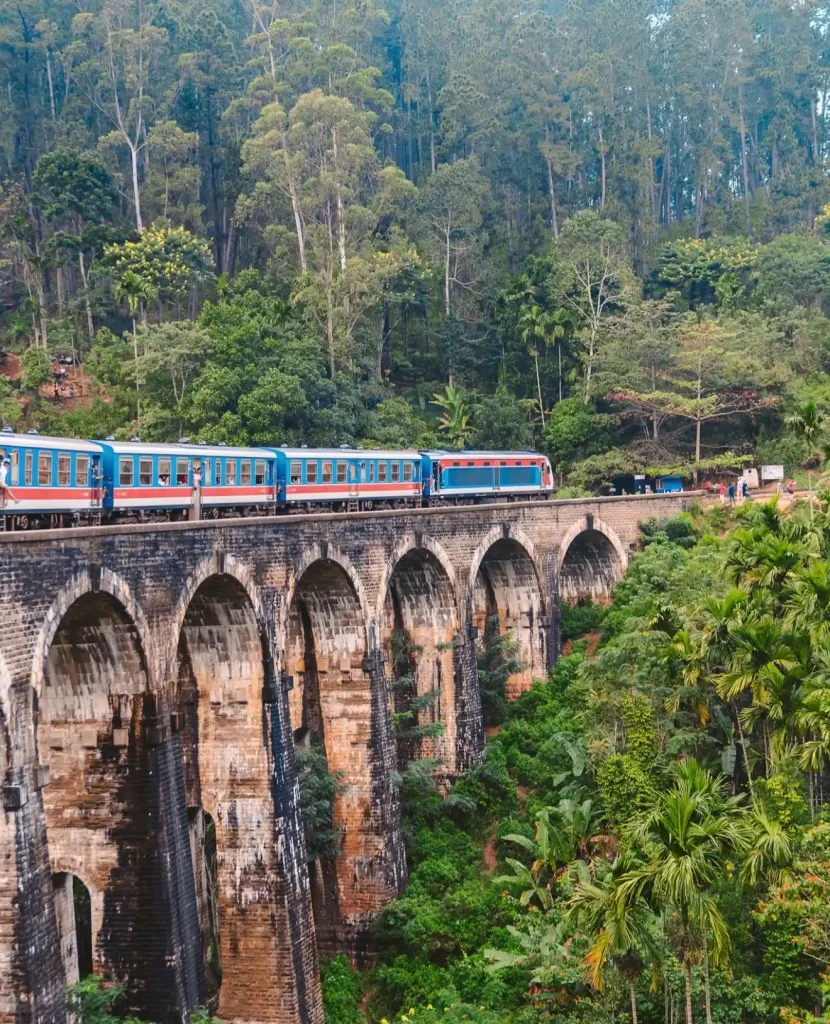
Photography: @its.me.tini/ Instagram
However, exact crossing times depend on the current Sri Lanka Railways timetable and actual train operations.
Services can be delayed, rescheduled or temporarily affected by engineering work and weather.
For current information, check the Main Line timetable published by Sri Lanka Railways and confirm relevant services at Ella or Demodara railway station.
The bridge lies between these two stations, so trains travelling through this section may cross the viaduct shortly before or after their scheduled station stops.
Allow a reasonable waiting margin and select your viewpoint before the train approaches.
Official timetable: Sri Lanka Railways.
How to See a Train Crossing the Bridge
The most enjoyable way to watch a train cross Nine Arch Bridge is from a safe hillside or valley viewpoint.
These positions allow visitors to see the train moving across the curved viaduct while keeping completely clear of the operating railway.
From a slightly elevated position, the train can be photographed with the bridge’s arches and surrounding greenery visible together.
From below, the train appears above the repeated arches, emphasising the structure’s height.
Choose a stable location with enough room to remain safely away from the railway.
Do not stand on the tracks, lean over the bridge or attempt to change positions as a train approaches.
The best train photographs are often taken away from the railway itself.
Why Train Times Can Change
Railway timetables are designed to transport passengers, not to provide fixed photography sessions at tourist attractions.
Train movements may be affected by delays, operational changes, maintenance and weather conditions.
Railway restoration work can also influence the number and timing of services operating along particular sections.
This is particularly relevant in Sri Lanka’s Hill Country, where challenging terrain and heavy rainfall can affect railway infrastructure.
Visitors should use current railway information rather than relying on old social media posts or outdated train-time lists.
Even after checking the timetable, expect some variation in the actual crossing time.
Best Time of Day to Visit Nine Arch Bridge
Early morning is generally the best time for a comfortable visit to Nine Arch Bridge.
The temperature is often cooler, the walking paths can be quieter and the soft natural light is particularly attractive for landscape photography.
Morning mist may also create beautiful atmospheric conditions around the valley.
Late afternoon offers another opportunity for scenic photographs, with warmer colours across the surrounding hillsides.
However, visitor numbers can increase during popular periods, and returning along woodland paths becomes less convenient as daylight fades.
Midday visits are possible, although strong sunlight can produce harsher shadows and make the walking approaches warmer.
Visiting Nine Arch Bridge in the Morning
The bridge has a particularly attractive atmosphere in the early morning.
Cooler temperatures make walking more comfortable, while the light gradually reveals the surrounding vegetation and the shape of the arches.
On some mornings, mist settles over the valley, creating an atmospheric backdrop for photography.
The softer light can also help capture detail in both the bridge’s masonry and the surrounding greenery.
Visitors interested in quiet scenery may enjoy this period even when no train is scheduled to cross.
Arriving early also provides more flexibility to choose a comfortable viewpoint before busier groups reach the area.
Late Afternoon at Nine Arch Bridge
Late afternoon offers attractive light across Ella’s hillsides and the railway valley.
The warmer colours can make the bridge and surrounding vegetation particularly photogenic.
However, changing shadows may affect some photographic angles, depending on the position of the sun and the chosen viewpoint.
The area can also be busier when visitors arrive after exploring other attractions around Ella.
When visiting late in the day, allow enough daylight for the return walk.
Forest paths and uneven ground can become difficult to negotiate when visibility decreases.
Weather and Seasonal Conditions
Nine Arch Bridge can be visited throughout the year, but weather conditions affect both the scenery and the comfort of the walking routes.
Rainfall keeps the surrounding hillsides and vegetation beautifully green.
Mist and low cloud can create atmospheric views, particularly in the morning.
However, heavy rain may make forest paths muddy, steps slippery and steep ground more difficult to negotiate.
Thick mist can also reduce visibility across the valley.
Wear suitable footwear and allow additional time when paths are wet.
During severe weather, avoid exposed slopes, unstable ground and any area restricted by local authorities.
The Best Viewpoints at Nine Arch Bridge
One of the greatest advantages of Nine Arch Bridge is the variety of viewpoints available around the valley.
Different positions reveal different aspects of the structure, from the impressive height of the arches to the sweeping curve of the railway.
Some viewpoints sit below the bridge, while others occupy surrounding hillsides.
Each perspective creates a different photographic composition.
For visitors, the best viewpoint is one that provides a clear view while remaining securely separated from the railway.
Choose an established path or public viewing area rather than creating shortcuts through tea fields or climbing onto unstable slopes.
Viewing Nine Arch Bridge from Below
The lower valley provides one of the most impressive perspectives of Nine Arch Bridge.
From below, visitors can appreciate the height of the viaduct and the repeated arches supporting the railway.
The structure appears particularly dramatic when framed by the surrounding greenery.
If a train passes, it travels above the arches, helping reveal the scale of the engineering.
This perspective is ideal for wide-angle photography and for appreciating the relationship between architecture and landscape.
Use established access paths and avoid unstable slopes or restricted railway areas.
Hillside Viewpoints Around the Bridge
Hillside viewpoints offer the classic panoramic image of Nine Arch Bridge surrounded by forest and tea-country scenery.
From an elevated position, the bridge’s curved alignment becomes especially apparent.
The surrounding vegetation provides a natural frame, while the railway disappears into the hills at either end.
Some hillside viewing areas are associated with local cafés or privately managed land.
Where charges or purchase requirements apply, respect the arrangements displayed by the business.
A slightly higher viewpoint can be particularly attractive when photographing a train moving across the bridge.
Viewing the Bridge from Nearby Cafés
Several small cafés and refreshment businesses operate within the wider Nine Arch Bridge area.
Some provide elevated seating with views towards the railway and surrounding valley.
These can be comfortable places to appreciate the scenery, particularly during warmer weather.
Facilities, opening hours and seating arrangements vary between businesses.
Before using a private terrace, check whether visitors are expected to purchase food or drinks.
Supporting local businesses is a pleasant part of exploring the area, provided their access arrangements are respected.
Is It Safe to Stand on Nine Arch Bridge?
Nine Arch Bridge is an active railway structure and must not be treated as an ordinary pedestrian viewing platform.
Standing, sitting or posing on the railway tracks creates a serious risk of being struck by a train.
The bridge’s curved alignment and nearby railway approaches can limit visibility.
A train may appear with less warning than visitors expect.
Do not rely on hearing a horn or assuming that trains move slowly enough for you to leave the tracks at the last moment.
The safest way to experience the bridge is to remain on established off-track visitor paths and viewpoints.
Follow all railway signs and instructions from authorised personnel.
Railway Safety for Visitors
Because Nine Arch Bridge remains part of Sri Lanka’s railway network, visitors should maintain awareness of railway activity throughout their visit.
Never sit on railway lines, lie between the tracks or stand in the path of an approaching train.
Do not enter nearby railway tunnels as part of a sightseeing walk.
Keep children away from the railway and remove headphones when walking near railway property.
Do not climb the bridge parapets or stand near steep drops for photographs.
Stay within appropriate viewing areas, and never cross barriers or ignore instructions from railway staff.
The impressive photographs available from the surrounding valley make risky track-level poses entirely unnecessary.
Photography Tips for Nine Arch Bridge
Nine Arch Bridge is one of Ella’s most rewarding destinations for landscape photography.
The combination of historic architecture, railway movement and lush vegetation provides opportunities for a wide range of compositions.
A wide-angle lens works particularly well when photographing the full structure and surrounding landscape.
From the hillside, the curve of the bridge can guide the viewer’s eye through the image.
From below, the arches become the dominant feature, emphasising the height and geometry of the viaduct.
Use the surrounding trees and tea-covered slopes as natural framing elements.
Above all, choose a stable viewpoint away from the active railway.
Photographing a Train Crossing Nine Arch Bridge
A passing train creates one of the most recognisable photographic scenes in Sri Lanka.
To capture the moment safely, choose your viewing position before the train is expected.
A hillside angle can show the train following the curve of the viaduct, while a lower position highlights the train crossing above the arches.
Use a faster shutter speed if you want to keep the moving train sharp.
Continuous shooting can help capture different positions as the train travels across the bridge.
Keep your camera ready, but do not move closer to the railway as the train approaches.
A photograph showing the whole train within the surrounding landscape is often more impressive than a risky close-up from the tracks.
Smartphone Photography at Nine Arch Bridge
Modern smartphones can capture excellent photographs at Nine Arch Bridge, particularly from elevated viewpoints.
Use the main camera for balanced detail and a wide-angle setting when you want to include the surrounding valley.
A moderate zoom can help make the train and bridge more prominent within the frame.
If photographing a moving train, use burst mode or record a short video from a secure position.
Morning light often produces attractive colours in the surrounding vegetation.
Keep your phone safely secured while walking on uneven trails, and avoid stepping backwards while concentrating on the screen.
Drone Photography Near Nine Arch Bridge
Drone operations in Sri Lanka are regulated by the Civil Aviation Authority of Sri Lanka.
Visitors must also consider the presence of active railway infrastructure, nearby private property and other people using the viewpoints.
Flying near moving trains or crowded viewing areas can create safety risks.
Do not assume that drone use is permitted simply because the bridge is surrounded by open countryside.
Obtain any required aviation and site permissions before operating a drone.
Official drone information: Civil Aviation Authority of Sri Lanka.
Nine Arch Bridge and Little Adam’s Peak
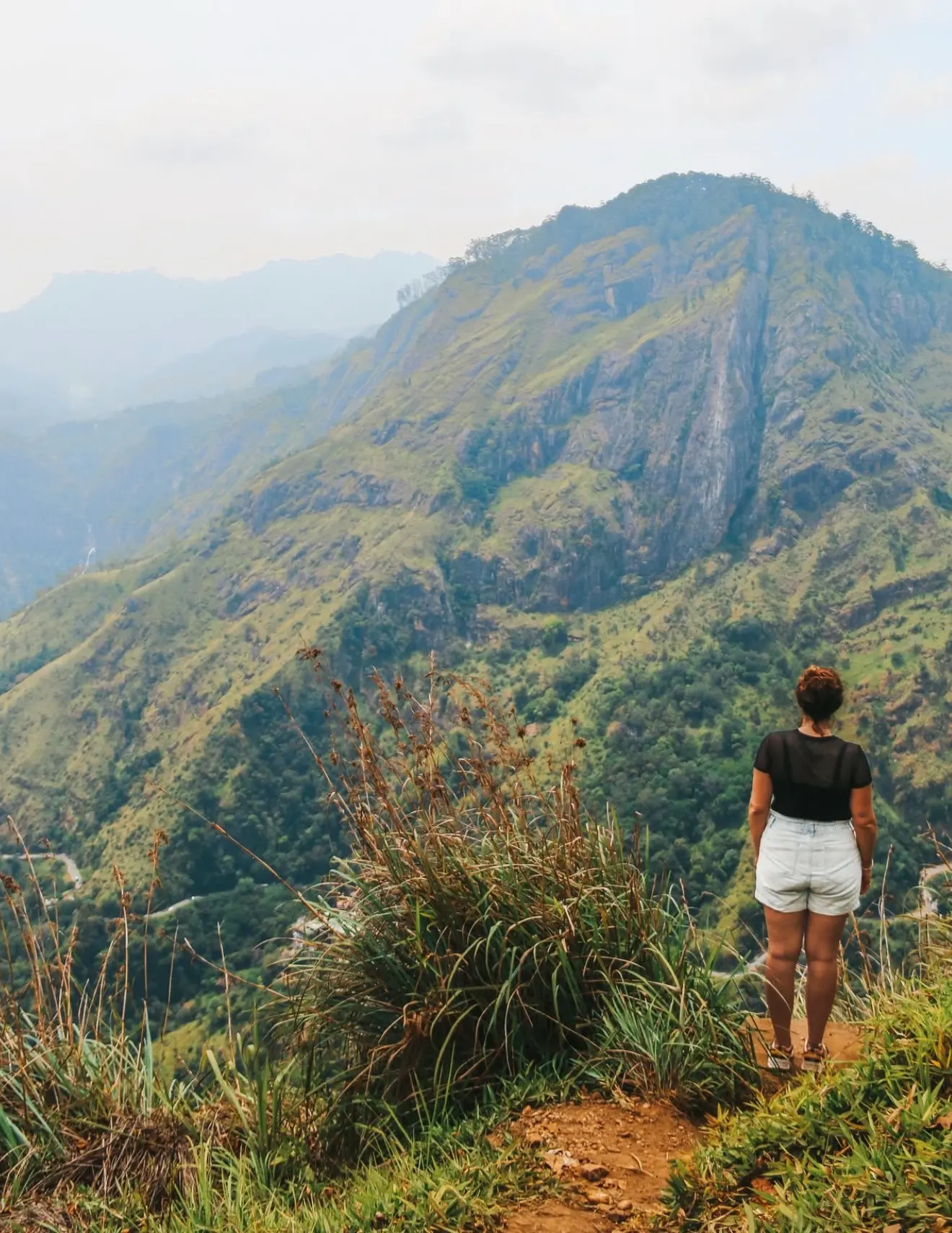
Little Adam’s Peak is another well-known attraction in Ella, offering open mountain scenery and views across the surrounding highlands.
Although both attractions are associated with walking and photography, their experiences are different.
Nine Arch Bridge focuses on historic railway architecture within a forested valley.
Little Adam’s Peak is a hillside viewpoint where visitors can enjoy broader mountain landscapes.
The two attractions demonstrate the variety of scenery found around Ella, from railway engineering to natural mountain panoramas.
Visitors interested in both should consider their walking ability, weather conditions and preferred viewpoints when exploring the wider area.
Nine Arch Bridge vs Demodara Railway Loop
Nine Arch Bridge and Demodara Railway Loop are two different engineering attractions associated with the same wider railway landscape.
Nine Arch Bridge is the famous curved viaduct carrying the railway across a deep valley between Ella and Demodara.
Demodara Railway Loop is a distinctive railway alignment near Demodara station, where the line loops around the hillside and passes beneath itself through a tunnel.
Both demonstrate the engineering solutions required to build railways through Sri Lanka’s mountainous terrain.
Nine Arch Bridge is generally the more recognisable photography attraction, while Demodara Loop is particularly interesting for railway enthusiasts.
What Should You Wear?
Comfortable walking clothes and suitable footwear are ideal for visiting Nine Arch Bridge.
The walking approaches can contain uneven stones, roots, steps and muddy sections after rainfall.
Trainers or walking shoes with reliable grip are therefore preferable to smooth flip-flops.
Lightweight clothing is usually comfortable during the day, although early mornings in Ella can feel cooler.
A light waterproof layer is useful during unsettled weather.
Carry a small backpack rather than a large shoulder bag if you will be walking along forest paths.
What Should You Bring?
A small day bag containing essential items is sufficient for most visits to Nine Arch Bridge.
- Comfortable walking shoes with reliable grip.
- Drinking water.
- A camera or charged smartphone.
- Sun protection.
- A lightweight waterproof jacket.
- A small backpack for personal belongings.
- Sri Lankan rupee cash for transport or refreshments.
- A reusable bag for any rubbish.
Keep equipment manageable, especially when using narrow or uneven hillside paths.
If you are planning to photograph a train, make sure your camera is ready before reaching your chosen viewing position.
Visiting Nine Arch Bridge with Children
Nine Arch Bridge can be an enjoyable experience for families, particularly children interested in trains and outdoor exploration.
The sight of a train crossing the historic arches can be particularly memorable.
However, close supervision is essential because of the operating railway, steep valley slopes and uneven walking paths.
Keep children away from the tracks and choose a stable viewpoint with sufficient room for everyone to stand safely.
A tuk-tuk may help reduce the walking distance for families with younger children.
Do not allow children to climb the bridge walls or move towards the railway for photographs.
Accessibility and Mobility Considerations
Nine Arch Bridge is located within a natural hillside environment rather than a purpose-built accessible attraction.
Some approaches involve uneven paths, slopes, steps and muddy ground.
This can make reaching certain viewpoints difficult for visitors with reduced mobility.
Travellers who require assistance should ask their accommodation about the most suitable public access point and the amount of walking involved.
A tuk-tuk may reduce the distance, but it does not guarantee level access to the best viewing areas.
There is no need to reach the bridge’s railway level to appreciate the structure.
Responsible Visiting at Nine Arch Bridge
Nine Arch Bridge is an important attraction within a living rural landscape.
The surrounding tea fields, local paths and nearby properties are used by residents and businesses.
Stay on established visitor routes and avoid trampling tea plants or entering private land without permission.
Do not leave plastic bottles, food packaging or other rubbish in the valley.
Respect railway workers, local residents and anyone carrying out normal activities around the bridge.
If using a private viewpoint or café terrace, follow the business’s access arrangements.
Responsible behaviour helps preserve both the railway heritage and the natural scenery that make the location special.
Common Mistakes to Avoid
One of the most common mistakes is relying on an old train timetable and expecting a crossing at an exact minute.
Another is standing on the active railway tracks for photographs, particularly when large groups are gathered near the bridge.
Visitors should also avoid entering private tea plantations without permission or using steep shortcuts through vegetation.
After rainfall, unsuitable footwear can make forest approaches slippery and uncomfortable.
Finally, do not judge the entire experience by whether a train appears.
The bridge’s architecture, surrounding landscape and peaceful valley setting are worthwhile attractions in their own right.
Is Nine Arch Bridge Worth Visiting?
Absolutely. Nine Arch Bridge is one of Ella’s most memorable attractions and an outstanding example of Sri Lanka’s historic railway architecture.
Its nine arches, sweeping railway curve and lush green valley create a beautiful scene unlike almost anywhere else in the country.
Watching a train cross the bridge adds a memorable sense of movement and highlights the structure’s continued role in Sri Lanka’s railway network.
However, the attraction remains impressive even without a passing train.
The surrounding forest paths, hillside viewpoints and historic masonry make it particularly rewarding for travellers interested in photography, engineering and nature.
For international visitors exploring Sri Lanka’s Hill Country, Nine Arch Bridge offers an unforgettable combination of history, landscape and living railway heritage.
Choose a safe viewpoint, allow time to appreciate the surroundings and experience one of Ella’s most iconic landmarks without placing yourself or others at risk.