Discover Adisham Bungalow, a historic English-style country house surrounded by misty forests and beautiful gardens in the hills of Haputale. Originally built as a private residence during British colonial rule, this remarkable property is now home to a Benedictine monastery.
With its distinctive stone architecture, peaceful surroundings and fascinating history, Adisham offers visitors a memorable cultural experience in Sri Lanka’s Hill Country.
Location: Approximately 3 km from Haputale, beside Thangamale Sanctuary
Best for: History, architecture, gardens and cultural experiences
Time needed: 1–2 hours
Public visiting days: Saturdays, Sundays and public holidays
Visiting hours: 9:00 am–12:00 noon and 3:00 pm–5:00 pm
Stone walls among misty mountain gardens
Why Visit Adisham Bungalow?
Adisham Bungalow is one of Haputale’s most distinctive historical attractions, combining traditional English country-house architecture with the natural beauty of Sri Lanka’s highlands.
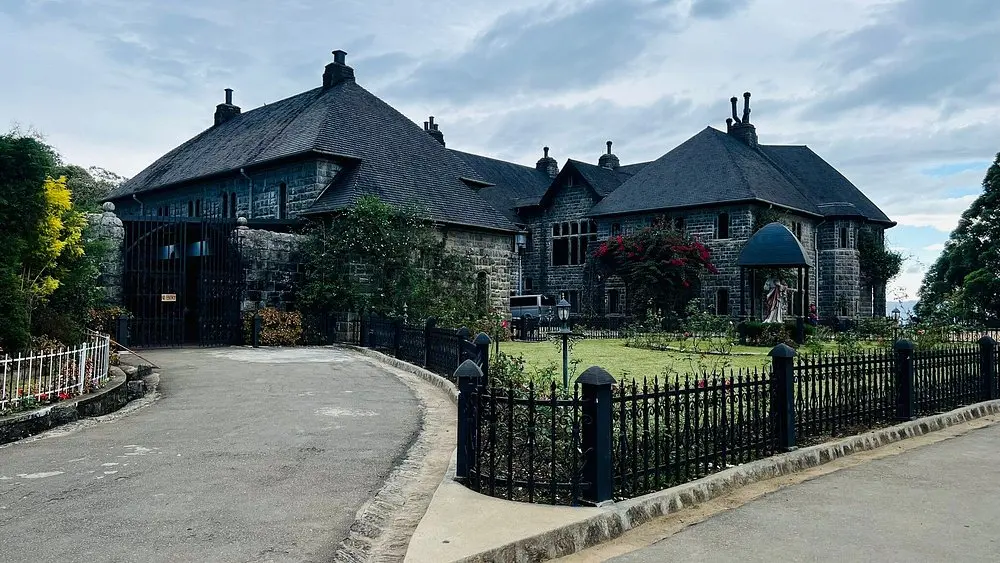
Surrounded by carefully maintained gardens and forested hills, the property offers a peaceful atmosphere away from the busier tourist attractions.
Visitors can admire the building’s Tudor-inspired design, explore selected historic interiors and learn how a luxurious colonial residence became a place of religious contemplation.
The surrounding gardens and picturesque mountain setting make Adisham particularly appealing to travellers interested in architecture, photography and local heritage.
The History of Adisham Bungalow
Adisham Hall was built for Sir Thomas Lister Villiers, an English planter and businessman who became chairman of George Steuart & Company, one of Sri Lanka’s oldest commercial enterprises.
Construction began in 1927, and the residence was completed in 1931. Villiers selected Haputale for its cool climate, spectacular mountain scenery and secluded location.
He named the property Adisham after the village in Kent, England, where he was born.
The residence reflected the wealth and lifestyle of the colonial plantation era, when successful planters and businessmen established grand country houses in Sri Lanka’s highlands.
Villiers lived at Adisham until his departure from Ceylon in 1949. The property subsequently changed ownership before beginning a new chapter as a religious institution.
Tudor Architecture and Historic Interiors
Adisham’s appearance draws inspiration from traditional Tudor and Jacobean country houses in England.
Designed by R. Booth and F. Webster, the mansion features locally quarried stone walls, steep roofs, narrow windows, prominent chimneys and extensive timberwork.
Its architectural design was influenced by Leeds Castle in Kent, creating a distinctive English country-house appearance against the surrounding Sri Lankan mountains.
Inside, polished timber panelling, period furniture, fireplaces and traditional fittings reflect the original character of the residence.
Selected rooms, including the former library and main sitting room, have historically been opened to visitors. These preserved interiors offer a glimpse into the lifestyle of the Villiers family during the early twentieth century.
Much of the original architectural character remains, making the building an important example of colonial-era residential design in Sri Lanka.
From Country House to Benedictine Monastery
Adisham entered a new period in its history when the Sylvestro Benedictine congregation acquired the property in 1961.
The former residence was transformed into St Benedict’s Monastery, which was formally consecrated in December 1962.
Today, the monastery remains home to a Benedictine religious community whose daily life centres on prayer, work and contemplation.
The monks maintain the property and its surrounding gardens while preserving the peaceful atmosphere associated with monastic life.
The monastery also serves as a place of religious formation, continuing a tradition that has shaped the property for more than six decades.
For visitors, this transformation adds a distinctive dimension to Adisham’s history, connecting its colonial architectural heritage with Sri Lanka’s living Christian traditions.
Gardens, Orchards and Monastery Produce
The landscaped gardens are among Adisham’s most attractive features.
Neatly maintained lawns, colourful flowers, mature trees and fruit orchards surround the stone mansion, creating an elegant contrast with the forested landscape beyond.
Haputale’s cool highland climate supports a variety of plants and fruit trees, contributing to the property’s distinctive garden atmosphere.
The Benedictine community continues a tradition of producing fruit preserves, including strawberry jam, orange marmalade and guava jelly.
These products are associated with the monastery’s gardens and orchards and are sold under the Adisham name.
Visitors can purchase available monastery products as souvenirs while supporting the community’s work.
Adisham and Thangamale Sanctuary
Adisham lies beside Thangamale Sanctuary, a protected forest area known for its highland vegetation, birdlife and scenic walking routes.
The surrounding woodland contributes to the property’s quiet atmosphere, with mist frequently drifting across the trees and gardens.
Travellers interested in nature can combine their cultural visit to Adisham with a walk through the wider Thangamale area.
The sanctuary offers opportunities to appreciate Haputale’s forest environment and observe birds along established routes.
Wear suitable walking shoes and remain on recognised paths when exploring the surrounding landscape.
How to Get to Adisham Bungalow
Adisham is situated approximately 3 kilometres from Haputale town, making it an accessible attraction for travellers staying in the area.
By Tuk-Tuk or Private Vehicle
A tuk-tuk is one of the most convenient ways to reach the monastery.
The journey follows a scenic highland road through wooded surroundings, with the final approach leading towards the historic property.
Agree on the fare with your driver before departing. Visitors can also arrange a return journey or include Adisham as part of a wider Haputale sightseeing excursion.
Walking from Haputale
Travellers who enjoy walking can reach Adisham on foot from Haputale.
The route passes through hilly terrain and forested surroundings, making it an enjoyable option in suitable weather.
Allow extra time for uphill sections, and carry drinking water and comfortable footwear.
Travelling Without a Car
Haputale is connected to other Hill Country destinations by train and bus.
Travellers arriving at Haputale Railway Station can use a local tuk-tuk to reach Adisham, making the attraction accessible without renting a car.
Opening Hours and Planning Your Visit
Public visiting is generally arranged on Saturdays, Sundays and public holidays.
The monastery’s published visiting periods are:
Morning: 9:00 am–12:00 noon
Afternoon: 3:00 pm–5:00 pm
Visitor access is limited to designated areas because Adisham remains an active religious institution.
Allow approximately one to two hours to appreciate the historic building, explore the gardens and enjoy the peaceful surroundings.
Morning visits are particularly pleasant for photography, with soft natural light and cooler temperatures.
Haputale’s weather can change quickly, so a light jacket or waterproof layer is useful throughout the year.
Visitor Etiquette and Photography
Adisham welcomes visitors into a property that continues to serve an important religious purpose.
Dress modestly, speak quietly and respect the peaceful atmosphere, particularly near the chapel and other religious spaces.
Remain within designated visitor areas and follow monastery staff instructions.
Photography opportunities are excellent around the exterior, where the stone architecture, landscaped gardens and surrounding trees provide beautiful compositions.
Indoor photography may be restricted. Respect displayed signs and avoid photographing monks, worshippers or monastery staff without permission.
Families visiting with children should also ensure that younger visitors respect the quiet environment and historic furnishings.
Accessibility and Visitor Comfort
Adisham is relatively compact compared with Haputale’s larger hiking attractions, although some garden paths and approaches involve slopes, steps and uneven surfaces.
Visitors with reduced mobility may find travelling directly to the property by vehicle more comfortable than walking from town.
Comfortable footwear is recommended for exploring the outdoor areas.
The cool mountain climate makes Adisham pleasant for sightseeing, but mist and rainfall can leave pathways damp and slippery.
Is Adisham Bungalow Worth Visiting?
Adisham Bungalow is a rewarding destination for travellers who appreciate history, architecture and peaceful natural surroundings.
Its striking English-style design, preserved interiors and beautifully maintained gardens offer a distinctive experience within Sri Lanka’s Hill Country.
The property’s continuing role as a Benedictine monastery gives the visit additional cultural and historical significance.
For travellers exploring Haputale, Adisham is an excellent opportunity to discover a quieter side of the region’s heritage while enjoying one of its most picturesque settings.