Discover Sithulpawwa Rock Temple, one of Sri Lanka’s remarkable ancient Buddhist monasteries, set among rocky hills and dry-zone forests in the wider Yala National Park region. Known for its hilltop white stupa, historic cave shelters, ancient inscriptions and peaceful religious atmosphere, Sithulpawwa offers an extraordinary combination of Buddhist heritage, archaeology and natural scenery.
This complete visitor guide explores the monastery’s history, its association with King Kavantissa, important religious monuments, temple etiquette, wildlife precautions, access from Tissamaharama and practical advice for international travellers.
Location: Yala region, Hambantota District, Southern Sri Lanka
Also known as: Sithulpawwa Rajamaha Viharaya, Chittalapabbata
Best for: Buddhist heritage, ancient archaeology, religious history and landscape photography
Distance: Approximately 24 km from Tissamaharama along the traditional temple road
Time needed: Around 2–3 hours at the temple, plus road travel
Best time: Early morning
Terrain: Rocky stairways, exposed stone surfaces and uneven paths
Dress code: Shoulders and knees covered; remove footwear in designated sacred areas
Important: Arrange transport and confirm temple-road access before travelling
Ancient Buddhist heritage above Yala’s forests
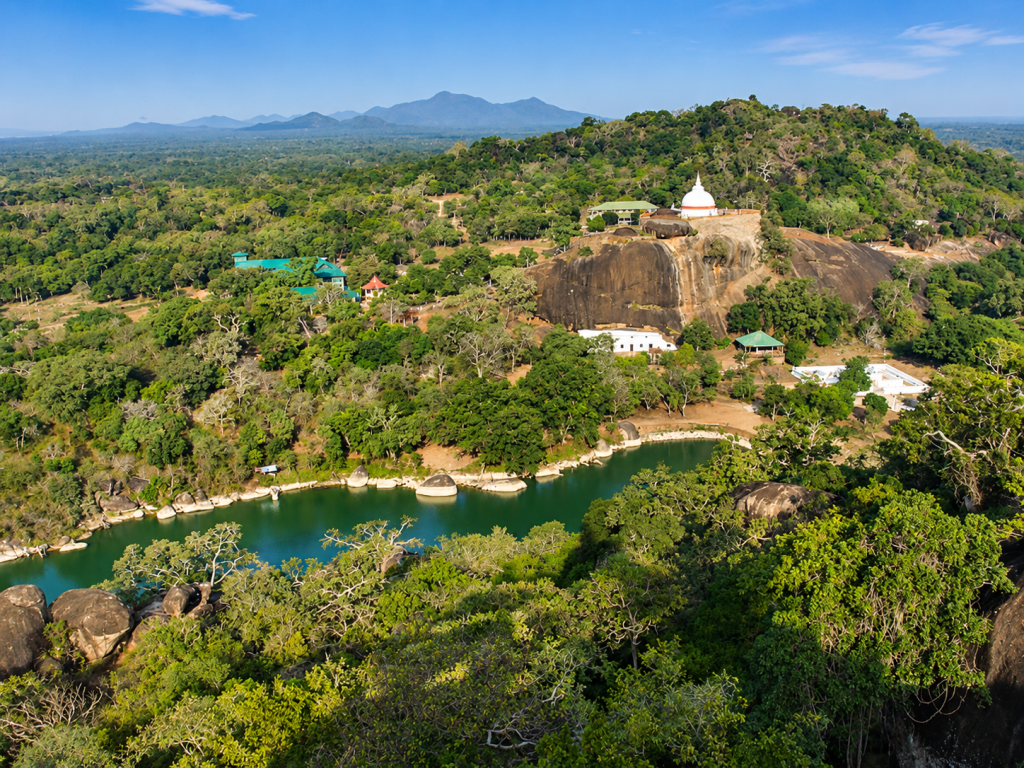
Photo: Gethmaperera / CC BY-SA 4.0 · Edited
Discover Sithulpawwa Rock Temple
Sithulpawwa Rock Temple is one of the most historically significant Buddhist sites in southern Sri Lanka, occupying a dramatic landscape of rocky outcrops and dry-zone forest near Yala National Park.
Unlike conventional temples built around a single shrine or enclosed courtyard, Sithulpawwa developed as an extensive monastic complex spread across several rocky hills.
Its archaeological landscape includes ancient stupas, natural cave shelters, inscriptions, religious sculptures and buildings associated with Buddhist worship and meditation.
One of its most recognisable features is the white stupa standing high above the surrounding forest, creating an impressive contrast against the rocky landscape and green vegetation below.
Beyond its striking setting, Sithulpawwa holds significant historical and religious importance.
Sithulpawwa was historically associated with a significant Buddhist monastic community and remains a place of religious devotion today.
For international travellers exploring the Yala region, it offers an opportunity to discover a different side of southern Sri Lanka’s heritage, beyond the wildlife for which the area is internationally famous.
Why Sithulpawwa Is Worth Visiting
Most visitors recognise Yala for its leopards, elephants, forests and wildlife safaris. Sithulpawwa introduces another remarkable dimension to the same region.
The temple reveals how ancient Buddhist communities established religious centres within remote natural landscapes, using rocky hills and caves as places of residence, meditation and worship.
The surviving monuments demonstrate the religious importance of southern Sri Lanka during the early historic period.
Visitors can appreciate ancient stone inscriptions, explore the setting of a longstanding Buddhist monastery and enjoy wide views across the surrounding forests.
Unlike a safari, where the focus is on finding wildlife, a visit to Sithulpawwa is primarily about understanding history, architecture and living religious traditions.
The combination of ancient cultural remains and natural scenery makes it one of the most distinctive heritage attractions in the wider Yala landscape.
The History of Sithulpawwa Monastery
Sithulpawwa has a history extending back to the early centuries of Buddhism in Sri Lanka.
The ancient monastery is associated with the kingdom of Ruhuna, an important political and religious centre in the south of the island.
Historical inscriptions and Buddhist traditions connect Sithulpawwa with King Kavantissa, who ruled the ancient Ruhuna region during the early historic period.
Royal support helped Buddhist monasteries develop into organised religious institutions, with facilities for worship, accommodation, meditation and the daily activities of monks.
Over time, Sithulpawwa became an important monastic centre, attracting religious patronage and developing a substantial collection of sacred structures.
The monastery’s surviving rock shelters, inscriptions and stupas provide evidence of this early Buddhist heritage.
King Kavantissa and the Ancient Ruhuna Kingdom
King Kavantissa is one of the important rulers associated with the early development of Buddhism in southern Sri Lanka.
He ruled the ancient kingdom of Ruhuna, a region that played a significant role in the island’s political and religious history.
King Kavantissa is also remembered as the father of King Dutugemunu, whose reign became closely associated with the great Buddhist monuments of Anuradhapura.
According to historical tradition, King Kavantissa supported the development of Buddhist religious institutions throughout Ruhuna.
Sithulpawwa is among the sites associated with this royal patronage.
The monastery’s connection with the ancient kingdom helps explain why a remote rocky landscape became an important centre of Buddhist religious life.
Why Is Sithulpawwa Also Known as Chittalapabbata?
Sithulpawwa is also known in ancient religious and historical sources as Chittalapabbata Vihara, with variations in the spelling of the name.
The name is associated with the monastery’s rocky mountain setting and longstanding Buddhist identity.
In historical references, Chittalapabbata appears as an important religious establishment within the southern region of Sri Lanka.
Its location among rocky hills was particularly suitable for monastic communities seeking quieter surroundings for meditation and religious practice.
Today, the names Sithulpawwa and Chittalapabbata preserve the connection between the active temple and its ancient monastic origins.
Sithulpawwa and Ancient Buddhist Meditation
Sithulpawwa is closely associated with the tradition of Buddhist meditation and monastic retreat.
Ancient Buddhist monks often used natural rock shelters and forest environments as places for contemplation and religious practice.
The rocky hills around Sithulpawwa offered relative isolation from major settlements, making the area well suited to a religious community.
Buddhist tradition remembers the monastery as a place where many monks pursued advanced spiritual practice, including arahantship, the state of liberation recognised within Buddhist teachings.
These traditions remain an important part of Sithulpawwa’s religious identity.
The physical remains of caves, stupas and monastic buildings also illustrate how the landscape supported a functioning community dedicated to Buddhist life.
The Main Sithulpawwa Rock and Stupa
The main rocky hill and its prominent white stupa are among the most memorable features of Sithulpawwa.
Rising above the surrounding dry-zone forest, the stupa forms a striking landmark that can be appreciated from different parts of the temple grounds.
The ascent towards the upper sacred area includes stone steps and exposed sections of rock.
As visitors gain height, the surrounding landscape opens into wide views across the forest canopy and rocky terrain.
The contrast between the white Buddhist monument and the natural setting is particularly impressive.
However, the upper terrace remains a sacred area used for religious devotion.
Visitors should move quietly, observe temple etiquette and avoid treating the stupa as simply a photography platform.
The Significance of Buddhist Stupas
A stupa is an important type of Buddhist religious monument, traditionally associated with sacred relics, religious commemoration and devotion.
Stupas have played a central role in Sri Lankan Buddhist architecture for more than two thousand years.
At Sithulpawwa, the stupas form part of a wider monastic landscape rather than standing as isolated monuments.
Their presence reflects the religious significance of the site and the patronage provided by earlier generations of rulers and devotees.
For Buddhist pilgrims, walking respectfully around a stupa and making offerings are familiar expressions of devotion.
International visitors can appreciate these monuments while recognising their continuing sacred purpose.
The Ancient Caves of Sithulpawwa
Natural rock shelters are among the most important archaeological features at Sithulpawwa.
These shelters were adapted for Buddhist monastic use during the early historic period.
Rock caves provided practical spaces for residence, meditation and protection from the elements.
Some were modified with features intended to make them more suitable for monks living within the complex.
The surviving shelters demonstrate how ancient religious communities made use of the natural landscape rather than relying entirely on large constructed buildings.
For visitors interested in archaeology, these quieter features provide valuable insight into the daily lives of early Buddhist monks.
Ancient Brahmi Inscriptions
Sithulpawwa is particularly important for its collection of ancient rock inscriptions.
Some inscriptions date to the early historic period and are written in forms of Brahmi script used in ancient Sri Lanka.
These records provide evidence of the monastery’s religious activity and the people who supported its development.
Inscriptions associated with cave shelters frequently record donations made for the use of Buddhist monks.
Such records are valuable because they offer historical evidence beyond the stories preserved in religious chronicles.
They help researchers understand patronage, language, religious institutions and aspects of society during the early development of Buddhism on the island.
Why the Rock Inscriptions Matter
Rock inscriptions are among the most useful sources for studying Sri Lanka’s ancient history.
While traditional chronicles preserve religious and royal accounts, inscriptions provide physical records created by people who lived during earlier periods.
At Sithulpawwa, these inscriptions help establish the site’s importance as an ancient Buddhist monastery.
They also provide evidence of donations and the relationships between monastic communities and their supporters.
Visitors should observe inscriptions from a respectful distance.
Never touch, trace, rub or apply water to inscriptions in an attempt to make the lettering more visible.
Even minor repeated contact can damage ancient carved surfaces.
Buddhist Image Houses and Sacred Sculptures
Beyond its prominent stupas and caves, Sithulpawwa contains remains associated with Buddhist image houses and religious sculpture.
Image houses are buildings or sacred spaces traditionally used to accommodate representations of the Buddha and other religious artwork.
The surviving features provide evidence of the artistic and devotional traditions that developed within the monastery.
They also demonstrate that Sithulpawwa was more than a collection of meditation caves.
It was a substantial religious institution with different spaces dedicated to worship and monastic life.
Visitors should remain within designated areas and avoid touching ancient sculptures or architectural fragments.
Ancient Paintings and Religious Artwork
Sithulpawwa is also associated with surviving Buddhist paintings and decorated religious spaces.
Ancient monastic sites often developed through successive periods, with religious artwork being repaired, renewed or modified over time.
The paintings and shrine features at Sithulpawwa reflect this longer history of religious use and artistic development.
These details are particularly interesting for travellers who enjoy Buddhist art and archaeology.
When entering a painted shrine or enclosed religious space, follow the photography instructions displayed at the site.
Flash photography and bright artificial lighting should not be used against delicate historic surfaces where prohibited.
Thissa Thera Chetiya and Religious Tradition
Buddhist tradition also associates Sithulpawwa with a monk known as Thissa Thera.
According to the religious account, he attained arahantship and was subsequently commemorated through a stupa known as Thissa Thera Chetiya.
This tradition contributes to the monastery’s identity as an important centre of Buddhist spiritual practice.
Stories associated with revered monks and sacred monuments are an important part of Sri Lanka’s pilgrimage culture.
They help explain why Buddhist devotees continue to regard Sithulpawwa as a significant religious destination.
Views Across the Yala Forest
One of the most distinctive aspects of Sithulpawwa is its elevated position above the surrounding Yala landscape.
From suitable viewpoints around the upper temple areas, visitors can appreciate wide expanses of dry-zone forest, rocky outcrops and natural vegetation.
The scenery offers a striking contrast to the more developed religious sites found in Sri Lanka’s major towns.
During the greener months, the vegetation can appear especially lush, while drier periods reveal a different character to the landscape.
The views also help explain why these rocky hills were attractive locations for ancient monastic communities seeking relative isolation.
Enjoy the scenery from established visitor areas rather than approaching exposed rock edges.
The Connection Between Sithulpawwa and Yala
Sithulpawwa lies within the wider landscape associated with Yala National Park, one of Sri Lanka’s most important wildlife regions.
Yala is internationally recognised for its dry-zone forests and wildlife, including elephants, leopards and numerous bird species.
However, the region also contains significant archaeological and religious heritage.
Sithulpawwa demonstrates how people used this natural landscape long before the modern development of national park tourism.
The monastery’s location illustrates the long relationship between religious life, ancient settlements and the environment of southern Sri Lanka.
Visiting the temple provides a cultural perspective on a region more commonly experienced through wildlife safaris.
Is Sithulpawwa a Safari Attraction?
Sithulpawwa is primarily a Buddhist temple and archaeological heritage site.
Although it stands within a landscape associated with wildlife, the purpose of visiting is to appreciate its religious monuments, history and natural setting.
A temple journey should not be treated as an informal wildlife safari.
The road may pass through areas where wild animals occur, but visitors should not attempt to search for or approach wildlife along the way.
National park safari activities are separately managed under the Department of Wildlife Conservation.
Respecting this distinction protects wildlife and preserves the religious atmosphere of Sithulpawwa.
Getting to Sithulpawwa from Tissamaharama
Tissamaharama is one of the most practical starting points for visiting Sithulpawwa.
The temple is reached through the wider Yala landscape, with the traditional access road extending approximately 24 kilometres from Tissamaharama.
For international travellers, arranging a private vehicle or local driver familiar with the temple road is generally the simplest option.
Road conditions differ from ordinary urban journeys and may include quieter stretches through forest and wildlife areas.
Weather, wildlife-management arrangements and temporary road restrictions can affect access.
Before travelling, confirm the recognised temple route with your accommodation, a knowledgeable local driver or the relevant authorities.
Agree the driver fare and return arrangements before travelling.
Visiting Sithulpawwa Without a Rental Car
International visitors do not need to rent a vehicle to explore Sithulpawwa.
Private transfers and locally arranged transport are practical options from Tissamaharama and accommodation in the wider Yala region.
Using a driver familiar with the area is particularly helpful because the temple lies away from the main tourist centres.
Confirm that the vehicle is suitable for the route and that the driver understands the current entrance and access arrangements.
Because the location is remote, the return journey should be arranged before leaving your accommodation.
Do not depend on finding a passing tuk-tuk or taxi near the temple after your visit.
Do You Need a Safari Jeep?
Visiting Sithulpawwa is different from booking a wildlife safari in Yala National Park.
The temple is an established pilgrimage destination with its own traditional access arrangements.
A standard Yala wildlife safari booking should not be treated as an automatic requirement for entering the temple.
However, roads passing through controlled wildlife areas are subject to the applicable rules of the Department of Wildlife Conservation.
Use a driver or transport provider familiar with the route and follow the relevant wildlife-area access requirements.
This ensures that the journey is arranged appropriately for a temple visit rather than a safari.
Wildlife Safety on the Temple Road
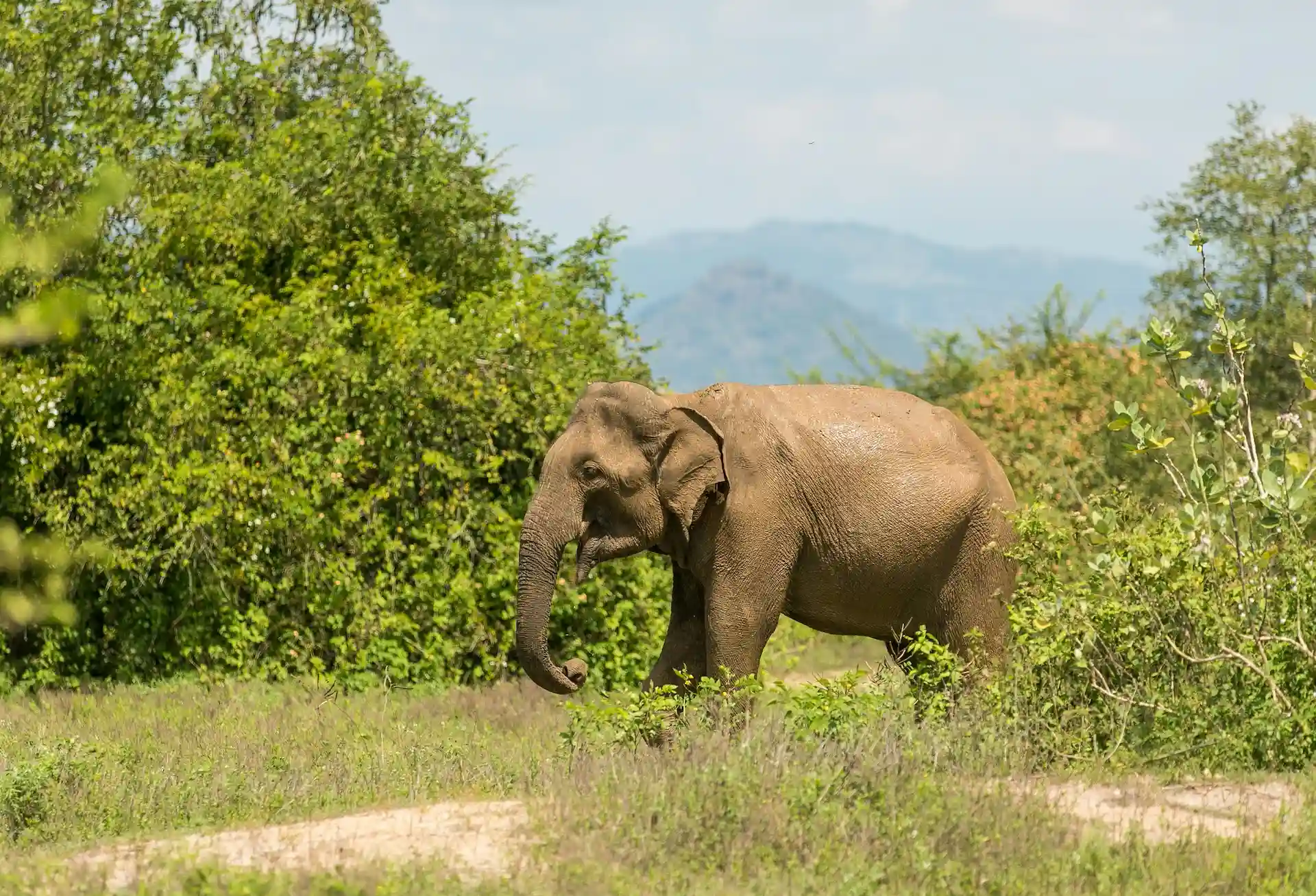
The landscape surrounding Sithulpawwa supports wild animals, including elephants.
Wildlife may sometimes move near roads used by vehicles travelling through the wider Yala region.
Elephants should always be treated as powerful wild animals rather than roadside attractions.
If an elephant is encountered, remain inside the vehicle and allow the animal plenty of space.
Never approach, feed or follow a wild elephant for photographs.
Do not ask a driver to block the road or move closer to wildlife.
Following local safety instructions is particularly important on quiet roads where animal movement may affect travel.
Monkeys and Other Wildlife Around the Temple
As Sithulpawwa lies within a natural forest environment, visitors may encounter monkeys and other small animals around parts of the temple area.
Monkeys can become attracted to food carried by visitors, especially when animals have previously been fed.
Keep bags closed and avoid displaying snacks unnecessarily.
Do not feed monkeys or attempt to interact with them closely.
Feeding wildlife can change natural behaviour and lead to aggressive encounters.
Keep a respectful distance from all animals and carry food packaging and rubbish away.
Best Time of Day to Visit Sithulpawwa
Early morning is generally the most comfortable time to visit Sithulpawwa.
The climate around Yala can become very hot, particularly across exposed rocky surfaces.
Morning temperatures make the steps and uphill sections more manageable.
The softer light is also attractive for photography, especially when viewing the white stupa against the surrounding forest.
As the day progresses, the exposed stone can become extremely hot.
Visitors should avoid rushing during warmer hours and take breaks whenever necessary.
How Difficult Is the Temple Climb?
Exploring Sithulpawwa involves walking across rocky terrain and climbing stone stairways to reach different sacred areas.
The site is not a technical mountain-climbing destination, but the uneven ground and exposed sections require care.
Some steps are steeper than others, and the climb can feel more tiring in strong sunlight.
Comfortable footwear with reliable grip is useful for travelling between the temple’s different levels.
Visitors who prefer a less physically demanding experience can appreciate parts of the complex without attempting every upper stairway.
The most important part of the visit is understanding the heritage and sacred atmosphere, not reaching the highest point at any cost.
What Should You Wear?
Sithulpawwa is an active Buddhist religious site, so visitors should dress modestly.
Cover your shoulders and knees and avoid clothing that is unsuitable for a place of worship.
Lightweight trousers, modest long skirts and breathable tops are practical options in the warm dry-zone climate.
Comfortable walking shoes are useful for the rocky paths, although footwear must be removed within designated sacred areas.
Hats should also be removed where temple instructions require it.
A small scarf or sarong is useful if additional coverage is needed.
Walking Barefoot on Hot Stone
Removing shoes is an important part of visiting Buddhist sacred areas in Sri Lanka.
At Sithulpawwa, exposed rocky surfaces can become particularly hot during the middle of the day.
Lightweight socks can help protect your feet where they are permitted by temple rules.
Move carefully on uneven or slippery surfaces, especially after rainfall.
Follow the footwear arrangements indicated by temple attendants rather than assuming the same rules apply across every part of the complex.
Temple Etiquette and Religious Respect
As a living Buddhist religious site, Sithulpawwa should be visited respectfully.
Keep your voice low around shrines, monks and worshippers.
Do not climb onto stupas or use sacred structures as places to sit.
Remain outside private monastic accommodation and meditation spaces unless invited by an authorised person.
Do not disturb flowers, lamps or other religious offerings.
When walking around a stupa as part of a devotional practice, follow the traditional clockwise direction used by Buddhist worshippers.
Visitors of different religions and backgrounds can appreciate Sithulpawwa without participating in Buddhist ceremonies.
Photography at Sithulpawwa
Sithulpawwa offers excellent opportunities for landscape, architectural and heritage photography.
The white stupa rising above the forest is one of the most distinctive subjects.
Wide photographs can capture the relationship between the religious buildings, rocky hills and surrounding vegetation.
Ancient caves and stone architectural details also provide interesting subjects for visitors interested in archaeology.
However, photography should never compromise religious etiquette or visitor safety.
Do not pose with your back directly towards Buddha images, obstruct worshippers or enter restricted areas for a photograph.
Follow photography restrictions around painted shrines and other protected features.
Drone Photography and Professional Filming
Professional filming and drone operations require particular care at Sithulpawwa.
The site combines an active Buddhist religious complex, protected archaeological heritage and a surrounding wildlife landscape.
These areas may be subject to separate religious, archaeological, wildlife and aviation requirements.
Ordinary visitor admission does not provide automatic permission to operate drones or conduct commercial filming.
Only undertake such activities with the necessary authorisation from the relevant authorities.
Heat, Water and Sun Protection
Sithulpawwa is located within Sri Lanka’s warm dry-zone environment, making preparation important even for a relatively short temple visit.
Carry sufficient drinking water for both the road journey and walking around the monastery.
Use sunscreen on exposed skin and wear a hat while travelling outside sacred areas.
Take regular breaks when climbing the steps, especially during hot weather.
The rocky surroundings may provide limited shade in some sections.
Travellers should avoid underestimating the effect of heat simply because the site is a cultural attraction rather than a long hiking trail.
What Should You Bring?
Bring a small, comfortable day bag containing drinking water, sunscreen and essential personal belongings.
Useful items include:
- Comfortable walking shoes with reliable grip.
- Modest clothing covering shoulders and knees.
- Lightweight socks for sacred areas where permitted.
- A reusable water bottle.
- Sun protection and a hat.
- A charged mobile phone.
- Small Sri Lankan rupee notes for local expenses or donations.
- A small bag for carrying rubbish away.
Keep your belongings light so that climbing between the temple’s different levels remains comfortable.
How Long Should You Spend at Sithulpawwa?
Allow approximately two to three hours to explore Sithulpawwa comfortably.
This provides time to appreciate the main stupa, ancient cave shelters, inscriptions and surrounding landscape without rushing.
Visitors with a particular interest in Buddhist history or archaeology may enjoy spending longer examining the surviving features.
Remember that the road journey is additional to the time spent at the temple.
Because Sithulpawwa lies in a relatively remote setting, arrange suitable return transport rather than relying on finding a vehicle after your visit.
Visiting Sithulpawwa with Children
Sithulpawwa can provide an interesting cultural and educational experience for families.
Older children who are comfortable walking and climbing steps may particularly enjoy the dramatic rocky landscape and historic structures.
However, parents should supervise children closely around exposed rocks, steep stairways and uneven ground.
Explain beforehand that Sithulpawwa is an active Buddhist temple where people come to pray and worship.
Children should not climb on ancient ruins, touch inscriptions or disturb religious objects.
Carry drinking water, provide sun protection and allow time for rests during warmer weather.
Accessibility for Older Travellers
Sithulpawwa’s rocky terrain and stairways can present difficulties for visitors with reduced mobility.
Some parts of the monastery are easier to reach than the higher rocky terraces.
Visitors who experience knee discomfort, balance difficulties or reduced walking stamina should move slowly and choose the sections that suit their ability.
Completing every stairway is not essential for appreciating the religious atmosphere and historical significance of the complex.
Travelling during cooler morning hours can also make the experience more comfortable.
Protecting Sithulpawwa’s Ancient Heritage
Sithulpawwa contains archaeological remains that have survived for many centuries.
These include ancient inscriptions, stone structures, religious sculptures and rock shelters associated with the monastery’s early history.
Visitors should never remove stones, scratch surfaces or touch carved inscriptions.
Do not climb onto ancient masonry or enter conservation areas that are closed to visitors.
Stay on established paths and respect any protective barriers around sensitive remains.
Preserving these structures helps ensure that future generations can continue to study and appreciate the religious history of southern Sri Lanka.
Responsible Visiting in the Yala Landscape
Sithulpawwa occupies an important natural environment where cultural heritage and wildlife conservation exist alongside one another.
Visitors should avoid leaving litter, disturbing animals or damaging vegetation around the temple.
Respect restrictions on roads and access routes through wildlife areas.
Do not feed monkeys or wild elephants.
Keep noise levels low and allow worshippers and monks to carry out their religious activities without interruption.
Choosing knowledgeable local transport providers and following the instructions of temple and wildlife authorities helps protect the area’s natural and cultural character.
Is Sithulpawwa Rock Temple Worth Visiting?
Yes. Sithulpawwa is one of the most rewarding cultural attractions in the wider Yala region, particularly for travellers interested in ancient Buddhism, archaeology and Sri Lanka’s religious history.
Its spectacular rocky setting, white stupa, ancient caves and inscriptions reveal the remarkable development of Buddhist monastic life within the forests of southern Sri Lanka.
The surrounding landscape adds another dimension, with broad views across a region more commonly associated with wildlife safaris.
However, Sithulpawwa’s true importance lies in its long religious history and continued role as a place of worship.
For international travellers, visiting respectfully provides an opportunity to understand how Sri Lanka’s ancient Buddhist heritage extends far beyond its better-known cultural cities.
Sithulpawwa is a place where history, spirituality and the natural wilderness of Yala come together in an extraordinary setting.