Discover Sigiriya Rock Fortress, one of Sri Lanka’s most extraordinary UNESCO World Heritage Sites. Rising dramatically above the surrounding plains, this ancient royal complex combines remarkable fifth-century architecture, sophisticated water gardens, beautiful frescoes, historic inscriptions and breathtaking views from the summit of Lion Rock.
Sigiriya is much more than a famous staircase leading to a viewpoint. Its gardens, monumental gateways, rock shelters and palace ruins reveal how King Kassapa transformed a natural rock formation into one of the most ambitious royal landscapes of ancient Sri Lanka.
This complete visitor guide covers Sigiriya’s history, entrance tickets, opening hours, museum, major archaeological attractions, climbing difficulty, transport and essential practical advice for international travellers.
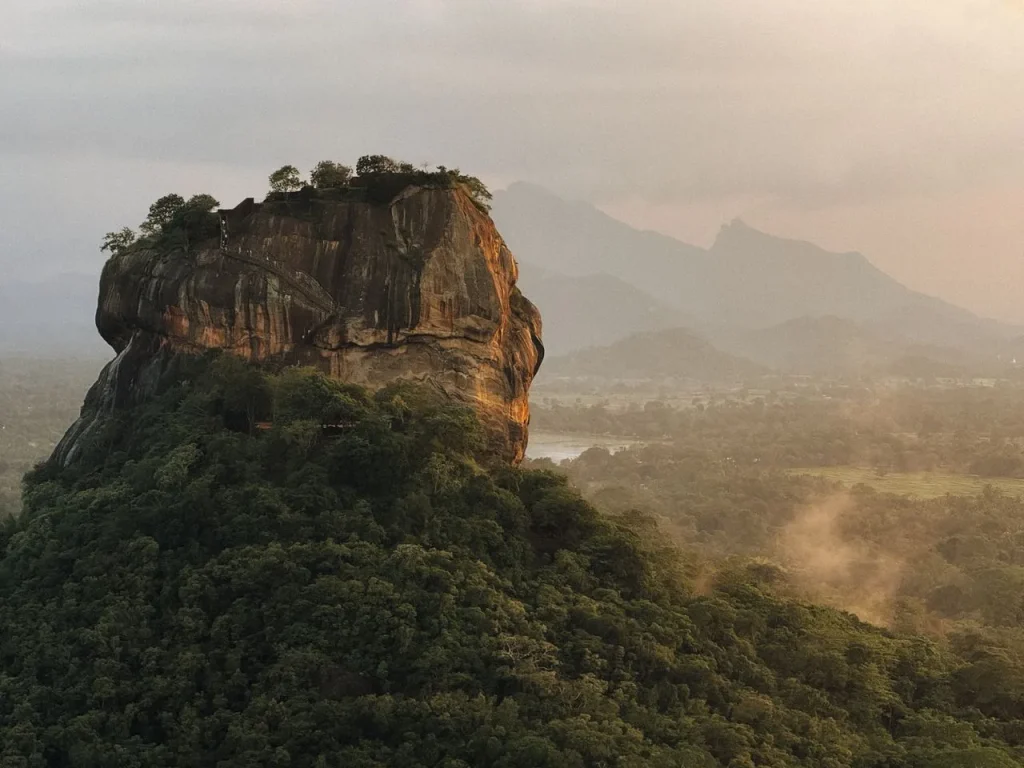
Location: Sigiriya, Matale District, Central Province
UNESCO status: World Heritage Site since 1982
Best for: Archaeology, history, architecture, gardens and panoramic views
Rock height: Approximately 180 metres above the surrounding landscape
Climb: Approximately 1,200 steps
Time needed: Around 3–4 hours for the main archaeological site
Opening hours: 7.00 am–5.00 pm
Foreign full ticket: US$35
Foreign half ticket: US$20
Best time: Early morning
Official ticketing: Central Cultural Fund
Ancient royal gardens beneath Lion Rock
Discover Sigiriya Rock Fortress
Sigiriya Rock Fortress is one of the most important archaeological attractions in Sri Lanka and a defining landmark of the country’s Cultural Triangle.
The enormous rock rises almost vertically above a landscape of forests, reservoirs and ancient gardens. Its distinctive appearance makes it immediately recognisable, but the significance of Sigiriya lies as much in the structures surrounding the rock as in the summit itself.
During the fifth century, the site became the centre of an extraordinary royal complex associated with King Kassapa I.
Carefully planned gardens, defensive structures, elaborate gateways and summit buildings were incorporated into the natural landscape, creating an impressive example of early urban planning and architecture.
Today, visitors can explore the remains of this historic city and climb towards the elevated royal precinct through a series of distinctive archaeological spaces.
The experience brings together ancient engineering, Buddhist history, artistic achievement and one of Sri Lanka’s most impressive viewpoints.
Why Sigiriya Is a UNESCO World Heritage Site
Sigiriya was inscribed on the UNESCO World Heritage List in 1982 under the name Ancient City of Sigiriya.
Its international significance comes from the exceptional relationship between natural geology and human construction.
The site demonstrates sophisticated achievements in landscape design, hydraulic engineering, royal architecture and artistic expression.
King Kassapa I established Sigiriya as his royal capital during his reign from 477 to 495 CE.
The ancient city was developed around a granite rock rising approximately 180 metres above the surrounding terrain, creating a dramatic setting for a fortified royal complex.
Sigiriya’s conservation is therefore important not only to Sri Lanka but also to the world’s understanding of early architecture, art and urban development.
The History of Sigiriya Rock Fortress
Sigiriya’s most famous historical period began during the fifth century, when King Kassapa I established his royal capital around the imposing rock.
The surrounding landscape was transformed through the construction of defensive features, formal gardens, palace structures and access routes leading towards the summit.
The royal complex made deliberate use of the rock’s natural height, steep slopes and commanding views across the surrounding countryside.
However, Sigiriya’s history did not begin with Kassapa.
The wider landscape had earlier associations with Buddhist monastic activity, with natural rock shelters used for religious purposes.
Following the end of Kassapa’s reign, the site again became associated with Buddhist monastic use.
These different historical phases help explain why Sigiriya contains both features associated with royal life and archaeological remains connected to Buddhist traditions.
Who Was King Kassapa?
King Kassapa I, also written as Kashyapa, ruled Sri Lanka from 477 to 495 CE.
According to Sri Lankan historical chronicles, he seized the throne from his father, King Dhatusena, during a period of political conflict.
The traditional account describes his half-brother Moggallana leaving the island and later returning to challenge Kassapa’s rule.
During his reign, Kassapa established Sigiriya as a royal capital, transforming the isolated rock and surrounding grounds into an elaborate palace and defensive complex.
His building programme included monumental architecture and carefully designed gardens, reflecting both royal ambition and considerable engineering knowledge.
In 495 CE, Kassapa’s reign ended following conflict with Moggallana, and the royal capital ceased to function in its original form.
The remains of his extraordinary construction project continue to define Sigiriya today.
Sigiriya Before and After King Kassapa
Although Sigiriya is most closely associated with King Kassapa, the surrounding rock landscape has a longer history.
Natural caves and rock shelters were used by Buddhist monastic communities before the fifth-century royal development.
After Kassapa’s death, the area became associated once again with monastic life, allowing religious activity to continue within the wider landscape.
This combination of royal and Buddhist heritage makes Sigiriya particularly interesting.
The visible archaeological remains represent different aspects of the site’s development rather than one completely unchanged historical period.
Understanding these layers helps visitors appreciate why Sigiriya is regarded as an ancient city and cultural landscape, not simply a fortress built on a rock.
Understanding the Ancient City of Sigiriya
The ancient Sigiriya complex was planned across several different levels.
The lower precinct contains landscaped gardens, pools, pathways and defensive structures.
Closer to the rock, enormous natural boulders were incorporated into architectural spaces, followed by terraced gardens rising towards the upper galleries.
The ascent continues past the surviving frescoes and Mirror Wall before reaching the monumental Lion’s Paw gateway.
From there, steep stairways lead towards the remains of the royal complex at the summit.
These distinct spaces demonstrate how the builders used both the natural terrain and carefully constructed architecture to create a unified royal landscape.
The Ancient Moats and Defensive Ramparts
Sigiriya’s outer archaeological landscape includes moats and substantial defensive ramparts associated with the fortified royal city.
These features demonstrate that security and controlled access were important considerations in the design of the complex.
The rock itself provided a natural defensive advantage, while constructed walls, water barriers and gateways contributed to the protected royal environment.
The wider defensive layout also reveals the scale of planning involved in developing Sigiriya.
It was not simply a palace occupying the top of an isolated rock, but a structured urban complex extending across the surrounding landscape.
The Water Gardens of Sigiriya
The water gardens are among Sigiriya’s greatest architectural achievements.
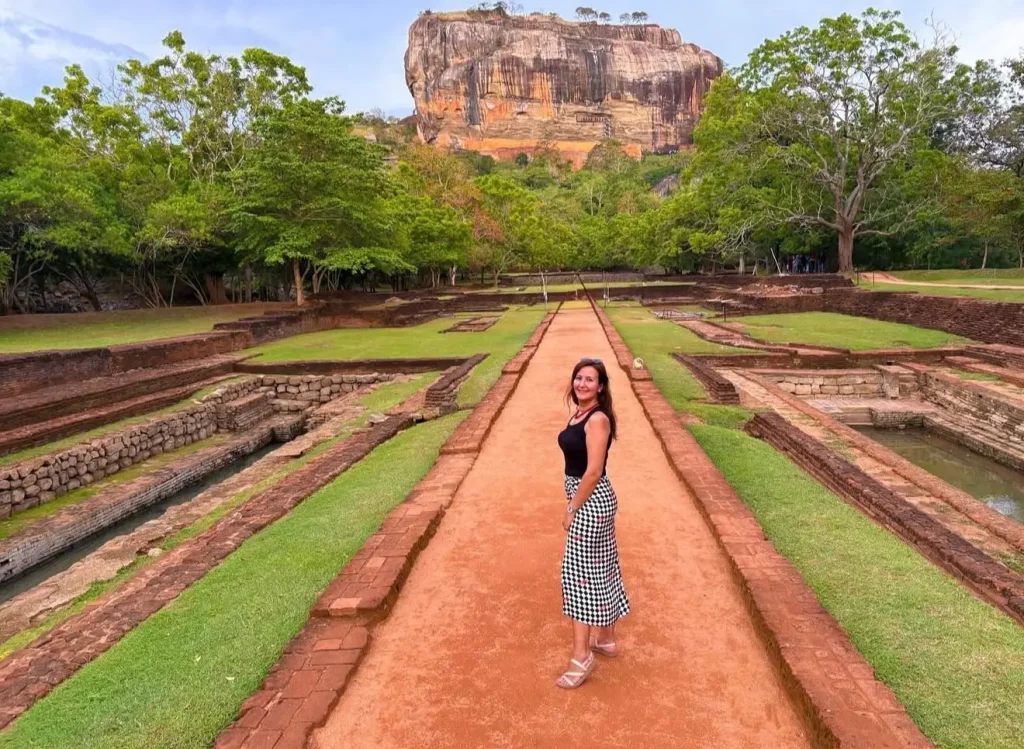
Photography: @mrv.krdgg/Instagram
Located within the lower western precinct, these formal gardens contain pools, waterways, fountains and carefully arranged landscaped spaces.
Their geometric layout contrasts with the more irregular natural surroundings, demonstrating a remarkable level of planning during the fifth century.
Water was used as both a practical resource and an important element of royal landscape design.
The gardens create a visual approach towards Lion Rock, with the enormous stone formation rising beyond the pools and landscaped pathways.
The symmetrical arrangement is particularly impressive when viewed from suitable positions along the main garden axis.
For visitors interested in ancient architecture, these gardens are just as important as the more famous summit.
How Did Sigiriya’s Ancient Fountains Work?
Sigiriya’s hydraulic engineering is one of the reasons the complex is internationally celebrated.
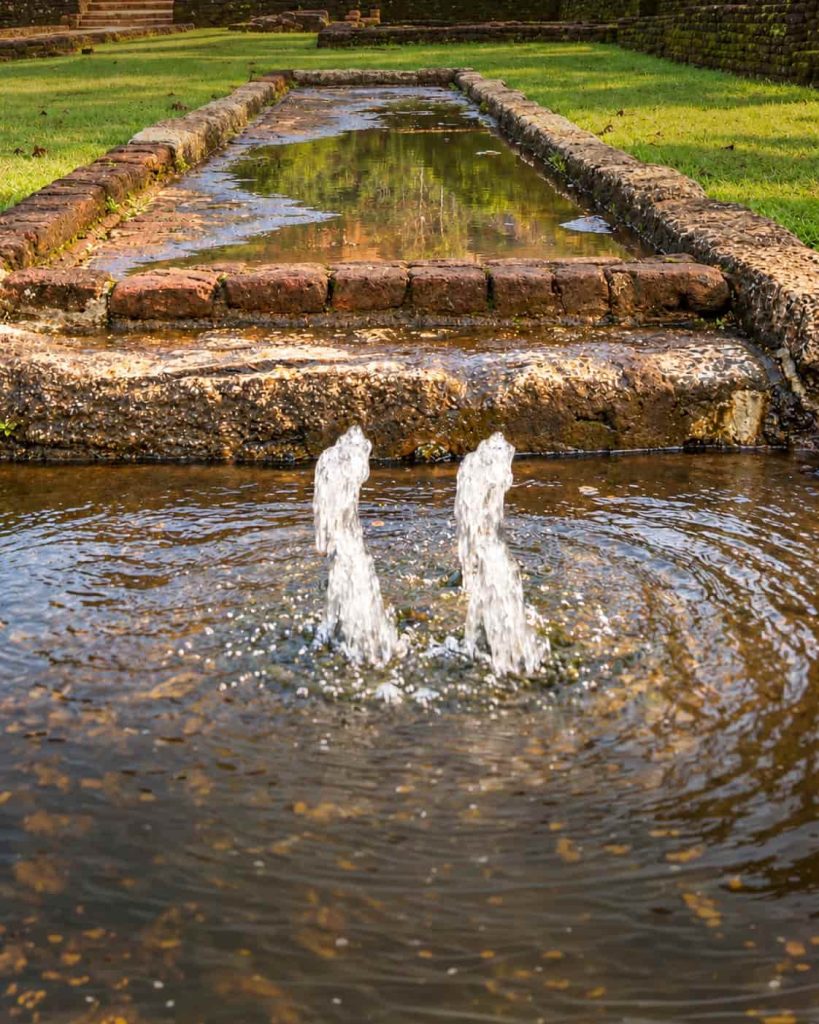
The ancient water system used interconnected channels, pools and underground conduits to manage the movement and distribution of water.
Careful planning of water levels and pressure allowed fountains to operate within the formal gardens.
Remarkably, parts of this ancient fountain system can still function when rainfall provides sufficient water.
This is an extraordinary example of how ancient engineers combined practical water management with decorative garden design.
Look closely at the relationship between the channels, stone features and pools to appreciate the complexity of the system.
The Boulder Gardens
Beyond the formal water gardens, the landscape changes into the Boulder Gardens.
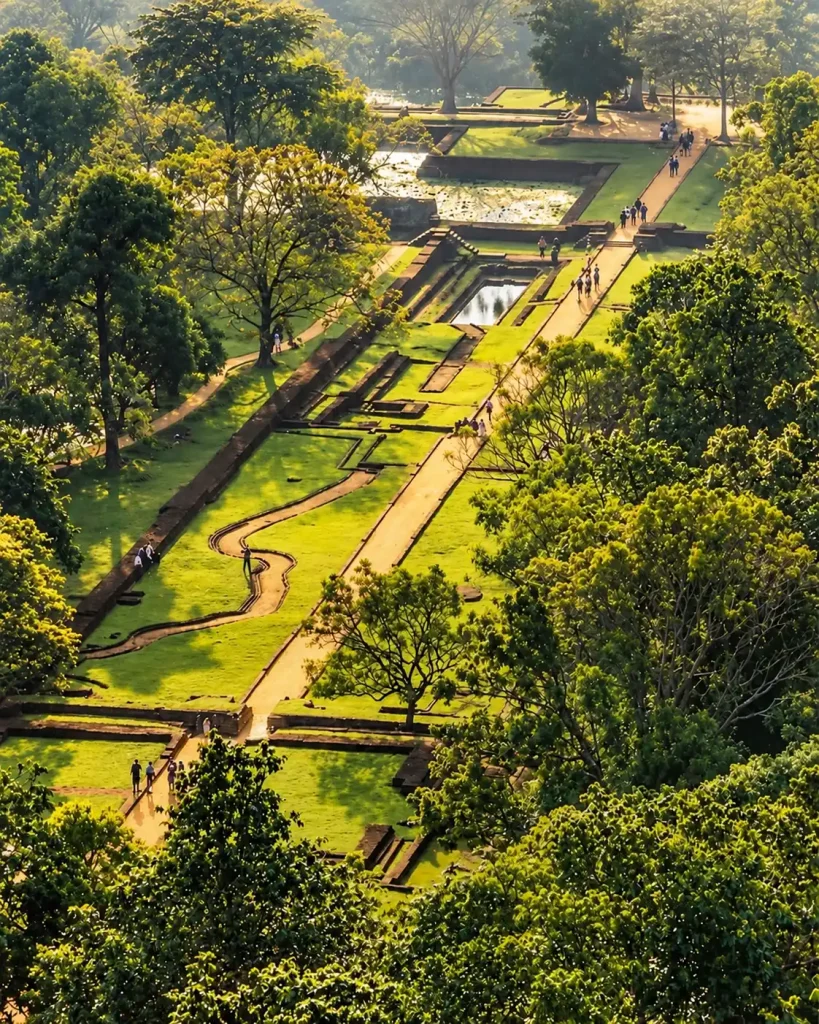
This section incorporates enormous natural rocks into a network of paths, structures and garden spaces.
Unlike the carefully symmetrical lower precinct, the Boulder Gardens make greater use of the irregular shapes of the existing terrain.
Natural rock formations were integrated into the architectural design, creating sheltered spaces and interesting transitions between different levels.
Some areas are associated with earlier religious use, reflecting the site’s longer monastic history.
The Boulder Gardens provide an excellent opportunity to appreciate how Sigiriya’s builders adapted architecture to the landscape rather than removing every natural obstacle.
The Terraced Gardens
The Terraced Gardens occupy the slopes around the base of Lion Rock.
They represent the transition from the lower gardens towards the steeper ascent.
Stone terraces, platforms and pathways make use of the rock’s natural shape while guiding movement upwards.
These structures demonstrate the engineering effort required to develop a large architectural complex within difficult terrain.
The terraced approach also reveals how the different sections of Sigiriya were connected through an organised system of walkways and stairways.
For travellers interested in landscape architecture, it is worth noticing how the formal gardens gradually give way to the more dramatic rocky surroundings.
How Difficult Is the Sigiriya Climb?
Climbing Sigiriya requires a reasonable level of fitness and confidence on stairways.
The ascent includes approximately 1,200 steps, combining ancient stone stairs with modern metal staircases attached to the rock.
Some sections are relatively gradual, while others become steep and exposed.
The climb does not require technical mountaineering equipment or specialist climbing experience.
However, it can be physically demanding because of the number of steps, tropical heat and occasional queues along narrow sections.
Visitors accustomed to walking and stair climbing will generally find the ascent more comfortable.
Take regular breaks and maintain a pace appropriate to your ability rather than trying to follow faster climbers.
How Long Does It Take to Climb Sigiriya?
The climb typically takes approximately 1.5–2 hours, depending on walking pace and breaks.
For a comfortable first visit to the wider archaeological complex, allow approximately three to four hours.
This provides time to appreciate the lower gardens, historic galleries, Lion’s Paw and summit remains.
Walking time varies with fitness, heat, crowds and the number of breaks taken during the climb.
Travellers interested in archaeology or photography may enjoy spending longer exploring the lower sections.
The museum is another worthwhile experience and may require additional time beyond the main site visit.
The Famous Sigiriya Frescoes
The surviving Sigiriya frescoes are among the most celebrated works of ancient Sri Lankan painting.
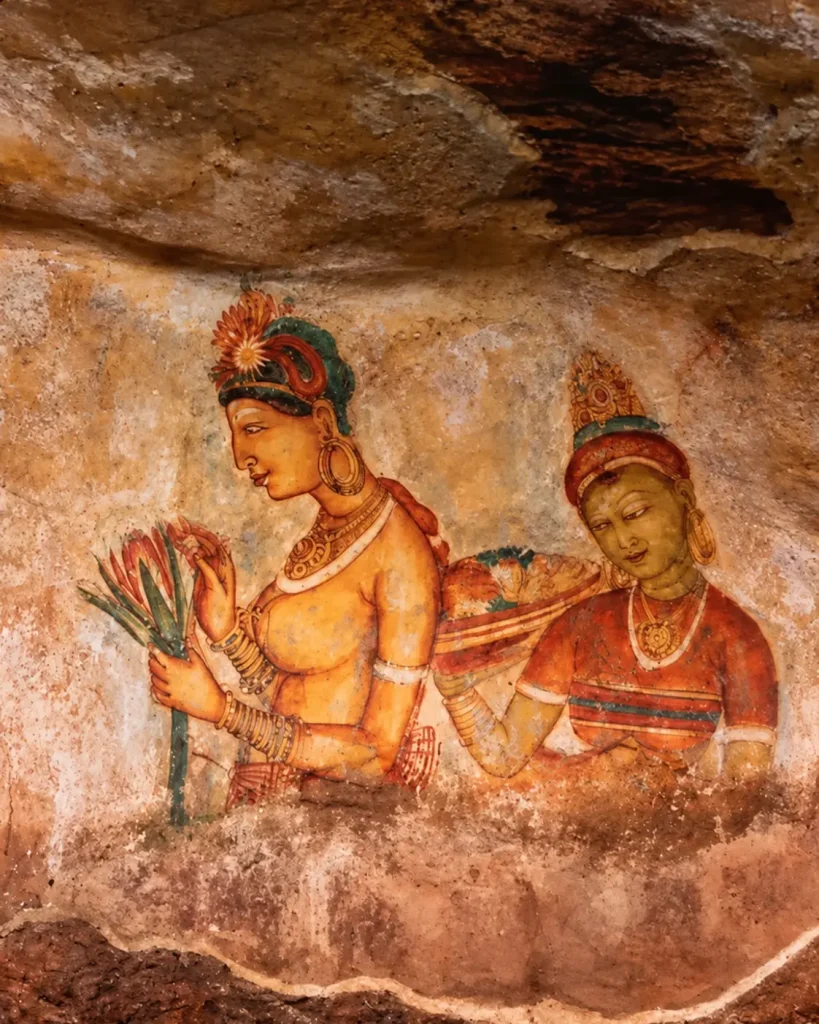
Located within a sheltered section of the rock face, the paintings depict female figures with elaborate ornaments, expressive features and carefully rendered colours.
They demonstrate the artistic sophistication of the fifth-century royal complex.
Although the exact identities of the figures remain the subject of different interpretations, the paintings are important evidence of the period’s artistic traditions.
The surviving frescoes form only part of what is believed to have been a much larger decorative programme.
Today, the paintings are protected as fragile archaeological treasures.
Who Are the Women in the Sigiriya Paintings?
The identity and symbolism of the female figures depicted in the Sigiriya frescoes have been interpreted in different ways.
Some historical interpretations associate them with celestial women or figures known as apsaras.
Other interpretations connect them with royal women or religious symbolism.
The artistic quality of the paintings is evident regardless of which interpretation is preferred.
The figures are notable for their jewellery, hairstyles, graceful poses and carefully applied colours.
They remain among the most important surviving examples of ancient painting in Sri Lanka.
Protecting the Fresco Gallery
The frescoes are extremely valuable and require strict conservation measures.
Visitors reach the gallery using a spiral staircase along the rock.
Follow the signs and instructions displayed by heritage staff, including restrictions on photography.
Do not use flash, touch the painted surfaces or lean against protective structures.
The space can become crowded because visitors move through a relatively narrow section.
Allow other visitors room and avoid obstructing the staircase or viewing gallery.
The Mirror Wall
The Mirror Wall is one of Sigiriya’s most fascinating historical features.
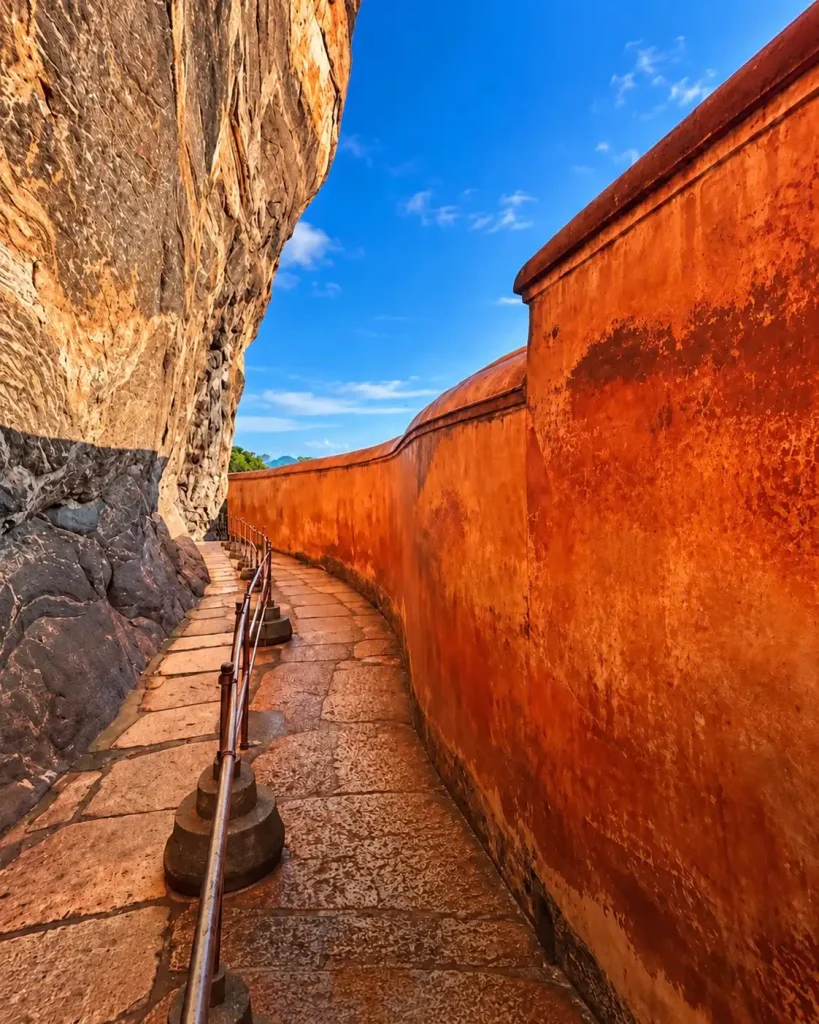
Originally covered with highly polished plaster, the wall became known for its smooth, reflective appearance.
It runs along part of the ancient gallery below the fresco area.
However, the Mirror Wall is especially important because of the historic writings preserved on its surface.
These inscriptions reveal how people visiting Sigiriya centuries ago responded to the paintings, surroundings and experience of the site.
The wall therefore provides an unusual connection between modern visitors and people who explored Sigiriya long before it became an internationally recognised tourist attraction.
Sigiri Graffiti and Ancient Poetry
The historic writings preserved on the Mirror Wall are commonly known as Sigiri graffiti.
They include verses, observations and reflections left by visitors during earlier centuries.
Many of these inscriptions are valuable examples of the development of Sinhala literary expression.
They also reveal that Sigiriya continued to attract visitors long after its fifth-century royal period.
For historians, the inscriptions provide evidence of language, poetry and the way people experienced art and landscape in the past.
The historic importance of these writings does not permit modern visitors to add their own names or messages.
Never write, scratch, touch or lean against the Mirror Wall.
Lion’s Paw Terrace
Lion’s Paw Terrace is one of the most dramatic locations on the ascent to Sigiriya’s summit.
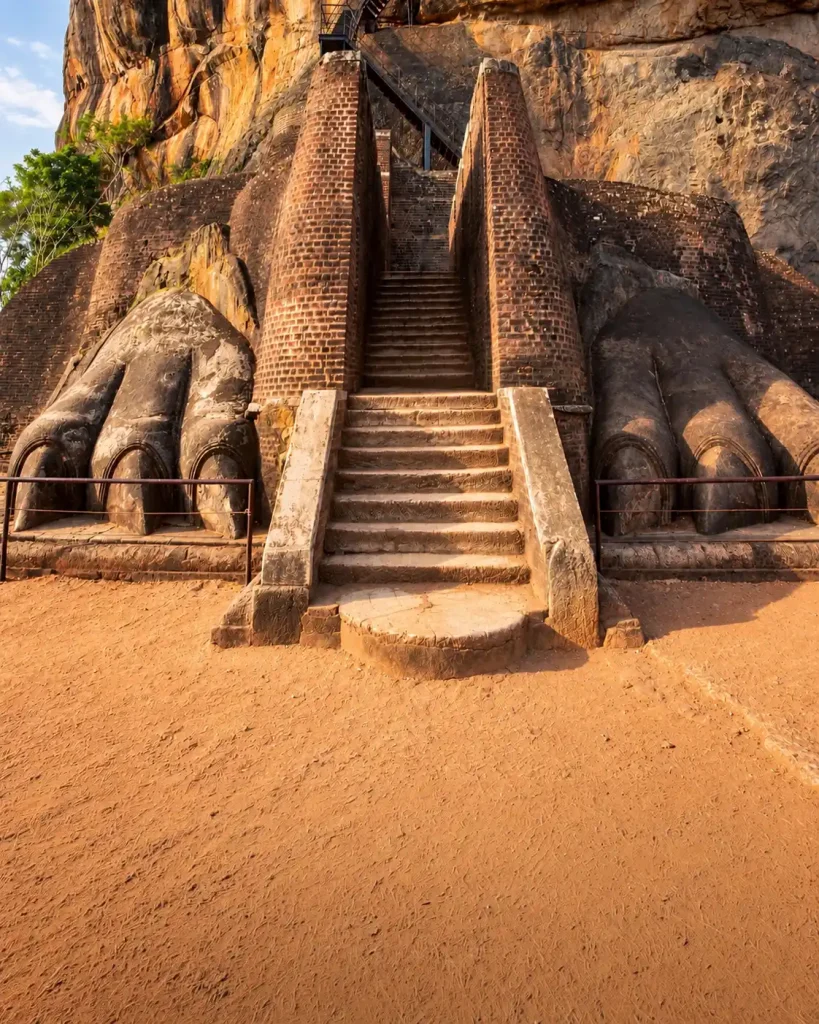
Here, two enormous stone lion paws mark the remains of a monumental gateway associated with the ancient royal complex.
The original entrance was designed around the form of a gigantic lion, with the stairway continuing upwards through the gateway.
Most of that structure has disappeared, leaving the impressive paws and surviving architectural remains.
The enormous scale of the gateway demonstrates the symbolic importance of the entrance to the upper royal precinct.
It also provides one of the most recognisable photography locations within Sigiriya.
The terrace can become crowded, so keep the stairways and access areas clear for other visitors.
Why Is Sigiriya Called Lion Rock?
The name Lion Rock is closely associated with the monumental lion gateway that once formed part of the ascent.
The surviving paws reveal the remarkable scale of the original structure.
The gateway was designed as an architectural expression of royal authority, creating a dramatic entrance towards the summit complex.
The lion also has an important symbolic place within Sri Lankan cultural identity.
Although the complete gateway no longer exists, the remaining paws preserve one of Sigiriya’s most distinctive architectural features.
The Final Staircase to the Summit
After Lion’s Paw Terrace, the ascent becomes more exposed.
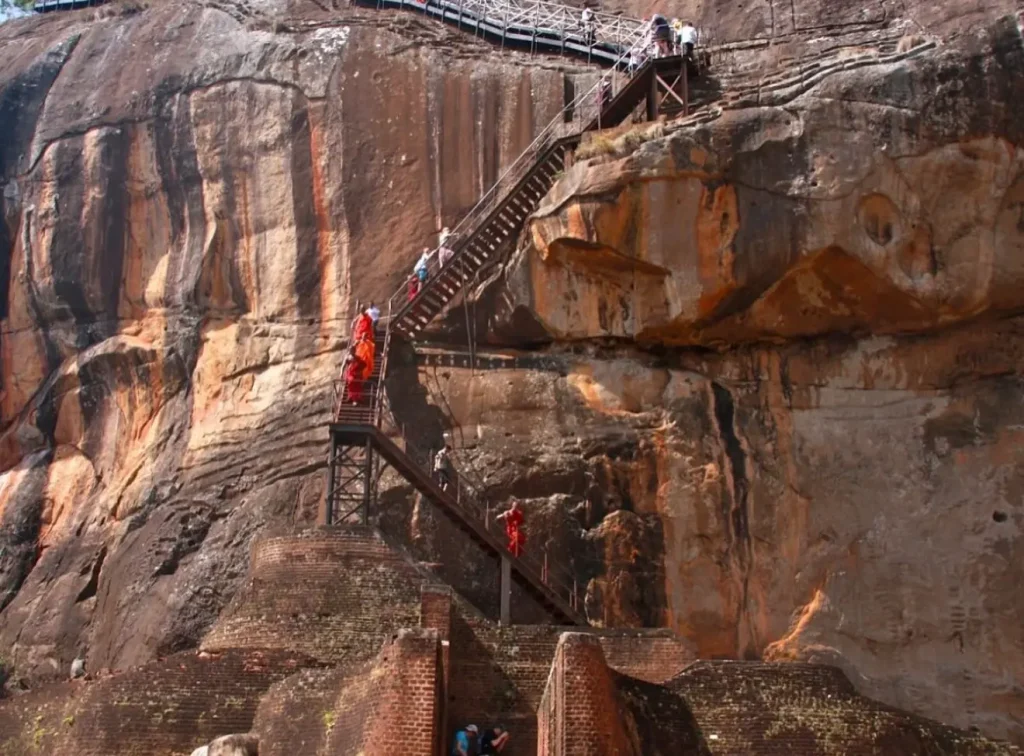
Photography:@mrv.krdgg/Instagram
The final section includes modern metal staircases running along the side of the rock.
These steps offer impressive views, but they can be uncomfortable for visitors with a strong fear of heights.
Use the handrails and maintain a steady pace throughout the ascent.
Do not stop in narrow sections to take photographs or lean over the barriers.
Allow faster visitors to move where it is safe and follow any instructions from staff managing visitor movement.
Strong wind, rain or temporary safety restrictions may affect access to the upper staircase.
Is Sigiriya Suitable for People Afraid of Heights?
Sigiriya’s upper staircases can be challenging for travellers who experience vertigo or strong discomfort with exposed heights.
Although the established visitor route includes handrails and constructed stairs, parts of the final ascent provide open views down the rock face.
Some visitors find these sections manageable when moving slowly, while others may prefer not to continue.
Reaching the summit is not essential for appreciating the archaeological importance of Sigiriya.
The water gardens, boulder gardens and other lower features remain valuable attractions in their own right.
Choose the level of exploration that feels physically and mentally comfortable.
What Can You See at the Summit?
The summit of Sigiriya contains the remains of the ancient royal complex, including foundations, terraces, pools and water-storage features.
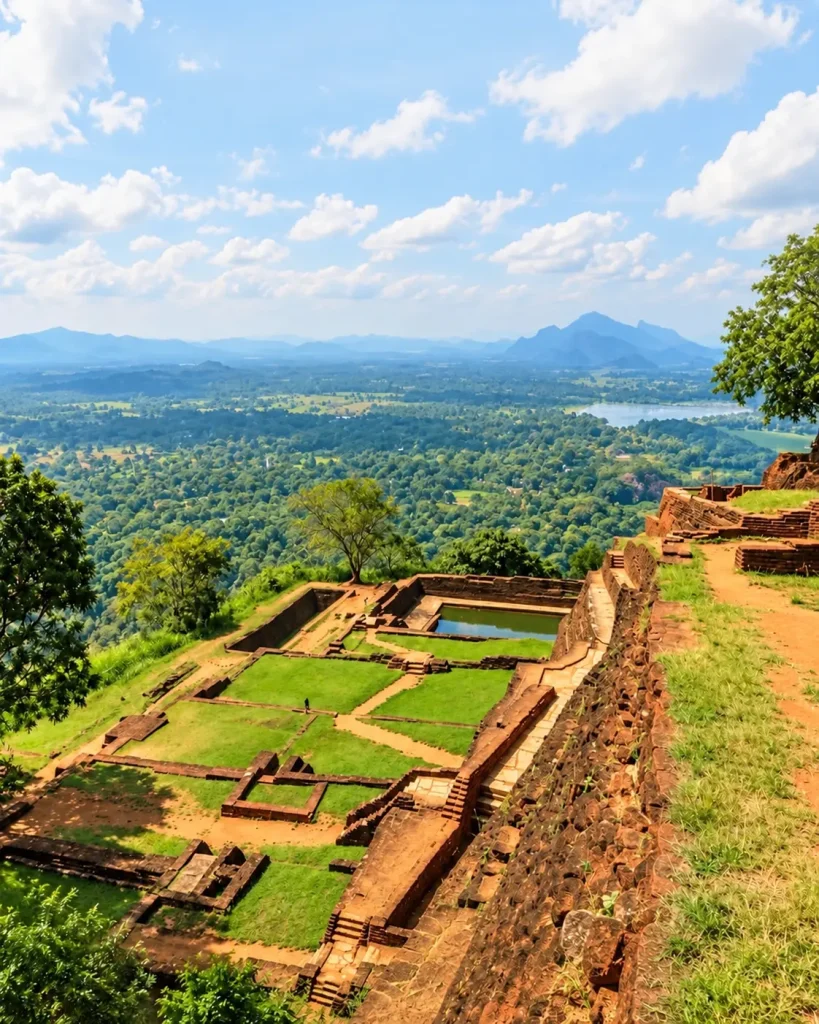
The original palace buildings have not survived intact, but their foundations reveal the organisation of the elevated site.
The summit offers a fascinating opportunity to imagine how the royal precinct once occupied the top of this enormous rock.
The surrounding views are equally impressive.
From the elevated plateau, visitors can look across the forests, reservoirs, cultivated land and distant hills of Sri Lanka’s Cultural Triangle.
The panoramic scenery helps explain why this location held such strategic and symbolic importance during the fifth century.
The Royal Palace Foundations
At the summit, surviving foundations and platforms reveal the former presence of substantial royal buildings.
Although the upper structures have largely disappeared, the archaeological remains provide evidence of the summit’s importance within the wider complex.
The position of different terraces and building foundations demonstrates how the relatively limited space was organised for royal use.
Visitors should appreciate the remains as part of a historical architectural plan rather than expecting an intact palace building.
Remain on recognised visitor paths and avoid walking or sitting on fragile ancient masonry.
Ancient Pools and Water Storage
Water management was a central part of Sigiriya’s engineering achievements, including at the summit.
Archaeological remains include pools and water-storage features associated with the ancient royal complex.
Providing water at such an elevated location required careful planning.
The surviving structures demonstrate the importance of water not only within the formal gardens below but also in the functioning of the summit.
These features contribute to Sigiriya’s reputation as an exceptional example of ancient hydraulic engineering.
Panoramic Views from Lion Rock
The views from Sigiriya’s summit are among the most impressive in Sri Lanka’s Cultural Triangle.
On clear days, the surrounding countryside stretches across forests, reservoirs and distant hills.
The summit also provides a fascinating perspective on the landscaped gardens and archaeological areas below.
From above, visitors can better appreciate the geometry and scale of the lower royal precinct.
Early morning light can make the scenery especially attractive, with softer colours across the landscape.
Allow time to appreciate the views safely rather than immediately returning towards the staircase.
Sigiriya Museum
Sigiriya Museum provides valuable background to the archaeological complex and its long history.
The museum introduces visitors to the development of the ancient city, its architecture, artistic traditions and discoveries made through archaeological research.
It is particularly useful for understanding features that are difficult to interpret from the surviving foundations alone.
The displays help explain the relationship between the natural rock, royal buildings, gardens and religious history of the site.
Admission to Sigiriya Museum is included with the standard Sigiriya entrance ticket.
Visitors seeking museum-only admission can purchase a separate ticket.
Sigiriya Museum Opening Hours and Admission
The published opening hours for Sigiriya Museum are 8.00 am–5.00 pm.
Visitors holding the standard Sigiriya heritage ticket can access the museum under the Central Cultural Fund’s published admission arrangements.
A separate museum-only foreign admission ticket is also available.
The museum can be especially enjoyable for travellers interested in learning more about the original architectural layout, archaeological discoveries and history of the royal complex.
The official visitor information is available through the Central Cultural Fund.
Sigiriya Entrance Ticket Prices
Sigiriya Rock Fortress is managed by the Central Cultural Fund, which provides the official heritage admission arrangements.
As of October 2026, the published foreign visitor ticket prices are:
Foreign full ticket: US$35
Foreign half ticket: US$20
The half-ticket category applies to foreign children aged 6–12.
Admission prices are quoted in US dollars, with Sri Lankan rupee payments calculated using the exchange rate applied by the Central Cultural Fund.
The ticket provides single-entry access under the published conditions and includes Sigiriya Museum.
Official current ticket prices: Central Cultural Fund Ticket Prices.
How to Book Sigiriya Tickets Online
The Central Cultural Fund provides an official eTicketing service for international visitors.
Booking online allows visitors to arrange their heritage ticket before arriving at the site.
After completing the booking, retain the reservation receipt and booking reference.
Under the published ticketing procedure, visitors present the receipt at the relevant heritage-site ticket counter to obtain their admission ticket.
Foreign half tickets and other eligible ticket categories are subject to the applicable identification requirements.
Bookings are subject to the Central Cultural Fund’s ticket validity and refund rules.
Official online booking: Central Cultural Fund eTicketing.
Sigiriya Opening Hours
The published opening hours for Sigiriya Rock Fortress are 7.00 am–5.00 pm.
Early admission is particularly useful because the exposed staircases become considerably warmer as the day progresses.
The morning also provides attractive natural light for photographing the gardens, rock face and surrounding landscape.
Visitors arriving later in the afternoon should consider the time required for both the climb and the descent before closing.
The main archaeological complex deserves sufficient time rather than a rushed visit concentrated only on the summit.
Best Time of Day to Visit Sigiriya
Early morning is generally the best time to visit Sigiriya.
Starting near the 7.00 am opening time provides cooler conditions for walking through the gardens and climbing the stairways.
Morning light also creates attractive views across the lower archaeological complex.
As the day progresses, direct sunshine can make the exposed sections of the rock hot and physically demanding.
Late afternoon offers softer light, but the published closing time places limits on how much of the site can be explored comfortably.
For most first-time visitors, arriving early provides the most enjoyable balance between weather, walking comfort and time for exploration.
Weather and Seasonal Conditions
Sigiriya experiences a warm tropical climate throughout the year.
Daytime temperatures can feel particularly demanding when climbing exposed stairways without much shade.
Rainfall varies seasonally, and heavy showers can affect the comfort and safety of walking on stone and metal steps.
Although the landscape may appear more colourful and green after rainfall, wet surfaces require greater care.
Warm weather is an important consideration regardless of the month you visit.
Carry drinking water, use sun protection and choose breathable clothing for the climb.
Heat and Dehydration During the Climb
Heat is one of the main challenges for visitors climbing Sigiriya.
The repeated effort of climbing steps, combined with tropical sunshine, can cause fatigue more quickly than expected.
Drink water regularly and take short breaks when needed.
A hat and sunscreen are helpful while walking through exposed sections of the gardens and lower approach.
If you feel dizzy, unusually weak or unwell, stop and seek assistance rather than continuing upwards.
Starting early and carrying sufficient water are among the simplest ways to make the experience more comfortable.
Rain and Slippery Staircases
Rain can make Sigiriya’s stone steps and exposed metal staircases slippery.
Use handrails and avoid rushing, particularly during the descent.
Wet weather can also reduce visibility and affect the comfort of the exposed upper sections.
When heavy rain or severe weather occurs, follow instructions from heritage-site staff.
Comfortable shoes with reliable grip are more suitable than loose sandals or slippery footwear.
Safety should always take priority over reaching the summit.
Wasps and Wildlife Safety
Sigiriya is surrounded by a natural landscape supporting insects and other wildlife.
Wasp and hornet nests have historically been associated with sections of the rock, particularly around the upper terraces.
Disturbing these insects can create a safety risk for visitors.
Do not throw objects, shout unnecessarily or attempt to approach nests.
If staff issue a warning or temporarily restrict movement, follow their instructions immediately.
The surrounding protected landscape also supports wild animals, including elephants in the wider region.
Remain within recognised visitor areas and avoid entering surrounding forest or protected land without authorisation.
What Should You Wear to Sigiriya?
Comfortable clothing suitable for warm-weather walking and climbing is the best choice.
The main Sigiriya Rock Fortress ascent is an archaeological visit rather than an active temple visit, so it does not generally require the same dress code as Dambulla Cave Temple.
Lightweight trousers, shorts and breathable tops are practical options for most visitors.
Comfortable walking shoes with good grip are especially important.
Avoid loose sandals, slippery footwear and clothing that makes climbing narrow stairways difficult.
If visiting separate religious sites in the surrounding area, carry appropriate clothing to cover shoulders and knees.
What Should You Bring?
A small day bag containing essential items is sufficient for most Sigiriya visits.
- Comfortable walking shoes with good grip.
- Drinking water in a reusable bottle.
- Sunscreen and a hat.
- Lightweight, breathable clothing.
- A small backpack for personal belongings.
- A camera or charged smartphone.
- A lightweight waterproof layer during unsettled weather.
- Any essential personal medication.
- Admission ticket or online booking receipt.
Keep your belongings light, particularly when climbing the steep upper staircases.
A compact backpack is generally more convenient than carrying a large shoulder bag.
Photography at Sigiriya Rock Fortress
Sigiriya provides outstanding opportunities for photographing archaeological architecture and natural scenery.
The water gardens offer attractive views of the rock rising beyond symmetrical pools and landscaped pathways.
The Boulder Gardens create opportunities for closer architectural compositions, while Lion’s Paw Terrace provides one of the site’s most recognisable subjects.
At the summit, panoramic photographs capture the surrounding forests, reservoirs and distant hills.
Respect restrictions around the fresco gallery and protected archaeological features.
Do not stop on narrow staircases for photographs or climb onto ancient walls to obtain a better angle.
Can You Fly a Drone at Sigiriya?
Drone use and professional filming at Sigiriya are controlled to protect its archaeological heritage, wildlife and visitor safety.
Ordinary admission does not provide automatic permission to operate a drone.
The Central Cultural Fund requires prior written authorisation for professional filming and drone operations.
Additional aviation and protected-area restrictions may also apply.
Visitors should respect these requirements and use permitted ground-level photography during ordinary sightseeing.
Can You Visit Sigiriya Without Climbing?
Yes. Sigiriya offers a rewarding archaeological experience even for visitors who do not climb to the summit.
The lower precinct contains some of the site’s most important features, including the Water Gardens, Boulder Gardens, defensive structures and landscaped surroundings.
These areas reveal much of the planning and engineering behind the ancient royal complex.
Sigiriya Museum also provides additional historical context through its displays.
Visitors who dislike heights or cannot manage substantial stair climbing can still appreciate the exceptional importance of the site.
Accessibility and Mobility Considerations
Sigiriya is not a fully accessible attraction.
The upper galleries, frescoes, Lion’s Paw and summit require substantial stair climbing.
There is no lift to the summit.
Some sections are steep and exposed, while lower pathways may contain uneven archaeological surfaces.
Travellers with reduced mobility can concentrate on the more accessible lower gardens and museum, depending on their individual needs.
Visitors with significant heart, respiratory, balance or mobility difficulties should consider the physical demands before attempting the upper ascent.
Visiting Sigiriya with Children
Sigiriya can be an exciting experience for families, particularly children interested in ancient history, castles and outdoor exploration.
The enormous rock, Lion’s Paw gateway and archaeological gardens can make the visit particularly memorable.
However, children need to be comfortable with prolonged walking and stair climbing if attempting the summit.
Parents should supervise children closely around exposed staircases, railings and elevated terraces.
Carry enough drinking water and provide suitable sun protection.
Allow regular breaks and avoid pressuring younger children to complete the climb if they become tired or uncomfortable.
Getting to Sigiriya from Dambulla
Dambulla is one of the most practical transport gateways for reaching Sigiriya.
The two locations are approximately 17–20 kilometres apart, depending on the starting point and route.
A car or tuk-tuk journey generally takes around 25–35 minutes in ordinary road conditions.
Local buses also connect the wider Dambulla and Sigiriya area, providing an economical option for travellers without a private vehicle.
When using public transport, allow for the final distance between the bus stop and the archaeological entrance.
Agree the tuk-tuk or driver cost before travelling.
Getting to Sigiriya from Habarana
Habarana is another convenient gateway to Sigiriya, particularly for travellers arriving by train or travelling through Sri Lanka’s Cultural Triangle.
The nearest railway station to Sigiriya is Habarana, approximately 15–18 kilometres away by road.
There is no railway station directly at Sigiriya Rock Fortress.
Visitors arriving at Habarana can arrange a tuk-tuk or taxi for the final road journey.
Train services should be planned using the current Sri Lanka Railways timetable.
Official railway information: Sri Lanka Railways.
Visiting Sigiriya Without a Rental Car
International travellers do not need to rent a car to explore Sigiriya.
Local buses, tuk-tuks and private transfers provide different options depending on where you are staying.
Dambulla is a useful bus transport hub, while Habarana provides access to the railway network.
Travellers staying within Sigiriya village may find accommodation close enough to reach the archaeological entrance by a short local journey.
For an early visit, arranging transport in advance can make reaching the entrance more convenient.
When booking a return journey, confirm the pickup location, total fare and waiting arrangements before departure.
Do You Need a Guide at Sigiriya?
A guide is not compulsory for an ordinary visit to Sigiriya Rock Fortress.
The established visitor route allows independent travellers to explore the principal archaeological areas.
However, an experienced heritage guide can add considerable value by explaining the history, architectural design and significance of the different monuments.
Guided interpretation is particularly useful for understanding the Water Gardens, Mirror Wall, royal history and summit foundations.
Choose a knowledgeable guide who communicates clearly and respects the archaeological site’s rules.
Confirm the guiding fee and duration before agreeing to the service.
Sigiriya Rock Fortress or Pidurangala Rock?
Sigiriya and Pidurangala offer different experiences despite their close proximity.
Sigiriya Rock Fortress is a major UNESCO-listed archaeological site featuring royal gardens, ancient engineering, frescoes, monumental gateways and summit ruins.
Pidurangala Rock is particularly popular for hiking and enjoying panoramic views towards Sigiriya itself. It also has historic Buddhist monastic associations.
Sigiriya is the stronger choice for travellers whose main interests are architecture, archaeology and understanding Sri Lanka’s ancient royal history.
Pidurangala appeals particularly to visitors interested in hiking and photographing the distinctive profile of Lion Rock from a distance.
The two experiences are complementary rather than identical.
Responsible Visiting at Sigiriya
Sigiriya is a protected archaeological landscape of outstanding international importance.
Visitors can help preserve it by following established paths and respecting conservation restrictions.
Do not touch ancient paintings, scratch the Mirror Wall or climb onto fragile stone and brick structures.
Stay out of restricted archaeological areas and avoid damaging plants or landscaped gardens.
Dispose of rubbish responsibly and respect the site’s restrictions on plastic and other waste.
Follow staff instructions around wasps, wildlife and temporary safety controls.
These practices help protect the ancient monuments while maintaining a safe environment for other visitors.
Is Sigiriya Worth the Entrance Fee?
Yes. For travellers interested in Sri Lankan history, ancient architecture and major cultural landmarks, Sigiriya is one of the country’s most rewarding attractions.
The entrance fee provides access to far more than the final staircase and panoramic summit view.
The formal Water Gardens, remarkable hydraulic system, Boulder Gardens, frescoes, Mirror Wall, Lion’s Paw and royal foundations together create an exceptional archaeological experience.
The inclusion of Sigiriya Museum adds further value for visitors interested in understanding the site’s historical development.
Allowing sufficient time to appreciate the entire landscape makes the visit far more meaningful than concentrating only on a photograph from the summit.
Why Sigiriya Deserves a Place on Your Sri Lanka Visit
Sigiriya Rock Fortress is one of the finest examples of how ancient Sri Lankan builders combined architecture, engineering, art and natural landscape.
The site’s fifth-century royal history, sophisticated water gardens and impressive summit structures reveal an extraordinary level of planning and craftsmanship.
Its surviving frescoes and Mirror Wall add artistic and literary significance, while the monumental lion gateway remains one of Sri Lanka’s most recognisable archaeological features.
Climbing the rock provides a memorable physical experience, but the true significance of Sigiriya extends throughout the surrounding ancient city.
For international travellers discovering Sri Lanka’s Cultural Triangle, Sigiriya offers an unforgettable introduction to the island’s history, creativity and architectural heritage.