Discover Parrot Rock, one of Mirissa’s most recognisable coastal viewpoints, rising from the sea just beside the town’s famous tropical beach. This small rocky outcrop offers a beautiful elevated view across Mirissa Bay, where golden sand, coconut palms, beachfront restaurants and the Indian Ocean create one of Sri Lanka’s most attractive coastal landscapes.
Unlike a conventional viewpoint reached by a permanent walking path, Parrot Rock has an important natural feature: access depends on the tide and the way waves are breaking across the approach. During calm, favourable conditions, visitors may be able to reach the rock on foot. At other times, the crossing can become slippery, difficult or dangerous.
This complete visitor guide explains how to reach Parrot Rock, how to assess the crossing, the best time for photography, what to wear, how to avoid tidal hazards and when enjoying the view from Mirissa Beach is the better choice.
Location: Mirissa Beach, Southern Province, Sri Lanka
Best for: Coastal views, photography and a short sightseeing experience
Time needed: Approximately 30–60 minutes, including the approach
Difficulty: Short climb with uneven and potentially slippery rock
Best time: Early morning when sea conditions and tide permit
Access: From Mirissa Beach, across a tide-affected rocky approach
Footwear: Secure shoes or sandals with reliable grip
Key safety: Do not cross when waves are breaking over the approach
Important: Check both tide direction and actual sea conditions before crossing
Coastal views across beautiful Mirissa Bay
Discover Parrot Rock in Mirissa
Parrot Rock is a small rocky outcrop situated close to Mirissa Beach, offering one of the most attractive viewpoints over the town’s curved tropical bay.
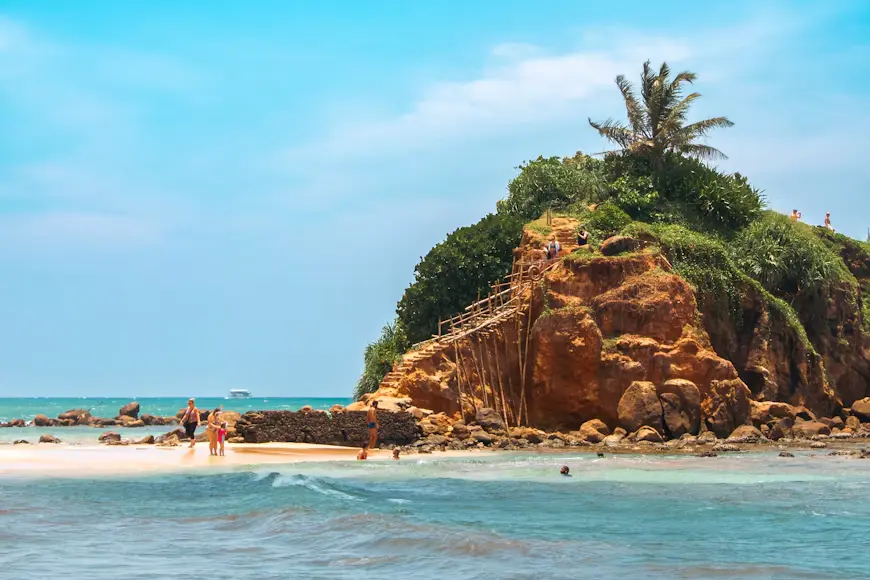
Although the rock rises only a modest distance above the surrounding beach, its elevated position creates a noticeably different perspective of the coastline.
From the top, visitors can appreciate the curve of Mirissa Beach, the surrounding coconut palms, the beachfront buildings and the turquoise and blue colours of the Indian Ocean.
The viewpoint is particularly appealing to travellers who enjoy landscape photography or want to appreciate the beauty of Mirissa from somewhere other than the main stretch of sand.
However, Parrot Rock is not a developed observation platform with guaranteed access. The natural crossing is influenced by tides, incoming waves and the condition of the surrounding rocks.
Understanding these conditions is essential to enjoying the viewpoint safely.
Why Parrot Rock Is Worth Visiting
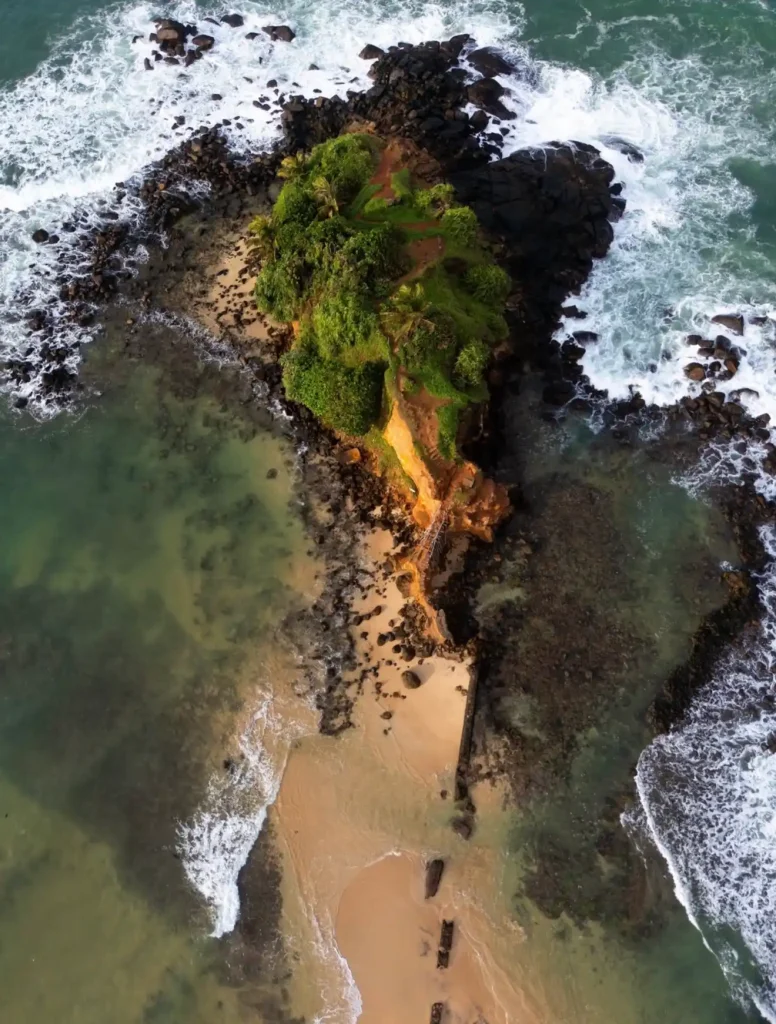
Parrot Rock offers a beautiful view of Mirissa’s tropical coastline without requiring a long journey or demanding mountain hike.
Photography: @bue_graphy/Instagram
The elevated position reveals the shape of the bay, with its broad sandy beach, surrounding vegetation and lively beachfront atmosphere.
From the sand, Mirissa Beach appears as a series of coastal views. From Parrot Rock, these features come together in one panorama.
Its small size is part of the attraction. Visitors do not need several hours to appreciate the scenery, making it an enjoyable short coastal experience.
The most rewarding visits happen when the crossing is straightforward, the rocks are dry enough to provide secure footing and the viewpoint is not overcrowded.
Parrot Rock is especially appealing for travellers who are already enjoying Mirissa Beach and want to experience the coastline from a different perspective.
What Does Parrot Rock Look Like?
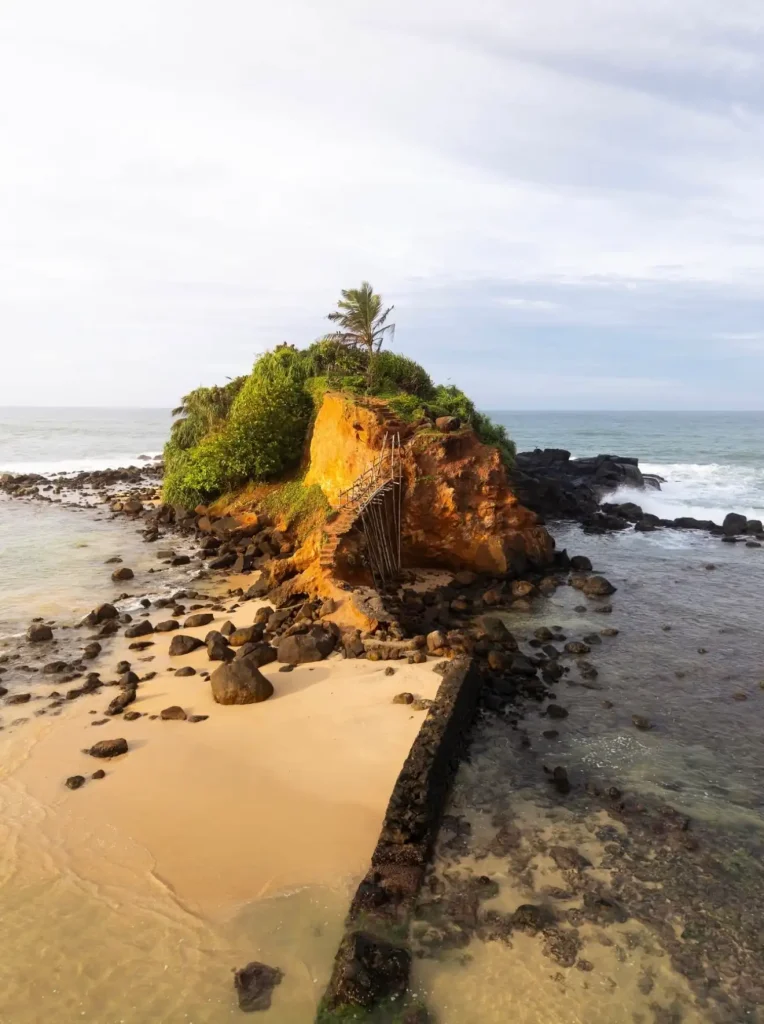
Parrot Rock is a compact rocky formation rising just off the main beach.
Unlike the large palm-covered headland at Coconut Tree Hill, Parrot Rock has a smaller, more rugged appearance.
Photography: @bue_graphy/Instagram
The approach involves crossing an area that may be exposed or partly covered by seawater, depending on the tide and wave conditions.
The final ascent follows uneven rock and a short climbing section towards the upper viewpoint.
Once above the beach, visitors can enjoy an open view across Mirissa Bay.
The rock’s exposed position also means that wind, waves and moisture can influence the experience.
Although it is a relatively small natural attraction, careful movement is important because its surfaces are not comparable to a fully paved public walkway.
Where Is Parrot Rock Located?
Parrot Rock is located beside the main Mirissa Beach area on Sri Lanka’s southern coastline.
It is clearly visible from the beach, making it easy for visitors to identify the outcrop before deciding whether to approach.
Travellers staying near Mirissa Beach can generally reach the surrounding shore on foot.
Those staying farther away can travel by tuk-tuk or taxi to the main beachfront and continue walking along the sand.
The rock is close enough to the beach to appear easily accessible, but the short distance should never be confused with a permanently safe crossing.
The condition of the water and rocks is far more important than the distance between the beach and the viewpoint.
How to Get to Parrot Rock
The approach to Parrot Rock begins from Mirissa Beach.
Visitors can walk along the sand towards the rocky outcrop and assess the crossing from the shore.
During suitable conditions, the connecting area may be sufficiently exposed and calm for a controlled crossing on foot.
When the tide is higher or stronger waves are breaking across the approach, the same route can become unsafe.
Before stepping onto the crossing, observe the sea for several minutes and check whether you can clearly identify secure footing.
If reaching the rock requires rushing between breaking waves, the conditions are not appropriate for a casual sightseeing visit.
There is no need to force the crossing. Parrot Rock is an attractive landmark to photograph from the beach itself.
Understanding the Tide at Parrot Rock
Tides are one of the most important considerations when visiting Parrot Rock.
As the tide falls, more of the area connecting the rock with the beach may become exposed.
As the tide rises, water can cover the approach and make it increasingly difficult to cross safely.
However, the height of the tide is only one part of the situation.
Even when the water level is relatively low, incoming swell can send waves across the rocks and create dangerous footing.
This means the safest decision must be based on both the predicted tide and the actual conditions at the beach.
Is Low Tide Always Safe for Crossing?
No. Low tide does not automatically guarantee a safe crossing to Parrot Rock.
Although the water level may be lower, waves can still break across the approach with considerable force.
Strong swell may wash over exposed rock or create sudden surges of water that affect your balance.
Algae, wet sand and sea spray can make surfaces slippery even when they are not completely submerged.
Before crossing, watch several sets of waves rather than relying on one calm moment.
If the route does not offer secure footing and a straightforward return, remain on the beach.
The aim is to enjoy an attractive viewpoint, not to overcome a difficult sea crossing.
How to Check Tide Times
Tide information can be useful when considering a visit to Parrot Rock.
A tide table or reliable marine forecast shows the expected times of high and low water for the relevant coastal area.
It also helps you understand whether the water is generally rising or falling.
However, predicted tide times should be treated as planning information rather than permission to cross.
A forecast cannot tell you exactly how individual waves are breaking across Parrot Rock’s approach at the moment you arrive.
Use the tide information alongside what you can see from the shore.
If the sea is rough, do not cross regardless of what the tide table suggests.
Why the Direction of the Tide Matters
Understanding whether the tide is rising or falling can help visitors avoid being cut off from the beach.
A falling tide may gradually reveal more of the connecting area, while a rising tide can cover sections that were previously exposed.
This matters because the crossing may feel straightforward when you leave the beach but become more difficult during your return.
If conditions are favourable, keep the visit short and remain aware of the water level throughout.
Do not spend a long time taking photographs while the connecting route is becoming increasingly covered.
The safest visit is one where the return remains clearly manageable.
When Should You Avoid Crossing?
There are several clear signs that Parrot Rock should be enjoyed from the beach rather than approached on foot.
Do not cross when waves are repeatedly breaking over the route, the rocks are covered by surging water or secure footing is difficult to identify.
If people attempting to cross are being pushed sideways, losing their balance or waiting for narrow gaps between powerful waves, the conditions are unsuitable.
Crossing should also be avoided during heavy rain, thunderstorms or when fading daylight makes the rocks difficult to see.
Do not rely on another visitor’s confidence as evidence that the route is safe.
Personal swimming ability does not remove the danger of falling onto rocks or being swept into the sea.
Why Wet Rocks Can Be Dangerous
Rock surfaces near the ocean can be considerably more slippery than they appear.
Sea spray, algae, wet sand and smooth worn surfaces can reduce the grip available beneath your footwear.
A rock may look dry from a distance while remaining wet in shaded or lower sections.
The risk increases when waves unexpectedly wash across the approach.
Move carefully and avoid jumping between rocks or stepping onto surfaces where you cannot clearly assess the next foothold.
Keep one hand free for balance whenever moving across uneven ground.
Do not attempt the crossing while holding a camera or using your phone.
What If the Water Rises While You Are on Parrot Rock?
If you notice that the water level is rising or waves are beginning to cover the approach, prepare to return while the route remains clearly safe.
Do not continue taking photographs while the crossing becomes progressively more difficult.
However, if the route has already become dangerous, do not attempt to jump through powerful waves or cross slippery rocks in a hurry.
Move to a stable position away from exposed edges and seek assistance from a lifeguard, nearby beach personnel or emergency responders.
Use your phone to call for help if necessary.
Remaining calm and avoiding a dangerous crossing is more important than reaching the beach immediately.
Planning your visit around a favourable tide and returning before conditions change is the best way to avoid this situation.
The View from the Top of Parrot Rock
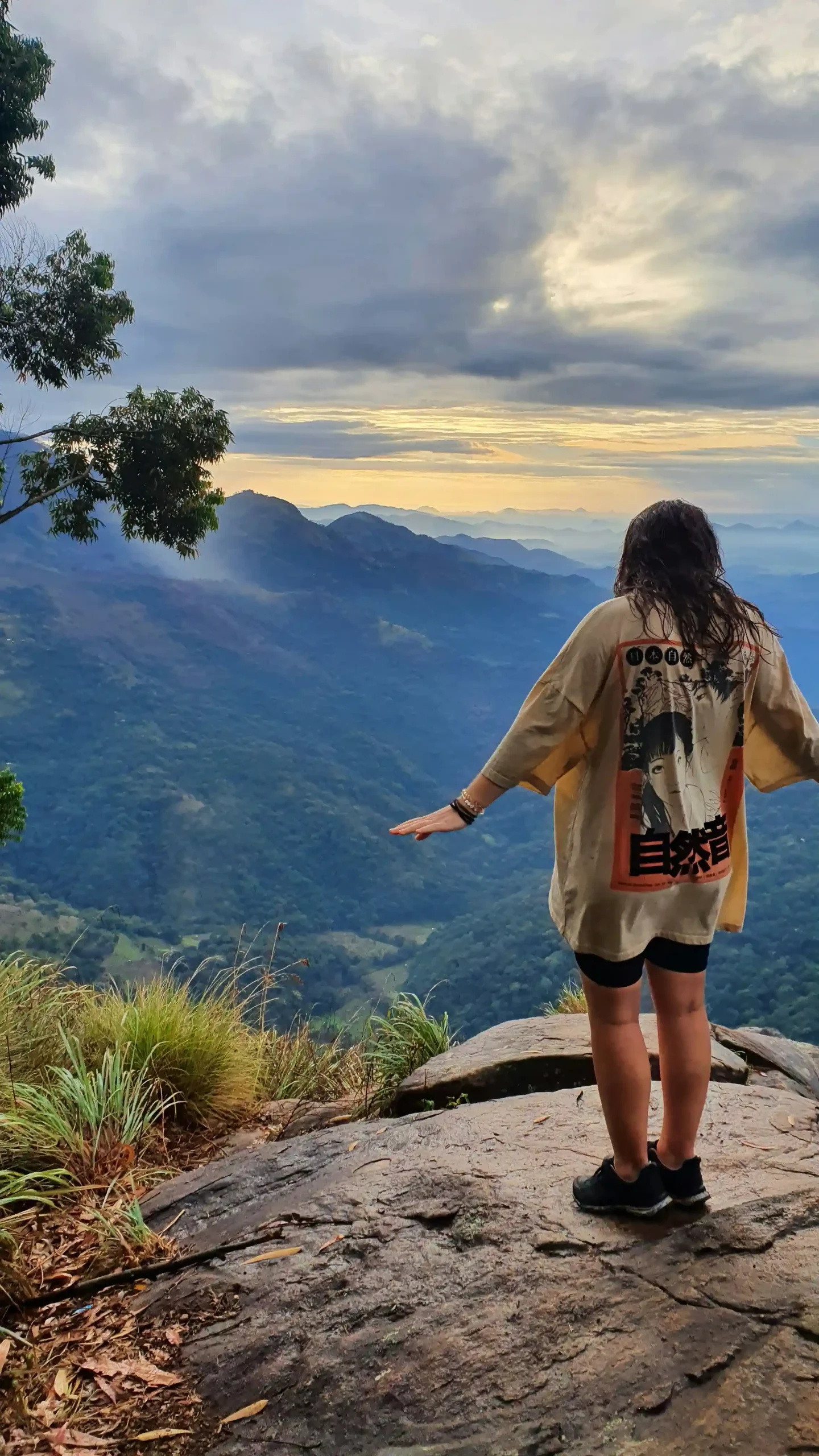
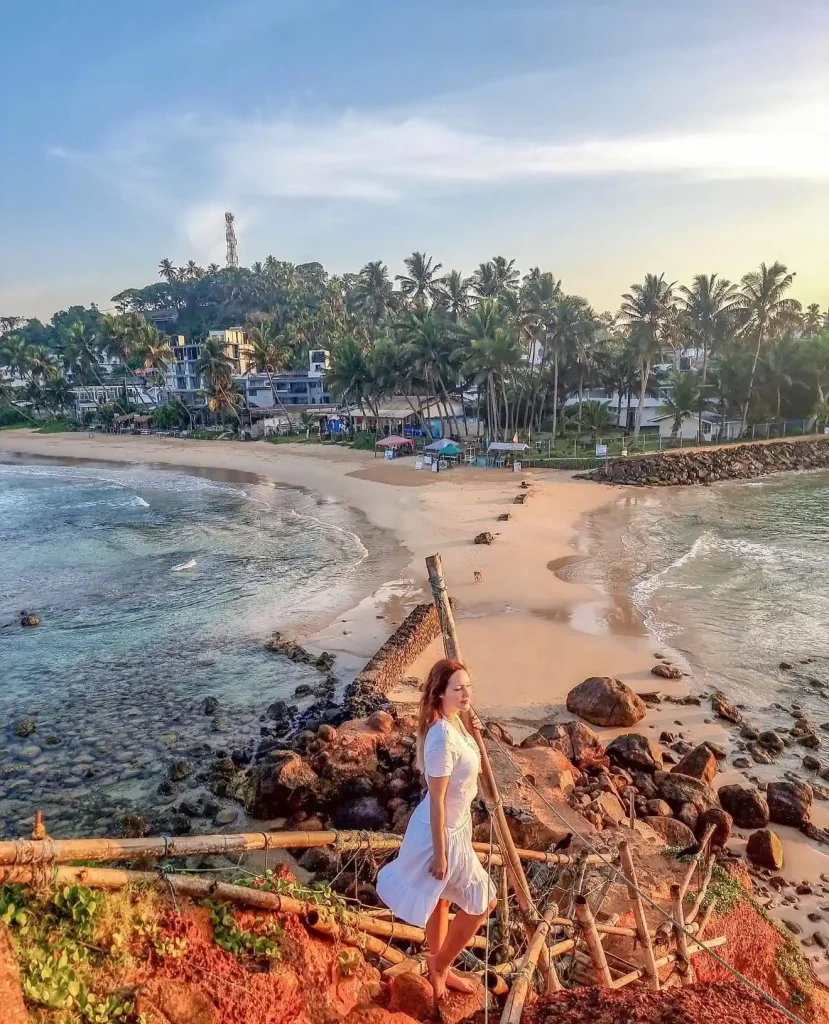
The reward for a safe ascent is a beautiful elevated view across Mirissa Bay.
From the top, the curved shoreline becomes more visible, revealing how the sandy beach sits between its surrounding headlands.
Photography: @julia.miran/Instagram
Coconut palms, beachfront restaurants and accommodation form the backdrop to the tropical coastline.
On a clear day, the Indian Ocean stretches beyond the bay, creating an attractive contrast between the shore and open sea.
The view is particularly enjoyable because it brings together many of Mirissa’s most recognisable features within one relatively compact panorama.
There is no need to reach an exposed edge to appreciate the scenery. The best views can be enjoyed from stable positions on the upper rock.
How Long Should You Spend at Parrot Rock?
Allow approximately 30–60 minutes for the complete experience, including the approach, climb, views and return.
The viewpoint itself is small, and many visitors find that 10–15 minutes at the top is enough to appreciate the scenery and take photographs.
The rest of the time should allow for careful movement and checking the crossing conditions.
There is no advantage in remaining on the rock for an extended period when the tide may begin to rise.
For most travellers, Parrot Rock is best appreciated as a short coastal viewpoint rather than a destination requiring several hours.
Best Time of Day to Visit Parrot Rock
Early morning is generally one of the most attractive times to enjoy Parrot Rock.
Temperatures are more comfortable, the beach can be quieter and the softer light creates attractive views across Mirissa Bay.
Late afternoon is another appealing period, particularly for travellers interested in photography.
However, late afternoon can attract larger numbers of visitors and leaves less time before darkness.
Sea conditions must always take priority over the time of day.
An early morning with rough swell is not a suitable time to cross, while calm conditions at another hour may provide a safer opportunity.
Sunrise at Parrot Rock
Early morning can create a particularly peaceful atmosphere around Mirissa Beach.
As daylight develops, the palms, beach and surrounding coastline become more clearly visible.
The changing light can be especially attractive for photographing the curved shoreline from an elevated position.
Fewer visitors may also make it easier to enjoy the viewpoint without crowding.
However, reaching the rock before there is enough natural light to assess the crossing is not advisable.
Wait until you can clearly see the water, rocks and available footholds.
The safest conditions are more important than being the first person at the viewpoint.
Sunset at Parrot Rock
Late afternoon brings warmer coastal light and a lively atmosphere to Mirissa Beach.
The view from Parrot Rock can be attractive as the colours of the sky and sea change towards evening.
However, the small viewpoint may become crowded as visitors arrive for sunset photographs.
More importantly, the descent and return crossing should be completed before fading light makes the surfaces difficult to see.
Do not remain on the rock until dark when the access depends on wet, uneven ground.
If the tide or waves are unsuitable, enjoy the evening light from the beach instead.
Photography at Parrot Rock
Parrot Rock is particularly rewarding for photographing the shape and atmosphere of Mirissa Bay.
Unlike Coconut Tree Hill, where the palms themselves are often the main subject, Parrot Rock offers an opportunity to photograph the beach from slightly above the shoreline.
A wide-angle composition can capture the curve of the bay, surrounding vegetation and ocean within one photograph.
A moderate zoom can highlight the layers of activity along the beach, including colourful buildings, boats and palms.
Early morning and late-afternoon light can produce softer colours and attractive reflections across the water.
Keep your equipment secure and avoid standing on unstable surfaces while composing photographs.
Taking Photographs with a Smartphone
A smartphone is more than sufficient for capturing attractive photographs from Parrot Rock.
Use the standard or wide-angle camera to include the full sweep of Mirissa Beach.
For a more detailed composition, moderate zoom can draw attention to particular sections of the coastline.
Make sure the horizon is level and allow the natural curve of the bay to guide the composition.
Most importantly, take your phone out only after reaching stable ground.
Do not attempt to record videos or take photographs while negotiating the tide-affected crossing.
Keep your attention on your footing until you have reached a secure position.
Photography Safety on the Viewpoint
Because Parrot Rock is a small natural formation, moving around other visitors requires particular care.
Do not step backwards while looking through your camera or phone screen.
Be aware of uneven edges and worn rock surfaces, especially near exposed drops.
If another visitor is using a popular position, wait rather than climbing into an unstable location.
Avoid blocking the safest walking route with tripods, bags or extended photoshoots.
A beautiful photograph is not worth the risk of slipping onto rocks or into the sea.
What Shoes Should You Wear?
Secure footwear with reliable grip is one of the most useful things to bring to Parrot Rock.
Ordinary loose flip-flops can slide or come off when wet, making them unsuitable for a slippery crossing.
Choose shoes or sandals that remain firmly attached to your feet and provide reasonable traction on uneven surfaces.
Footwear should also allow you to feel stable while climbing the short rocky section.
If you have been swimming, dry your feet and remove loose sand before attempting to climb.
When the rocks are heavily covered with water or algae, appropriate footwear does not make an unsafe crossing safe.
What Should You Bring?
Parrot Rock is a short coastal visit, so travelling light is the most practical approach.
- Secure shoes or sandals with good grip.
- Drinking water.
- Sunscreen and a hat.
- A small bag that leaves your hands free.
- A charged smartphone or compact camera.
- A waterproof pouch for essential items.
- Any necessary personal medication.
Avoid carrying large beach bags, bulky camera equipment or anything that requires both hands during the crossing.
Leave unnecessary belongings securely at your accommodation.
Can Children Visit Parrot Rock?
Parrot Rock can be suitable for some families when the crossing is clearly calm, the footing is secure and children are closely supervised.
However, the most important consideration is the approach rather than the height of the viewpoint.
Children may find it difficult to maintain balance on wet rocks or respond safely when waves suddenly cross their path.
Never carry a young child across rough water simply to reach the viewpoint.
If an adult feels uncertain about the crossing, the conditions are not appropriate for a child.
Families can enjoy the appearance of Parrot Rock and the surrounding bay safely from Mirissa Beach without climbing it.
Accessibility and Mobility Considerations
Parrot Rock is a natural coastal viewpoint rather than a fully accessible visitor attraction.
The approach can involve uneven rocks, shallow water and surfaces affected by waves.
These conditions may be difficult for visitors with limited mobility, reduced balance or joint discomfort.
The climb itself is short but requires suitable coordination and confidence on natural ground.
There is no alternative lift or paved route to the summit.
Travellers who cannot manage the crossing comfortably can still appreciate the rock and surrounding coastline from Mirissa Beach.
Is a Guide Necessary?
A guide is not generally required to appreciate Parrot Rock.
The viewpoint is small and easily recognised from Mirissa Beach.
However, the absence of a formal guide does not mean the crossing is always suitable.
Visitors must consider the tide, waves and condition of the rocks before attempting to reach the top.
Local lifeguards or experienced beach personnel can provide useful advice about current sea conditions where available.
If the crossing is unsuitable, no guide or accompanying person can eliminate the danger created by strong waves and slippery rocks.
Is There an Entrance Fee for Parrot Rock?
Parrot Rock is a natural coastal viewpoint rather than a developed heritage attraction with a standard ticketed entrance.
Visitors generally approach it directly from Mirissa Beach when sea conditions allow.
Parrot Rock has no formal opening hours, and access depends on tide and sea conditions.
Practical access depends on the condition of the sea, not on an advertised attraction timetable.
Respect any local access notices and arrangements displayed near the approach.
Parrot Rock and Mirissa Beach
Parrot Rock is closely connected with the main Mirissa Beach experience.
The beach offers a broad sandy shoreline, tropical scenery and numerous cafés and restaurants overlooking the Indian Ocean.
Parrot Rock provides a different perspective of the same landscape by raising the viewing position above the beach.
The main attraction is the panorama across Mirissa Bay rather than the rock formation itself.
For visitors unfamiliar with the area, the beach is the best place to observe the crossing conditions before deciding whether to approach.
For more information about seasonal sea conditions, swimming and beach facilities, read our Mirissa Beach Swimming and Visitor Guide.
Parrot Rock vs Coconut Tree Hill
Parrot Rock and Coconut Tree Hill are two of Mirissa’s most recognisable viewpoints, but they offer different experiences.
Parrot Rock is a small, tide-dependent outcrop that provides an attractive view back across the main beach.
Coconut Tree Hill is a larger palm-covered headland known for its wider ocean panorama and distinctive tropical landscape.
Coconut Tree Hill does not require the same type of tidal crossing, although its natural ground and exposed cliff edges still require care.
For travellers choosing one dedicated viewpoint, Coconut Tree Hill generally offers the more substantial experience.
Parrot Rock is particularly enjoyable when visitors are already at Mirissa Beach and the crossing happens to be clearly safe.
Explore our Coconut Tree Hill Visitor Guide for detailed access, photography and safety advice.
Is Parrot Rock a Swimming Spot?
Parrot Rock is best understood as a coastal viewpoint rather than a designated swimming attraction.
The water surrounding the rocky formation can be affected by swell, currents and breaking waves.
Do not treat the crossing as a swimming challenge or attempt to reach the rock by swimming through rough water.
Jumping from rocks or entering the sea near exposed edges can be dangerous.
Visitors interested in swimming should choose a suitable section of Mirissa Beach where current conditions and local safety advice support entering the water.
The purpose of visiting Parrot Rock is to enjoy the scenery, not to test swimming ability.
Respecting Other Visitors
Parrot Rock has limited space, and crowding can quickly affect both comfort and safety.
A few visitors stopping on the narrow approach may make it difficult for others to move securely.
Keep access areas clear and avoid standing in the safest route while posing for photographs.
Allow people sufficient time to complete the climbing section without being rushed.
If the viewpoint is busy, wait patiently or take fewer photographs rather than moving towards unstable rocks.
Being considerate helps everyone enjoy the scenery safely.
Protecting the Coastal Environment
Parrot Rock forms part of Mirissa’s natural coastal landscape and should be treated with respect.
Do not leave rubbish, food packaging or cigarette ends on the rock or surrounding beach.
Avoid scratching names into stone, damaging vegetation or removing natural materials.
Marine wildlife and coastal habitats may be affected by unnecessary disturbance.
Respect the surrounding environment and avoid entering sensitive areas for photographs.
A responsible visit helps preserve the coastal setting that makes Mirissa attractive to local residents and international travellers.
Is Parrot Rock Worth Visiting?
Yes, when the tide and waves make the approach clearly safe.
Parrot Rock is a charming coastal viewpoint that offers an attractive elevated perspective of Mirissa Beach and the surrounding bay.
It is particularly rewarding for travellers who enjoy short sightseeing experiences and landscape photography.
However, the small viewpoint does not justify taking risks with strong waves, slippery rocks or an incoming tide.
If the crossing is straightforward, a short visit can be an enjoyable part of experiencing Mirissa’s coastline.
If conditions are rough, enjoy the rock from the beach instead.
The most memorable travel experiences are the ones you can enjoy safely, and Parrot Rock is at its best when nature makes the crossing easy.