Discover the heart of Sri Lanka’s famous tea country with a visit to a working tea estate near Nuwara Eliya. Surrounded by rolling green plantations and cool mountain scenery, Pedro Tea Estate and Damro Labookellie offer opportunities to learn how Ceylon tea is grown, processed, tasted and prepared for sale. This guide compares both estates, explains the traditional tea-making process and provides practical advice for international travellers.
Location: Nuwara Eliya and surrounding tea-growing hills, Central Province
Best for: Tea factory tours, plantation scenery, tea tasting and cultural experiences
Main choices: Pedro Tea Estate and Damro Labookellie Tea Centre
Pedro Tea Estate: Approximately 3.5 km east of Nuwara Eliya town
Damro Labookellie: Along the main road towards Ramboda and Kandy
Time needed: Around 1.5–3 hours, including travel, depending on the estate
What to expect: Tea production, factory explanations, estate scenery and opportunities to taste Ceylon tea
Experience Ceylon tea where it grows
Discover Nuwara Eliya’s Famous Tea Estates
Nuwara Eliya is one of Sri Lanka’s most celebrated tea-growing regions, where neat rows of tea bushes cover hillsides beneath cool mountain skies.
The landscape has become one of the defining images of the country’s Central Highlands, but tea cultivation represents far more than attractive scenery.
Tea has shaped the region’s economy, communities, transport networks and cultural identity for generations.
Visiting a working tea estate provides an opportunity to discover the processes behind one of Sri Lanka’s most internationally recognised products.
From the careful selection of fresh leaves to the machinery used for processing, grading and packaging, tea production involves a series of specialised stages.
For international travellers, a factory visit helps connect the familiar experience of drinking tea with the agricultural landscape and people responsible for producing it.
Why Visit a Tea Factory in Nuwara Eliya?
Driving through Nuwara Eliya’s tea country reveals beautiful plantations, but visiting a factory offers a deeper understanding of how the industry operates.
A guided factory visit introduces the journey from freshly harvested leaves to the finished tea sold in shops around the world.
You can learn why tea leaves are withered, how rolling helps develop flavour, what happens during oxidation and how finished tea is sorted into different grades.
Many visitor experiences also include an explanation of the region’s growing conditions and an opportunity to taste different teas.
The experience is particularly rewarding for travellers who want to understand Sri Lanka’s agricultural heritage rather than simply photograph the surrounding plantations.
Pedro Tea Estate or Damro Labookellie?
Pedro Tea Estate and Damro Labookellie are two of the most practical places to experience tea production around Nuwara Eliya.
Both provide an introduction to Ceylon tea, but their locations and visitor experiences have different advantages.
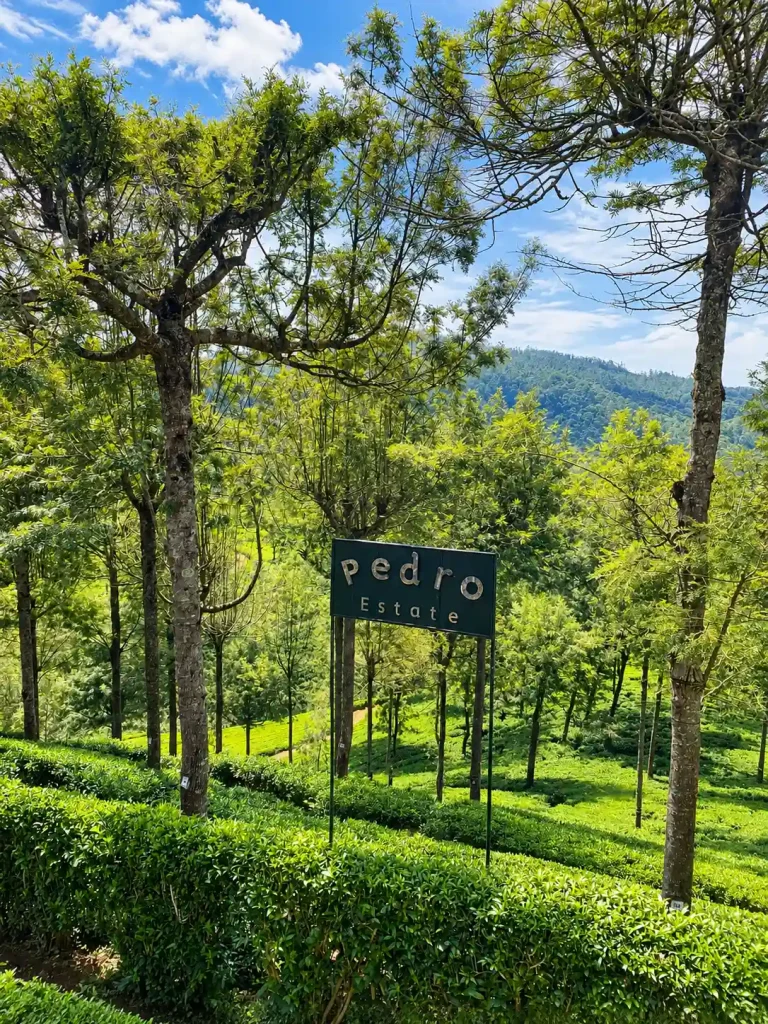
Pedro Tea Estate is the more convenient choice for travellers staying in Nuwara Eliya town. It is only a short road journey from the centre and is particularly suitable for visitors interested in a traditional working factory.
Damro Labookellie Tea Centre is situated along the scenic main road north of Nuwara Eliya towards Ramboda and Kandy. Its appeal includes the tea-country setting, visitor centre, factory explanations and opportunities to taste and purchase tea.
Neither estate is automatically better for every traveller.
The most suitable choice depends on your location, interest in tea production and the type of experience you would prefer.
Pedro Tea Estate: Close to Nuwara Eliya Town
Pedro Tea Estate is one of the most accessible working tea estates near central Nuwara Eliya.
Located approximately 3.5 kilometres east of the town, it is surrounded by the green plantation landscape characteristic of Sri Lanka’s high country.
The estate is associated with a long history of tea cultivation and manufacturing in the region.
Its factory provides visitors with an introduction to the different stages involved in producing Ceylon tea.
Because Pedro is relatively close to the town centre, reaching the estate is straightforward by tuk-tuk, taxi or private vehicle.
The location is particularly convenient for travellers who want to learn about tea manufacturing without undertaking a long drive through the hills.
The History of Pedro Tea Factory
Pedro Tea Factory has roots in the nineteenth-century expansion of tea production in Sri Lanka’s Central Highlands.
The factory is associated with the development of industrial tea manufacturing in Nuwara Eliya, using processes that helped establish Ceylon tea’s international reputation.
Pedro Tea Factory was established in 1885 and is known for its historic tea-manufacturing equipment..
The estate remains connected to the tradition of producing high-grown tea in the cooler climate surrounding Nuwara Eliya.
For visitors, the historical setting adds interest to the factory experience, demonstrating how tea production has evolved over generations.
What Happens During a Pedro Tea Factory Tour?
A typical Pedro factory visit provides an explanation of the tea manufacturing process.
The guided tour introduces the stages that transform freshly harvested tea leaves into the finished product.
Visitors may learn about withering, rolling, oxidation, drying and grading, with explanations of how each stage influences the final tea.
A typical factory tour takes approximately 20 minutes.
The overall visit can take longer when allowing time for tea tasting, enjoying the plantation scenery and purchasing tea.
Pedro is a functioning production facility, so visitors must follow the designated tour areas and instructions given by factory staff.
Pedro Tea Estate Visitor Hours
Pedro Tea Estate’s published visitor hours are 8.00 am to 5.00 pm.
Factory visitor access is scheduled before 12.30 pm and resumes after 2.00 pm.
The break between these visitor periods is important when arranging transport or a factory tour.
Factory access follows the operating arrangements of a working tea-processing facility, with staff directing visitors through the appropriate areas.
Confirm the tour arrangements with the estate or your accommodation provider before travelling, particularly if seeing the production machinery is your main interest.
Tea Production at Pedro
Pedro offers a useful introduction to traditional tea manufacturing techniques.
The factory experience focuses on the industrial processes involved in preparing tea leaves for grading and packaging.
Historic equipment is part of the site’s character, although the machinery operating during a particular visit depends on the factory’s production requirements.
Some visitors may see equipment in use, while other visits concentrate more on explanations and the different stages of manufacture.
A knowledgeable guide can help connect the machines and processes with the finished tea you eventually drink.
Photography within Pedro’s production areas is restricted, so follow staff instructions throughout the visit.
The Tea Landscape Around Pedro Estate
Pedro Tea Estate is surrounded by the green slopes and cultivated hillsides that give Nuwara Eliya its distinctive appearance.
Rows of tea bushes follow the contours of the terrain, creating an attractive landscape of agricultural fields and mountain scenery.
The cooler climate and higher elevation contribute to the growing conditions associated with Nuwara Eliya tea.
For visitors interested in photography, the plantation surroundings are an important part of the experience.
However, the fields are working agricultural areas rather than unrestricted public gardens.
Remain within visitor-approved spaces and avoid entering planted sections without permission.
Damro Labookellie Tea Centre
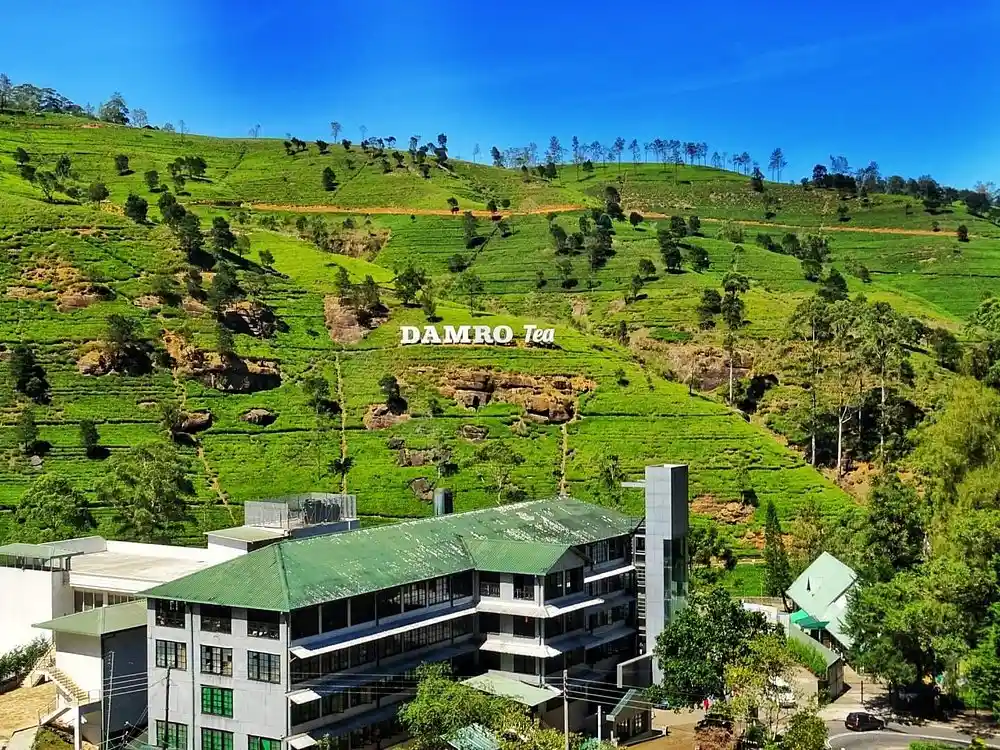
Damro Labookellie Tea Centre is another well-known destination for visitors interested in Ceylon tea.
Located along the main road north of Nuwara Eliya towards Ramboda and Kandy, it occupies a scenic position within Sri Lanka’s tea-growing hills.
The centre was previously known as Mackwoods Labookellie Tea Centre and has a longstanding association with tea production and tourism in the region.
Today, visitors can learn about tea manufacturing, explore the visitor facilities and enjoy opportunities to taste different teas.
The surrounding plantation scenery adds to the appeal, particularly for travellers interested in the relationship between the region’s agriculture and landscape.
What to Expect at Damro Labookellie
Damro Labookellie offers a visitor-focused introduction to the tea industry.
Factory explanations introduce the stages of tea manufacturing, including leaf selection, withering, rolling, oxidation, drying and sorting.
Visitors can also learn about different types of tea and the way processing affects their characteristics.
The tea centre includes opportunities for tasting and purchasing tea, making it appealing to travellers who enjoy exploring different flavours.
The main road location also provides attractive views across the surrounding tea-growing landscape.
For international visitors, Damro offers an accessible combination of tea education, tasting and highland scenery.
Black Tea and White Tea at Damro
Damro Labookellie is associated with the production and presentation of different Ceylon tea varieties.
Damro produces black and white tea, while green tea is processed at another facility within its wider operation.
Black tea undergoes controlled oxidation, contributing to its colour, aroma and characteristic flavour.
White tea is produced using carefully selected leaf material and comparatively minimal processing, creating a different style of tea.
These differences provide an interesting introduction to the variety of products that can come from the same tea plant.
During a tasting, compare the colour, aroma and flavour of the different varieties to understand their individual characteristics.
Why Damro Appeals to Tea Lovers
Damro Labookellie is particularly attractive to visitors who enjoy learning about different tea styles.
The visitor centre allows travellers to connect the tea-making process with the finished products offered for tasting and sale.
Comparing different types of tea can reveal differences in fragrance, strength, colour and mouthfeel.
It also provides an opportunity to understand how leaf selection and processing influence what eventually reaches the cup.
For travellers who enjoy tea but are unfamiliar with its production, this combination of explanation and tasting makes the experience particularly accessible.
How Ceylon Tea Is Grown
Tea is produced from the leaves of Camellia sinensis, a plant cultivated extensively throughout Sri Lanka’s central and southern growing regions.
Tea bushes are maintained through regular pruning and harvesting to encourage suitable new growth.
The youngest leaves and buds are particularly important for producing many established tea styles.
On plantations, tea bushes are commonly arranged in closely planted rows that follow the contours of the hillsides.
This creates the distinctive green patterns visible throughout Nuwara Eliya’s landscape.
Successful cultivation depends on appropriate rainfall, temperature, soil conditions, elevation and skilled agricultural management.
What Does High-Grown Ceylon Tea Mean?
Nuwara Eliya is one of Sri Lanka’s best-known high-grown tea regions.
The term high-grown tea generally refers to tea cultivated at elevations above approximately 1,200 metres.
At higher elevations, cooler temperatures and distinctive growing conditions influence leaf development and the character of the finished tea.
Nuwara Eliya tea is known for its delicate aroma, refined flavour and pale golden infusion.
These qualities distinguish it from some lower-grown Sri Lankan teas, which may produce darker, stronger cups.
Altitude influences tea character, but personal preference remains important. A stronger low-grown tea can be just as enjoyable as a delicate high-grown variety.
Why Nuwara Eliya Tea Tastes Different
Tea flavour develops through a combination of growing conditions and manufacturing techniques.
Nuwara Eliya’s altitude, rainfall, temperature and changing highland weather influence how the tea plants grow.
The selection of leaves, timing of harvesting and care taken during production also affect the finished product.
High-grown Nuwara Eliya teas are often appreciated for a light body, delicate aroma and refined flavour.
These characteristics make tea tasting particularly interesting because visitors can compare a familiar everyday drink with varieties that reveal more subtle differences.
How Black Tea Is Made
Black tea production involves a series of carefully controlled stages.
Although the precise equipment and techniques vary between factories, the general process follows a recognisable sequence from fresh leaf to finished tea.
A factory visit provides an opportunity to understand how each stage contributes to flavour, colour, aroma and consistency.
1. Tea Plucking
The process begins with harvesting suitable fresh leaves from the tea bushes.
For many quality tea styles, the tender upper leaves and bud are particularly important.
Skilled workers select the required leaf material according to the estate’s plucking standards.
The harvested leaves are then transported for processing.
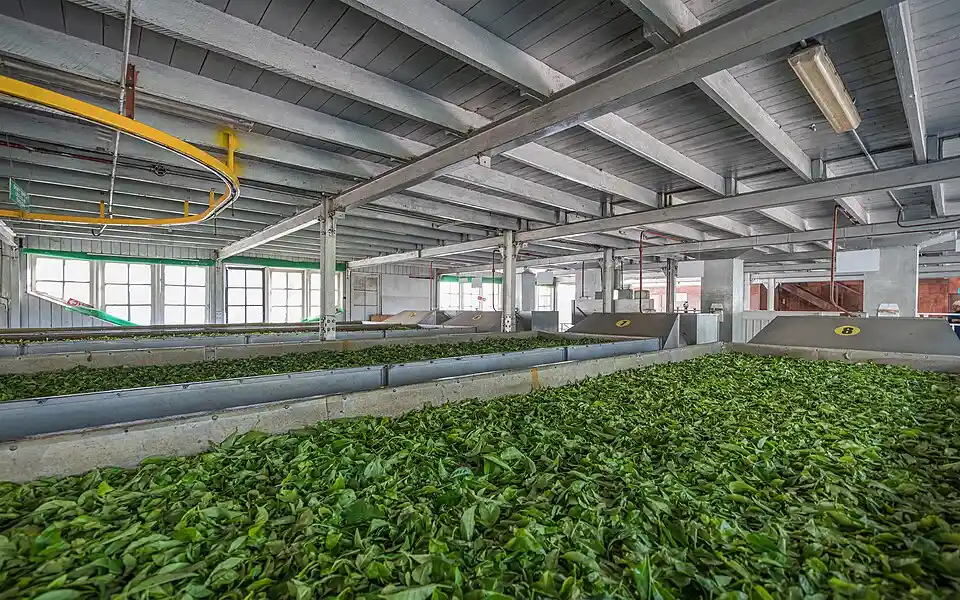
2. Withering
Fresh tea leaves contain a considerable amount of moisture.
During withering, they are spread out under controlled conditions so that some of this moisture can evaporate.
The leaves become softer and more suitable for the next processing stage.
Withering also contributes to the chemical changes that influence the finished tea’s flavour.
3. Rolling
The withered leaves are rolled or mechanically worked to disrupt their cellular structure.
This allows naturally occurring substances within the leaves to interact with oxygen during the following stage.
Rolling also helps shape the leaf and influences the appearance of the finished tea.
4. Oxidation
Oxidation is one of the defining stages of black tea production.
As the processed leaves react with oxygen, chemical changes develop the colour, aroma and flavour associated with black tea.
This stage is sometimes traditionally called fermentation within the tea industry, although oxidation is the more precise description of the main process.
The timing and control of oxidation play an important role in the final tea’s character.
5. Drying or Firing
After the desired level of oxidation is reached, the leaves are dried using controlled heat.
This reduces moisture and effectively stops the oxidation process.
Proper drying is important for maintaining the tea’s flavour and helping preserve it during storage and transport.
6. Sorting and Grading
The dried tea is sorted into different grades according to characteristics such as leaf size and appearance.
Grades help identify and classify the different products produced by the factory.
They should not be interpreted as a simple ranking where the largest or most expensive grade is automatically the best.
The finished tea is then prepared for storage, distribution, packaging or further commercial processing.
Understanding Tea Grades
Visitors often encounter tea grades such as Orange Pekoe, Broken Orange Pekoe and other familiar classifications when exploring Ceylon tea.
These terms generally relate to the physical characteristics of processed tea leaves, particularly their size and appearance.
Leaf grade influences brewing behaviour and can affect the strength and character of the drink.
However, grade alone does not determine whether you will enjoy a particular tea.
Growing conditions, manufacturing quality, freshness and personal taste all matter.
A factory guide can help explain the labels used on the teas available for tasting and purchase.
What Happens During Tea Tasting?
Tea tasting is one of the most enjoyable parts of a tea-estate visit.
It allows visitors to compare different products and recognise how growing region, leaf selection and manufacturing influence the finished drink.
Begin by noticing the colour of the tea in the cup.
Next, consider the aroma before taking a small sip and paying attention to the flavour, strength and mouthfeel.
When comparing several teas, tasting them without milk or sugar initially makes it easier to recognise their individual characteristics.
You can then decide which styles you prefer for everyday drinking.
What Should You Look for When Tasting Tea?
Different teas can have noticeably different characteristics.
Some produce a light golden colour with a delicate aroma, while others are darker and more full-bodied.
Pay attention to the balance between fragrance, flavour and strength.
There is no requirement to prefer the most expensive or most delicate tea.
The best choice is the one you genuinely enjoy drinking.
A tasting session can also help you recognise why different Ceylon tea regions have their own identities.
Can You Buy Tea at the Estates?
Tea shops are a familiar part of the visitor experience at Pedro and Damro Labookellie.
They provide an opportunity to purchase tea after learning about its production and tasting different varieties.
Products may include black tea and other styles sold in retail packaging suitable for taking home.
Before buying, check the tea type, grade, weight and producer information.
Consider how you normally prepare tea and whether the product matches your preferences.
Tea can make an attractive Sri Lankan souvenir, especially when you understand where it was produced and how it differs from other varieties.
Tips for Buying Ceylon Tea as a Souvenir
Choose sealed retail packaging that clearly identifies the tea.
If you particularly enjoyed a tasting, ask for the same product or an equivalent grade rather than selecting tea solely because the packaging looks premium.
Smaller packets can be practical for trying different varieties at home.
Keep the tea dry and protected from strong odours during travel.
If flying internationally, retaining the original retail packaging makes the product easier to identify when passing through customs or security checks.
Check your destination country’s rules for bringing food products from overseas.
Will the Tea Factory Machinery Be Running?
Tea factories are working agricultural processing facilities rather than museums operating exclusively for tourists.
Machinery is used according to the arrival of harvested leaves, manufacturing requirements and maintenance schedules.
A guided visit may therefore include a combination of live production, stationary equipment and explanations of the manufacturing process.
If watching active machinery is particularly important to you, confirm the day’s production arrangements when organising your visit.
A well-explained factory tour remains valuable because it shows how the separate stages of tea production work together.
Tea Plucking Experiences
Some estates and tourism providers offer supervised opportunities to learn about tea plucking.
These experiences can introduce visitors to the skill involved in selecting suitable leaves and maintaining harvesting standards.
Tea plucking requires knowledge, care and physical effort, often carried out repeatedly across steep terrain.
An educational experience should explain the work rather than presenting it merely as an activity for photographs.
Visitors should follow estate instructions and avoid entering active plantations without permission.
Respecting the people responsible for harvesting tea is an important part of understanding the industry.
The People Behind Sri Lanka’s Tea Industry
Sri Lanka’s tea heritage cannot be understood only through its colonial-era factories, famous brands and picturesque plantations.
Generations of plantation workers and their families have played an essential role in sustaining the industry.
Many estate communities have Indian Tamil heritage, reflecting the labour history of tea cultivation during the colonial period and the generations that followed.
Harvesting, processing and maintaining the estates require considerable skill and daily work.
A thoughtful visit recognises the people responsible for tea production alongside the machinery and scenery.
Do not photograph workers closely without permission or interrupt their activities.
Learning about the human history of tea adds important context to one of Sri Lanka’s most recognisable industries.
The Origins of Ceylon Tea
Commercial tea cultivation expanded in Sri Lanka during the nineteenth century, when the island was known as Ceylon.
James Taylor is closely associated with the development of the country’s commercial tea industry, particularly through his work at Loolecondera Estate in the Kandy region.
Tea subsequently became one of Sri Lanka’s major agricultural exports.
As cultivation expanded into the central highlands, factories, roads, railway connections and estate settlements developed to support the industry.
Nuwara Eliya became an important tea-growing region, recognised for the distinctive characteristics of its high-elevation tea.
Visiting a working factory offers an opportunity to see how this historical industry continues to operate today.
Photography at Tea Estates
Tea plantations around Nuwara Eliya provide some of Sri Lanka’s most recognisable hill-country photographs.
Rows of tea bushes, mist-covered slopes, estate buildings and distant mountains create attractive landscape compositions.
Morning light can be particularly pleasant, while mist often adds atmosphere to the surrounding hills.
Use approved visitor areas when taking photographs and avoid blocking estate roads or work areas.
Photograph workers only with their permission, especially when taking close portraits.
Factory interiors may have photography restrictions. At Pedro, visitors should follow the site’s restrictions on photographing production areas.
What to Wear for a Tea Estate Visit
Nuwara Eliya’s cool highland climate makes lightweight layers a practical choice.
Comfortable walking shoes are useful for estate grounds, paths and factory visitor areas.
A jumper or light jacket is particularly helpful during cooler mornings.
Carry a compact waterproof jacket because mist and rain can develop quickly in the hills.
Inside working factories, avoid loose clothing or accessories that could interfere with machinery.
Follow all safety and clothing instructions provided by factory staff.
Getting to Pedro Tea Estate
Pedro Tea Estate lies approximately 3.5 kilometres east of central Nuwara Eliya.
A tuk-tuk or taxi is a convenient way to reach the factory without renting a car.
Travellers staying in the town centre can also arrange transport through their accommodation.
The relatively short distance makes Pedro particularly accessible for visitors who are based in Nuwara Eliya itself.
Agree the tuk-tuk or driver cost before travelling.
If arranging a return journey, confirm whether your driver will wait during the factory visit.
Getting to Damro Labookellie
Damro Labookellie is located along the A5 road running north from Nuwara Eliya towards Ramboda and Kandy.
The surrounding route passes through scenic hill-country terrain and extensive tea-growing landscapes.
A private vehicle, taxi or tuk-tuk provides convenient access to the tea centre.
For travellers already using the main road between Nuwara Eliya and Kandy, the location is particularly practical.
Confirm the total transport fare and arrangements before departure, including any waiting time.
Visitors travelling independently should use the recognised tea-centre entrance rather than walking through working plantation areas.
How Long Does a Tea Estate Visit Take?
Allow approximately 1.5–3 hours for a tea-estate experience, including travel, depending on your chosen location.
The factory tour itself can be relatively short. At Pedro, the published tour duration is approximately 20 minutes.
Additional time may be spent tasting tea, exploring permitted visitor areas, taking photographs and enjoying the surroundings.
Travellers with a particular interest in tea production may prefer longer explanations and a more detailed tasting.
The overall time required at Damro depends partly on your starting location and the services you choose at the centre.
Are Tea Estate Visits Suitable for Children?
Tea factories can provide an interesting educational experience for families, especially children learning how everyday products are made.
Seeing the different stages of tea manufacturing can help explain the connection between agriculture and food production.
However, factories are working industrial environments, and children must follow the instructions of staff.
Keep young children supervised near machinery, factory entrances and estate roads.
Families should choose a visit appropriate to the children’s ages and ability to remain within designated visitor areas.
Accessibility and Visitor Comfort
Accessibility varies between tea factories and visitor facilities.
Working estates can contain steps, uneven surfaces and areas designed primarily for industrial operations.
Visitors with reduced mobility should enquire about the easiest entrance and whether the factory tour includes stairs.
Damro’s visitor-centre setting may appeal to those prioritising a tea-tasting experience, while Pedro’s proximity to town reduces travel time.
However, the physical layout of individual facilities should be considered separately from the distance required to reach them.
Visiting Tea Estates Responsibly
Tea estates are working agricultural environments that support local communities and businesses.
Respect private property, production areas and estate access restrictions.
Do not enter tea fields, photograph workers closely or approach machinery without permission.
Follow instructions from guides and factory employees throughout the visit.
Avoid leaving food packaging or other rubbish around plantation roads and gardens.
Supporting responsible operators and treating workers respectfully helps create a more meaningful visitor experience.
Which Tea Estate Should You Choose?
For most international travellers, either Pedro Tea Estate or Damro Labookellie provides a worthwhile introduction to Ceylon tea.
Choose Pedro Tea Estate if you are staying in central Nuwara Eliya and want a conveniently located working factory where the emphasis is on understanding tea manufacture.
Choose Damro Labookellie if you value a scenic tea-country setting, tasting facilities and an easily accessible tea centre along the main road towards Ramboda and Kandy.
Both offer opportunities to appreciate the relationship between tea cultivation, manufacturing and the highland landscape.
A single well-explained tea-factory visit is enough to give most first-time travellers a valuable understanding of the industry.
Are Nuwara Eliya Tea Estate Visits Worthwhile?
Absolutely. Visiting a tea estate is one of the most meaningful ways to understand Nuwara Eliya and its surrounding highland landscape.
Tea has influenced the region’s history, employment, culture and economy for generations, making the plantations much more than beautiful scenery.
Pedro Tea Estate provides a convenient introduction to traditional manufacturing near the town, while Damro Labookellie combines tea education with a scenic visitor-centre experience.
Learning how tea is harvested, processed, graded and tasted gives new meaning to Sri Lanka’s famous Ceylon tea.
For international travellers, a thoughtful estate visit offers an enjoyable combination of history, agriculture, local culture and one of the hill country’s most distinctive landscapes.