Discover Bundala National Park, one of Sri Lanka’s most important wetland wildlife destinations and an exceptional place for birdwatching. Located near Hambantota and within easy reach of the wider Yala region, Bundala protects a beautiful coastal landscape of lagoons, salt marshes, dunes, scrubland and wetlands that attract remarkable resident and migratory birds.
Famous for its seasonal greater flamingos and internationally recognised conservation status, Bundala offers a quieter alternative to Sri Lanka’s busier wildlife parks. This complete visitor guide covers the best birdwatching season, flamingo sightings, wetland wildlife, safari bookings, entrance permits, responsible photography and practical advice for international travellers.
Location: Hambantota District, Southern Province, Sri Lanka
Best for: Birdwatching, migratory birds, flamingos, wetlands and nature photography
Safari experience: Guided wildlife viewing by safari jeep
Main migratory bird season: September–March
Recommended safari duration: Approximately 3–4 hours
Best time of day: Early morning or late afternoon
Wildlife: Waterbirds, elephants, crocodiles, deer and other dry-zone animals
Conservation status: Ramsar Wetland of International Importance and part of a UNESCO Biosphere Reserve
Practical accommodation base: Tissamaharama
Park authority: Department of Wildlife Conservation
Where migratory birds meet coastal wetlands
Discover Bundala National Park
Bundala National Park is one of Sri Lanka’s most rewarding wildlife destinations for travellers who enjoy birds, wetlands and the quieter side of nature.
Located along the southern coastline near Hambantota, the national park protects a remarkable mixture of habitats, including brackish lagoons, seasonal freshwater areas, salt marshes, sand dunes, coastal vegetation and dry-zone forest.
These environments support an impressive variety of wildlife, particularly birds that depend on wetlands for feeding, resting and migration.
Unlike wildlife parks where visitors concentrate mainly on finding leopards or elephants, Bundala offers a slower experience focused on observing animals within their natural habitats.
A safari may involve watching flamingos feeding in shallow water, identifying wading birds along a lagoon, observing crocodiles near the banks or listening to bird calls across the wetlands.
For international travellers interested in natural history, Bundala provides an excellent introduction to Sri Lanka’s coastal ecosystems.
Why Bundala Is Worth Visiting
Bundala is particularly appealing because of its combination of wildlife diversity and peaceful wetland scenery.
The park’s lagoons attract birds from different habitats, while its scrubland and forest areas support mammals, reptiles and other wildlife.
The landscape changes throughout the year as rainfall, water levels and seasonal migration influence the animals present.
Rather than racing between sightings, visitors can spend time observing the behaviour of birds, watching the water and understanding the connections between different habitats.
Bundala is especially rewarding for birdwatchers, wildlife photographers and travellers who prefer a relaxed safari atmosphere.
Its international conservation importance adds another dimension, making the park valuable not only as a tourism attraction but also as a protected environment for migratory wildlife.
Why Bundala Is Different from Yala
Although Bundala and Yala are located within the same wider region of southern Sri Lanka, they offer different wildlife experiences.
Yala National Park is particularly famous for its Sri Lankan leopards, elephants and predator-focused jeep safaris.
Bundala National Park is best known for wetlands, migratory birds, flamingos and quieter wildlife observation.
Bundala’s lagoons and shallow feeding areas attract numerous bird species, making binoculars and a knowledgeable birdwatching guide especially valuable.
The park also supports mammals and reptiles, but its greatest strength is the opportunity to explore a coastal ecosystem through birdwatching and patient observation.
Travellers whose main priority is seeing a leopard will generally find Yala more appropriate, while those interested in birds and wetlands may prefer Bundala.
Bundala’s International Conservation Importance
Bundala is recognised internationally for the ecological importance of its wetlands.
The area has received several conservation designations reflecting its value to wildlife and the wider natural environment.
It became Sri Lanka’s first Wetland of International Importance under the Ramsar Convention in 1991.
Bundala was subsequently declared a national park in 1993, strengthening protection for its habitats and wildlife.
In 2005, the wider Bundala landscape was designated a UNESCO Biosphere Reserve under the Man and the Biosphere Programme.
These recognitions reflect different aspects of conservation, from protecting internationally significant wetlands to supporting the relationship between biodiversity and surrounding communities.
Bundala as Sri Lanka’s First Ramsar Wetland
Bundala holds an important place in Sri Lanka’s environmental history as the country’s first designated Ramsar Wetland of International Importance.
The Ramsar Convention is an international agreement concerned with the conservation and wise use of wetlands.
Wetlands are valuable ecosystems because they support biodiversity, regulate water and provide essential habitats for many species.
At Bundala, the lagoons and surrounding wetland areas are particularly important for resident and migratory waterbirds.
These habitats provide feeding and resting areas for birds travelling between distant regions.
Bundala’s Ramsar recognition highlights why protecting coastal wetlands matters far beyond Sri Lanka’s borders.
Bundala’s UNESCO Biosphere Reserve Status
The wider Bundala landscape became a UNESCO Biosphere Reserve in 2005.
Bundala is Sri Lanka’s only coastal UNESCO Biosphere Reserve, recognised for its protected natural habitats and surrounding communities.
The national park forms the protected core of a larger biosphere landscape.
This wider reserve contains lagoons, wetlands, coastal vegetation, dry forest and areas associated with local communities.
Biosphere reserves promote conservation alongside sustainable relationships between people and their environments.
UNESCO Biosphere Reserve status is separate from UNESCO World Heritage status. Bundala’s international recognition is specifically connected with its wetland and biosphere conservation importance.
How Many Bird Species Are Found at Bundala?
Bundala is one of Sri Lanka’s most important birdwatching locations because of the remarkable number of species associated with its habitats.
Bundala National Park is home to approximately 197 recorded bird species, including numerous resident and migratory birds.
The wider Bundala Biosphere Reserve supports approximately 230 indigenous and migratory bird species.
The wider reserve includes additional habitats beyond the national park’s protected core, contributing to the larger species count.
For visitors, the main attraction is not simply the number of species recorded, but the opportunity to observe a rich variety of birds within different natural environments.
From large waterbirds feeding in the lagoons to smaller species moving through scrubland, Bundala rewards patient observation.
Best Season for Birdwatching at Bundala
The main migratory birdwatching season at Bundala generally runs from September to March.
During this period, migratory birds travel to Sri Lanka from breeding grounds in other parts of the world.
Many use the wetlands as feeding and resting areas during the northern hemisphere’s colder months.
The arrival of migratory species makes this period particularly interesting for birdwatchers seeking a wide variety of waterbirds.
However, the exact species present and their numbers vary according to migration patterns, rainfall and water conditions.
Bundala also supports resident birds throughout the year, making the park rewarding outside the principal migratory season.
Why Migratory Birds Visit Bundala
Many bird species travel considerable distances between breeding and wintering areas.
These journeys require suitable habitats where birds can rest and find enough food to maintain their energy.
Bundala’s lagoons and shallow wetlands provide feeding grounds for birds that depend on aquatic insects, small fish and other wetland organisms.
Different water depths create opportunities for different types of birds.
Long-legged waders may search for food in shallow water, while ducks and other waterbirds use deeper sections or open lagoons.
This variety of feeding environments makes Bundala particularly important within wider migratory bird networks.
Greater Flamingos at Bundala National Park
Greater flamingos are among Bundala’s most famous wildlife attractions.
These elegant birds are recognised by their long legs, curved bills and distinctive pinkish colouring.
During suitable seasonal conditions, flamingos may gather in groups around the lagoons, creating one of the most memorable sights in Sri Lankan birdwatching.
Their feeding behaviour is particularly interesting, as they use their specialised bills to filter small organisms from the water.
Watching flamingos move through a lagoon or feed together can be an extraordinary experience for nature enthusiasts.
The number of flamingos present changes between seasons and years, reflecting natural migration and changing wetland conditions.
When Can You See Flamingos at Bundala?
The September-to-March migratory season is the most relevant period for travellers interested in seeing greater flamingos.
However, flamingo movements depend on conditions across a much wider geographical area.
Water levels, salinity and feeding opportunities influence which lagoons the birds use.
Some seasons bring particularly impressive gatherings, while others produce smaller numbers.
For travellers whose main interest is flamingo photography, a specialist local birdwatching guide can help identify the areas where birds have been active recently.
Approach any flamingo encounter quietly and observe the birds from an appropriate distance.
Other Migratory Waterbirds
Flamingos are only one part of Bundala’s migratory birdlife.
The park’s wetlands attract numerous wading birds and waterbirds that travel to Sri Lanka seasonally.
Species groups include sandpipers, plovers, stints, godwits, terns and other birds associated with coastal wetlands.
Many use the shallow margins of lagoons to search for food.
Some species are relatively easy to distinguish, while others have subtle differences in plumage, bill shape and size.
A knowledgeable guide and binoculars make the experience particularly rewarding, especially when several similar-looking birds are feeding together.
Resident Birds at Bundala
Bundala’s birdwatching appeal extends beyond the migratory season.
Resident birds use the park’s lagoons, dry-zone scrub, trees and freshwater habitats throughout the year.
Herons, egrets, kingfishers and other wetland birds are among the groups visitors may encounter.
Peafowl and additional dry-zone species can be found in suitable land habitats.
Birds of prey also occur around the park, using open areas and wetland environments to search for food.
The combination of permanent and seasonal birdlife means there is often something interesting to observe, even when the major migratory flocks are absent.
Herons, Egrets and Other Lagoon Birds
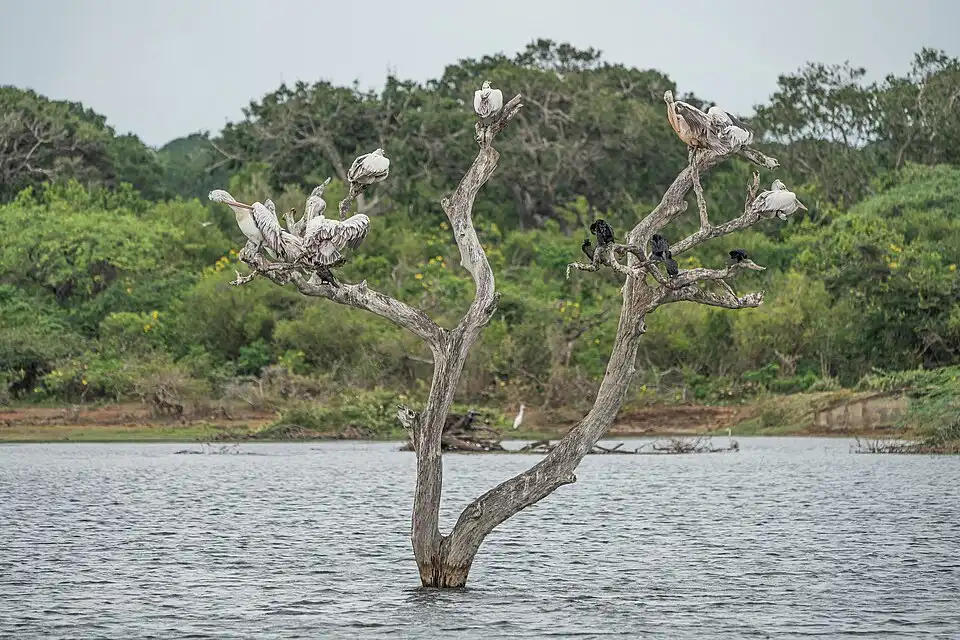
Herons and egrets are particularly interesting to observe because of their specialised feeding behaviour.
Many stand quietly beside shallow water, waiting for fish and other small animals to move within reach.
Some walk slowly through the wetlands, while others remain almost motionless for long periods.
Pelicans and other larger waterbirds may also be encountered in suitable habitats.
Observing these different feeding techniques provides insight into how wetland species use the same environment in different ways.
For photographers, patience often produces better results than repeatedly changing position.
Birds of Prey and Dry-Zone Species
Bundala’s ecological variety supports birds beyond the open lagoons.
Raptors may be seen flying above grassland, scrub or wetland areas in search of prey.
Other species use trees, bushes and dry forest habitats for shelter and feeding.
These birds are easy to overlook if a safari concentrates entirely on large flocks near the water.
Ask your guide to include time for observing the scrubland and dry-zone habitats as well as the lagoons.
The diversity of birds across different environments is one of Bundala’s greatest attractions.
The Lagoons of Bundala National Park
Water is central to Bundala’s identity as a wildlife destination.
The national park contains four principal brackish-water lagoons, forming an important part of the protected wetland system.
Brackish water contains a mixture of fresh and salt water, creating ecological conditions that differ from ordinary freshwater lakes.
These lagoons are accompanied by salt marshes, seasonal freshwater habitats, coastal vegetation and other wetland environments.
Changes in rainfall, salinity and water depth influence where birds feed and rest.
A good safari guide will explain these connections rather than simply identifying the animals visible from the jeep.
Salt Marshes and Shallow Feeding Areas
Salt marshes are an important part of Bundala’s coastal wetland landscape.
These environments support plants adapted to saline conditions and provide habitat for various small aquatic organisms.
Shallow water and exposed wet ground create feeding opportunities for wading birds.
As water levels change, different sections become suitable for different species.
This is one reason birdwatching conditions can vary considerably even within the same season.
Understanding the wetland environment helps visitors appreciate why particular birds gather in one location rather than another.
Sand Dunes and Coastal Vegetation
Bundala’s coastal landscape includes sandy environments and dune vegetation that differ from its wetter lagoon habitats.
These areas support specialised plants and animals adapted to dry, sandy and sometimes saline conditions.
The dunes also contribute to the character of the park’s southern coastal scenery.
Coastal vegetation provides shelter for wildlife and helps protect vulnerable sandy environments from erosion.
Visitors should remain on authorised safari tracks rather than entering dunes or vegetation independently.
Protecting these habitats is important because even small disturbances can affect sensitive coastal ecosystems.
Mangroves and Freshwater Habitats
Small mangrove areas and seasonal freshwater environments add further ecological variety to Bundala.
Mangroves are coastal plants adapted to waterlogged ground and varying salinity.
Their root systems create shelter for small aquatic animals and contribute to the stability of wetland environments.
Freshwater habitats attract species that may use different feeding areas from birds found in brackish lagoons.
The combination of these ecosystems helps explain Bundala’s remarkable biodiversity within a relatively compact coastal landscape.
Crocodiles at Bundala National Park
Bundala supports crocodiles within its wetland habitats.
Both of Sri Lanka’s crocodile species are found within the wider Bundala Biosphere Reserve.
These are the mugger crocodile and the saltwater crocodile, which use different freshwater and coastal wetland environments.
Crocodiles may be observed resting near the water or moving through suitable lagoon habitats.
They can remain difficult to see when partly submerged or concealed near vegetation.
Always remain inside the safari vehicle except at designated stops permitted by the park authorities, and never approach lagoon banks independently.
Wild Elephants at Bundala
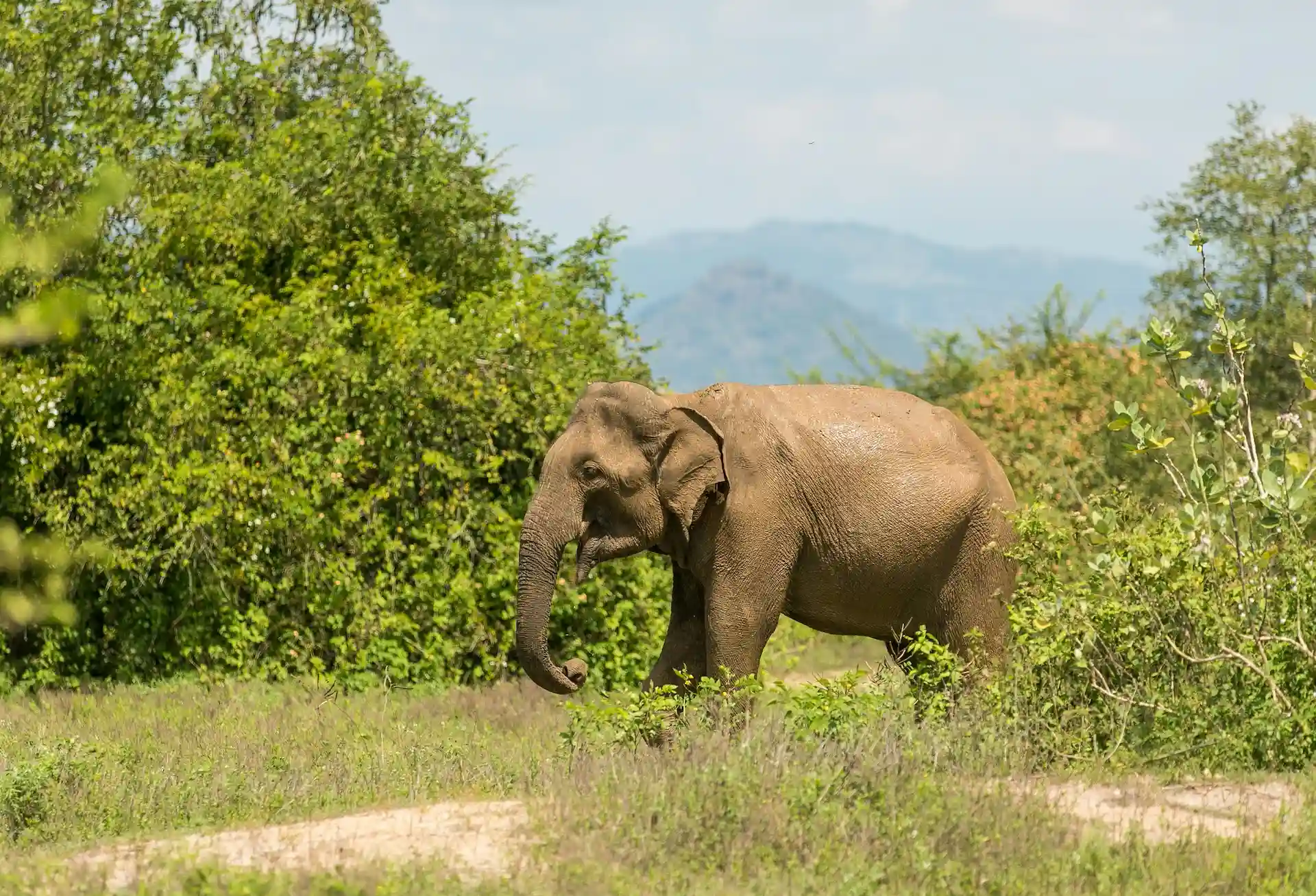
Although Bundala is best known for birds, Asian elephants also occur within the park’s wider habitat.
Elephants may move through dry forest, scrubland and suitable feeding areas depending on natural conditions.
Seeing an elephant during a Bundala safari can be a memorable addition to the birdwatching experience.
However, elephants are not the main reason most specialist birdwatchers choose the park.
Their movements vary with food, water and seasonal conditions.
If an elephant is encountered, stay inside the jeep, maintain a respectful distance and follow the driver’s instructions.
Other Mammals in Bundala
Bundala also supports a range of mammals associated with Sri Lanka’s dry-zone and wetland environments.
Animals recorded in the park include deer, jackals, monkeys, mongooses and other smaller mammals.
Fishing cats and other elusive species form part of the wider mammal community, although they are rarely the focus of ordinary daytime safaris.
These animals play important roles within the park’s ecosystems, including controlling prey populations and contributing to the natural food web.
The possibility of encountering mammals adds variety to the experience, but Bundala remains especially valuable for its birds and wetlands.
Can You See Leopards at Bundala?
Leopards are recorded within Bundala’s wider mammal community.
However, the park is not primarily known as a leopard-watching destination.
The strongest reasons to visit Bundala are its lagoons, migratory birds, resident birdlife and diverse wetland habitats.
A leopard sighting would be an exceptional wildlife encounter rather than the main focus of a typical safari.
Travellers especially interested in the possibility of seeing a Sri Lankan leopard will generally find Yala National Park the more appropriate choice.
What Happens on a Bundala Safari?
A Bundala safari usually takes place in a jeep driven by a local operator familiar with the national park.
After entering through the approved park entrance, the vehicle follows authorised tracks passing through wetlands, scrubland and other wildlife habitats.
Unlike a safari focused mainly on large mammals, birdwatching often involves longer stops in one position.
Your guide may pause beside a lagoon to identify waterbirds, observe their feeding behaviour or examine distant flocks through binoculars.
Other sections of the drive provide opportunities to observe crocodiles, mammals and dry-zone birds.
The most rewarding experience usually comes from moving slowly and allowing time for careful observation.
Why a Birdwatching Guide Makes a Difference
Birdwatching requires a different approach from searching for large mammals.
A knowledgeable Bundala guide should understand the habitats used by different bird groups and recognise species through their appearance, behaviour and calls.
They can help visitors distinguish similar-looking waterbirds and explain why particular species are feeding in certain areas.
Local knowledge is also useful for understanding seasonal migration, water levels and recent bird activity.
When choosing an operator, ask whether the driver or accompanying guide regularly works with birdwatchers.
An experienced birding guide can make even a relatively quiet morning interesting and educational.
How Long Should You Spend at Bundala?
For most first-time visitors, a three-to-four-hour safari provides a rewarding introduction to Bundala.
This allows time to observe wetland birds, explore different habitats and stop for photography without rushing.
A half-day experience is also manageable in Sri Lanka’s warm southern climate.
Dedicated birdwatchers may prefer a longer session when interested in identifying additional species and observing behaviour in detail.
Bundala is a park where the quality of observation matters more than the distance travelled.
Spending time beside a productive lagoon can be more rewarding than attempting to cover every available track.
Morning or Afternoon Safari?
Both early morning and late afternoon can be excellent periods for visiting Bundala.
Early morning is particularly attractive for birdwatching because temperatures are cooler and many birds are active around feeding areas.
Morning light also helps create attractive photographs across the wetlands.
Late afternoon offers softer light and another opportunity to observe birds and other wildlife as the strongest heat begins to ease.
Specialist birdwatchers may choose a particular session based on current water levels, bird activity and the species they hope to observe.
For most international travellers, an early morning safari is an excellent starting point.
How to Choose a Bundala Safari Operator
Selecting the right safari operator is particularly important at a birdwatching destination.
A suitable operator should provide an authorised vehicle, an experienced driver and knowledge of the park’s habitats.
For birdwatchers, species-identification skills are especially valuable.
Before booking, confirm the safari duration, passenger numbers, national park permit arrangements and whether binoculars are available.
Also ask how the driver approaches feeding birds and whether they maintain sufficient distance to avoid disturbing wildlife.
A responsible operator should prioritise patient observation rather than rushing between sightings.
Private Jeep or Shared Safari?
Bundala can be explored through private or shared jeep arrangements, depending on the services offered by local operators.
A private safari is particularly appealing for serious birdwatchers and photographers who want more control over the time spent observing different species.
It allows the group to concentrate on its own interests within the park’s rules and permitted routes.
A shared safari can be more economical and may suit travellers who want a general introduction to the wetlands.
However, it is worth checking whether the other passengers have similar interests, as birdwatching often involves stopping for long periods.
Whichever format you choose, confirm the vehicle’s passenger capacity and seating arrangements before booking.
Bundala Entrance Permits and Booking
Bundala National Park is managed by Sri Lanka’s Department of Wildlife Conservation.
Visitors enter under the department’s national park permit arrangements.
The official Day Visitor ePermit service provides a way to arrange entrance permits online.
Many local safari operators also organise the permit process for their customers.
When booking, confirm whether the quoted price includes park admission, jeep hire, applicable taxes and transport from your accommodation.
Use the official permit service for current entrance arrangements: Department of Wildlife Conservation Day Visitor ePermit.
How Much Does a Bundala Safari Cost?
The overall price of a Bundala safari depends on the type of jeep, passenger numbers, national park charges and services included.
A private jeep may cost more per person than a shared booking but provides greater flexibility for photography and birdwatching.
National park admission and transport services may be charged separately, depending on the operator.
When comparing safari packages, request an itemised quotation showing the park permit, jeep hire, applicable taxes and hotel transfers.
This makes it easier to compare operators fairly and select an experience that suits your interests.
Binoculars: The Most Useful Birdwatching Equipment
Binoculars are one of the most valuable items to bring on a Bundala safari.
Many wetland birds feed far from the vehicle, making it difficult to appreciate their appearance with the naked eye.
Binoculars help visitors observe plumage, feeding behaviour and movement without approaching the birds unnecessarily.
They are particularly useful when watching flamingos, waders and other species gathered across broad lagoons.
If you do not own binoculars, ask whether your safari operator can provide or arrange a suitable pair.
Check that the focus and lenses are working properly before entering the park.
Birdwatching for Complete Beginners
You do not need specialist birdwatching knowledge to enjoy Bundala.
For beginners, the experience can be an enjoyable introduction to recognising different bird groups and understanding their behaviour.
Begin by observing obvious differences in size, colour, beak shape and the way birds feed.
Notice how herons stand in shallow water, how waders search for food and how larger birds move between feeding areas.
A knowledgeable guide can explain these differences without overwhelming visitors with technical terminology.
The aim is to appreciate the wildlife rather than memorise every species name.
Responsible Birdwatching Etiquette
Birdwatching should always allow animals to continue their natural behaviour.
Keep noise levels low and maintain a respectful distance from feeding or resting birds.
Do not ask the driver to approach a flock until it takes flight.
If birds repeatedly move away from the vehicle, increase the distance rather than continuing to approach them.
A good wildlife encounter allows visitors to observe natural feeding, resting and social behaviour.
Photographs captured without disturbing the animals provide a more meaningful record of the experience.
Why You Should Avoid Bird-Call Playback
Some birdwatching activities use recorded calls to attract birds into view.
However, repeated playback can interfere with territorial behaviour, feeding and breeding activity.
At Bundala, patient observation and habitat knowledge are better approaches for ordinary visitor safaris.
An experienced guide should use natural calls, visual clues and an understanding of the environment to find birds.
Enjoying the natural wetland soundscape is also part of the experience.
Respectful observation helps protect the birds that make Bundala such an important conservation area.
Wildlife Photography at Bundala
Bundala is particularly attractive for photographing waterbirds, wetlands and coastal landscapes.
The open lagoons allow visitors to observe birds against broad natural backgrounds.
A camera with a telephoto lens is useful for photographing birds at a distance without disturbing them.
Morning and late-afternoon light can produce attractive reflections across the water.
However, the best photograph should never require the vehicle to chase or surround wildlife.
Keep flash switched off around animals and avoid encouraging birds to take flight purely for photographs.
Taking Photographs with a Smartphone
A smartphone can be useful for capturing Bundala’s wide coastal scenery, even without specialist wildlife equipment.
Lagoon reflections, distant flocks, trees and open landscapes can make attractive compositions.
For distant birds, digital zoom may produce less detail than a dedicated telephoto lens.
Rather than trying to make a small bird fill the frame, consider photographing it as part of the surrounding habitat.
Keep your phone secured while the jeep travels over uneven or dusty tracks.
Dust and Safari Jeep Comfort
Some Bundala safari tracks can become dry and dusty, particularly during periods of limited rainfall.
Travelling too closely behind another jeep can make the experience uncomfortable and reduce visibility.
A responsible driver should maintain suitable spacing and travel at speeds appropriate for wildlife observation.
A lightweight scarf or buff can help protect against dust, while sunglasses provide additional comfort.
Keep cameras and other electronic equipment protected when driving along rough tracks.
Slow driving also creates more opportunities to notice smaller animals that might otherwise be missed.
What to Wear for a Bundala Safari
Bundala has a warm coastal climate, so lightweight and breathable clothing is usually the most comfortable choice.
Long trousers or comfortable shorts, a breathable top and secure footwear are practical for most visitors.
A hat and sunglasses are useful when travelling through exposed areas.
Neutral or subdued clothing colours are convenient for a wildlife-focused experience, although specialist safari clothing is not essential.
For early-morning departures, a light additional layer may be useful before the day becomes warmer.
What Should You Bring?
A small, practical day bag is sufficient for most half-day safaris.
- Binoculars for birdwatching.
- Drinking water in a reusable bottle.
- Sunscreen and sunglasses.
- A secure hat.
- Insect repellent.
- A camera or smartphone.
- A lightweight rain jacket.
- A scarf or buff for dusty conditions.
- A bird field guide or identification app, if interested.
- Essential personal medication.
- A small bag for carrying rubbish away.
Keep your belongings secured inside the vehicle and avoid carrying unnecessary luggage.
Safari Safety Around Wetlands
Bundala’s wetland environments require the same care expected in any protected wildlife area.
Crocodiles may be present in lagoons and other water habitats, while elephants and other wild animals can move through the surrounding landscape.
Stay inside the safari jeep except at recognised stops where visitors are permitted to leave the vehicle.
Never walk towards lagoon edges or enter the water independently.
Do not feed animals, approach resting wildlife or interfere with birds gathered around feeding areas.
Follow the instructions of your driver and the Department of Wildlife Conservation throughout the visit.
Visiting Bundala with Children
Bundala can provide a wonderful educational wildlife experience for families, especially children interested in birds and nature.
The park offers opportunities to observe animals in different habitats and learn why wetlands are important.
However, birdwatching often requires patience because some animals remain distant or difficult to see.
For younger children, a shorter half-day safari is generally more comfortable than a long specialist birdwatching session.
Parents should supervise children throughout the drive and explain the importance of remaining quiet near wildlife.
Simple activities such as identifying different bird shapes or recognising animal behaviour can help make the experience engaging.
Accessibility and Visitor Comfort
Bundala safaris generally involve travelling through the park in a vehicle rather than walking along extended nature trails.
This can make the experience suitable for travellers who prefer less physical activity.
However, safari jeeps may have elevated boarding steps, and uneven tracks can make the ride uncomfortable for some passengers.
Visitors with reduced mobility should discuss boarding arrangements, seating and vehicle suitability with the operator before booking.
A private jeep may offer greater flexibility for comfort and rest stops within the park’s permitted arrangements.
Getting to Bundala National Park
Bundala National Park is located in Hambantota District, to the west of the main Yala safari area.
For international travellers, the most straightforward approach is usually to arrange transport through a safari operator or accommodation provider.
Tissamaharama is a convenient starting point for visitors staying in the wider Yala region.
Travellers staying near Hambantota or elsewhere along the south coast can also reach Bundala by road.
When arranging a safari, confirm the pickup location and whether accommodation transfers are included in the quoted price.
Agree the tuk-tuk or driver cost before travelling.
Where Should You Stay for Bundala?
Tissamaharama is one of the most practical accommodation bases for visiting Bundala National Park.
The town offers a wide range of guesthouses, hotels, restaurants and safari operators.
Its location also provides convenient access to the wider Yala region.
Travellers staying near Hambantota or at accommodation along the southern coastline can also arrange Bundala safaris.
When choosing accommodation, consider the planned park entrance and whether your operator provides early-morning pickup.
Staying closer to the agreed departure location can reduce unnecessary road travel before a sunrise or early-morning safari.
Bundala National Park or Yala National Park?
Both Bundala and Yala are valuable wildlife destinations, but the right choice depends on what you most want to experience.
Choose Bundala National Park if your priorities are migratory birds, flamingos, coastal wetlands, bird photography and a quieter safari atmosphere.
Choose Yala National Park if your main interest is the possibility of seeing Sri Lankan leopards alongside larger mammals and varied dry-zone wildlife.
Bundala’s strength is its wetland ecology and bird diversity, while Yala is particularly recognised for its predator-focused safari opportunities.
For serious wildlife enthusiasts, the two parks offer complementary experiences because they protect different habitats and support different types of wildlife observation.
Protecting Bundala’s Wetland Ecosystems
Bundala’s lagoons, salt marshes and coastal habitats are internationally important natural environments.
They provide feeding and resting areas for migratory birds and support numerous other plants and animals.
Visitors can help preserve these habitats by choosing responsible operators and following park regulations.
Never leave plastic bottles, food packaging or other rubbish inside the park.
Do not encourage drivers to leave authorised tracks, approach nesting birds or disturb flocks for photographs.
Responsible tourism allows visitors to enjoy the wetlands while respecting the wildlife that depends on them.
Is Bundala National Park Worth Visiting?
Absolutely. Bundala National Park is one of Sri Lanka’s most rewarding wildlife destinations for travellers interested in birds, wetlands and natural landscapes.
Its internationally important lagoons provide habitat for resident birds and migratory species, including the beautiful greater flamingo.
The park’s Ramsar recognition and the wider area’s UNESCO Biosphere Reserve designation demonstrate its exceptional conservation importance.
Although Bundala can also offer encounters with elephants, crocodiles and other mammals, its greatest attraction is the opportunity to appreciate Sri Lanka’s coastal wetland wildlife at a slower pace.
A knowledgeable birdwatching guide, binoculars and a patient approach can turn even a short safari into a memorable nature experience.
For international travellers wanting to discover the quieter side of Sri Lanka’s wildlife, Bundala is an outstanding choice.