Discover whale and dolphin watching in Mirissa, one of Sri Lanka’s most exciting marine wildlife experiences. Located on the island’s southern coastline, Mirissa is a well-known departure point for boat excursions into the Indian Ocean, where blue whales, other whale species and dolphins may be encountered in their natural environment.
Watching a whale surface in the open ocean can be unforgettable. However, the experience depends on wild animal movements, weather, sea conditions and, most importantly, the behaviour of the boat operator.
A responsible whale-watching trip is about observing marine wildlife without chasing, crowding or disturbing the animals. This complete guide explains the best visiting season, how to choose a licensed operator, Sri Lanka’s legal viewing distances, boat safety, seasickness preparation, photography and practical advice for international travellers.
Departure area: Mirissa Harbour, Southern Province
Best for: Blue whales, dolphins and marine wildlife observation
Main season: Generally November to April
Best departure period: Early morning
Trip duration: Several hours, depending on sea conditions and wildlife movements
Boat type: Licensed marine wildlife observation vessel
Wildlife: Blue whales, other whale species and dolphins
Legal viewing distance: At least 100 metres from whales and 50 metres from other marine mammals
Essential preparation: Sun protection, suitable clothing and seasickness precautions
Important: Wildlife sightings are never guaranteed
Ocean encounters guided by genuine care
Discover Whale Watching in Mirissa
Mirissa is one of Sri Lanka’s best-known locations for whale and dolphin watching, attracting travellers who want to encounter some of the world’s largest marine animals in the wild.
Excursions generally depart from Mirissa Harbour and travel into the offshore waters of Sri Lanka’s southern coastline.
The region is internationally recognised for the presence of blue whales, along with other whale and dolphin species.
Unlike a wildlife attraction where animals remain in a confined area, whale watching takes place in the open ocean. Boats travel through natural marine habitats where animals move independently.
Sometimes a whale may surface relatively close to the vessel. On other occasions, visitors may observe distant blows, a brief appearance of the back or tail, or dolphins moving through the surrounding water.
The unpredictability is part of observing wildlife in its natural environment. A well-managed trip respects that independence rather than attempting to control it.
Why Mirissa Is Famous for Whale Watching
Mirissa’s reputation is closely connected with the marine environment off Sri Lanka’s southern coastline, particularly the deeper waters associated with the Dondra Point region.
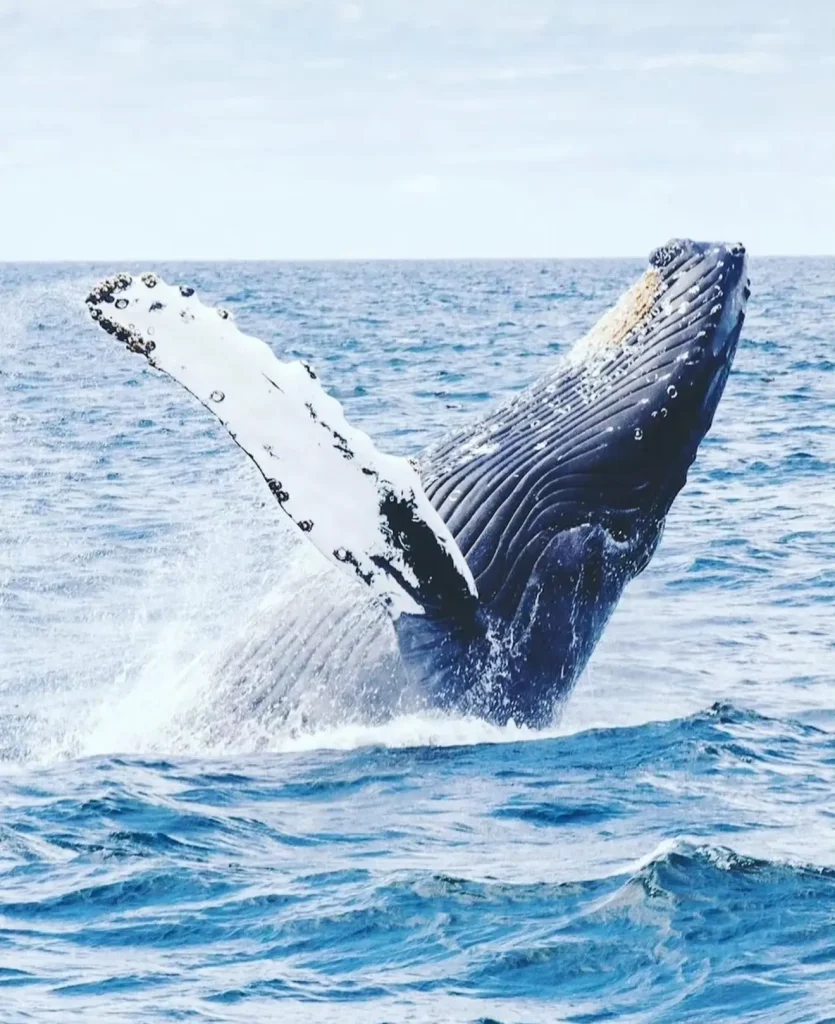
Photography: @ramsay/Instagram
Sri Lanka’s southern coastline is one of the country’s most popular destinations for whale watching.
The waters support several species of whales and dolphins, making the region important for marine wildlife observation.
Blue whales are the animals most strongly associated with Mirissa, although other species may also appear.
The experience has become one of the area’s signature attractions, drawing visitors interested in marine biology, photography and responsible nature tourism.
However, the number of animals seen on any particular trip depends on natural conditions. Mirissa’s reputation should never be interpreted as a guarantee of close whale sightings.
The Marine Environment off Dondra Point
Dondra Point, near the southernmost part of Sri Lanka, is associated with the offshore waters used for whale-watching excursions from Mirissa and neighbouring coastal towns.
These waters form part of the northern Indian Ocean, where different marine species live, feed and travel.
Whales depend on the availability of suitable food and ocean conditions, rather than remaining in one location for the benefit of visitors.
Changes in prey distribution, water conditions and natural movement can influence where animals are encountered.
For travellers, this explains why a whale-watching boat may need to travel some distance offshore and why two trips departing from the same harbour can produce very different experiences.
What Whales Can You See from Mirissa?
Several whale species are associated with the waters off Sri Lanka’s southern coastline.
Blue whales are the most famous and frequently promoted attraction.
Other species that may occur in the wider southern waters include sperm whales and Bryde’s whales.
Different animals use the region according to their natural ecology, feeding behaviour and movements.
Not every species is equally likely to be encountered during an ordinary tourist excursion.
For the best experience, approach the trip with an interest in marine wildlife generally rather than expecting a particular whale to appear.
Blue Whales: Mirissa’s Most Famous Wildlife
The blue whale is the largest animal known to have lived on Earth.
Its immense size makes it one of the most extraordinary marine animals to observe in the wild.
When a blue whale surfaces, visitors may notice the characteristic blow of air and water vapour, followed by part of the animal’s long back becoming visible.
Depending on its movement, the whale may remain at the surface briefly before diving again.
The complete body is rarely visible above the water during an ordinary sighting.
Photographs showing a whale spectacularly breaching beside a boat should not be treated as the standard experience.
Observing a blue whale surfacing naturally from a respectful distance is remarkable in its own right.
Sperm Whales and Bryde’s Whales
Blue whales are not the only large marine mammals associated with Sri Lanka’s waters.
Sperm whales are deep-diving toothed whales known for their distinctive head shape and ability to undertake long underwater dives.
Bryde’s whales are another type of large baleen whale found in tropical and subtropical waters.
Encounters with these species depend on their presence in the area and the conditions on the day.
Passengers should not expect every whale-watching trip to offer multiple species.
A knowledgeable marine guide can help visitors understand the differences between species and explain the behaviour observed from the vessel.
Dolphin Watching from Mirissa
Dolphins are another exciting part of Mirissa’s marine wildlife experience.
Several dolphin species occur in Sri Lankan waters, and they may occasionally be encountered during whale-watching excursions.
Visitors may see dolphins swimming near one another, surfacing to breathe or moving through the ocean in groups.
Dolphins can travel quickly, making sightings particularly dynamic.
However, their speed should never encourage a skipper to chase them.
Responsible dolphin watching involves allowing the animals to move naturally without using boats to block, surround or redirect them.
Are Whale and Dolphin Sightings Guaranteed?
No. Whale and dolphin sightings are never guaranteed.
Marine mammals are wild animals that travel through extensive ocean environments.
Their movements depend on feeding conditions, natural behaviour, sea state and other environmental factors.
Even during the main whale-watching season, a boat may return without observing a whale.
Some excursions may produce several sightings, while others result in only brief or distant encounters.
This uncertainty is an essential part of responsible wildlife tourism.
Choose an operator that explains sightings realistically instead of promising a guaranteed close encounter.
Best Time of Year for Whale Watching in Mirissa
The principal whale-watching season in Mirissa generally runs from November to April, overlapping with the more settled conditions commonly experienced along Sri Lanka’s southern coast.
During this period, operators may have more opportunities to undertake offshore excursions when weather and sea conditions are suitable.
However, the main season does not guarantee calm seas every morning.
Wind, swell and changing weather can affect boat departures even during otherwise favourable months.
Marine wildlife movements also change naturally, meaning the number and species of animals encountered may vary.
For international travellers, the best approach is to consider the main season while recognising that the actual sea conditions determine whether a trip can operate safely.
Whale Watching from May to October
From May to October, conditions along Sri Lanka’s southern coastline are often less settled because of seasonal changes in weather and ocean swell.
Stronger seas can make offshore travel uncomfortable or unsuitable for tourist vessels.
Some operators may reduce services or suspend departures when conditions are poor.
However, whale presence and safe boating conditions should be considered separately.
A sunny day does not necessarily mean the ocean is suitable for whale watching, while marine animals do not follow a fixed tourism timetable.
Travellers visiting outside the main period should not assume that an ordinary Mirissa whale-watching service will be operating.
Why Most Whale-Watching Boats Leave Early
Whale-watching excursions from Mirissa commonly begin during the early morning.
This allows boats to use the morning period for travelling offshore and searching for wildlife.
Morning conditions can also be more comfortable than later periods when wind and surface movement increase.
However, departure times are determined by individual operators and the conditions affecting the planned voyage.
Sri Lanka’s marine mammal observation regulations specify a permitted operating window for licensed observation activities between 5.30 am and 7.00 pm.
This legal window is not a fixed timetable for tourist departures. Visitors should follow the actual check-in and boarding arrangements provided by their operator.
What Happens During a Mirissa Whale-Watching Trip?
A typical whale-watching experience begins at Mirissa Harbour, where passengers meet their operator and prepare to board the vessel.
Before departure, the crew should provide information about safety equipment, emergency procedures and suitable behaviour while travelling offshore.
Once the boat leaves the harbour, it travels into the southern Indian Ocean to look for signs of marine wildlife.
These may include the visible blow of a whale, movement at the surface or observations made by the trained crew.
When marine mammals are located, a responsible skipper slows the vessel and follows the applicable approach restrictions.
Passengers can then observe the animals without the boat attempting to force a close encounter.
The journey concludes with the return to Mirissa Harbour, with the duration influenced by conditions at sea.
How Long Does Whale Watching Take?
Whale-watching excursions from Mirissa commonly last several hours, but the exact duration varies.
Travel time depends on sea conditions, the distance required to reach suitable observation areas and the movements of marine wildlife.
Some excursions return sooner, while others may involve a longer period offshore.
Passengers should avoid making arrangements that depend on an exact return minute.
In particular, allowing little time between a boat excursion and an important train, flight or onward transfer can create unnecessary pressure.
The operator should provide an expected duration and explain how bad weather or other circumstances may affect the return.
How to Choose a Responsible Whale-Watching Operator
Choosing the operator is the most important decision when arranging whale watching in Mirissa.
A responsible company should operate an appropriately licensed vessel and employ trained personnel familiar with marine wildlife regulations.
It should provide suitable safety equipment, communication facilities and clear emergency procedures.
Staff should also explain how they approach marine mammals and why viewing distances must be respected.
The best operator is not necessarily the one offering the cheapest ticket or claiming the highest chance of a close whale photograph.
Choose a company that prioritises passenger safety, professional boat handling and the welfare of marine wildlife.
Questions to Ask Before Booking
Before purchasing a whale-watching ticket, clarify the arrangements with the operator.
- Is the vessel appropriately licensed for marine mammal observation?
- Will a registered marine wildlife guide be on board?
- Are properly fitting life jackets available for every passenger?
- Does the vessel carry communication and navigation equipment?
- What safety briefing is provided before departure?
- How does the crew maintain legal distances from whales and dolphins?
- What is the expected trip duration?
- What happens if weather conditions prevent departure?
- What is the policy if no whales are sighted?
- What is included in the complete ticket price?
Clear answers help distinguish a professionally managed trip from one relying mainly on aggressive marketing.
Sri Lanka’s Legal Whale-Watching Distances
Sri Lanka regulates whale and dolphin observation through the Sea Mammals (Observation, Regulation and Control) Regulations, No. 1 of 2012.
These regulations are intended to protect marine mammals and manage the vessels used to observe them.
The minimum approach distances are particularly important:
Whales: Boats must not deliberately approach closer than 100 metres.
Other marine mammals, including dolphins: Boats must not approach closer than 50 metres.
Vessels must also reduce speed appropriately and avoid sudden manoeuvres that could disturb the animals.
These requirements are legal obligations, not simply optional recommendations for environmentally conscious tourists.
Visitors should never encourage a skipper to break them for photography.
How a Boat Should Approach Whales
Responsible whale watching begins before the vessel reaches an animal.
Sri Lanka’s regulations require operators to reduce speed gradually when marine mammals are observed.
They also establish additional precautions as the vessel approaches the observation area, including a requirement to switch off the engine at the specified whale-viewing distance.
A skipper should avoid abrupt changes in speed or direction.
The boat should not cut across the animal’s path, position itself in front of a moving whale or prevent it from continuing through the ocean.
When several vessels are present, responsible operators should maintain appropriate spacing rather than surrounding the animal.
The purpose is to observe natural behaviour without making the whale respond to the boat.
Why Boats Must Not Chase Whales
Chasing whales can interfere with their natural behaviour and create unnecessary disturbance.
Marine mammals depend on regular breathing, feeding, communication and movement through their environment.
A vessel repeatedly accelerating towards a surfacing whale may interrupt these activities.
Fast approaches can also increase risks to passengers and animals.
Responsible operators should never treat a whale sighting as a race against other boats.
When an animal moves away, the correct response is to respect that movement rather than attempt to follow it closely.
A distant observation that leaves the whale undisturbed is preferable to a close encounter created through aggressive boat handling.
Watching Mothers and Calves Responsibly
Whale and dolphin mothers with calves require particular care.
Young marine mammals depend on their mothers for protection and feeding.
Boats must not separate a mother and calf or move between them.
Repeated approaches can interfere with the group’s natural movement.
If a mother and calf are encountered, the vessel should maintain a respectful distance and allow the animals to continue without disturbance.
Visitors should never request a closer view simply because a calf is visible.
Why Responsible Boats Avoid Crowding
Popular marine wildlife sightings can attract several vessels into the same area.
When boats compete for better viewing positions, the surrounding water can become congested.
This may disturb marine mammals and increase the risk of unsafe manoeuvres.
A responsible skipper should avoid surrounding animals or competing with other boats for the closest position.
If another vessel is behaving inappropriately, the correct response is not to imitate its actions.
The welfare of the animals and the safety of passengers must remain more important than obtaining a closer photograph.
Can You Swim with Whales or Dolphins in Mirissa?
Ordinary whale-watching passengers should not enter the water to approach whales or dolphins.
Sri Lanka’s marine mammal observation regulations restrict passengers from entering the sea during observation activities, except in circumstances involving the required prior authorisation for diving.
A standard sightseeing ticket does not grant permission to swim with marine mammals.
Whales and dolphins are wild animals, and entering the water near them can create risks to both people and wildlife.
Be cautious of operators casually advertising opportunities to jump into the sea beside whales or dolphins.
Responsible marine wildlife observation should take place from the permitted vessel.
What Safety Equipment Should the Boat Have?
A suitable whale-watching vessel should carry safety equipment appropriate for offshore passenger operations.
This includes life jackets for passengers, reliable communication equipment, navigation facilities and arrangements for responding to emergencies.
Sri Lanka’s marine mammal regulations address vessel equipment and registered guides.
Visitors should confirm that the boat has sufficient life jackets for everyone on board.
Families should check that child-sized jackets are available before making payment.
Safety equipment should be accessible, and the crew should explain its use before departure.
If passengers are not given a proper safety briefing, raise the issue before the boat leaves harbour.
Choosing Between Small and Large Whale-Watching Boats
Whale-watching vessels can vary considerably in size, layout and facilities.
Smaller boats may carry fewer passengers, while larger vessels can provide more seating space and additional passenger facilities.
However, boat size alone does not establish whether an operator is responsible.
The quality of maintenance, safety equipment, trained crew and wildlife-viewing behaviour are more important.
For travellers concerned about seasickness or travelling with children, the seating arrangements, shade, toilets and opportunities to remain safely seated may influence comfort.
Before booking, ask about the vessel’s facilities and whether its design is suitable for your needs.
What Happens During Bad Weather?
Weather and sea conditions are central to the safety of whale-watching operations.
Sri Lanka’s regulations prohibit observation trips during inclement weather and require vessels to return to land when unsuitable conditions develop.
Conditions offshore can be considerably rougher than they appear from Mirissa Beach or the harbour.
Wind, waves and swell can make the journey uncomfortable or unsafe even when the sky is relatively clear.
If a responsible operator cancels because of poor conditions, this reflects appropriate safety judgement.
Passengers should never pressure a skipper to depart or remain offshore simply because their travel arrangements are inconvenient.
Weather Cancellations and Refund Policies
Before paying for a whale-watching excursion, understand what happens if weather conditions prevent the trip from operating.
Different operators may offer rescheduling, refunds or other arrangements depending on their booking terms.
Ask whether cancellation conditions are stated in writing and how passengers will be informed of a cancelled departure.
Weather-related decisions should be made according to maritime safety requirements rather than a fixed promise to depart.
An operator who prioritises safety provides a more reliable service than one willing to sail in dangerous conditions.
Seasickness on a Mirissa Whale-Watching Trip
Seasickness is one of the most important practical considerations for visitors travelling offshore from Mirissa.
Even people who feel comfortable on ferries or larger boats may experience motion sickness on smaller vessels in open-ocean conditions.
Repeated movement caused by swell can result in nausea, dizziness and general discomfort.
Some travellers feel well throughout the journey, while others develop symptoms relatively quickly.
If you are particularly susceptible to motion sickness, take the issue seriously before booking rather than assuming the sea will remain calm.
How to Prepare for Seasickness
A few simple preparations can help make an offshore journey more comfortable.
Eat a light meal before departure rather than boarding with an excessively full stomach.
Stay hydrated and avoid excessive alcohol before the trip.
Follow the crew’s advice about suitable seating, and try to look towards the horizon if you begin feeling uncomfortable.
Fresh air may also be helpful where it can be enjoyed safely.
Travellers who normally use motion-sickness medication should follow the product instructions and seek advice from a pharmacist or healthcare professional where needed, particularly because some treatments can cause drowsiness.
Prepare before departure, as managing symptoms can become more difficult once the boat is offshore.
What Should You Wear?
Lightweight and comfortable clothing is generally suitable for whale watching in Mirissa.
However, the combination of wind, sea spray and early-morning conditions can feel cooler than expected.
A lightweight windproof or waterproof layer is useful, particularly on an exposed vessel.
Choose secure footwear with good grip rather than loose sandals that may be difficult to manage on wet decks.
A hat should be firmly secured so that it cannot blow into the water.
Comfortable clothing that allows you to remain safely seated and move carefully around the vessel is more useful than specialised outdoor fashion.
What to Bring on a Whale-Watching Trip
Pack lightly and protect important belongings from water and sea spray.
- Sunscreen and sunglasses.
- A securely fitted hat.
- Drinking water.
- A lightweight windproof or waterproof jacket.
- Secure footwear with suitable grip.
- A small dry bag or waterproof pouch for electronics.
- A camera or charged smartphone.
- Any essential personal medication.
- Appropriate seasickness supplies if needed.
- A small reusable bag for rubbish.
Keep large bags and unnecessary valuables at your accommodation.
Make sure essential items can be stored securely so they do not move around the boat during rough conditions.
Sun Protection at Sea
Sun protection is important even when a whale-watching excursion begins early in the morning.
Sunlight reflected from the ocean can increase exposure during several hours offshore.
Cloud cover may reduce the feeling of heat without eliminating the risk of sunburn.
Use suitable sunscreen, sunglasses and protective clothing.
Drink water regularly, especially during warm weather.
Travellers seated in exposed areas of the vessel should take particular care during longer excursions.
Whale and Dolphin Photography
Photographing whales requires patience because the animals spend much of their time underwater.
When a whale surfaces, the visible portion may appear for only a short period before it dives again.
A camera with moderate zoom or a telephoto lens is useful for photographing wildlife from an appropriate legal distance.
It is often more rewarding to capture the animal within the surrounding ocean rather than attempt an extreme close-up.
The natural setting, reflections and movement of the sea can make a distant sighting visually impressive.
Do not encourage the skipper to move closer or alter the vessel’s course to obtain a photograph.
Taking Photos with a Smartphone
A smartphone can capture memorable photographs and videos during a whale-watching excursion.
However, distant marine wildlife is more difficult to photograph with a phone than animals close to land.
Excessive digital zoom can reduce image quality, particularly when the boat is moving.
Try including the surrounding ocean and use burst photography or video when appropriate.
Keep your phone secured with a suitable grip or strap.
Never lean dangerously over a vessel’s railing or stand in an unsafe position for a better angle.
How to Assess Whale-Watching Reviews
Online reviews are useful when comparing Mirissa whale-watching operators, but they should be interpreted carefully.
A five-star review because several whales appeared close to a vessel does not necessarily indicate responsible boat handling.
Likewise, a safe, well-managed excursion without a whale sighting is not automatically a poor experience.
Look for repeated comments about crew professionalism, safety briefings, vessel maintenance, passenger comfort and behaviour around wildlife.
Reviews mentioning animal chasing, dangerously close approaches or excessive crowding deserve particular attention.
The best operator is one whose passengers consistently describe responsible conduct rather than simply dramatic sightings.
What If You Do Not See Any Whales?
A trip without whale sightings is possible, even during the main season.
Marine mammals are not confined to a fixed location and cannot be summoned to the surface.
Some operators offer repeat-trip arrangements or other policies when whales are not seen, but the terms vary between companies.
Confirm these conditions before booking rather than assuming another excursion will automatically be provided free of charge.
Passengers should not pressure the crew to extend the search into poor weather or travel at unsafe speeds towards distant sightings.
A responsible return to harbour without seeing a whale is preferable to an unsafe encounter created through reckless behaviour.
Whale Watching with Children
Whale watching can be an exciting educational experience for families, particularly children interested in marine animals.
However, travelling offshore involves different considerations from an ordinary beach excursion.
Young children may become tired, uncomfortable or seasick during several hours at sea.
Before booking, check whether the vessel provides appropriately sized life jackets, suitable seating, shade and access to toilets.
Children should remain supervised throughout the journey, particularly when the boat is moving or passengers gather around viewing areas.
Families should choose a well-managed vessel suited to their children’s ages and comfort rather than selecting an operator solely because of price.
Accessibility and Passenger Comfort
Boat accessibility can vary considerably between whale-watching operators.
Some vessels require passengers to climb steps or move across uneven boarding surfaces.
Once offshore, the boat’s movement may make walking and maintaining balance more difficult.
Travellers with reduced mobility should ask about boarding arrangements, seating, handrails and toilet access before booking.
Those who need assistance should choose a vessel able to accommodate their requirements safely.
It is also important to consider whether remaining seated during a long journey is comfortable for the individual passenger.
Mirissa Harbour: What Visitors Should Know
Mirissa Harbour is an active working harbour used by fishing vessels as well as marine tourism operators.
Early morning can be particularly busy, with crews preparing boats, moving equipment and carrying out normal harbour activities.
Visitors should follow their operator’s meeting instructions and remain within areas intended for passengers.
Do not obstruct fishing crews, working quays or vehicle access while taking photographs.
The harbour is a place of employment for the local community, not simply a tourist departure terminal.
Respecting its working environment is an important part of responsible travel.
Getting to Mirissa Harbour
Travellers staying around Mirissa Beach and nearby accommodation can reach the harbour by tuk-tuk, taxi or another locally arranged vehicle.
For early departures, arranging transport before the trip is particularly convenient.
Visitors staying in Weligama, Matara or elsewhere along the southern coastline can also travel to Mirissa by road.
Confirm the exact meeting point and check-in time with your operator because harbour boarding arrangements can vary.
Agree the tuk-tuk or driver fare before travelling.
Allow enough time to reach the correct boat without rushing through busy working areas.
Whale Watching and Local Fishing Communities
Marine tourism takes place alongside established fishing activities in the waters around Mirissa.
Fishing boats, harbour workers and other maritime users depend on safe access to the sea for their livelihoods.
Sri Lanka’s marine mammal observation regulations also require whale-watching vessels to avoid disturbing fishing activities.
Responsible tourism therefore involves more than protecting whales and dolphins.
It also requires respect for fishing equipment, working vessels and the people who use the harbour every day.
Operators who handle these relationships professionally contribute to a more sustainable marine tourism industry.
Plastic Waste and Marine Conservation
Waste management is an essential part of responsible whale watching.
Plastic bottles, food packaging and other rubbish can cause serious problems when they enter the marine environment.
Do not throw any waste overboard, including small items that may appear harmless.
Use reusable water bottles where practical and keep your rubbish until it can be disposed of appropriately on land.
Preventing plastic, polythene and other waste from entering the ocean is essential for protecting Sri Lanka’s marine wildlife.
Choosing operators who take waste management seriously helps protect the marine environment on which whale watching depends.
Why Responsible Whale Watching Matters
Whales and dolphins are highly mobile wild animals that depend on their ocean environment for feeding, communication, breeding and movement.
Tourist vessels can create disturbance when they approach too quickly, move unpredictably or repeatedly surround animals.
By maintaining legal distances and allowing wildlife to move freely, operators reduce unnecessary pressure on marine mammals.
Responsible whale watching can also help visitors develop a greater appreciation of marine ecosystems and the importance of conservation.
The most meaningful experience is not necessarily the closest possible encounter.
It is watching wildlife behave naturally while knowing that the observation has been conducted with care.
Is Whale Watching from Mirissa Worth It?
Yes. For travellers who genuinely enjoy marine wildlife and understand the unpredictability of the open ocean, whale and dolphin watching from Mirissa can be one of Sri Lanka’s most memorable nature experiences.
The possibility of observing a blue whale in its natural environment is extraordinary, while dolphins and other marine species add further interest.
However, a successful trip should be measured by more than the number of animals observed.
Professional boat handling, appropriate safety equipment, respectful wildlife distances and realistic expectations are essential.
Choose a responsible operator, prepare for the conditions at sea and allow the wildlife to determine the experience.
That approach makes whale watching from Mirissa more meaningful for both the visitor and the remarkable animals living in Sri Lanka’s southern waters.