Discover Mirissa Beach, one of Sri Lanka’s most beautiful and popular south-coast destinations. With its golden sand, swaying coconut palms, tropical ocean views and beachfront restaurants, Mirissa offers the perfect setting for travellers looking to experience the relaxed atmosphere of Sri Lanka’s southern coastline.
The beach is known for its attractive curved bay, lively cafés, spectacular evening atmosphere and easy access to famous coastal viewpoints such as Coconut Tree Hill and Parrot Rock. When sea conditions are suitable, visitors can also enjoy swimming in the warm waters of the Indian Ocean.
However, Mirissa is an open-ocean beach, and conditions can change depending on the season, swell, currents and weather. Understanding where to swim, when to visit and how to assess the water makes an important difference to the experience.
This complete visitor guide covers Mirissa Beach’s main swimming areas, seasonal conditions, rip currents, restaurants, facilities, accommodation, coastal viewpoints and essential safety advice for international travellers.
Location: Mirissa, Southern Province, Sri Lanka
Best for: Beach relaxation, swimming when conditions allow, photography and sunsets
Main beach season: Generally November to April
Time needed: Half a day to a relaxed full day
Best time: Early morning or late afternoon
Swimming: Conditions vary across the bay and throughout the year
Facilities: Beachfront restaurants, cafés and nearby accommodation
Nearby viewpoints: Coconut Tree Hill and Parrot Rock
Getting there: Walking, tuk-tuk, taxi, train or local bus connections
Golden sands and tropical ocean sunsets
Discover Mirissa Beach
Mirissa Beach is the heart of one of Sri Lanka’s best-known coastal towns, combining beautiful tropical scenery with a relaxed holiday atmosphere.
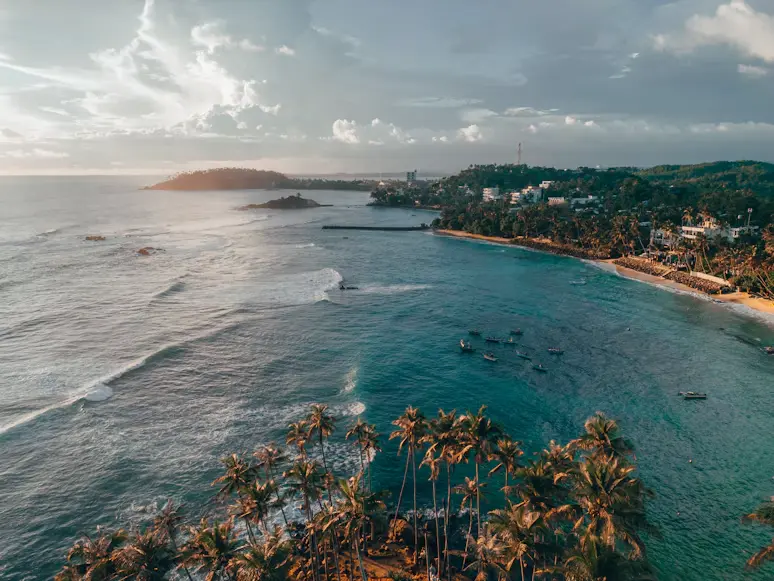
The main beach forms a broad, gently curving bay bordered by rocky headlands and backed by coconut palms, guesthouses, restaurants and small hotels.
During the main tourist season, the beachfront becomes a lively place where travellers enjoy the ocean, relax on the sand and spend time at cafés overlooking the water.
Unlike isolated beaches with very limited facilities, Mirissa combines attractive coastal scenery with convenient access to food, accommodation and local transport.
This makes it particularly appealing to first-time visitors exploring Sri Lanka’s south coast.
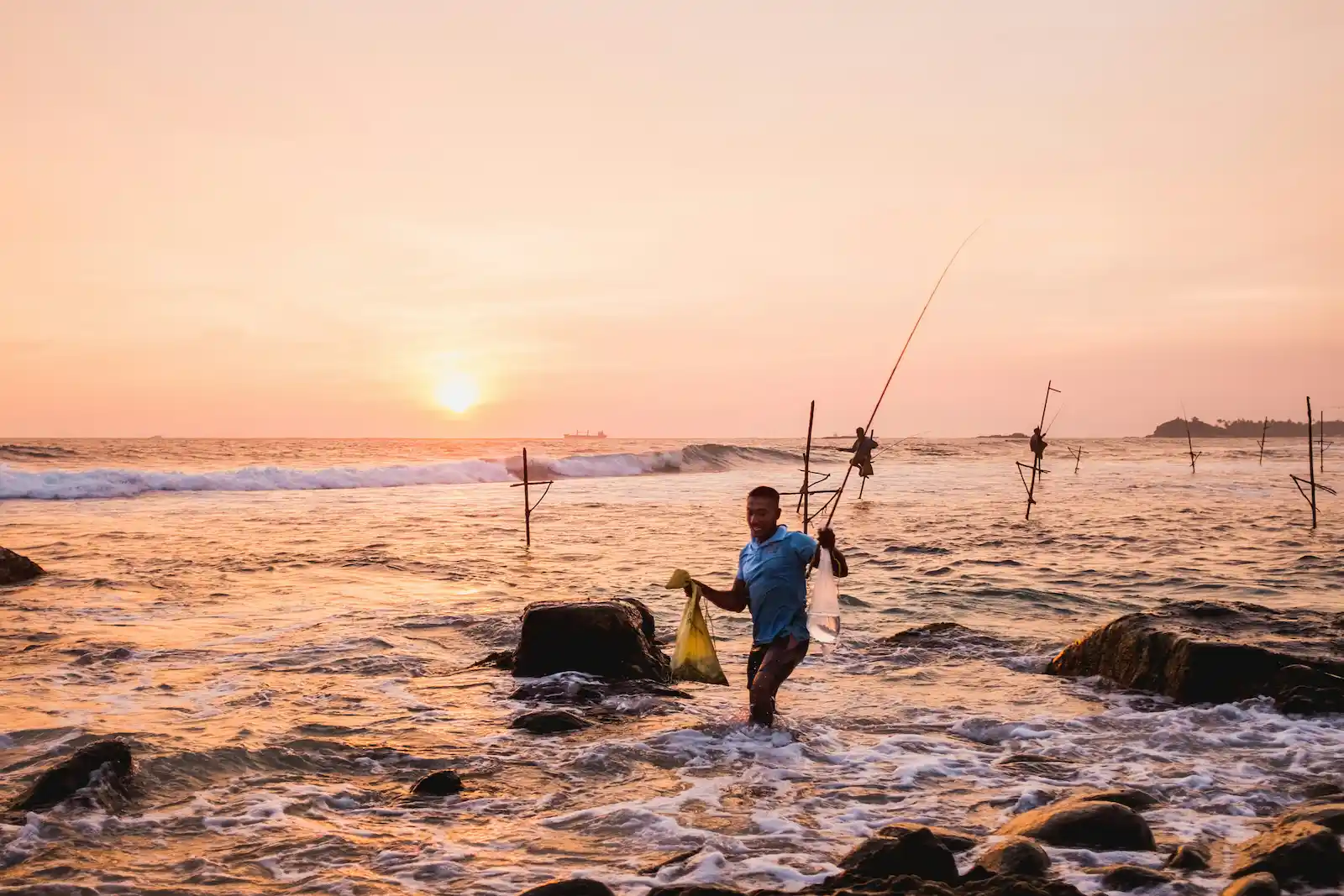
Mirissa combines authentic local coastal life with a lively and welcoming holiday atmosphere. Local residents, fishermen, holidaymakers and beach businesses all share the same coastline.
Why Mirissa Beach Is Worth Visiting
Mirissa Beach offers many of the experiences international travellers imagine when planning a holiday in tropical Sri Lanka.
Golden sand, palm-fringed surroundings, warm weather and beautiful ocean views create an attractive setting for relaxation.
The beach also offers a lively social atmosphere, particularly during the main season when restaurants and cafés are busy with visitors.
Travellers can enjoy a quiet morning walk, relax under shade, photograph the coastline or spend time watching the changing light across the bay.
When conditions are suitable, swimming adds another enjoyable dimension.
Mirissa’s greatest advantage is its combination of natural beauty and convenience. You can appreciate the tropical coastline without needing to travel far from restaurants, accommodation and other local facilities.
What Is Mirissa Beach Actually Like?
Mirissa’s main beach is shaped like a broad crescent rather than a completely straight stretch of sand.
This curved shape influences how waves approach different sections of the shoreline.
Some areas may experience smaller breaking waves, while other sections can be affected by stronger surf, rocks or currents.
The atmosphere also changes as you move along the beach.
Certain sections are busier because of nearby restaurants and accommodation, while others may feel more relaxed, particularly earlier in the morning.
Walking along the bay before choosing where to settle is worthwhile. A short change of position can make a difference to shade, noise, sea conditions and the number of people nearby.
Understanding the Different Sections of Mirissa Beach
Although Mirissa is commonly described as one beach, different sections of the bay can offer different experiences.
The more central areas are particularly convenient for visitors who want easy access to restaurants, refreshments and the main beachfront atmosphere.
Areas nearer the rocky ends of the bay provide different coastal views but can also be more exposed to breaking waves and water movement.
The safest-looking swimming area is not necessarily the same throughout the day.
Wind, swell direction, tide and local currents can change how waves break along the sand.
Before entering the water, take time to observe the specific section you intend to use rather than assuming the entire bay has identical swimming conditions.
Best Time of Year to Visit Mirissa Beach
The main beach season in Mirissa generally runs from November to April.
During these months, the southern coastline often experiences more settled weather and calmer sea conditions.
This period is particularly attractive for travellers hoping to enjoy beach relaxation and swimming.
However, seasonal averages are not a guarantee of safe water on every day.
Large swells, strong currents and sudden weather changes can still affect the sea during the main season.
Visitors should assess the water each day and follow local safety warnings, even when travelling during the most popular months.
Mirissa Beach from November to April
November to April is the most popular period for beach holidays along much of Sri Lanka’s southern coast.
The sea is generally more settled, and many beach businesses operate at their busiest levels.
Visitors can enjoy a lively atmosphere, with restaurants, cafés and accommodation catering to travellers from different countries.
The weather is often suitable for spending extended periods outdoors, although tropical sunshine can be intense.
Swimming may be enjoyable when wave and current conditions are appropriate, but visitors should never rely solely on the month when judging whether the sea is safe.
The main season also attracts more holidaymakers, especially around Christmas, New Year and other popular travel periods.
Mirissa Beach from May to October
From May to October, Mirissa commonly experiences rougher sea conditions associated with the seasonal weather patterns affecting Sri Lanka’s south-western coastline.
Stronger swell and changing wind conditions can make swimming and certain water activities more difficult.
However, this does not mean every day is rainy or unsuitable for enjoying the beach.
There can still be sunny periods when the coastline looks beautiful and the weather is pleasant for walking or relaxing.
The important distinction is between pleasant weather on land and safe conditions in the sea.
A sunny day does not guarantee that currents or breaking waves are suitable for swimming.
The beach can also feel quieter outside the main season, with some businesses operating reduced services.
Best Time of Day to Visit Mirissa Beach
Early morning and late afternoon offer two of the most enjoyable ways to experience Mirissa Beach.
Early morning is particularly attractive for travellers who appreciate quieter surroundings, softer sunlight and cooler sand.
The beach can feel peaceful before restaurants become busy and larger numbers of visitors arrive.
Late afternoon is ideal for enjoying the social atmosphere, coastal photography and changing colours of the sky.
Midday can still be enjoyable, particularly for relaxing in shade, but the strong tropical sun makes sunscreen, drinking water and regular breaks important.
Early Morning at Mirissa Beach
Mirissa Beach has a particularly peaceful atmosphere during the early morning.
The sand is generally cooler, fewer visitors are moving around and the coastline can feel noticeably less crowded.
It is an excellent period for walking along the shore and appreciating the bay before the busiest part of the day.
Photographers may also enjoy the softer light falling across the palms, beach and surrounding headlands.
However, an early visit does not automatically mean the water is safe for swimming.
Check the sea conditions independently of how peaceful the beach appears.
Late Afternoon and Sunset at Mirissa
Late afternoon is one of the most attractive periods for enjoying Mirissa’s coastal atmosphere.
As the heat begins to ease, visitors return to the beachfront to enjoy refreshments, photographs and views across the ocean.
The lower sunlight creates warmer colours over the beach and surrounding palms.
Restaurants and cafés often become busier as people gather for the evening.
Cloud cover and seasonal weather influence the appearance of the sunset, but the changing light can be beautiful even when the sun itself is partly obscured.
Mirissa is particularly appealing to travellers who enjoy finishing the day in a relaxed beachfront setting.
Is Mirissa Beach Safe for Swimming?
Mirissa Beach can be suitable for swimming when conditions are calm and local safety advice supports entering the water.
However, the beach should not be treated as automatically safe simply because it is popular with tourists.
The Indian Ocean can produce powerful waves and currents, even when the weather appears pleasant.
Conditions may also differ across the curved bay, making some sections more challenging than others.
Before swimming, observe the sea for several minutes, look for local safety information and speak to a lifeguard where one is on duty.
If there is no reliable safety guidance and the conditions are difficult to judge, remaining on the beach is the safer choice.
How to Choose a Swimming Area
Choosing a suitable place to enter the water is one of the most important parts of enjoying Mirissa Beach safely.
Look for an area with a clear, unobstructed entry and waves that are manageable for your swimming ability.
Where a recognised lifeguarded swimming zone is operating, follow the lifeguard’s instructions and use the designated area.
Avoid rocky sections, channels of strong water movement and places where waves repeatedly break with considerable force.
Do not assume that an area is safe simply because other visitors are swimming there.
Sea conditions can change quickly, and another person’s confidence does not establish whether the water is suitable for you.
Understanding Waves and Shore Breaks
Waves can behave differently along different sections of Mirissa Beach.
Some waves may break gradually as they approach the sand, while others can become steep and powerful close to the shoreline.
Strong shore-breaking waves can knock swimmers off balance and cause injuries, particularly when someone is standing in shallow water.
Waves can also arrive in sets, meaning a calmer period may be followed by several larger breakers.
Take time to watch the sea before entering, including how frequently larger waves approach.
If waves are repeatedly knocking people down or breaking forcefully close to shore, do not enter the water.
Rip Currents at Mirissa Beach
Rip currents are an important potential hazard at open-ocean beaches.
A rip current is a concentrated movement of water flowing away from shore, sometimes carrying swimmers into deeper water.
These currents can be difficult to identify without experience.
Possible signs include a channel of disturbed water, unusual patterns of foam or water that looks different from the surrounding breaking waves.
However, not every rip current is clearly visible from the beach.
Do not rely only on appearance when choosing where to swim.
If local lifeguards or safety personnel are available, ask them about the current conditions before entering the sea.
What to Do If You Are Caught in a Rip Current
If you are caught in a rip current, the most important step is to remain as calm as possible.
Do not attempt to swim directly against the current towards the shore. Fighting the current can quickly cause exhaustion.
If you can stand safely, try to wade rather than swim.
If you are in deeper water and able to swim, move parallel to the shoreline until you are outside the strongest part of the current, then make your way back towards land.
If you become exhausted or cannot escape, float to conserve energy, raise one arm and shout for assistance.
Anyone witnessing a swimmer in difficulty should alert a lifeguard or local emergency service rather than entering dangerous water without the training or equipment to perform a rescue.
Are There Lifeguards at Mirissa Beach?
Visitors should not assume that every section of Mirissa Beach has continuous lifeguard supervision.
The availability of lifeguards, flags and other safety arrangements may vary by location and time.
Where lifeguards are operating, follow their instructions and respect any warnings against entering the sea.
If no lifeguard is present, exercise additional caution and avoid swimming in unfamiliar or challenging conditions.
Travellers who are not confident swimmers should avoid entering the sea unless an appropriately supervised area is available.
Lifeguard coverage and safety facilities may be limited, so visitors should always assess sea conditions before swimming.
Swimming Near Rocks and Headlands
The rocky sections at the ends of Mirissa’s bay can create attractive coastal scenery but may also introduce additional water hazards.
Waves can break unpredictably against rocks, while currents may become stronger near natural channels and exposed formations.
Wet rocks can also be extremely slippery.
Do not enter the water beside rocks when waves are breaking strongly.
Avoid climbing into the sea from exposed headlands or attempting to reach isolated water areas through rough surf.
Choose an appropriate beach entry instead of taking unnecessary risks near rocky surroundings.
Mirissa Beach for Families with Children
Mirissa can be an enjoyable destination for families, combining beach relaxation with nearby restaurants and accommodation.
Children may enjoy playing on the sand, walking along the shoreline and observing the waves.
However, swimming conditions should be assessed particularly carefully when younger visitors are involved.
Keep small children within arm’s reach around breaking waves, even when the water appears shallow.
Do not allow children to enter the sea without close adult supervision.
Choose a spacious area away from exposed rocks and strong wave activity.
Regular breaks in shade, drinking water and sun protection are also important for families spending time on the beach.
Is Mirissa Suitable for Non-Swimmers?
Yes. Mirissa Beach offers plenty to enjoy without entering the sea.
The attractive coastline, tropical scenery and beachfront atmosphere make it suitable for visitors interested in relaxing rather than swimming.
Non-swimmers can enjoy walks on the sand, photography, cafés and views of the Indian Ocean.
However, standing in shallow water close to strong breaking waves can still be dangerous.
Visitors who cannot swim should avoid entering the sea in unsupervised conditions and remain well clear of areas affected by strong currents.
The beach can be a rewarding destination even when ocean conditions make swimming unsuitable.
Beach Relaxation and Finding Shade
Mirissa’s tropical climate makes shade an important consideration when spending extended periods on the beach.
Some areas have natural shade from palms and surrounding vegetation, while restaurants may provide seating or shaded spaces for customers.
The availability and arrangements for beach furniture can vary between businesses.
Before using loungers or other facilities, confirm whether there is a charge or a minimum food and drink purchase.
Bring sunscreen, sunglasses and sufficient drinking water, even when cloud cover makes the sunlight feel less intense.
Regular shade breaks are especially important during the middle of the day.
Restaurants and Cafés at Mirissa Beach
Mirissa is known for its lively beachfront restaurant and café scene.
Visitors can enjoy refreshments, coffee, tropical fruit drinks and a variety of Sri Lankan and international meals while overlooking the ocean.
Seafood is particularly associated with the region’s coastal food culture.
Restaurant styles range from casual beach cafés to more developed dining spaces.
Menus, opening hours and prices vary, especially between the main season and quieter months.
Take time to compare menus, check displayed prices and choose establishments that appear clean and well managed.
For seafood, confirm the price and portion before ordering, particularly when dishes are charged by weight.
Beachfront Dining at Sunset
Evening dining is one of the experiences that gives Mirissa its distinctive holiday atmosphere.
As the sun begins to set, restaurants and cafés overlooking the bay become popular places to relax.
The ocean views and cooler evening temperatures create an attractive setting for a leisurely meal.
Some beachfront businesses offer music or a lively social atmosphere, particularly during the busy season.
However, the experience differs across the beach.
Travellers who prefer quieter dining can choose restaurants away from the busiest music and nightlife areas.
Evening Atmosphere and Nightlife
Mirissa Beach is known for its relaxed daytime character, but some sections become livelier after dark.
Beachfront restaurants, social gatherings and music can create an enjoyable atmosphere for travellers looking for an active evening.
The level of activity changes according to the season, weekday and location along the bay.
Not every part of Mirissa has the same nightlife atmosphere.
Visitors looking for peaceful evenings should consider the location of their accommodation carefully.
Recent guest reviews can be useful for understanding whether a particular property experiences noise from nearby beach businesses.
Where to Stay Near Mirissa Beach
Accommodation close to the main bay is particularly convenient for travellers who want easy access to the beach, restaurants and nearby viewpoints.
Properties near the busiest beachfront areas provide a lively atmosphere and opportunities to reach many facilities on foot.
However, rooms immediately beside active restaurants or music venues may experience noise during the evening.
Travellers prioritising quiet nights may prefer accommodation slightly inland or away from the busiest parts of the beach.
Before booking, check the exact map position, walking access and recent reviews discussing noise and nearby facilities.
Accommodation around Mirissa Beach ranges from lively beachfront properties to quieter stays further inland.
Coconut Tree Hill Near Mirissa Beach
Coconut Tree Hill is one of Mirissa’s most photographed coastal viewpoints.
Located on a palm-covered headland east of the main beach area, it offers attractive views across the ocean and surrounding coastline.
It is particularly popular during early morning and late afternoon, when the light is softer.
However, the headland has natural ground and exposed cliff edges rather than a purpose-built viewing platform.
Wear footwear with suitable grip and take care after rainfall.
For detailed access, photography and cliff-safety information, explore our Coconut Tree Hill Visitor Guide.
Parrot Rock at Mirissa Beach
Parrot Rock is another recognisable feature of the Mirissa coastline.
The small rocky outcrop lies close to the main bay and provides an elevated view back across the beach.
It is particularly attractive for travellers interested in seeing the curved coastline from a different perspective.
However, access to Parrot Rock is influenced by tide and sea conditions.
When strong waves are breaking over the approach, crossing the rocks can be dangerous.
Never attempt to reach the outcrop simply because other visitors are doing so.
The viewpoint is best appreciated only when the access is safe and conditions are suitable.
Planning to visit? Read our Parrot Rock Mirissa Visitor Guide for practical tips on tidal access, safety and the best time to explore.
Mirissa Beach Photography
Mirissa Beach offers excellent opportunities for coastal photography.
The combination of golden sand, coconut palms, colourful boats, rocky headlands and ocean scenery creates a variety of subjects.
Early morning light is particularly attractive for quieter photographs of the bay, while late afternoon provides warmer tones across the beach.
Wide compositions can emphasise the curve of the shoreline and the surrounding tropical vegetation.
Closer photographs can capture details such as palm leaves, waves and the textures of the sand.
Be considerate when photographing local residents, fishermen, workers or other visitors.
Always ask permission before taking recognisable close-up portraits.
Drone Photography at Mirissa Beach
Drone photography along Sri Lanka’s coastline is subject to national aviation regulations and applicable local restrictions.
Visitors should not assume that an open beach automatically permits drone operations.
Privacy, nearby properties, crowds and airspace rules all need to be considered.
Launching a drone close to swimmers, restaurant customers or crowded beach areas can create unnecessary safety risks.
Only operate a drone where the required permissions and safe flying conditions have been established.
Official drone information: Civil Aviation Authority of Sri Lanka.
Marine Wildlife Around Mirissa
Mirissa’s wider coastal waters support important marine wildlife, including dolphins, whales and sea turtles.
The town is particularly famous as a departure point for whale-watching excursions during suitable seasonal conditions.
However, marine wildlife should always be observed responsibly.
If a turtle or other animal appears close to shore, maintain a respectful distance and allow it to move freely.
Never touch, chase, feed or surround marine animals.
Do not attempt to follow wildlife into deeper water or dangerous surf.
Protecting marine life helps preserve the coastal environment that makes Mirissa such a special destination.
Whale Watching and the Beach
Mirissa is internationally recognised for whale-watching opportunities in the waters off Sri Lanka’s southern coast.
Boat excursions operate from the wider Mirissa area, with availability influenced by weather and sea conditions.
However, whale watching is a separate marine activity from relaxing or swimming at the main beach.
The conditions that permit a comfortable beach visit do not automatically guarantee suitable offshore boating conditions.
Travellers interested in whale watching should choose a responsible licensed operator that follows marine wildlife guidelines and provides appropriate safety equipment.
Wildlife sightings are never guaranteed.
For more practical tips, explore our Mirissa Whale Watching and Beach Guide.
Beach Sellers and Personal Belongings
Mirissa is a popular visitor destination, so ordinary precautions with personal belongings are sensible.
Keep phones, wallets and other valuables secure when relaxing on the beach.
Do not leave important belongings unattended while swimming or walking to a nearby viewpoint.
Carry only the items you need and leave passports or other important documents securely at your accommodation where possible.
Beach sellers and local vendors may approach visitors offering goods or services.
If you are not interested, a polite and clear refusal is usually sufficient.
Agree prices before accepting services or making purchases.
Getting to Mirissa Beach Without a Car
Mirissa is connected to the wider south coast by road and railway, making it accessible for independent travellers.
The town has a railway station on Sri Lanka’s coastal railway route, with services connecting parts of the southern region.
However, not every train stops at every station, so travellers should check the relevant timetable before making arrangements.
Local buses also connect Mirissa with surrounding towns, including Weligama and Matara.
For the final journey from a railway station or bus stop, a tuk-tuk can be a convenient option when carrying luggage.
Agree the tuk-tuk or driver fare before travelling.
Official railway information: Sri Lanka Railways.
Getting Around Mirissa
Mirissa is a relatively compact coastal town, and many visitors can reach the main beach, restaurants and nearby accommodation on foot.
Tuk-tuks are useful for short journeys, particularly during hot weather or when travelling with luggage.
Distances between different parts of the town may appear small on a map, but local roads can be busy and some walking routes provide limited pedestrian space.
Take care when walking beside traffic, particularly after dark.
For visitors using a tuk-tuk or private driver, confirm the destination and fare before starting the journey.
Visiting Mirissa Beach with Reduced Mobility
Mirissa Beach offers relatively straightforward access from nearby restaurants and accommodation in some areas.
However, access conditions differ along the bay, and not every approach provides a level paved path onto the sand.
Soft sand can be difficult for wheelchair users or travellers with limited mobility.
Some restaurants may provide more convenient access than others, depending on their entrances and seating arrangements.
Travellers with specific accessibility needs should ask accommodation providers about the nearest suitable beach access and the availability of step-free facilities.
The rocky approaches towards nearby viewpoints are generally more demanding than remaining around the main beachfront.
What Should You Bring to Mirissa Beach?
A small beach bag containing essential items is usually sufficient for a comfortable visit.
- Sunscreen suitable for tropical sunshine.
- A hat and sunglasses.
- Drinking water.
- Comfortable sandals or beach footwear.
- A towel and suitable swimwear.
- A lightweight cover-up for cafés and restaurants.
- A waterproof pouch for essential belongings.
- Cash in Sri Lankan rupees.
- A small bag for carrying rubbish away.
If you plan to walk towards Coconut Tree Hill or Parrot Rock, bring footwear with sufficient grip for uneven or potentially slippery surfaces.
Keep valuable items to a minimum so that relaxing on the beach remains convenient.
Responsible Beach Behaviour
Mirissa is both a popular tourism destination and part of Sri Lanka’s coastal environment.
Visitors can help protect the beach by disposing of rubbish responsibly and reducing unnecessary single-use plastic.
Do not leave cigarette ends, food packaging or other waste in the sand.
Avoid removing coral, disturbing wildlife or damaging coastal vegetation for photographs.
Respect fishermen, local residents and people working along the beach.
Keep noise levels considerate around accommodation and quieter areas.
Responsible behaviour helps preserve Mirissa’s natural beauty and supports a positive relationship between tourism and the local community.
Is Mirissa Beach Worth Visiting?
Absolutely. Mirissa Beach is one of Sri Lanka’s most enjoyable south-coast destinations for travellers seeking tropical scenery, beachfront dining and a relaxed seaside atmosphere.
Its attractive curved bay, golden sand and coconut palms create a beautiful setting for beach relaxation and photography.
When conditions are appropriate, swimming can add to the experience, while nearby viewpoints such as Coconut Tree Hill and Parrot Rock offer additional coastal scenery.
Mirissa is livelier than some of Sri Lanka’s quieter beaches, making it particularly appealing to visitors who enjoy convenient restaurants, cafés and a social holiday atmosphere.
The key to enjoying Mirissa is understanding that the ocean remains a natural environment. Assess swimming conditions carefully, respect warnings and choose activities appropriate to the weather and sea.
For international travellers exploring Sri Lanka’s southern coastline, Mirissa Beach offers a memorable combination of natural beauty, convenience and tropical coastal charm.