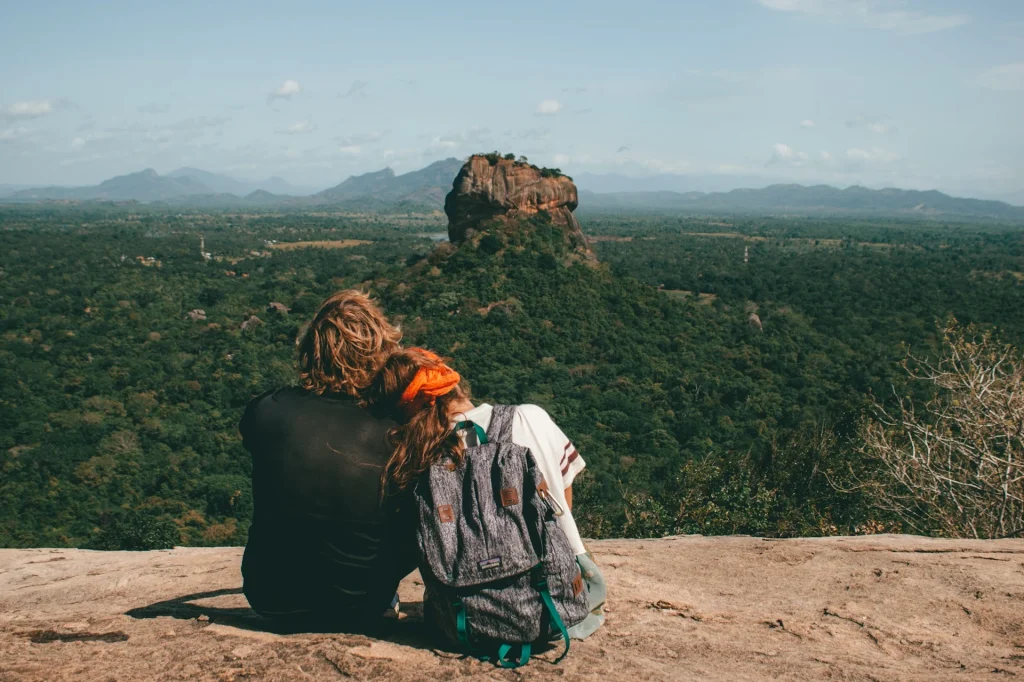
Discover Pidurangala Rock, one of the most rewarding sunrise hikes in Sri Lanka’s Cultural Triangle. Located just north of the famous Sigiriya Rock Fortress, this ancient rocky outcrop offers spectacular panoramic views across the surrounding forest, with Lion Rock rising dramatically above the landscape.
Pidurangala is more than a scenic viewpoint. The experience combines a historic Buddhist monastery, a peaceful forest trail, an impressive reclining Buddha statue and an adventurous final climb over large boulders.
This complete visitor guide covers the hiking route, sunrise timing, temple dress code, climbing difficulty, entrance arrangements, photography, transport and essential safety advice for international travellers.
Location: Near Sigiriya, Matale District, Central Province
Distance: Approximately 2.5 km north of Sigiriya Rock
Best for: Sunrise, hiking, photography and panoramic views of Lion Rock
Difficulty: Moderate, including a final boulder scramble
Climbing time: Approximately 45–60 minutes uphill
Total time needed: Around 2–3 hours, including summit time and descent
Best time: Early morning for sunrise
Entrance: Paid admission through the temple premises
Dress code: Shoulders and knees covered within the temple area
Footwear: Remove shoes in designated sacred areas; hiking shoes are suitable beyond the temple
Transport: Tuk-tuk, taxi or private vehicle from Sigiriya
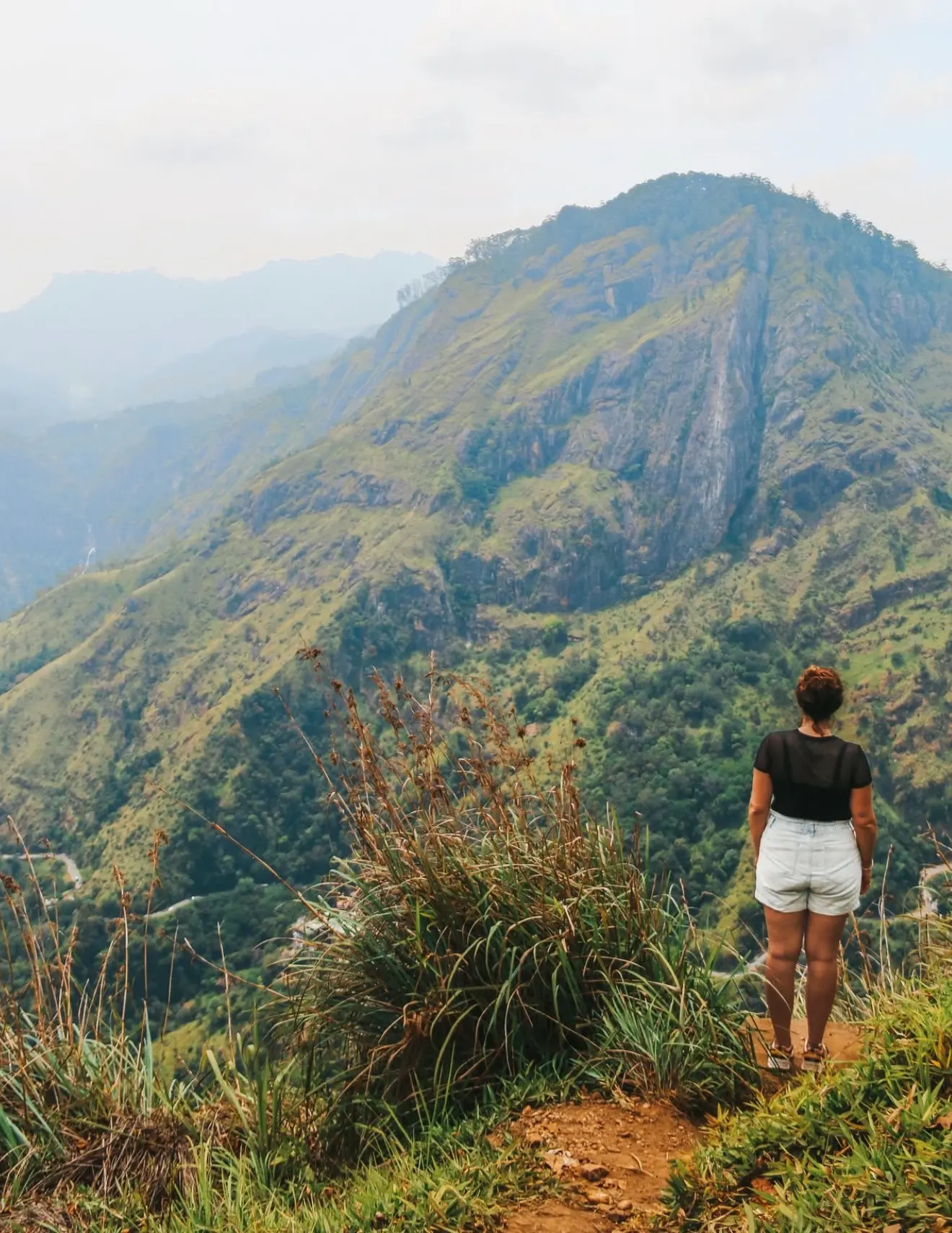
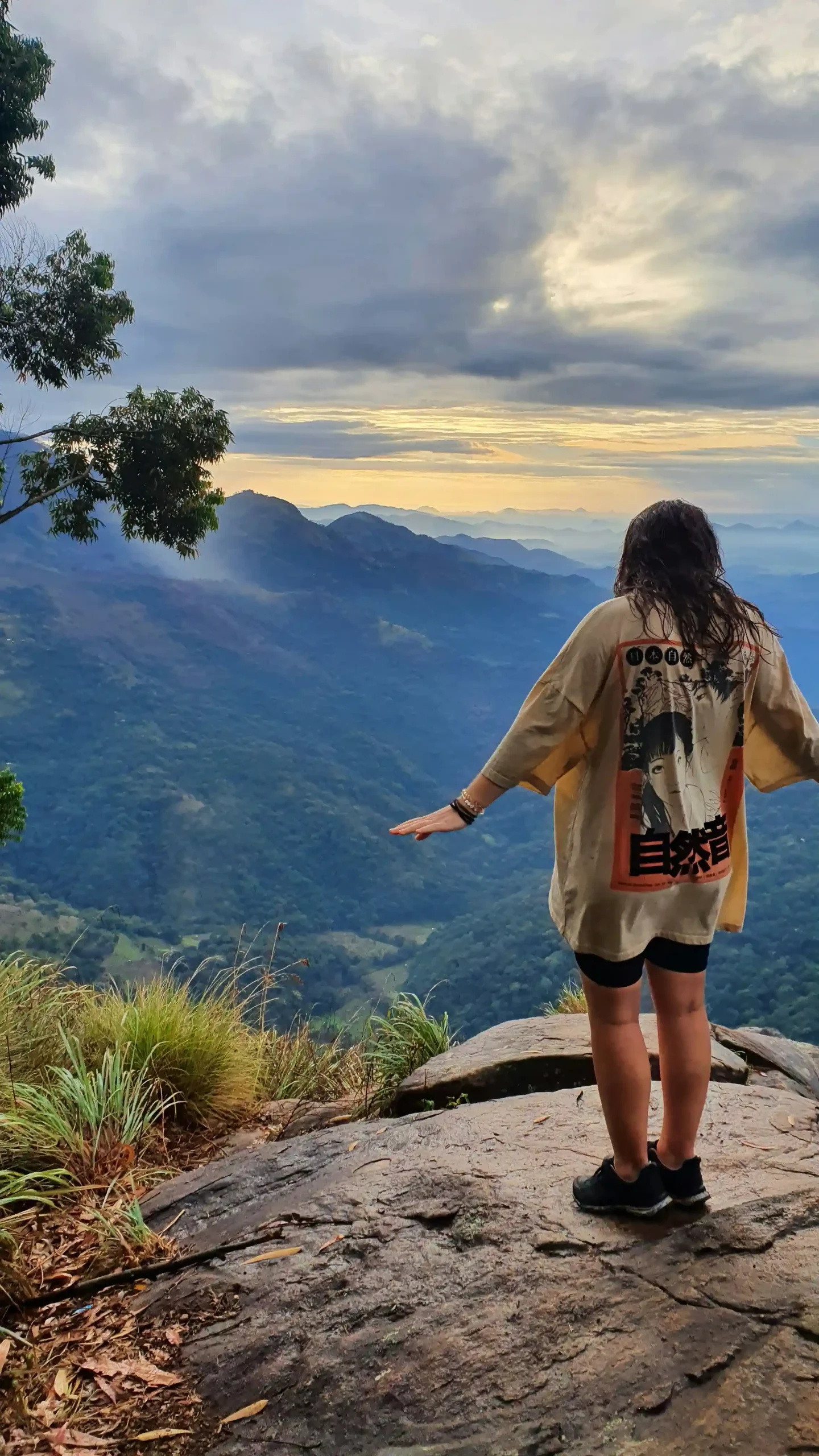
Sunrise views over ancient Lion Rock
Discover Pidurangala Rock
Pidurangala Rock is one of the most impressive natural viewpoints in central Sri Lanka, offering a memorable combination of hiking, heritage and dramatic scenery.
Located opposite the world-famous Sigiriya Rock Fortress, Pidurangala provides a panoramic perspective of Lion Rock rising above the surrounding forest.
The summit is particularly popular at sunrise, when the first light of the day gradually illuminates the countryside and reveals the extraordinary shape of Sigiriya in the distance.
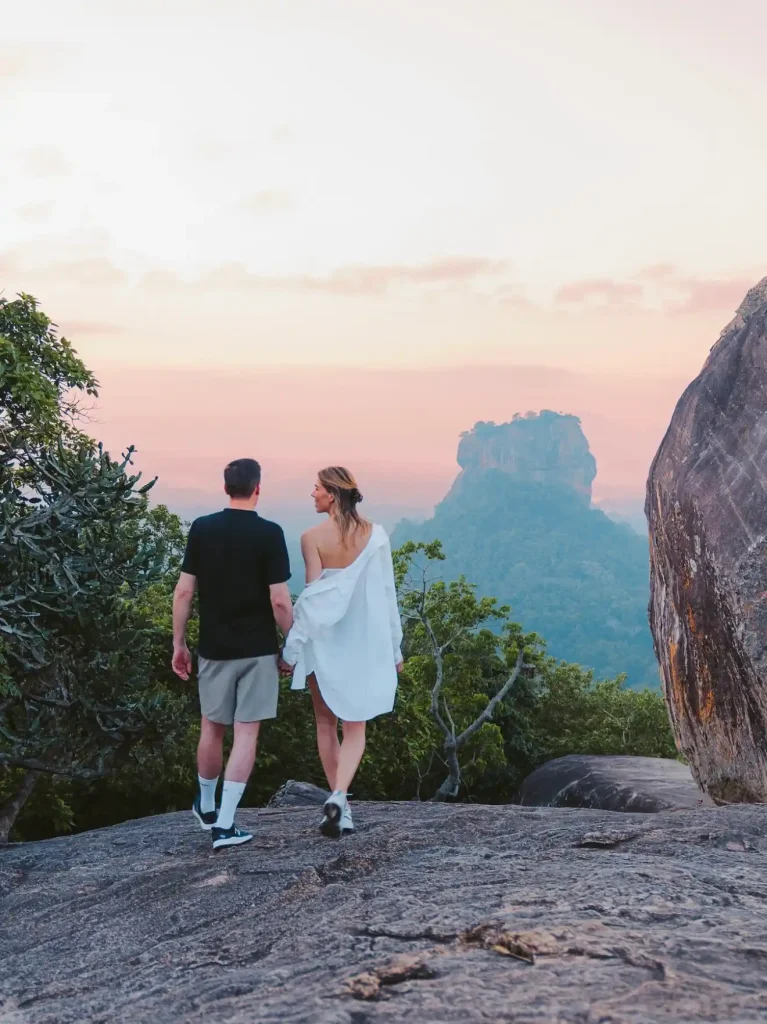
Photography: @its.me.tini
Unlike Sigiriya, where visitors follow an established archaeological route through gardens, galleries and staircases, Pidurangala offers a more natural hiking experience.
The trail passes through a Buddhist temple, continues along a shaded forest path and finishes with a short but demanding scramble over large rocks.
This combination makes Pidurangala especially attractive to travellers who enjoy outdoor experiences and want to appreciate the landscape surrounding Sri Lanka’s ancient royal capital.
Why Pidurangala Is Worth Visiting
Pidurangala offers something that Sigiriya Rock itself cannot: an elevated view of the entire Lion Rock formation.
From the summit, visitors can appreciate how Sigiriya rises almost vertically from the surrounding plains, creating one of the most recognisable landscapes in Sri Lanka.
The wide rocky summit also provides views across forests, reservoirs, farmland and distant hills.
For photographers, this is one of the finest locations in the Cultural Triangle for capturing Sigiriya within its natural surroundings.
However, Pidurangala’s appeal extends beyond photography.
The climb provides a rewarding physical challenge, while the historic Buddhist temple and ancient reclining Buddha add cultural significance.
For international visitors, the experience combines adventure, natural beauty and an opportunity to discover a quieter part of the region’s religious heritage.
The Famous View of Sigiriya Rock
The most celebrated feature of Pidurangala is the extraordinary view towards Sigiriya Rock Fortress.
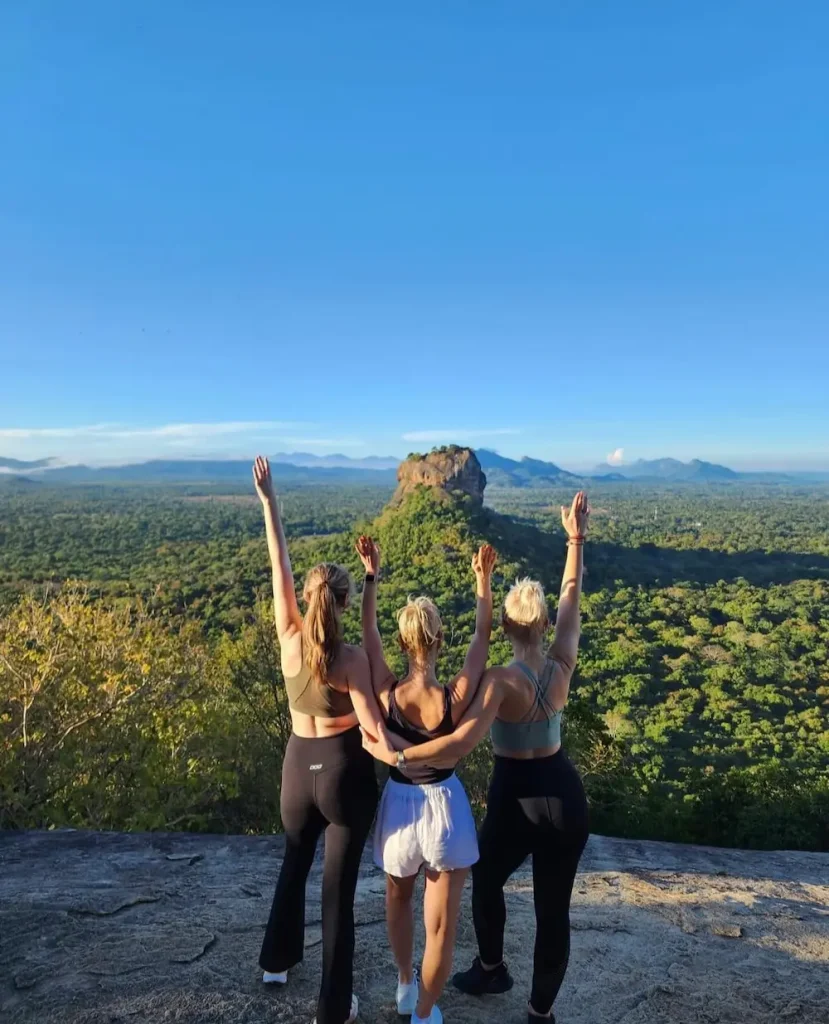
Photography: @korosaco/Instagram
From Pidurangala’s broad summit, Lion Rock appears as an enormous natural formation rising from the forest below.
The surrounding landscape creates a striking contrast between the dense green vegetation and the exposed rock face.
On clear mornings, the view extends across the surrounding countryside, providing an impressive perspective of the wider Sigiriya region.
The viewpoint is particularly valuable because it allows travellers to appreciate Sigiriya’s distinctive shape and its relationship with the surrounding landscape.
While climbing Sigiriya reveals the architecture of its ancient royal complex, standing on Pidurangala reveals the extraordinary natural setting in which that complex was constructed.
Pidurangala Rock and Sri Lanka’s Ancient History
Pidurangala has a significant Buddhist history connected with the wider religious landscape around Sigiriya.
The area was associated with Buddhist monastic activity long before it became a popular sunrise viewpoint.
Natural rock shelters provided suitable environments for meditation and religious practice.
The monastery is particularly associated with the fifth-century period of King Kassapa, who established his royal capital at nearby Sigiriya.
Historical traditions connect the development of Pidurangala’s religious complex with the changes taking place around Sigiriya during Kassapa’s reign.
Today, surviving religious structures and archaeological remains provide evidence of this monastic heritage.
Visitors should therefore regard Pidurangala as both a hiking destination and a place of historical and religious importance.
King Kassapa and the Pidurangala Monastery
King Kassapa I ruled Sri Lanka from 477 to 495 CE and is remembered for constructing the remarkable royal complex at Sigiriya.
Pidurangala’s Buddhist monastery is traditionally associated with his period of rule.
Religious accounts connect Kassapa with support for the monastic community near the rock.
The relationship between the two locations illustrates an important aspect of Sri Lanka’s early history: royal centres and Buddhist monasteries often developed within the same wider cultural landscape.
Although Sigiriya became famous for its palace, water gardens and monumental lion gateway, Pidurangala remained closely connected with Buddhist religious life.
This history adds depth to the hiking experience and explains why the ascent begins within an active temple complex.
The Buddhist Temple at Pidurangala
The Pidurangala climb begins through the premises of an active Buddhist temple.
The religious complex is associated with Pidurangala Raja Maha Viharaya, which preserves the site’s longstanding Buddhist identity.
Visitors encounter religious buildings and sacred areas before continuing towards the forested hiking path.
This is an important difference from an ordinary recreational hiking trail.
The temple remains a place of worship, and visitors are expected to behave respectfully while passing through its grounds.
Modest clothing and the removal of footwear in designated sacred areas form part of the visitor requirements.
Once you have passed through the temple premises, you can put your hiking shoes back on for the rocky ascent.
Pidurangala Temple Dress Code
Cover your shoulders and knees when passing through the Buddhist temple.
This requirement applies to visitors entering the religious premises, including those whose main purpose is to climb the rock.
Lightweight trousers, longer shorts that cover the knees, modest skirts and tops covering the shoulders are suitable options.
Visitors arriving in clothing that does not meet the dress requirements may need additional coverage.
Carrying a lightweight sarong or scarf is a practical solution, particularly for travellers wearing ordinary hiking clothes.
Shawls may be available at the temple entrance, but bringing your own covering makes the process more convenient.
Remove footwear where instructed, then put your hiking shoes back on after leaving the designated sacred area.
Removing Shoes at the Temple
Removing footwear is an important custom at Buddhist temples throughout Sri Lanka.
At Pidurangala, visitors pass through religious premises before reaching the main hiking trail.
Follow temple instructions regarding where shoes must be removed.
Keep your footwear with you if directed, as it will be needed for the rocky sections higher up.
Hiking barefoot beyond the religious area is not advisable because the route contains uneven stones, exposed roots and large boulders.
Practical footwear is particularly important during the final scramble near the summit.
The Pidurangala Hiking Route
The route to the summit can be divided into three main sections: the temple entrance, the forested stairway and the final rocky scramble.
The first part takes visitors through the religious complex and towards an established trail climbing the lower slopes.
The path includes stone steps and shaded areas beneath the surrounding vegetation.
Higher up, the route reaches an area containing historic Buddhist remains and a large reclining Buddha statue.
Beyond this point, the nature of the hike changes considerably.
The final section involves negotiating large boulders and uneven rock, sometimes using both hands to move through narrow spaces.
After completing this section, visitors emerge onto the broad rocky summit with panoramic views of Sigiriya and the surrounding countryside.
The Forested Stairway
The lower part of the Pidurangala climb follows a shaded route through dry-zone vegetation.
Stone steps and established paths help visitors gain height gradually.
The surrounding trees provide welcome shade, particularly during warmer parts of the day.
The trail also gives visitors an opportunity to appreciate the natural environment around the rock.
Bird calls, forest vegetation and occasional wildlife movement add interest to the ascent.
Although this section is less demanding than the final scramble, the steps can still be uneven.
Wear suitable shoes, watch your footing and maintain a steady pace.
The Reclining Buddha Statue
One of Pidurangala’s most important historical features is the large reclining Buddha statue located along the climbing route.
The image occupies a sheltered area beneath a substantial rock overhang.
It is associated with the site’s ancient Buddhist monastic heritage and has undergone restoration during its long history.
Sections of the statue reveal the brick construction beneath the remaining plaster.
The image represents the Buddha in a reclining position, a familiar subject within Buddhist religious art.
Its location within the rock shelter creates a striking connection between natural geology and religious architecture.
Visitors should move quietly around the image, avoid touching the sculpture and follow any photography restrictions displayed at the site.
Ancient Monastic Ruins Along the Trail
Pidurangala contains archaeological remains associated with its earlier Buddhist monastic use.
These features include religious structures and rock-shelter areas connected with the long history of the monastery.
Ancient Buddhist communities often established temples and meditation spaces in natural rock environments because they provided shelter and relative isolation.
The remains around Pidurangala demonstrate how monks adapted the existing landscape for religious life.
For travellers interested in archaeology, the ruins provide an important contrast to the royal architecture of nearby Sigiriya.
Remain on recognised paths and avoid climbing onto fragile masonry or disturbing protected features.
The Final Boulder Scramble
The final section of the Pidurangala hike is the most physically demanding part of the experience.
Instead of following ordinary steps, visitors must climb over and between large boulders.
Some sections require crouching, stepping onto elevated rocks or using both hands to support your body.
The route is not technical rock climbing, but it does demand balance, coordination and confidence moving across uneven surfaces.
In places, a large backpack can make movement awkward, particularly when passing through narrow spaces.
Keep your hands free and secure your phone or camera before attempting the scramble.
Take your time and allow sufficient space between yourself and other climbers.
For many visitors, this short scramble is the most adventurous and memorable part of the hike.
Is Pidurangala Rock Difficult to Climb?
Pidurangala is generally considered a moderately difficult hike.
Pidurangala is a moderately difficult hike, combining established walking paths with a challenging final boulder scramble.
Visitors with reasonable fitness, good balance and confidence on uneven terrain will usually find the climb manageable.
However, the route may be challenging for anyone who struggles with using their hands to climb, crouching or stepping across large rocks.
The difficulty also increases when the rock is wet or when the final scramble is attempted in darkness.
The main consideration is not simply how far you can walk, but whether you can move safely over large natural boulders.
How Long Does It Take to Climb Pidurangala?
The ascent typically takes approximately 45–60 minutes, depending on fitness, route conditions and crowd levels.
Experienced hikers may reach the summit more quickly, while first-time visitors may prefer additional time.
The final scramble can create delays when several people are moving through the same narrow rocky section.
Allow at least 30 minutes at the summit to enjoy the scenery and take photographs.
The descent requires additional time, particularly when moving carefully across the boulders.
For most visitors, planning approximately two to three hours for the full return experience is sensible.
How to Plan a Pidurangala Sunrise Climb
Sunrise is the most popular time to climb Pidurangala.
The early morning atmosphere, cooler temperatures and changing light create an exceptional setting for the view towards Sigiriya Rock.
To reach the summit before sunrise, check the sunrise time for your specific travel date.
Allow approximately 45–60 minutes for the ascent, together with additional time for admission, passing through the temple and navigating the trail in darkness.
Leave enough time to find a safe viewing position before the sun rises.
Visitors should arrange transport and confirm early entrance arrangements with their accommodation or a knowledgeable local operator before setting off.
A properly charged head torch is essential for a comfortable pre-dawn climb.
Why Sunrise at Pidurangala Is Special
Watching sunrise from Pidurangala is one of Sri Lanka’s most memorable hilltop experiences.
As darkness gradually fades, the surrounding plains become visible and the enormous shape of Sigiriya emerges above the forest.
Soft morning light creates beautiful colours across the landscape, particularly when mist settles among the trees.
The elevated position provides a broad perspective of the Cultural Triangle and its distinctive rocky formations.
For photographers, the changing light creates opportunities to capture Lion Rock against a dramatic sky.
For other visitors, simply sitting on the summit and watching the landscape awaken is the main attraction.
Cloud, Mist and Sunrise Views
Weather conditions influence the appearance of the sunrise from Pidurangala.
Clear mornings provide expansive views across the surrounding countryside, while mist can create atmospheric layers above the forest.
Cloud may occasionally obscure the sun or parts of Sigiriya Rock.
As the morning progresses, changing light and moving clouds can reveal different details of the landscape.
Allow time to appreciate the natural scenery rather than concentrating only on the exact moment the sun rises.
Remain within safe viewing areas regardless of visibility.
What Time Should You Arrive?
The ideal arrival time depends on the sunrise time for your travel date and your expected walking speed.
The ascent usually takes around 45–60 minutes, with additional time needed when the route is crowded or the final scramble is difficult.
For a pre-dawn climb, begin with sufficient time to pass through the temple and reach the summit before the first light becomes too strong.
Arranging transport in advance is particularly helpful because fewer tuk-tuks may be available in the early morning.
Use a head torch from the beginning of the trail and move carefully through the darker sections.
Prioritise safe movement rather than rushing to reach the summit at an exact minute.
Is Sunset Worth Visiting Pidurangala?
Sunset provides another attractive opportunity to experience Pidurangala.
Late-afternoon light can produce warm colours across the surrounding landscape and the exposed rock formations.
One advantage is that much of the ascent can be completed in daylight.
However, sunset visitors must consider the descent carefully.
The final boulder section becomes more difficult as natural light fades, and moving across the rocks in darkness requires additional concentration.
Carry a head torch and begin descending with sufficient light to complete the difficult sections safely.
For many first-time visitors, sunrise remains the preferred experience because it combines cooler conditions with the opportunity to descend in daylight.
Safety at the Pidurangala Summit
Pidurangala’s summit is a broad area of exposed rock offering panoramic views across the surrounding landscape.
Unlike a conventional viewing platform, the natural summit contains uneven surfaces and exposed edges.
There are areas where a fall could be extremely dangerous.
Remain well back from the edge and select stable ground when sitting or taking photographs.
Avoid stepping backwards while framing a photograph, especially before sunrise when visibility is limited.
Wind, rain and wet rock can increase the risk of slipping.
If the summit is crowded, wait for a suitable viewing position rather than moving towards isolated or dangerous rocks.
Dealing with Crowds at Sunrise
Pidurangala is an established attraction and sunrise can draw considerable numbers of visitors.
The final boulder section is relatively narrow, so short queues may form as people climb through the same spaces.
Allow others enough room to move and avoid pushing ahead on difficult sections.
Once at the summit, the broad rocky surface provides space to enjoy the views without needing to remain directly beside another group.
Choose a safe viewing position and remain considerate of other travellers taking photographs.
Quiet behaviour also helps preserve the peaceful character of the sunrise experience.
What to Wear for the Pidurangala Hike
Comfortable walking clothes and footwear with reliable grip are essential.
Choose trainers or hiking shoes suitable for uneven stone and natural rock surfaces.
Avoid flip-flops, loose sandals and footwear that makes scrambling difficult.
Lightweight clothing is generally appropriate for the warm climate, although early-morning temperatures can feel cooler before sunrise.
Remember that the route begins through Buddhist temple premises.
Carry appropriate clothing to cover your shoulders and knees and follow the footwear rules within the sacred area.
A small backpack is more practical than carrying belongings in your hands.
What Should You Bring for Sunrise?
A small day bag containing essential hiking equipment is sufficient for most visitors.
- A reliable head torch or flashlight.
- Comfortable hiking shoes with good grip.
- Modest clothing or a sarong for the temple entrance.
- Drinking water in a reusable bottle.
- A small snack if needed.
- A charged mobile phone.
- A compact power bank.
- A lightweight warm layer for the early morning.
- Sunscreen and a hat for the descent.
- Sri Lankan rupee cash for admission and transport.
Keep your equipment compact because the final boulder scramble is easier when your hands are free.
Why a Head Torch Is Important
A head torch is one of the most useful items for a Pidurangala sunrise climb.
It allows you to illuminate the trail while keeping both hands available for balance.
This becomes particularly important near the summit, where visitors need to climb over and between large rocks.
A smartphone torch can serve as a backup, but holding a phone while scrambling makes the movement more difficult.
Ensure your light is charged and working before leaving your accommodation.
Use the beam to check the next foothold rather than shining it towards other visitors.
Pidurangala Entrance Tickets
Pidurangala Rock is a ticketed attraction, with admission arranged through the temple entrance.
The visitor payment supports access to a site that combines a Buddhist religious complex with an established hiking route.
Carry sufficient Sri Lankan rupee cash when arriving, particularly for an early-morning climb.
Confirm the applicable entrance charge through your accommodation or at the official ticket point.
Pidurangala’s admission arrangements are separate from those used for Sigiriya Rock Fortress.
A Sigiriya Rock Fortress ticket does not serve as a Pidurangala admission ticket.
Opening and Sunrise Access Arrangements
Pidurangala is particularly popular for sunrise, and early visitor access is an established part of the experience.
Admission is handled through the temple premises at the base of the rock.
Travellers planning a pre-dawn ascent should arrange their transport and confirm the entrance arrangements before travelling.
Accommodation providers in Sigiriya can often help visitors organise an early transfer to the temple.
Allow sufficient time for admission, temple etiquette and the initial walk before reaching the more challenging upper trail.
Getting to Pidurangala from Sigiriya
Pidurangala Rock is located just north of Sigiriya Rock Fortress, making it easily accessible from the surrounding accommodation area.
The two rocks are approximately 2.5 kilometres apart, although the exact road distance depends on your starting point and the entrance used.
A tuk-tuk is one of the most convenient transport options, especially for travellers planning to arrive before sunrise.
Many guesthouses and hotels around Sigiriya can assist with arranging a driver familiar with the temple entrance.
Agree the tuk-tuk or driver fare before travelling.
For early-morning visits, confirm the return pickup time and location in advance.
Getting to Pidurangala from Dambulla
Dambulla is a convenient transport gateway for travellers exploring Sri Lanka’s Cultural Triangle.
Pidurangala lies approximately 21 kilometres from Dambulla.
Travellers staying in Dambulla can arrange a tuk-tuk, taxi or private vehicle to the temple entrance.
Those relying on public transport can use available bus connections towards Sigiriya and arrange the final transfer locally.
For a sunrise hike, a pre-arranged direct vehicle is usually the most practical choice because public transport may not operate early enough.
Confirm the complete transport cost and return arrangements before departure.
Can You Walk to Pidurangala?
Walking to the temple may be possible for travellers staying close to Pidurangala or in suitable parts of the Sigiriya accommodation area.
However, the route to the temple is separate from the actual summit hike.
Road conditions, traffic, lighting and the distance from your accommodation should be considered before deciding to walk.
For a pre-dawn visit, arranging transport directly to the entrance is usually more comfortable than walking along unfamiliar roads in darkness.
This also helps conserve energy for the final rocky ascent.
Do You Need a Guide to Climb Pidurangala?
A guide is not generally required for the standard Pidurangala hiking route.
The established trail is used regularly by visitors, and the climb is relatively short compared with many longer mountain hikes.
However, the final boulder section requires care, particularly in darkness.
Travellers unfamiliar with scrambling or uncomfortable finding a route before sunrise may benefit from an experienced local guide.
A guide can also provide information about the monastery’s history and help visitors navigate the more difficult sections.
Confirm the guiding fee and service arrangements before beginning the hike.
Wildlife Along the Trail
Pidurangala’s forested surroundings support a variety of animals associated with Sri Lanka’s dry-zone environment.
Birds may be heard among the trees, while monkeys can occasionally be encountered near parts of the route.
Reptiles and insects also occur within the surrounding natural landscape.
Use your head torch when moving in darkness and check where you place your hands during the boulder scramble.
Do not feed monkeys or leave food waste along the trail.
Remain on the recognised hiking route rather than moving through surrounding vegetation to search for wildlife.
Photography at Pidurangala Rock
Pidurangala is one of the best locations in Sri Lanka for photographing Sigiriya Rock Fortress within its wider landscape.
The most recognisable composition shows Lion Rock rising above the forest, framed by the open surroundings of Pidurangala’s summit.
A wide-angle lens can capture the broad landscape, including the forests, surrounding hills and changing sky.
A moderate telephoto lens can make Sigiriya appear more prominent within the frame.
Sunrise creates attractive colours, while light mist can add depth to the forest below.
Always photograph from stable ground and avoid exposed edges or unstable boulders.
Taking Photos with a Smartphone
A smartphone is more than capable of capturing attractive photographs from Pidurangala.
Use the wider camera setting to include Sigiriya and the surrounding landscape.
For a more detailed composition, a moderate zoom can help emphasise the rock without removing too much of the scenery.
Early morning light can change quickly, so take photographs as different parts of the landscape become illuminated.
Keep the phone safely stored while scrambling over boulders.
Do not step backwards or move towards a dangerous edge simply to improve the composition.
Drone Photography at Pidurangala
Drone operations require appropriate permission under Sri Lanka’s aviation rules and any applicable local heritage or protected-area restrictions.
The summit should not be treated as an unrestricted drone-launching location.
Unauthorised flights can disturb wildlife, interfere with other visitors and create safety concerns around a crowded viewpoint.
Visitors should use ordinary photography unless the necessary permissions for drone operations have been obtained.
Climbing Pidurangala After Rain
Rain can make the Pidurangala hike considerably more challenging.
The natural rock surfaces may become slippery, particularly around the final scramble.
Wet boulders reduce grip and make it more difficult to judge safe footholds.
The risks increase when climbing in darkness or when several visitors are moving through narrow spaces.
Choose footwear with reliable grip and avoid rushing on wet surfaces.
During heavy rain or severe weather, prioritise safety and follow any local access instructions.
Visiting Pidurangala with Children
Pidurangala can be a rewarding experience for families with older children who enjoy hiking and are comfortable moving over uneven terrain.
The forest trail and panoramic summit provide an exciting outdoor experience.
However, the final scramble requires balance and the ability to use both hands to climb through rocky sections.
Very young children may find this section difficult, particularly in darkness or wet conditions.
Parents should assess their children’s confidence, coordination and stamina before attempting the summit.
Keep children closely supervised near exposed edges and during the descent.
Accessibility and Mobility Considerations
Pidurangala is not a fully accessible attraction.
The main hiking route includes uneven stone steps, natural terrain and a final boulder scramble.
These features can make the climb particularly difficult for visitors with significant knee, hip, balance or mobility concerns.
There is no lift or ordinary vehicle access to the summit.
Visitors who cannot complete the upper climb may still appreciate the temple area and the accessible portions of the historic religious landscape according to their individual abilities.
Assess your physical comfort carefully before continuing beyond the reclining Buddha towards the final scramble.
Pidurangala Rock or Sigiriya Rock Fortress?
Pidurangala and Sigiriya are two of the most recognisable rocky landmarks in Sri Lanka’s Cultural Triangle, but they offer different experiences.
Choose Pidurangala Rock if you are primarily interested in sunrise, a moderately adventurous hike and the classic panoramic view of Lion Rock.
Choose Sigiriya Rock Fortress if your main interest is ancient history, royal architecture, archaeological gardens, frescoes and a UNESCO-listed cultural site.
Pidurangala is more focused on natural scenery and hiking, while Sigiriya offers a much more extensive archaeological experience.
The two attractions complement each other rather than providing identical alternatives.
For more detailed historical information, explore our Sigiriya Rock Fortress Visitor Guide.
Responsible Hiking at Pidurangala
Pidurangala combines a sacred Buddhist site with a sensitive natural landscape.
Visitors should respect both aspects throughout the climb.
Stay on the established trail and avoid damaging vegetation or historic stonework.
Do not leave plastic bottles, food packaging or other rubbish behind.
Never feed monkeys or disturb wildlife living around the forested slopes.
Respect worshippers and religious buildings when passing through the temple premises.
At the summit, maintain a reasonable noise level and give other visitors room to appreciate the scenery.
Responsible behaviour helps preserve the experience for future travellers and the local religious community.
Is Pidurangala Rock Worth Visiting?
Absolutely. Pidurangala Rock offers one of Sri Lanka’s most memorable short hikes, combining spectacular scenery, Buddhist heritage and an adventurous final climb.
The panoramic view of Sigiriya rising above the surrounding forest is the principal attraction, particularly during sunrise when the landscape gradually emerges in the morning light.
The forest trail, ancient reclining Buddha and temple complex add cultural interest to an already rewarding outdoor experience.
Although the hike is shorter than many of Sri Lanka’s mountain trails, the final boulder scramble requires suitable footwear, balance and care.
For international travellers exploring Sigiriya and the Cultural Triangle, Pidurangala offers an exceptional opportunity to enjoy the region’s natural beauty from a different perspective.
Arrive prepared, respect the temple, climb safely and take time to appreciate the extraordinary view of Lion Rock from above the forest.