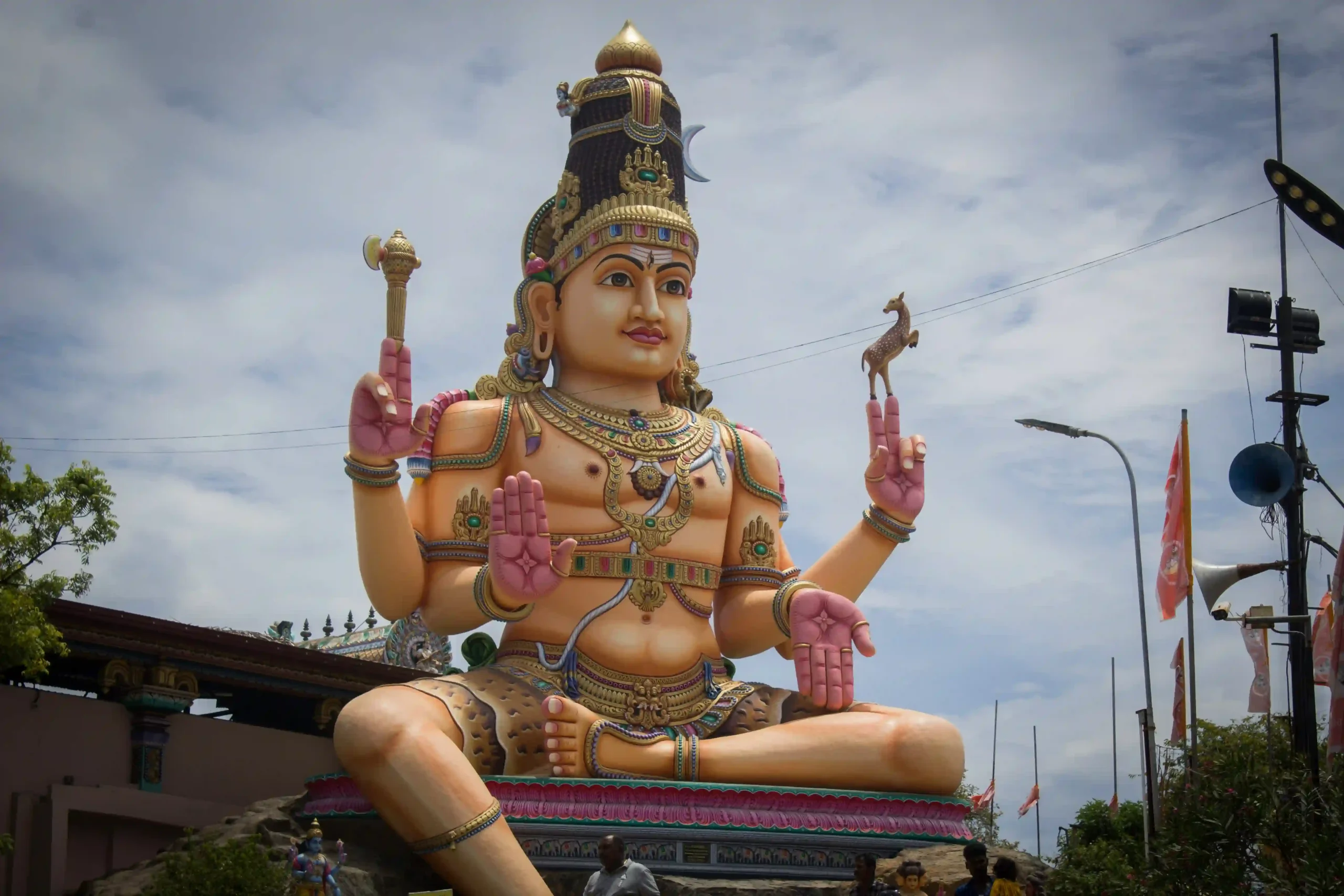
Discover the spiritual heart of Jaffna at Nallur Kandaswamy Kovil, one of Sri Lanka’s most important Hindu temples, where magnificent golden towers, centuries-old traditions and daily religious ceremonies reflect the rich cultural heritage of northern Sri Lanka.
Dedicated to Lord Murugan, the temple is a major centre of Tamil Saivite worship, attracting devotees from Sri Lanka and around the world. Its impressive Dravidian architecture, colourful festivals and deeply rooted religious customs make it an essential cultural landmark for visitors exploring Jaffna.
For more information about the surrounding city, explore our Jaffna Destination Guide.
Location: Nallur, Jaffna, Northern Province
Best for: Hindu culture, temple architecture and religious traditions
Time needed: Approximately 1–2 hours
Best time to visit: Early morning or late afternoon
Dress code: Modest clothing, barefoot entry and specific requirements for men
Photography: Prohibited within the temple premises
Golden towers and living Tamil devotion
Why Visit Nallur Kandaswamy Kovil?
Nallur Kandaswamy Kovil is one of the most significant religious and cultural landmarks in northern Sri Lanka.
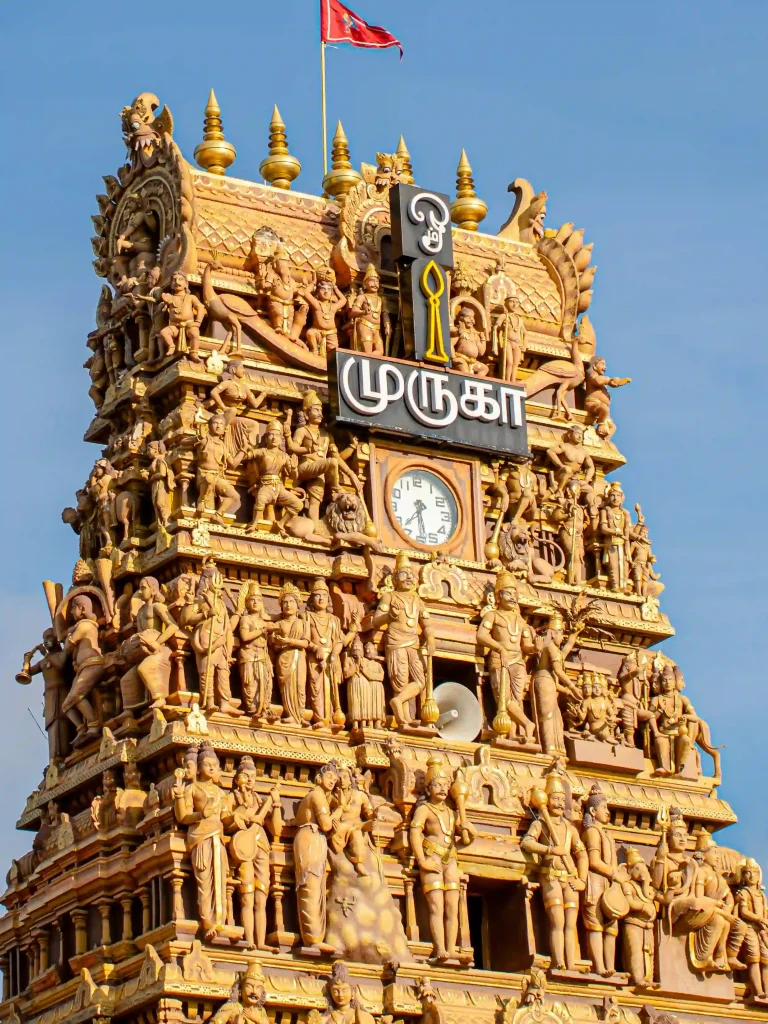
Its striking golden entrance tower, richly decorated shrines and vibrant ceremonial traditions offer visitors a fascinating introduction to Tamil Hindu heritage.
Unlike a historic monument visited solely for its architecture, Nallur remains an active centre of worship where daily rituals, devotional music and religious celebrations form an important part of community life.
Visitors can appreciate the temple’s architectural beauty while experiencing the atmosphere created by traditional poojas, ringing bells and the movement of devotees through the sacred complex.
The temple’s importance extends beyond religion, representing centuries of Tamil cultural identity and historical continuity in Jaffna.
The History of Nallur Kandaswamy Kovil
Nallur’s religious history stretches back several centuries, closely connected with the former Kingdom of Jaffna.
The area served as an important political and cultural centre during the medieval period, when Hindu temples played a central role in the region’s religious life.
Early History and Portuguese Rule
Historical traditions associate Nallur’s early temples with the rulers of the Jaffna Kingdom.
A significant temple was established during the fifteenth century, when Nallur developed as an important royal and religious centre.
During Portuguese colonial expansion in the seventeenth century, the temple was destroyed as part of the wider transformation of the region’s religious and political landscape.
Its destruction marked a major interruption in Nallur’s established Hindu traditions.
Reconstruction in 1734
The present temple traces its origins to 1734, during the Dutch colonial period.
Raghunatha Mappana Mudaliar re-established worship centred on the sacred Vel, the divine spear associated with Lord Murugan.
The Vel remains central to the temple’s religious identity and is enshrined as a sacred representation of the deity.
Successive generations of the Mappanar family continued to develop the complex, adding shrines, ceremonial spaces and increasingly elaborate architectural features.
The temple has expanded considerably over time, becoming one of Sri Lanka’s most recognisable Hindu religious landmarks.
Lord Murugan and the Temple’s Religious Significance
Nallur Kandaswamy Kovil is dedicated to Lord Murugan, also known as Skanda, Karthikeya and Subramanya.
Murugan holds an important place in Tamil Hindu traditions and is associated with courage, wisdom, protection and spiritual victory.
At Nallur, the sacred Vel represents the divine power of Murugan and occupies a central position in the temple’s worship.
The temple also contains shrines and representations associated with other Hindu deities, reflecting the wider traditions of Saivite worship.
For devotees, Nallur is a sacred place for prayer, offerings, religious vows and participation in important annual festivals.
Visitors can gain a deeper appreciation of Tamil Hindu culture by observing the temple’s rituals and understanding the symbolism behind its architecture and ceremonies.
The Architecture of Nallur Kandaswamy Kovil
Nallur is celebrated for its magnificent Dravidian-style architecture, characterised by richly decorated entrance towers, colourful sculptures and carefully arranged sacred spaces.
The temple’s architecture has developed through several periods of expansion, combining traditional religious design with elaborate ornamental details.
The Golden Entrance Gopuram
One of the temple’s most recognisable features is its magnificent golden entrance tower, known as a gopuram.
Decorated with intricate sculptures and religious motifs, the tower creates an impressive entrance to the sacred complex.
Its detailed ornamentation reflects traditional South Indian temple architecture and the artistic heritage of Tamil Hindu culture.
The golden façade is particularly striking in morning and late-afternoon sunlight.
The Temple’s Towers and Courtyards
Beyond the principal entrance, the complex includes additional gopurams, shrines, pillared halls and ceremonial courtyards.
These structures organise the movement of devotees and provide dedicated spaces for different forms of worship.
The southern Shanmuga Raja Gopuram and the northern Gubera Raja Gopuram are important examples of the temple’s later architectural development.
Their elaborate sculptural decorations contribute to the impressive appearance of the wider complex.
Inside, traditional stonework, sacred symbols and decorative elements reflect the temple’s continuing religious and artistic traditions.
Opening Hours and Daily Pooja Times
Nallur Kandaswamy Kovil follows a structured daily worship schedule.
On regular days, except Fridays, the temple opens during three periods:
Early morning: 4:00 am–5:15 am
Morning and midday: 7:00 am–12:00 noon
Afternoon and evening: 3:00 pm–6:20 pm
On Fridays, the temple opens from:
Morning: 4:00 am–12:00 noon
Afternoon and evening: 3:00 pm–6:20 pm
Daily Pooja Schedule
The temple holds several important poojas throughout the day:
- 4:30 am: Palliyarai Pooja
- 5:00 am: Ushath Kala Pooja
- 10:00 am: Kaala Santhi Pooja
- 12:00 noon: Uchchi Kaala Pooja
- 4:00 pm: Sayaratchai Pooja
- 5:00 pm: Irandam Kala Pooja
- 6:00 pm: Artha Jama Pooja
Worship times may change during major religious festivals and special ceremonies.
Visitors planning to attend a particular pooja can use the official Nallur Kandaswamy Kovil worship schedule for the latest arrangements.
What to Expect During Temple Worship
Attending a pooja offers an opportunity to experience Nallur’s living religious traditions.
Ceremonies may include devotional chanting, rhythmic music, bells, sacred lamps and offerings presented by priests.
Devotees gather in designated worship areas, often moving between shrines as different parts of the ceremony take place.
The atmosphere can be particularly moving during major poojas, when the sounds of traditional instruments and collective devotion fill the temple.
Visitors of different faiths are welcome to observe respectfully from permitted areas.
Remain quiet during worship, allow devotees to approach the shrines and follow instructions from temple staff.
Taking time to observe the rituals offers valuable insight into the religious traditions that remain central to life in Jaffna.
Dress Code and Temple Visitor Etiquette
Nallur Kandaswamy Kovil follows traditional Hindu religious customs, with specific requirements for clothing, footwear and behaviour.
Understanding these rules before arriving helps ensure a comfortable and respectful visit.
Dress Code for Men
Men are required to remove shirts and other upper garments before entering the inner sanctum or designated worship areas where bare-chested entry is required.
Respectful trousers, a sarong or another suitable lower-body garment can be worn.
Follow the temple’s instructions regarding the areas where this requirement applies.
Dress Code for Women
Women should wear modest clothing that covers the shoulders and extends to at least the knees.
Sleeveless tops are not permitted within the temple premises.
A modest dress, long skirt or loose trousers with covered shoulders is suitable for visiting.
Traditional attire is also welcomed.
Footwear and Personal Belongings
All visitors must remove footwear before entering the temple premises.
Use the designated footwear area and keep valuable belongings secure.
Large bags, suitcases and heavy luggage are prohibited inside the temple.
Visitors should carry only essential personal items and leave larger belongings at their accommodation.
Photography and Mobile Phones
Photography and video recording are prohibited within the temple premises.
Mobile phones should be switched off or placed on silent, with calls and unnecessary phone use avoided during the visit.
Drone photography is also prohibited within the temple grounds.
Visitors wishing to photograph the impressive entrance towers can do so from appropriate public areas outside the temple, while respecting worshippers and surrounding traffic.
The Nallur Mahotsavam Festival
The annual Nallur Mahotsavam is one of the most important Hindu religious festivals in northern Sri Lanka.
Celebrated over 25 days, the festival attracts large numbers of devotees from across Sri Lanka and overseas.
The celebrations begin with the ceremonial raising of the temple flag, followed by daily worship, religious processions and special ceremonies.
The Grand Chariot Festival
One of the most important events is the Ther Thiruvizha, or chariot festival.
During this ceremony, a richly decorated temple chariot is drawn through the surrounding streets by devotees.
The procession is accompanied by traditional music, prayers and large gatherings of worshippers.
The event creates a remarkable atmosphere of devotion and cultural celebration.
Other Festival Highlights
The Mahotsavam also includes special abhishekams, ceremonial processions and the Theertham ritual.
These events reflect the temple’s established religious traditions and the importance of Lord Murugan within Tamil Hindu worship.
During the festival, the surrounding streets become particularly lively, with increased pedestrian activity and special traffic arrangements.
Travellers hoping to experience the celebrations should allow additional time for transport and follow the directions of temple staff and event organisers.
Best Time to Visit Nallur Kandaswamy Kovil
Early morning and late afternoon are generally the most comfortable times to explore Nallur.
Jaffna experiences a warm tropical climate, with strong sunshine throughout much of the year.
Early Morning
Morning offers cooler temperatures and a peaceful atmosphere around the temple.
It is particularly suitable for visitors who wish to observe the morning worship ceremonies.
Walking barefoot is also more comfortable before the outdoor paving becomes hot.
Late Afternoon
Late afternoon is another excellent time to visit, with softer light illuminating the temple’s golden architectural details.
Visitors can experience the evening sequence of poojas while enjoying more comfortable temperatures.
Visiting During Festivals
Religious festivals provide an especially vibrant cultural experience, although the temple and surrounding streets can become very crowded.
For a quieter visit focused on architecture and everyday worship, ordinary weekdays are generally more suitable.
Allow approximately one to two hours to appreciate the temple and experience part of its daily religious activities.
How to Get to Nallur Kandaswamy Kovil
Nallur Kandaswamy Kovil is located approximately 2 kilometres northeast of central Jaffna.
Its convenient location makes it easy to include while exploring the city’s cultural attractions.
By Tuk-Tuk
A tuk-tuk is one of the easiest ways to reach the temple from central Jaffna.
The journey generally takes around 10–15 minutes, depending on your starting point and traffic conditions.
Local drivers are familiar with the landmark and can arrange a direct journey from hotels, guesthouses or the railway station.
Agree on the fare before travelling.
Walking or Cycling
Travellers staying near Nallur can reach the temple on foot or by bicycle.
The surrounding streets provide an opportunity to experience the neighbourhood and its traditional Tamil cultural atmosphere.
Walking is most comfortable during the cooler morning and late-afternoon periods.
Travelling Without a Car
Jaffna is connected to other destinations in northern Sri Lanka by local buses and road transport.
Travellers arriving in Jaffna by train or long-distance bus can arrange a short tuk-tuk journey to the temple.
During the annual Mahotsavam, temporary road closures and pedestrian-only areas may require visitors to walk the final section.
Accessibility and Visitor Comfort
Nallur Kandaswamy Kovil is an active religious complex with traditional architectural features, stone paving and designated worship spaces.
Visitors may encounter steps, uneven surfaces and areas requiring barefoot entry.
Travellers with reduced mobility may find direct transport to the temple entrance more comfortable than walking from the city centre.
Access to some inner areas may be challenging, depending on individual mobility requirements and the temple’s arrangements.
Families visiting with children should supervise younger visitors closely, particularly during crowded worship periods.
Jaffna’s warm climate also makes hydration important. Drink sufficient water before entering and allow time for rest when exploring the surrounding area.
Exploring Nearby Jaffna Attractions
Nallur Kandaswamy Kovil can be combined with other important cultural landmarks around Jaffna.
Jaffna Public Library is one of the city’s most recognisable historic institutions, celebrated for its elegant architecture and remarkable cultural history.
For more information, explore our Jaffna Public Library History and Visitor Guide.
Jaffna Fort offers another contrasting experience, with impressive Dutch-period fortifications, historic ruins and views across Jaffna Lagoon.
Together, these attractions reveal different aspects of northern Sri Lanka’s religious, educational and colonial heritage.
Is Nallur Kandaswamy Kovil Worth Visiting?
Nallur Kandaswamy Kovil is one of the most meaningful cultural attractions in northern Sri Lanka, combining magnificent Dravidian architecture with centuries of Tamil Hindu religious traditions.
Its golden towers, vibrant ceremonies and continuing importance as a centre of worship offer visitors a memorable introduction to Jaffna’s cultural identity.
For travellers interested in Sri Lanka’s diverse religious heritage, Nallur provides an opportunity to experience the traditions, architecture and spiritual atmosphere of one of the island’s most celebrated Hindu temples.