
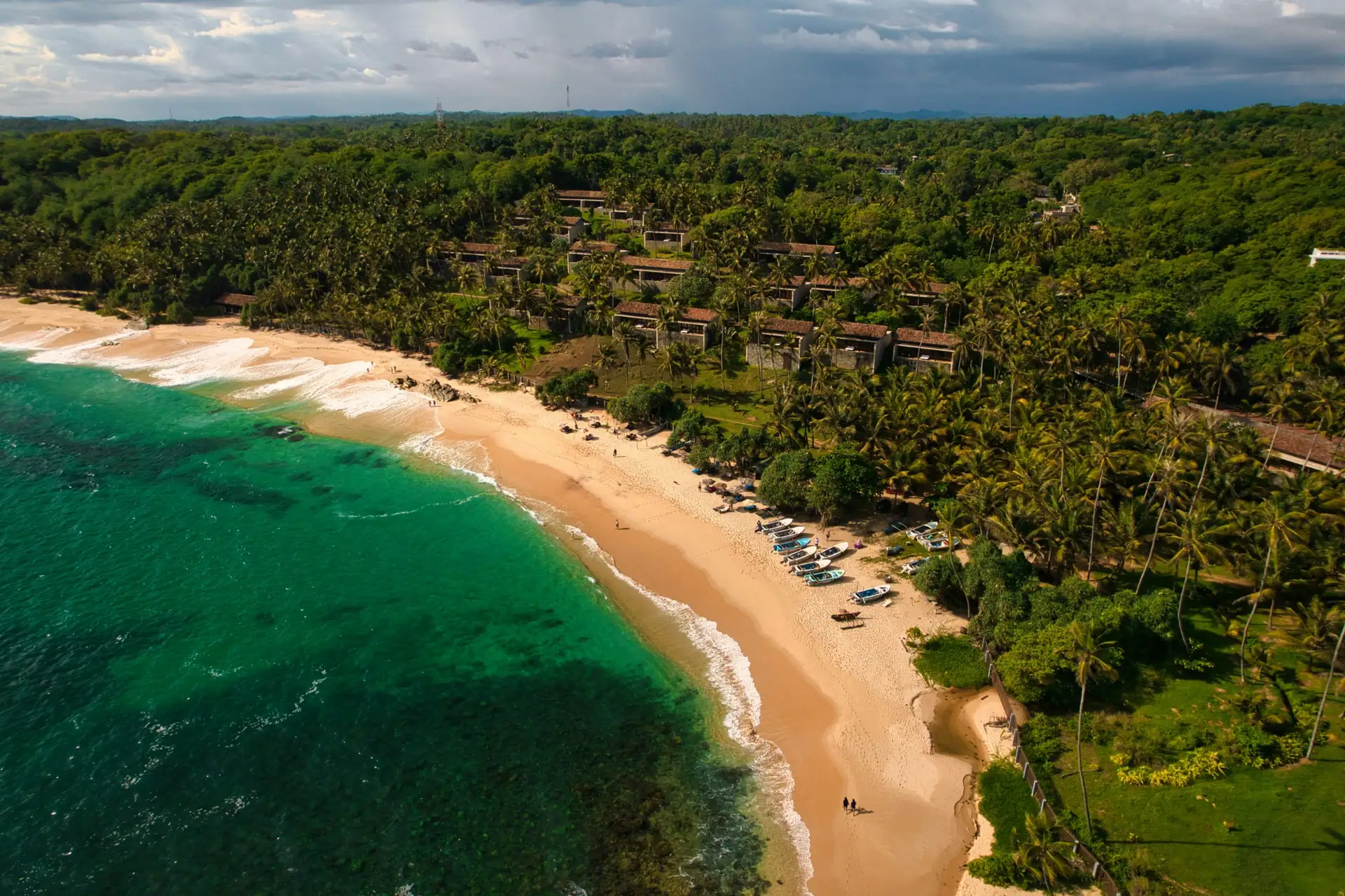
Discover the beautiful beaches of Tangalle, where secluded tropical bays, golden sands and peaceful coastal scenery offer a relaxing escape along Sri Lanka’s southern coastline.
Located in Southern Province, Tangalle is known for its quieter atmosphere, palm-fringed beaches and traditional fishing communities. From the sheltered coves of Goyambokka to the long stretches of sand extending towards Marakolliya, the area offers a variety of coastal experiences.
Whether you are looking for a peaceful beach holiday, beautiful photography locations or an opportunity to explore Sri Lanka’s natural coastline, Tangalle is a rewarding destination.
Explore our Tangalle Destination Guide for more information about the surrounding region.
Location: Tangalle, Southern Province, Sri Lanka
Best for: Quiet beaches, relaxation, coastal scenery and nature
Recommended stay: 2–3 nights
Best time to visit: December–April
Swimming: Choose sheltered bays when local conditions permit
Getting around: Tuk-tuk, private vehicle or bicycle
Golden beaches and peaceful tropical escapes
Why Visit Tangalle Beaches?
Tangalle offers one of the most relaxed beach experiences along Sri Lanka’s southern coast.
Compared with busier destinations such as Mirissa and Unawatuna, its coastline features more secluded stretches of sand, smaller beach communities and a slower pace of life.
The area is particularly appealing to travellers looking for a peaceful coastal stay surrounded by natural scenery.
One of Tangalle’s greatest attractions is the variety of beaches within a relatively short distance.
Western Tangalle features smaller bays, rocky headlands and beautiful palm-fringed coves.
East of the town centre, the coastline opens into long sandy beaches backed by tropical vegetation, lagoons and quieter accommodation.
This diversity allows visitors to choose between convenient coastal locations, scenic bays and more secluded beach settings.
Goyambokka Beach
Goyambokka Beach is one of Tangalle’s most attractive coastal destinations.
Located west of the town centre, this beautiful crescent-shaped bay is surrounded by palm trees, rocky headlands and tropical vegetation.
Its naturally sheltered position makes it one of the better-known beaches in Tangalle for swimming during favourable sea conditions.
The beach also offers a pleasant environment for relaxing, sunbathing and enjoying the coastal scenery.
Swimming at Goyambokka
Goyambokka is generally more sheltered than the long beaches east of Tangalle.
During periods of calm weather, parts of the bay can provide suitable swimming conditions.
However, powerful shore breaks and changing currents can still occur, particularly when large ocean swells reach the coastline.
Visitors should seek current local safety advice before entering the water.
The beach is particularly rewarding during the morning, when temperatures are cooler and the surroundings often feel quieter.
Silent Beach (Godellawela)
Silent Beach, also known as Godellawela Beach, is one of Tangalle’s most picturesque coastal locations.
Situated west of Tangalle near Goyambokka, this secluded bay features soft golden sand, clear-looking water and a beautiful backdrop of palm trees.
Its relatively peaceful setting makes it particularly attractive for travellers interested in scenic beaches and nature photography.
The surrounding headlands and tropical vegetation create an intimate atmosphere, making Silent Beach a popular destination for a relaxing afternoon.
Is Silent Beach Safe for Swimming?
Despite its sheltered appearance, Silent Beach can experience powerful rip currents and strong waves.
The water may appear calm from the shoreline even when dangerous currents are present.
Visitors should not assume that the beach is suitable for swimming simply because the bay looks protected.
Enjoying the sand, scenery and nearby coastal surroundings is often the better choice when sea conditions are uncertain.
Pallikkudawa Beach and the Western Coves
Pallikkudawa is located close to Tangalle town and features a collection of smaller rocky bays.
Unlike the extensive sandy beaches farther east, this section of coastline is characterised by rocky headlands, compact coves and attractive ocean views.
Some sheltered sections may offer swimming opportunities during suitable conditions, although submerged rocks and changing currents require care.
The area is particularly appealing for travellers who want to explore smaller beaches without travelling far from town.
A tuk-tuk is a convenient way to move between the western coves, especially where rocky headlands make walking along the shoreline difficult.
Medaketiya Beach
Medaketiya is one of Tangalle’s most convenient beach areas for travellers staying close to the town centre.
Stretching east from Tangalle, the beach features a broad sandy shoreline with guesthouses, hotels and small restaurants nearby.
Its main attraction is the combination of coastal scenery and easy access to local facilities.
Visitors can enjoy long walks, beachfront dining and relaxed mornings overlooking the Indian Ocean.
Swimming Conditions at Medaketiya
Medaketiya is more exposed than Tangalle’s smaller western bays.
The shoreline can experience powerful waves, steep shore breaks and dangerous currents, even when the weather appears pleasant.
It is therefore better regarded primarily as a beach for walking, relaxation and coastal scenery.
Swimming should be considered only where knowledgeable local safety advice confirms that current conditions are suitable.
For travellers who value restaurants and accommodation within walking distance, Medaketiya remains an excellent area to stay.
Medilla Beach
Medilla Beach extends farther east from Medaketiya and offers a quieter coastal atmosphere.
The beach is known for its long stretches of sand, tropical vegetation and relatively peaceful surroundings.
Accommodation becomes more spread out, creating an appealing setting for travellers who prefer greater privacy and fewer crowds.
Medilla is particularly attractive for early-morning beach walks and photography.
Its exposed shoreline can produce strong waves and currents, making swimming hazardous.
Visitors should also allow sufficient time for returning to their accommodation, particularly after sunset.
Marakolliya and Kapuhenwala Beach
Marakolliya and Kapuhenwala are among the quieter coastal areas east of Tangalle.
These long sandy beaches are backed by natural vegetation, wetlands and sections of the lagoon environment.
Their open landscapes provide beautiful views along the coastline, with fewer buildings and a more secluded atmosphere.
Marakolliya Beach
Marakolliya is particularly rewarding for travellers who enjoy peaceful beach walks and natural scenery.
The long shoreline provides opportunities for photography, birdwatching and relaxation.
However, powerful waves, steep underwater slopes and strong currents make much of the beach unsuitable for casual swimming.
Kapuhenwala Beach
Kapuhenwala lies farther along the eastern coastline, close to the lagoon and coastal wetland environment.
The area offers a mixture of sandy shoreline, tropical vegetation and scenic views.
It is especially attractive for travellers interested in coastal nature and secluded accommodation.
Swimming requires considerable caution because of exposed surf, strong currents and the nearby lagoon environment.
These eastern beaches are best appreciated for their scenery, peaceful atmosphere and opportunities to explore the coastline on foot.
Swimming Safely at Tangalle Beaches
Swimming safety is one of the most important considerations when visiting Tangalle.
Many beaches along this coastline are exposed to powerful Indian Ocean swells.
Strong currents, steep shore breaks and sudden changes in water depth can make swimming dangerous.
Choosing a Suitable Swimming Location
Goyambokka and certain sections of Pallikkudawa are generally more sheltered than the open beaches east of town.
However, even these bays can become hazardous when ocean conditions change.
Before swimming:
- Seek current advice from knowledgeable local accommodation staff or lifeguards where available.
- Follow warning signs and avoid beaches affected by heavy surf or strong currents.
- Never swim alone or after dark.
- Keep children within close reach around breaking waves.
- Avoid swimming near lagoon outlets, rocky headlands and fishing areas.
- Stay out of the water when conditions are uncertain.
Lifeguard supervision is limited on many Tangalle beaches, making extra caution essential.
What to Do If Caught in a Rip Current
Rip currents are powerful channels of water moving away from the shoreline.
If caught in one, remain calm and avoid swimming directly against the current.
Float or tread water to conserve energy and signal for help.
If you are able to swim, move parallel to the shoreline until free of the current, then return towards the beach.
Do not attempt to rescue another swimmer by entering dangerous water without appropriate training and equipment. Alert others and seek professional assistance.
Swimming After Heavy Rain
Heavy rainfall can increase runoff, alter water conditions and affect areas near lagoon outlets.
Avoid swimming in discoloured water or near drainage channels following substantial rain.
When the sea is rough, choose a sheltered pool or enjoy the beach from shore instead.
Best Time to Visit Tangalle Beaches
The most favourable period for a beach holiday in Tangalle is generally December to April.
During these months, Sri Lanka’s southern coastline typically experiences more settled weather and better conditions for beach activities.
January to March is particularly attractive for travellers looking for warm sunshine and relaxed coastal experiences.
However, calm weather does not guarantee safe swimming conditions.
Visiting During the Southwest Monsoon
From approximately May to September, the southwest monsoon can bring stronger ocean swells and unsettled weather to the southern coastline.
Exposed beaches may experience particularly challenging swimming conditions during this period.
Tangalle can still be enjoyed for coastal scenery, relaxation and nearby cultural attractions, even when swimming is unsuitable.
Best Time of Day
Early morning is ideal for beach walks and photography.
Temperatures are cooler, the sand is more comfortable and the coastline often feels particularly peaceful.
Late afternoon is another attractive time, with softer sunlight creating beautiful colours across the water and surrounding palm trees.
Sunset views vary according to the orientation of each beach and the surrounding headlands.
Where to Stay in Tangalle
Choosing the right accommodation location can make a significant difference to your Tangalle experience.
For Beach Access and Swimming Opportunities
Goyambokka is an attractive option for travellers who prefer a smaller bay and access to a relatively sheltered section of coastline.
Accommodation around the western coves offers a quieter setting while remaining within a short journey of Tangalle town.
For Restaurants and Convenience
Medaketiya and areas close to Tangalle town are particularly convenient for travellers who want access to restaurants, shops and transport.
These locations suit visitors who prefer to explore without arranging a vehicle for every meal or short outing.
For Privacy and Seclusion
Medilla, Marakolliya and Kapuhenwala offer more secluded accommodation options.
These areas are well suited to couples and travellers looking for peaceful surroundings and long beach walks.
However, restaurants and transport services can be more limited, particularly after dark.
Always check the exact accommodation location before booking, as properties advertised as being in Tangalle may be several kilometres apart.
Tangalle Beaches for Families
Tangalle can be a rewarding destination for families seeking a quieter beach holiday.
The beautiful coastal scenery, relaxed accommodation and nearby nature attractions provide opportunities for enjoyable family experiences.
For travellers with young children, accommodation with convenient transport, reliable dining options and a swimming pool can be particularly practical.
Goyambokka and the western coves may offer a more manageable setting than the long, exposed eastern beaches, although sea conditions must still be assessed carefully.
Families should avoid isolated swimming locations and supervise children closely near the shoreline.
Early-morning beach visits are particularly comfortable for younger children, with cooler temperatures and opportunities to enjoy the sand before the midday heat.
Restaurants and Evenings in Tangalle
Tangalle has a relaxed dining atmosphere, with small restaurants, seafood establishments and hotel dining available around the coastal area.
Restaurants near Tangalle town and Medaketiya are generally more convenient for travellers who prefer to walk from their accommodation.
More secluded beach areas may offer fewer evening dining options.
Fresh seafood, Sri Lankan rice and curry, coconut-based dishes and tropical fruit are commonly available in local restaurants.
Tangalle is quieter at night than destinations such as Mirissa and Unawatuna.
Its evening atmosphere is better suited to relaxed dining and peaceful coastal stays than lively nightlife.
Visitors staying in remote locations should arrange transport for evening outings rather than walking along unfamiliar, unlit beaches after dark.
How to Get to Tangalle
Tangalle is located along Sri Lanka’s southern coastline, east of Matara and west of Hambantota.
The town is accessible by road from major destinations across southern Sri Lanka.
By Private Car or Transfer
A private transfer is one of the most convenient ways to reach Tangalle, particularly for travellers carrying luggage or staying at secluded beach accommodation.
Private vehicles can be arranged from Colombo, Galle, Mirissa, Matara and other destinations.
The Southern Expressway provides convenient road connections for longer journeys.
By Bus
Public buses connect Tangalle with Matara, Hambantota and other towns along the southern coastline.
Travellers arriving from Colombo or Galle can use regional bus connections to reach Tangalle.
Local buses are an economical option, although a tuk-tuk may be needed for the final journey to accommodation outside the town centre.
By Train
Tangalle does not have its own railway station.
Beliatta is the nearest convenient railway station, with connections along Sri Lanka’s southern railway network.
From Beliatta, travellers can continue to Tangalle by bus, tuk-tuk or private vehicle.
Getting Around Tangalle
Tuk-tuks are one of the easiest ways to travel between Tangalle’s separate beaches.
The coastline is spread out, and road transport is often more practical than walking between distant bays.
Agree on the tuk-tuk fare before starting your journey.
Nature and Cultural Experiences Near Tangalle
Tangalle offers access to several rewarding attractions beyond its beaches.
Rekawa Turtle Watching
Rekawa is an important marine turtle nesting beach east of Tangalle.
Community-led evening programmes allow visitors to observe wild nesting turtles while supporting conservation efforts.
For more information, explore our Rekawa Turtle Watching Responsible Visitor Guide.
Kalametiya Bird Sanctuary
Kalametiya is a beautiful coastal wetland known for its mangroves, lagoons and resident and migratory birds.
Guided boat excursions offer opportunities to explore the peaceful waterways and observe wildlife.
Read our Kalametiya Lagoon Bird Sanctuary Visitor Guide.
Mulkirigala Rock Temple
Mulkirigala Rock Temple is a remarkable Buddhist heritage site located inland from Tangalle.
Its ancient cave shrines, religious paintings and scenic hilltop views make it one of the area’s most rewarding cultural attractions.
Explore our Mulkirigala Rock Temple Visitor Guide for more details.
Responsible Beach Travel
Tangalle’s coastline supports local fishing communities, coastal wildlife and important natural habitats.
Visitors can help preserve these environments through simple responsible practices.
Take all rubbish away and avoid leaving plastic or cigarette ends on the sand.
Do not disturb fishing nets, boats or working areas used by local residents.
Avoid touching or removing coral, shells containing marine life or other natural materials.
Near turtle nesting beaches, keep artificial lighting to a minimum after dark and respect conservation restrictions.
Choose established paths when exploring coastal vegetation and lagoon areas.
Responsible travel helps protect the natural character that makes Tangalle special.
Is Tangalle Worth Visiting?
Tangalle is one of Sri Lanka’s most rewarding beach destinations for travellers seeking peaceful surroundings, beautiful coastal scenery and a slower pace of life.
Its combination of secluded bays, long sandy beaches and nearby nature attractions provides an excellent setting for a relaxing southern coast escape.
With thoughtful beach selection and attention to swimming safety, Tangalle offers a memorable coastal experience for international travellers.