
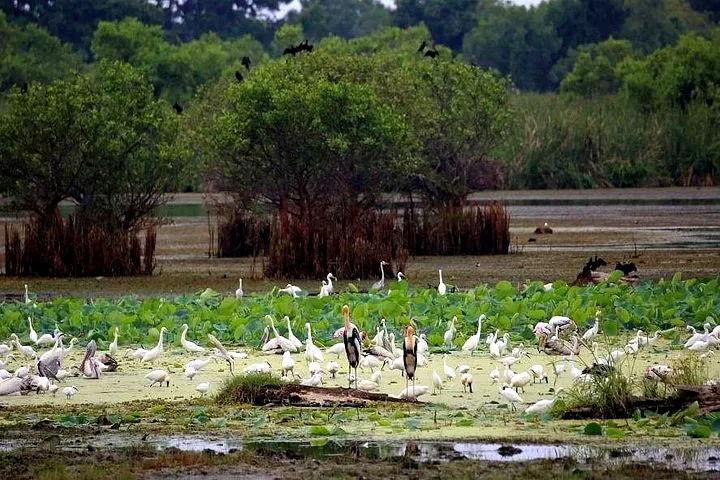
Discover one of Sri Lanka’s most peaceful birdwatching destinations at Kalametiya Lagoon, where mangrove forests, reed beds and quiet waterways provide a remarkable sanctuary for resident and migratory birds.
Located east of Tangalle on Sri Lanka’s southern coast, Kalametiya Bird Sanctuary is a protected wetland known for its rich biodiversity and beautiful natural landscapes. A guided lagoon boat trip offers an intimate experience of this coastal ecosystem, with opportunities to observe waterbirds, explore sheltered waterways and appreciate the tranquillity of the surrounding countryside.
For more information about the area, explore our Tangalle Destination Guide.
Location: Near Hungama, Hambantota District, Southern Province
Best for: Birdwatching, lagoon boat trips, nature photography and wetlands
Time needed: Approximately 2–4 hours
Best time of day: Early morning
Best birdwatching season: November–March
Getting there: Tuk-tuk or private transfer from Tangalle
Quiet lagoons, mangroves and remarkable birdlife
Why Visit Kalametiya Bird Sanctuary?
Kalametiya is one of the most rewarding nature destinations along Sri Lanka’s southern coastline, particularly for travellers who enjoy birdwatching and peaceful outdoor experiences.
The sanctuary contains an interconnected landscape of shallow lagoons, mangroves, reed beds, salt marshes and coastal vegetation.
These habitats attract an impressive variety of wildlife, from colourful kingfishers to larger waterbirds searching for food along the lagoon.
One of Kalametiya’s greatest attractions is the opportunity to explore the wetlands by small boat, travelling slowly through calm waterways surrounded by natural vegetation.
Unlike conventional jeep safaris, the experience focuses on quiet wildlife observation and the beauty of the wetland environment.
Its convenient location near Tangalle also makes Kalametiya an excellent half-day excursion for visitors exploring Sri Lanka’s south coast.
Kalametiya Bird Sanctuary and Its History
Kalametiya has a long history of wildlife protection.
The area was first declared a wildlife sanctuary in 1938, recognising the ecological importance of its coastal wetlands.
This original protection was withdrawn in 1946 following local opposition.
On 28 June 1984, Kalametiya was declared a sanctuary again under Sri Lanka’s wildlife protection legislation.
Today, the protected landscape forms part of the wider Lunama–Kalametiya wetland system, which supports an important variety of coastal habitats and bird species.
The sanctuary is also closely connected with neighbouring communities whose traditional livelihoods include fishing and agriculture.
This relationship between wildlife conservation and local life gives Kalametiya a distinctive character among Sri Lanka’s nature attractions.
The Lunama–Kalametiya Wetland Ecosystem
The Lunama–Kalametiya wetland complex contains a remarkable variety of habitats that contribute to its ecological importance.
The landscape is shaped by the interaction of freshwater, seawater, seasonal rainfall and surrounding agricultural activity.
Mangroves and Reed Beds
Mangroves are among the most important features of the lagoon environment.
Their complex root systems provide shelter for fish and other aquatic animals while supporting the wider food chain.
Reed beds create valuable feeding and nesting habitats for birds, particularly species that depend on sheltered wetland vegetation.
The combination of mangroves and reeds also contributes to the area’s distinctive scenery.
Shallow Lagoons and Salt Marshes
Shallow lagoon waters and exposed mudflats provide feeding grounds for waterbirds and migratory species.
As water levels change, different sections of the wetland become suitable for birds searching for fish, insects and small aquatic animals.
Salt marshes and coastal vegetation support additional wildlife, creating a varied ecosystem within a relatively small geographical area.
Conservation and Local Communities
The lagoon environment has changed over time through natural sedimentation, altered water flows and surrounding land use.
Conservation efforts are important for maintaining the ecological value of these wetlands.
Visitors contribute to responsible tourism by supporting local guides, respecting fishing activities and avoiding damage to sensitive vegetation.
Birdwatching at Kalametiya
Birdwatching is the main attraction at Kalametiya.
The wider wetland complex supports more than 150 recorded bird species, including resident birds and seasonal migrants.
The variety of habitats makes the area particularly rewarding for travellers interested in observing waterbirds in their natural environment.
Resident Birds
Bird species visitors may encounter include:
- Herons and egrets: Often observed hunting in shallow water or resting along the lagoon.
- Kingfishers: Colourful birds that perch near waterways and dive for fish.
- Cormorants: Frequently seen swimming, fishing or resting with their wings spread.
- Storks and other large waterbirds: Found around suitable shallow-water feeding areas.
- Birds of prey: Kites and other raptors may be observed above the wetlands and surrounding vegetation.
A knowledgeable local guide can help identify different species through their appearance, calls and behaviour.
Migratory Birds
Kalametiya becomes particularly interesting during the northern hemisphere’s winter migration season.
From approximately November to March, migratory birds add to the variety of species found within the wetland complex.
These visitors can include sandpipers, plovers, terns and other wading birds that use coastal wetlands for feeding and resting.
Resident birds remain present throughout the year, making Kalametiya a rewarding destination outside the principal migration period as well.
Kalametiya Lagoon Boat Trips
A guided boat trip is one of the best ways to experience Kalametiya’s natural environment.
Small boats allow visitors to travel through the lagoon, approaching reed beds, mangrove-lined waterways and open sections of water at a comfortable pace.
The experience is particularly enjoyable during the early morning, when temperatures are cooler and birds are actively feeding.
What to Expect
A typical lagoon excursion lasts approximately 1.5–3 hours, depending on the operator, water conditions and chosen route.
During the journey, visitors can observe birds, enjoy the quiet landscape and learn about the wetland ecosystem from a local guide.
Some tours use small paddled boats, providing a particularly peaceful experience with minimal engine noise.
The calm pace is ideal for photographers and travellers who prefer to observe wildlife without disturbance.
Choosing a Local Boat Guide
A knowledgeable local guide can make a significant difference to the experience.
Choose an operator who understands the wetland environment, maintains appropriate distances from wildlife and follows safe boating practices.
Before booking, confirm:
- The trip duration and approximate route.
- Whether the quoted price covers the whole boat or each passenger.
- The number of passengers allowed.
- Availability of properly fitting life jackets.
- Whether a birdwatching guide is included.
All passengers should wear properly fitted life jackets and follow the boat operator’s safety instructions.
Advance arrangements are particularly useful for early-morning departures.
Best Time to Visit Kalametiya
Early morning is the best time to explore Kalametiya Bird Sanctuary.
The cooler temperatures, softer sunlight and generally active birdlife create excellent conditions for wildlife observation.
A departure around sunrise is particularly attractive for photographers, with golden light illuminating the lagoon and surrounding vegetation.
Late afternoon can also provide rewarding birdwatching opportunities and beautiful natural scenery.
Best Months for Birdwatching
November to March is particularly attractive for birdwatching because migratory species join the resident bird population.
These months also coincide with the main tourism season along Sri Lanka’s southern coastline.
Outside this period, visitors can continue to enjoy resident birds, mangrove scenery and the lagoon environment.
Water levels, rainfall and vegetation change seasonally, influencing where birds gather and which routes are suitable for boat excursions.
For travellers interested in photography, early morning generally provides the best combination of light, temperature and wildlife activity.
Other Wildlife at Kalametiya
Although birds are the main attraction, Kalametiya supports a wider variety of wildlife.
Fish, reptiles, amphibians, butterflies and small mammals contribute to the wetland ecosystem.
Water monitor lizards may be observed near lagoon banks, while crocodiles also inhabit parts of the wider wetland environment.
Visitors should remain seated during boat excursions and avoid putting hands or feet into the water.
Wildlife is best observed quietly and from a suitable distance.
The natural diversity of the lagoon makes a guided excursion an opportunity to appreciate how different species depend on the same coastal ecosystem.
How to Get to Kalametiya from Tangalle
Kalametiya Bird Sanctuary is located near Hungama, approximately 20–25 kilometres east of Tangalle.
The journey typically takes around 30–40 minutes by road, depending on your accommodation and the boat departure point.
By Tuk-Tuk
A tuk-tuk is one of the easiest ways to reach Kalametiya from Tangalle.
Local drivers can take visitors directly to the agreed boat departure area.
For an early-morning visit, arranging a return journey in advance is particularly convenient.
Agree on the total fare before departing.
By Private Car or Transfer
A private car or arranged transfer is another practical option, particularly for families or travellers staying in more secluded accommodation.
Hotels and local accommodation providers around Tangalle may also be able to organise transport together with a lagoon excursion.
By Public Transport
Public buses operate along the main Tangalle–Hambantota coastal route.
Travellers using public transport can travel towards Hungama and arrange local transport for the remaining journey to the lagoon.
A tuk-tuk or private transfer is generally more convenient for reaching the exact boat departure location, especially before sunrise.
Entrance Fees and Booking Information
Kalametiya is a protected wetland rather than a conventional national park with a standard jeep-safari experience.
Guided boat excursions are generally arranged through local operators, with charges depending on the boat, route, trip duration and group size.
Publicly accessible surrounding areas may be explored independently where access is permitted, while boat trips are charged separately.
For the most convenient experience, book directly with a local guide or arrange a trip through your accommodation in Tangalle.
Confirm what is included in the price before paying, particularly transport, guiding services and boat hire.
Birdwatching and Photography Tips
Kalametiya provides excellent opportunities for bird and landscape photography.
The contrast between open water, mangrove forests and tall reeds creates attractive natural compositions.
What Equipment to Bring
Binoculars are particularly useful for identifying birds from a comfortable distance.
For photography, a telephoto lens allows close-up images of birds without approaching them.
A wide-angle lens is useful for capturing the broader wetland scenery, especially during sunrise.
Carry cameras and electronic equipment in a waterproof or dry bag during boat trips.
Responsible Wildlife Photography
Wildlife photography should always prioritise the wellbeing of animals.
Avoid loud bird-call recordings, flash photography near sensitive wildlife and repeated attempts to approach resting or nesting birds.
Do not ask boat operators to enter protected vegetation or disturb wildlife for a better photograph.
Patient observation often produces the most rewarding wildlife encounters.
Visiting Kalametiya with Children
Kalametiya can be an enjoyable nature experience for families, particularly children interested in birds and wildlife.
The quiet boat journey provides opportunities to learn about wetland ecosystems and observe animals in their natural environment.
For younger children, choose an operator offering a suitable boat and a shorter route if needed.
Children must wear appropriately sized life jackets and remain supervised throughout the journey.
Families should bring drinking water, sun protection and a small supply of snacks.
A knowledgeable guide can also make the excursion more engaging by explaining the different birds and habitats encountered along the way.
Practical Tips for Visiting Kalametiya
A little preparation can make a lagoon excursion more comfortable and enjoyable.
What to bring
- Binoculars and a camera, if available.
- Drinking water and a light snack.
- Sunscreen, a hat and insect repellent.
- A small waterproof bag for valuables.
- Lightweight clothing and comfortable footwear suitable for boat boarding.
Wear neutral-coloured clothing if you plan to spend time observing birds.
Avoid excessive noise and sudden movements near wildlife.
Remain on permitted paths when exploring on foot, and respect private land, fishing areas and sensitive habitats.
Take all rubbish away and avoid feeding wild animals.
Kalametiya or Bundala National Park?
Kalametiya and Bundala offer two different approaches to exploring Sri Lanka’s southern wetlands.
Kalametiya Bird Sanctuary is particularly suited to travellers seeking a quiet lagoon excursion, small-boat birdwatching and an intimate experience of mangrove and wetland habitats.
Bundala National Park offers a larger protected landscape with wetlands, lagoons, scrubland and coastal habitats, usually explored through organised jeep safaris.
Both destinations are rewarding for birdwatchers, but the best choice depends on your preferred wildlife experience.
Kalametiya is especially convenient for travellers staying around Tangalle, while Bundala is also accessible from the Hambantota and Tissamaharama areas.
Nearby Attractions Around Kalametiya
Kalametiya can be combined with several attractions along the southern coast.
Tangalle Beaches
Tangalle is known for its beautiful coastline, quiet beaches and relaxed atmosphere.
The area offers an excellent base for exploring nearby wildlife attractions while enjoying a peaceful coastal stay.
For more information, explore our Tangalle Beaches Complete Swimming and Visitor Guide.
Rekawa Turtle Watching
Rekawa is one of Sri Lanka’s recognised sea turtle nesting areas, where conservation-focused night visits offer opportunities to learn about marine turtle protection.
Responsible tours follow strict guidelines to minimise disturbance to nesting turtles.
Read our Rekawa Turtle Watching Responsible Visitor Guide for practical advice.
Is Kalametiya Bird Sanctuary Worth Visiting?
Kalametiya Bird Sanctuary is one of the most peaceful wildlife destinations on Sri Lanka’s southern coast.
Its beautiful lagoon scenery, diverse birdlife and small-scale guided boat excursions provide an opportunity to experience the country’s natural heritage at a slower pace.
For travellers staying in Tangalle or exploring the wider southern coastline, Kalametiya offers a memorable nature experience that combines birdwatching, scenic waterways and the ecological richness of Sri Lanka’s coastal wetlands.