
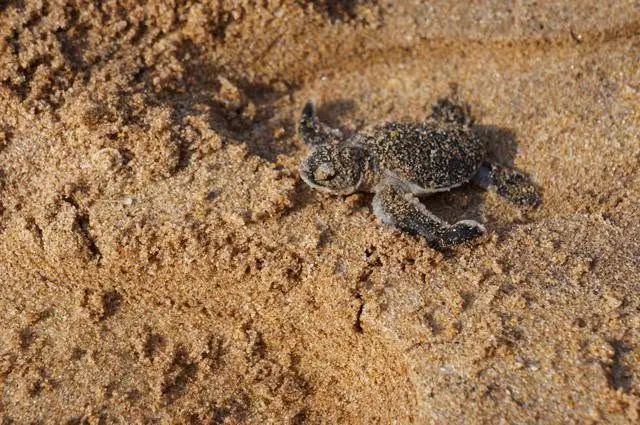
Experience one of Sri Lanka’s most remarkable wildlife encounters at Rekawa Beach, where endangered sea turtles emerge from the Indian Ocean to nest beneath the night sky.
Located near Tangalle on Sri Lanka’s southern coast, Rekawa is an important marine turtle nesting site and home to a community-led conservation programme. Guided evening visits give travellers an opportunity to observe natural nesting behaviour while supporting the protection of turtles and their coastal habitat.
For international travellers interested in wildlife and conservation, Rekawa offers a memorable experience that combines nature, education and responsible tourism.
Explore our Tangalle Destination Guide for more information about the surrounding coastline.
Location: Rekawa Beach, approximately 8 km east of Tangalle
Best for: Wild sea turtles, conservation and nature experiences
Start time: 8:30 pm daily
Best nesting season: April–July
Time needed: Allow approximately 2–4 hours
Admission: LKR 2,000 per international adult; LKR 1,000 per international child
Advance booking: Not normally required
Wild sea turtles beneath southern skies
Why Visit Rekawa Turtle Watch?
Rekawa is one of Sri Lanka’s most important natural nesting beaches for sea turtles.
Each year, female turtles return to the coastline to lay their eggs in the sand, continuing a natural cycle that has existed for millions of years.
What makes Rekawa particularly special is its community-based approach to conservation.
Rather than offering staged wildlife encounters, the Turtle Watch programme allows visitors to observe natural nesting activity under the supervision of trained local guides.
The experience takes place after dark, when nest protectors monitor the beach and identify turtles coming ashore.
Visitors learn about turtle conservation, nesting behaviour and the challenges facing marine wildlife while contributing to a programme that supports local communities.
For travellers seeking a meaningful wildlife experience near Tangalle, Rekawa is a rewarding addition to a southern Sri Lanka journey.
Rekawa Turtle Conservation and Its History
Sea turtle conservation at Rekawa has developed through decades of collaboration between environmental organisations and local communities.
In 1996, the Turtle Conservation Project established a community-based programme to protect nesting turtles and their eggs.
The initiative introduced an approach known as in-situ conservation, protecting turtle nests in their natural beach environment rather than routinely removing eggs for artificial incubation.
From Egg Collection to Conservation
Before the programme began, turtle egg collection was a widespread activity among parts of the local community.
The conservation project created alternative employment opportunities by training local residents, including former egg collectors, as nest protectors and research assistants.
These conservation workers monitored nesting activity, protected eggs and helped reduce threats to marine turtles.
In 2012, the community organisation Nature Friends of Rekawa took over the daily management of the Turtle Watch programme.
Today, visitor admission fees help support conservation work, environmental education and local livelihoods.
The project demonstrates how responsible tourism can contribute to wildlife protection while creating economic opportunities for coastal communities.
Sea Turtle Species at Rekawa
Five species of marine turtles have been recorded nesting along Rekawa’s coastline.
Green Turtle
Green turtles are the most frequently recorded nesting species at Rekawa.
These large marine turtles are known for returning to suitable sandy beaches to lay their eggs.
Females dig nests using their rear flippers before depositing eggs and covering them with sand.
Olive Ridley Turtle
Olive ridley turtles are smaller than green turtles and are recognised by their rounded shells.
They are among the species recorded nesting at Rekawa, although their numbers vary between seasons.
Hawksbill Turtle
Hawksbill turtles are recognised by their distinctive pointed beaks and patterned shells.
They are critically endangered globally, making the protection of their nesting and feeding habitats particularly important.
Loggerhead and Leatherback Turtles
Loggerhead and leatherback turtles have also been recorded in the Rekawa area.
Leatherbacks are the largest living sea turtles and are distinguished by their flexible, ridged shells.
These species are less frequently encountered at Rekawa than green turtles.
The species observed during any individual visit depends entirely on natural nesting activity.
What Happens During Rekawa Turtle Watch?
The official Turtle Watch programme begins each evening at 8:30 pm.
Visitors arrive at the conservation visitor centre near Rekawa Beach, where local guides explain the rules and introduce the conservation project.
While visitors remain at the centre, trained nest protectors patrol the beach looking for female turtles coming ashore.
Waiting for a Nesting Turtle
When a turtle is spotted, guides monitor her movements before deciding when visitors can safely approach.
Female turtles are particularly sensitive while searching for a nesting location and digging their nests.
Visitors are therefore kept at a distance until the guides determine that observation can take place without unnecessary disturbance.
Once the turtle begins laying eggs, a small group may be guided to an appropriate viewing position.
The turtle is then allowed to complete her natural nesting process before returning to the ocean.
How Long Does the Experience Take?
A turtle may arrive relatively early in the evening or much later.
Waiting times can range from one to two hours or longer, and the complete nesting process may take several hours.
During periods of low nesting activity, the programme generally concludes around 11:30 pm if no turtle has been spotted.
Turtle sightings are never guaranteed, as nesting activity depends entirely on wild animals.
The most rewarding approach is to enjoy the experience patiently while respecting the conservation team’s decisions.
Best Time to See Turtles at Rekawa
Sea turtles nest at Rekawa throughout the year, although nesting activity changes seasonally.
The main nesting season generally occurs between April and July, when the beach experiences its highest levels of activity.
During these months, the likelihood of observing a nesting turtle is generally greater.
Visiting Outside the Peak Season
Nesting activity continues during other months, including the main tourism season along Sri Lanka’s southern coast.
From October to January, turtle numbers are generally lower than during the April–July peak.
Visitors travelling outside the busiest nesting months can still participate in the evening Turtle Watch programme.
The appearance of turtles depends on natural conditions, including ocean activity and individual nesting behaviour.
For travellers planning their visit primarily around turtle watching, April to July offers the strongest seasonal opportunity.
Rekawa Turtle Watch Tickets and Opening Information
The community conservation programme operates throughout the year, with the evening watch beginning at 8:30 pm.
The published admission prices are:
- International adults: LKR 2,000
- International children: LKR 1,000
- Sri Lankan adults: LKR 500
- Sri Lankan children: Free
Admission income contributes to the community conservation programme and its nest-protection activities.
Advance booking is not normally required.
Visitors should arrive at the conservation visitor centre at approximately 8:30 pm and no later than 9:00 pm to avoid missing early nesting observations.
Visitor Centre Facilities
The Rekawa Turtle Watch visitor centre provides information about marine turtles, their nesting behaviour and the conservation work taking place along the beach.
Facilities include toilets, drinking-water facilities and a small shop featuring locally produced items.
Educational displays and presentations help visitors understand the importance of protecting turtle nesting habitats.
For official visitor information, see the Rekawa Turtle Watch website.
Responsible Turtle Watching Rules
Protecting the turtles is the most important priority during every Rekawa night watch.
Female turtles can be disturbed by artificial lighting, noise and people approaching too closely.
Visitors must therefore follow the instructions of trained conservation guides throughout the experience.
Keep the Beach Dark
Bright artificial light can disturb nesting females and interfere with the behaviour of hatchlings.
Do not use phone torches, white or yellow flashlights, headlamps or camera lights on the nesting beach.
Authorised guides use controlled red lighting when necessary for conservation and viewing activities.
Keep phone screens dim and avoid illuminating turtles or surrounding nesting areas.
Never Touch Turtles or Eggs
Visitors must not touch nesting turtles, eggs or hatchlings.
Handling wildlife can interfere with natural behaviour and create unnecessary stress.
Remain behind the viewing position established by the guides, and never block a turtle’s route between her nest and the sea.
Do not approach a turtle independently or attempt to attract her attention.
Respect Group Viewing Arrangements
Rekawa can become busy during periods of increased nesting activity.
Remain with your assigned group and move only when directed by the conservation staff.
Avoid loud conversations, sudden movements and attempts to surround a turtle for photographs.
These precautions allow visitors to observe wildlife while minimising disturbance to the animals.
Lighting and Photography at Rekawa
Photography is permitted only when it follows the conservation team’s instructions.
Flash photography and bright artificial lighting are prohibited.
Visitors should avoid using camera lights, illuminated phone screens or torches to photograph turtles.
Low-light photography without flash may be possible when authorised by the guides.
A camera capable of working in low light is useful, although maintaining a respectful viewing distance is more important than obtaining a photograph.
Do not move closer to a turtle, leave the viewing group or position yourself in her path.
The night watch is also an opportunity to appreciate marine wildlife without relying on photography.
Can You See Baby Turtles at Rekawa?
Rekawa’s principal evening visitor experience focuses on observing adult female turtles arriving to nest.
Hatchlings emerge naturally after their eggs have developed beneath the sand.
Their appearance is unpredictable and cannot be arranged around visitor schedules.
Newly emerged hatchlings instinctively move towards the sea, beginning an important stage of their natural development.
Visitors should never request opportunities to hold baby turtles or participate in artificially arranged releases.
Releasing hatchlings prematurely can reduce their chances of survival.
The conservation programme prioritises protecting natural nests and allowing hatchlings to reach the ocean without unnecessary interference.
How to Get to Rekawa from Tangalle
Rekawa is located approximately eight kilometres east of Tangalle, within Sri Lanka’s Hambantota District.
The conservation visitor centre is accessed from Rekawa Road, near the coastal village and the surrounding wetlands.
By Tuk-Tuk
A tuk-tuk is one of the easiest ways to reach Rekawa from Tangalle.
Local drivers are familiar with the Turtle Watch visitor centre and can arrange a return journey after the evening programme.
Because the visit takes place at night and may finish late, arrange your return transport before departing.
Agree on the full fare, including waiting time, before beginning the journey.
By Private Car or Transfer
A private vehicle or pre-arranged transfer is particularly convenient for families and travellers staying at more secluded coastal accommodation.
Hotels and guesthouses around Tangalle can often assist with arranging transport to the conservation centre.
Visitors travelling with a private driver should allow flexibility for a later finish if turtle nesting activity continues.
From Other Southern Coast Destinations
Rekawa can also be visited from nearby coastal destinations such as Dikwella, Hiriketiya and Hambantota.
Travellers staying farther away should account for the late-night return journey when arranging transport.
Tangalle provides one of the most convenient bases for visiting Rekawa.
What to Wear and Bring
Rekawa Turtle Watch takes place outdoors after dark, with visitors walking across sandy beach surfaces.
Wear comfortable, dark-coloured clothing that does not reflect light.
Lightweight trousers and a shirt covering the shoulders are practical choices for the coastal environment.
Footwear should be suitable for walking on soft sand and occasional wet conditions.
Bring drinking water, insect repellent and a lightweight rain jacket during unsettled weather.
Carry only essential belongings and keep valuables secure while walking along the beach.
The experience may involve extended periods of waiting, so comfortable clothing and patience are particularly important.
Visiting Rekawa with Children
Rekawa can be an educational wildlife experience for families, especially older children who are interested in marine animals.
The conservation guides provide an opportunity to learn about sea turtles, their nesting behaviour and the importance of protecting marine habitats.
However, the programme begins after dark and may continue late into the evening.
Younger children may find the waiting periods, darkness and requirement to remain quiet challenging.
Parents should explain the viewing rules before arriving and supervise children closely throughout the experience.
Families should also consider whether children are comfortable walking on soft sand at night.
For travellers with limited mobility, the beach’s uneven surfaces and low-light conditions can make access challenging.
Rekawa Turtle Watch or a Turtle Hatchery?
Rekawa offers a different experience from visiting a conventional turtle hatchery.
At Rekawa, the focus is on observing wild female turtles nesting naturally on an active conservation beach.
The programme protects nests within their original environment whenever possible and supports trained local conservation workers.
Some turtle hatcheries elsewhere offer opportunities to handle turtles or participate in scheduled releases.
These activities can interfere with natural development and should not be considered an essential part of responsible marine turtle conservation.
For travellers interested in watching wild nesting behaviour while supporting a community-led conservation programme, Rekawa is an excellent choice.
Explore More Around Tangalle
Rekawa is located within a beautiful section of Sri Lanka’s southern coastline, offering convenient access to beaches, wetlands and other nature attractions.
Tangalle Beaches
Tangalle is known for its long sandy beaches, sheltered coves and relaxed coastal atmosphere.
The surrounding area is ideal for travellers seeking a peaceful stay with opportunities for nature excursions.
Explore our Tangalle Destination Guide for more information.
Kalametiya Bird Sanctuary
Kalametiya Bird Sanctuary is another rewarding wildlife destination east of Tangalle.
Its shallow lagoons, mangrove forests and reed beds support resident and migratory bird species.
Guided lagoon excursions provide opportunities for birdwatching and peaceful nature photography.
Read our Kalametiya Lagoon Bird Sanctuary Visitor Guide for practical information.
Is Rekawa Turtle Watching Worth Visiting?
Rekawa Turtle Watch is one of the most meaningful wildlife experiences along Sri Lanka’s southern coast.
Its community-led conservation programme gives travellers an opportunity to observe the natural nesting behaviour of endangered marine turtles while contributing to their protection.
For visitors interested in wildlife, conservation and responsible travel, Rekawa offers a memorable experience that reflects the importance of protecting Sri Lanka’s coastal ecosystems.