
Discover the maritime history of Galle inside a beautifully preserved Dutch-era warehouse, where traditional fishing boats, marine wildlife and centuries of coastal trade reveal Sri Lanka’s enduring relationship with the Indian Ocean.
Located within historic Galle Fort, the Maritime Museum offers a fascinating indoor experience for visitors interested in history, coastal culture and marine life.
For more information about the surrounding city, explore our Galle Destination Guide.
Location: Galle Fort, near the Old Gate
Best for: Maritime history, coastal culture and families
Time needed: 60–90 minutes
Opening hours: Tuesday–Saturday, 9:00 am–5:00 pm
Closed: Sundays, Mondays and public holidays
Foreign adult ticket: US$5
Foreign child ticket: US$3
Why Visit Galle Maritime Museum?
Galle has been an important trading port for centuries, connecting Sri Lanka with merchants and maritime routes across the Indian Ocean.
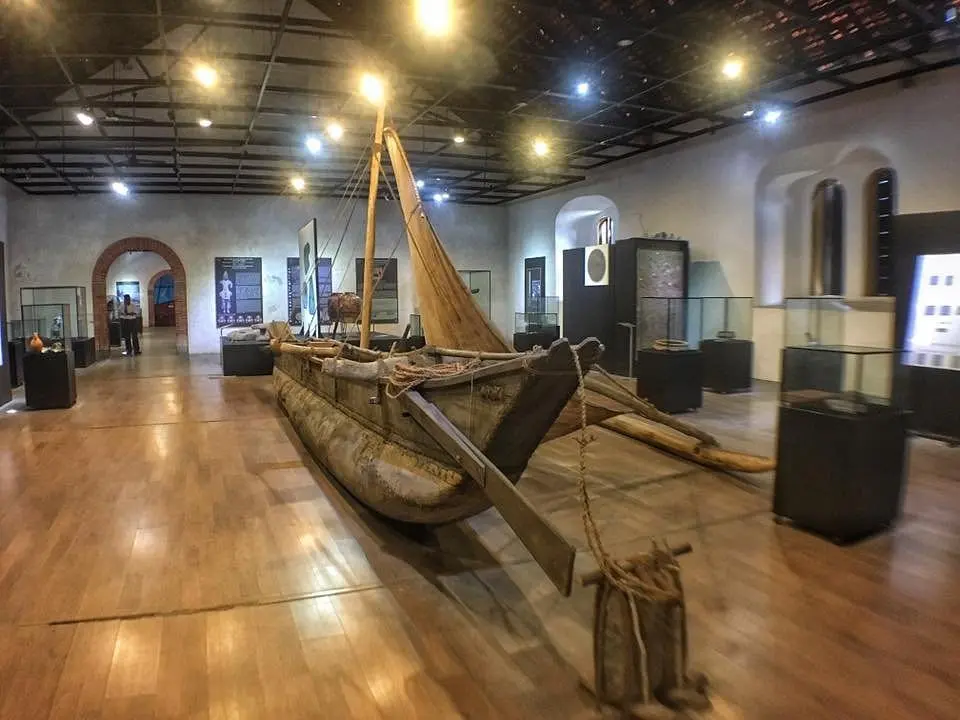
The Maritime Museum brings this history to life through exhibits exploring traditional boats, fishing communities, overseas trade and the island’s rich marine environment.
Visitors can discover how coastal communities developed their livelihoods around the sea, examine traditional watercraft and learn about the marine ecosystems surrounding Sri Lanka.
Housed within a historic warehouse, the museum also offers a closer look at the commercial heritage that shaped Galle Fort.
The Historic Dutch Warehouse
One of the museum’s most distinctive features is its location inside a Dutch warehouse dating to 1671.
Situated near the Old Gate of Galle Fort, the building was constructed during a period when the city was a major centre of colonial maritime trade.
Warehouses played an essential role in the port’s economy, providing secure storage for commodities arriving and departing by sea.
Today, the building’s historic architecture remains an important part of the museum experience. Its thick walls and traditional structure reflect the commercial character of seventeenth-century Galle.
The warehouse stands within the UNESCO-listed Old Town of Galle and its Fortifications, where European colonial architecture and South Asian traditions form a distinctive historic landscape.
What to See Inside Galle Maritime Museum
The museum’s collections explore the relationship between Sri Lanka’s coastal communities, maritime activities and marine environment.
Traditional Boats and Fishing Culture
Traditional watercraft are among the museum’s most interesting exhibits.
Models and replicas illustrate the different types of boats historically used for fishing, passenger transport and trade along Sri Lanka’s southern coastline.
Visitors can explore how boat construction and fishing techniques developed around local coastal conditions.
Displays also introduce the everyday lives of fishing communities, highlighting the skills, equipment and traditions passed down through generations.
These collections offer an insight into the important role fishing continues to play in Sri Lankan coastal life.
Maritime Trade and Galle Harbour
Galle’s natural harbour helped establish the city as a significant trading centre along Indian Ocean shipping routes.
For centuries, merchants travelled between Sri Lanka and destinations across Asia, the Middle East and Europe, exchanging goods and establishing commercial connections.
The museum’s maritime heritage displays provide insight into this trading history and the role of vessels, harbour facilities and coastal settlements.
Historic shipping and archaeological collections also help illustrate how maritime activity influenced the development of southern Sri Lanka.
Marine Ecosystems and Coastal Wildlife
Another important part of the museum focuses on the natural environment surrounding Sri Lanka’s coastline.
Displays introduce marine habitats and wildlife, including coral reefs, mangroves, sea turtles, seabirds and other coastal species.
Visitors can examine marine shells, coral specimens and models that illustrate the diversity of life found in tropical waters.
The mangrove displays are particularly interesting for understanding how coastal vegetation supports marine ecosystems, providing sheltered habitats for fish and other wildlife.
Together, these exhibits highlight the connection between healthy marine environments and the communities that depend on them.
The Whale Skeleton
One of the museum’s most memorable attractions is a large whale skeleton displayed overhead.
Its impressive size provides visitors with a striking perspective on the marine mammals found in Sri Lanka’s surrounding waters.
The skeleton is particularly engaging for families and younger visitors, offering an opportunity to appreciate the scale and anatomy of these remarkable ocean animals.
The Museum and the 2004 Indian Ocean Tsunami
The Maritime Museum has an important place in Galle’s more recent history.
On 26 December 2004, the Indian Ocean tsunami caused devastating destruction across Sri Lanka’s coastline, including significant damage to the museum and its collections.
The historic warehouse survived, but flooding damaged exhibitions and resulted in the loss of numerous valuable artefacts.
Restoration followed through Sri Lanka–Netherlands cultural cooperation, helping preserve the historic building and rebuild the museum’s exhibitions.
Today, the restored museum represents both Galle’s maritime heritage and the preservation of cultural collections following a major natural disaster.
How to Get to Galle Maritime Museum
The museum is located within Galle Fort, close to the historic Old Gate.
Visitors staying inside the Fort can reach the museum on foot while exploring its narrow streets and historic buildings.
From Galle Railway Station or the central bus station, the Fort is accessible by a short tuk-tuk journey or a walk into the historic town.
Travellers arriving from Colombo can take the coastal train to Galle, while buses and private transfers provide alternative transport options.
The museum’s central location makes it convenient to combine with nearby attractions, including the Fort’s historic streets, churches and harbour-facing areas.
Visitor Tips and Facilities
Galle Maritime Museum is a manageable attraction to explore, with most visitors spending between one hour and an hour and a half inside.
Comfortable footwear is recommended, particularly if you are combining your museum visit with a walk around Galle Fort.
There is no special dress code for an ordinary museum visit. Lightweight clothing is suitable for the warm coastal climate.
The museum occupies a historic building, with architectural features and internal surfaces that may present challenges for visitors with reduced mobility.
Inside the galleries, follow displayed photography rules and staff instructions to help protect the collections. Professional photography and commercial filming may require separate permission.
The museum is also a useful indoor attraction during hot weather or rainy periods, offering a change of pace from exploring the Fort’s outdoor landmarks.
Is Galle Maritime Museum Worth Visiting?
Galle Maritime Museum is a worthwhile attraction for travellers interested in the city’s trading history, coastal traditions and marine wildlife.
Its combination of traditional boats, fishing displays, natural history collections and historic architecture creates an experience that appeals to different interests.
For families, history enthusiasts and visitors exploring Galle Fort, the museum offers an engaging introduction to the maritime heritage of Sri Lanka’s southern coast.
Frequently Asked Questions
Is Galle Maritime Museum the same as Galle National Museum?
No. They are separate museums. Galle Maritime Museum focuses on maritime heritage, fishing traditions and marine ecosystems, while Galle National Museum explores the broader history and cultural traditions of southern Sri Lanka.
Is Galle Maritime Museum suitable for children?
Yes. Traditional boat models, marine wildlife displays and the large whale skeleton make the museum particularly engaging for children and families.
Do I need a guide to explore the museum?
A guide is not essential, as visitors can explore the museum’s exhibits independently. A knowledgeable local guide can provide additional historical context and explain Galle’s wider maritime heritage.
Can I visit the museum during rainy weather?
Yes. The museum is an indoor attraction and a convenient option for exploring Galle during periods of rain or intense midday heat.
Is Galle Maritime Museum accessible without a car?
Yes. Galle is connected to Colombo and other coastal destinations by train and bus. The museum can then be reached on foot or by tuk-tuk from central Galle.
Can I take photographs inside the museum?
Photography is subject to the museum’s visitor rules. Follow displayed restrictions and staff guidance, particularly when photographing sensitive exhibits or using professional equipment.
Do I need a separate ticket to enter the museum?
Yes. Galle Fort itself is freely accessible, while the Maritime Museum charges a separate admission fee.