
Kushtarajagala Weligama Complete Cultural Site Visitor Guide
Discover Kushtarajagala, one of Sri Lanka’s most intriguing ancient Buddhist sculptures, carved directly into a natural rock face in the coastal town of Weligama.
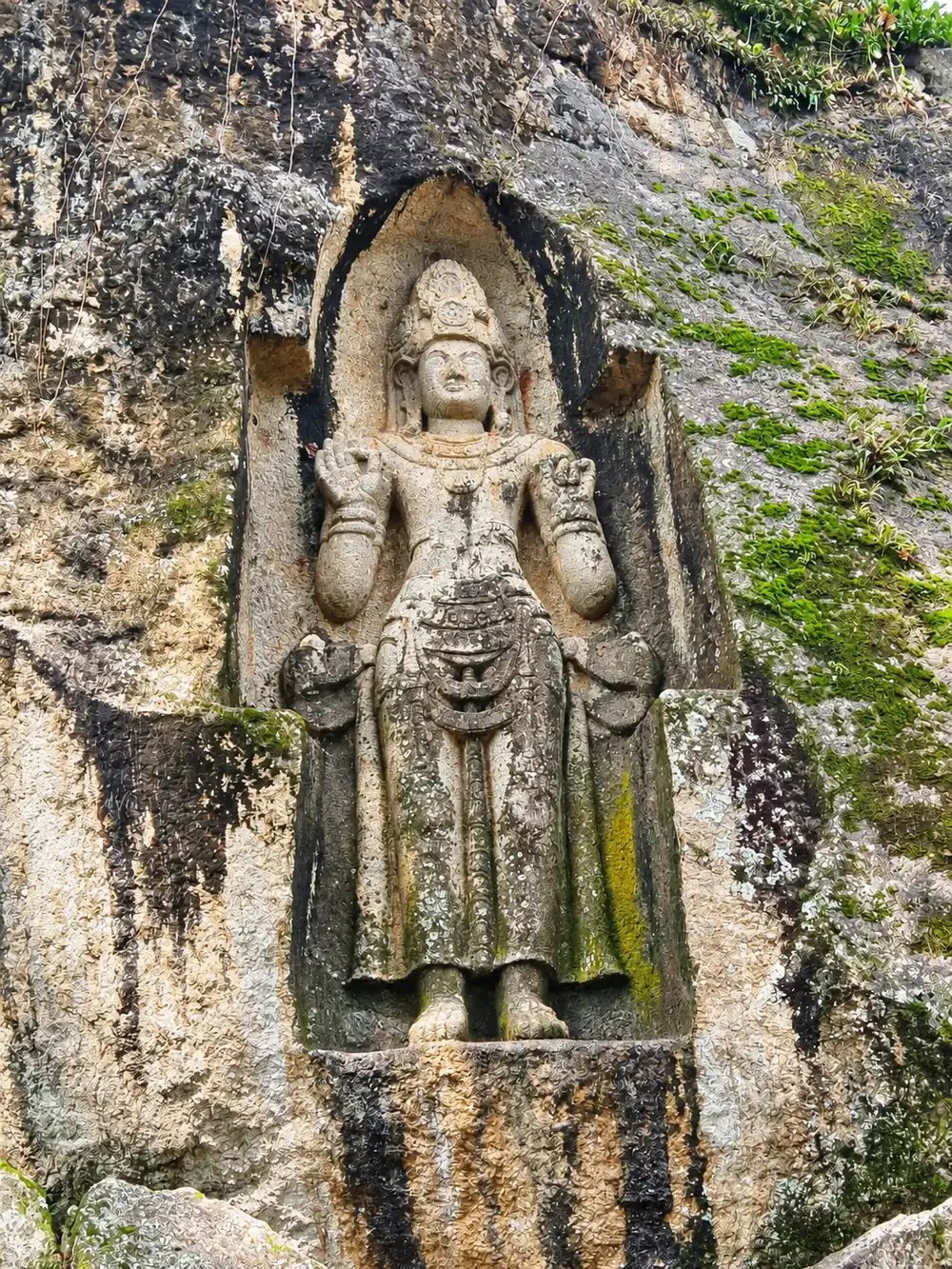
Standing approximately 3.83 metres tall, this remarkable stone figure is widely identified as Avalokiteshvara, a Bodhisattva associated with compassion in Mahayana Buddhism. Its elaborate headdress, decorative jewellery and finely carved details reveal a fascinating chapter of Sri Lanka’s religious and artistic history.
Located just a short distance from Weligama’s popular surfing beaches, Kushtarajagala offers travellers an opportunity to discover the town’s cultural heritage beyond its beautiful coastline.
Explore our Weligama Destination Guide for more information about the surrounding area.
Location: Old Matara Road, Weligama, Southern Province
Best for: Buddhist history, archaeology and cultural photography
Historical period: Early medieval Sri Lanka
Statue height: Approximately 3.83 metres
Time needed: Approximately 20–40 minutes
Best time to visit: Early morning or late afternoon
Entrance fee: Free
Opening hours: Accessible daily; daylight visits recommended
Getting there: Walking, tuk-tuk or private vehicle
Ancient Buddhist artistry carved into stone
Why Visit Kushtarajagala?
Kushtarajagala is one of Weligama’s most distinctive historical landmarks.
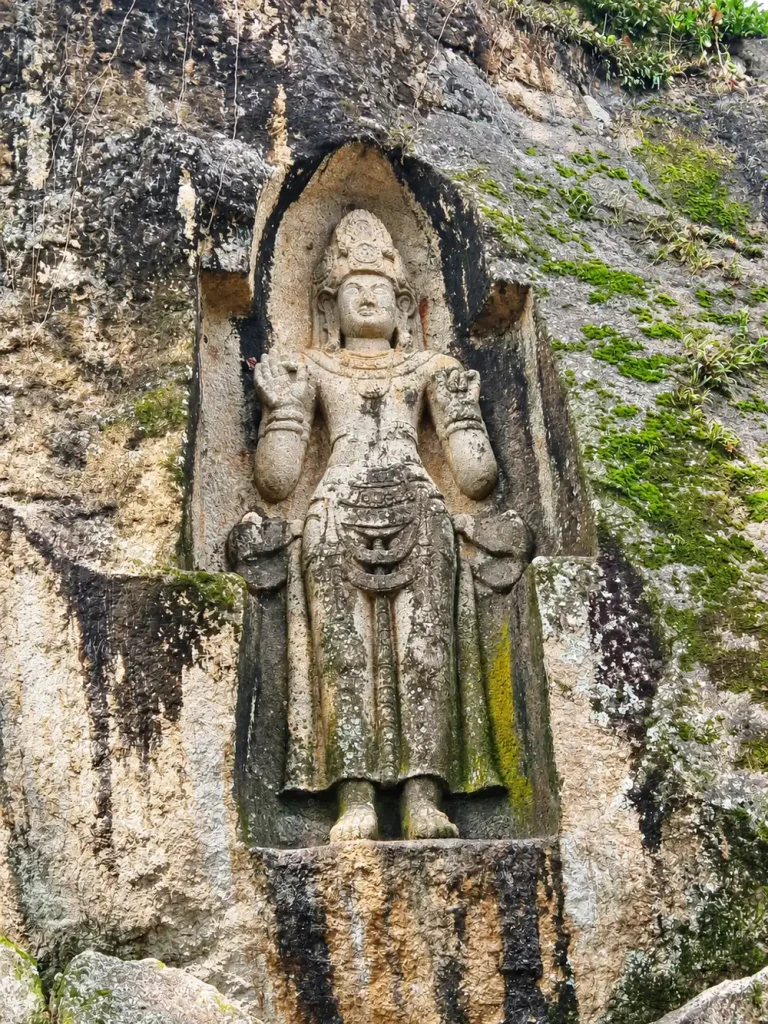
While the town is widely known for its sandy bay and surfing culture, this ancient rock carving reveals an important part of Sri Lanka’s Buddhist heritage.
The monument features a magnificent standing figure sculpted into a large natural boulder, surrounded by weathered stone and tropical vegetation.
Its impressive size and intricate details make it particularly interesting for travellers who appreciate archaeology, traditional art and religious history.
The sculpture is also closely associated with local legends about healing and a mysterious king, adding another dimension to its cultural significance.
Unlike Sri Lanka’s larger archaeological complexes, Kushtarajagala can be explored within a relatively short visit.
For travellers staying in Weligama, it provides an excellent opportunity to experience a different side of the southern coast.
History and Religious Significance of Kushtarajagala
Kushtarajagala is an important example of ancient Buddhist rock sculpture associated with the Mahayana tradition.
The monument is commonly dated to approximately the 6th–7th centuries AD on stylistic grounds, although some historical studies suggest a later period.
Its detailed ornamentation and religious imagery demonstrate the artistic traditions that developed in Sri Lanka during the early medieval period.
Mahayana Buddhism in Sri Lanka
Mahayana Buddhism places particular importance on Bodhisattvas, enlightened beings who aspire to help others attain liberation.
Although Theravada Buddhism became the dominant tradition in Sri Lanka, Mahayana influences also contributed to the island’s historical religious culture.
Evidence of these influences survives in Buddhist sculptures, architectural remains and religious imagery found across the country.
Kushtarajagala is an important example of this artistic heritage along Sri Lanka’s southern coast.
Who Does the Statue Represent?
The sculpture is widely identified as Avalokiteshvara, a Bodhisattva associated with compassion and the protection of living beings.
In Sri Lankan Buddhist tradition, Avalokiteshvara is also associated with Natha.
The figure’s elaborate headdress, decorative ornaments and symbolic hand gestures support its identification as a Bodhisattva rather than a portrait of an ordinary ruler.
Although other interpretations of the figure have been proposed, the Avalokiteshvara identification is well established in Sri Lankan cultural heritage descriptions.
Architecture and Carved Details
The most remarkable feature of Kushtarajagala is its standing figure, measuring approximately 383 centimetres in height.
Unlike a separate stone statue, the image was carved directly into the surface of a large natural rock.
The figure stands within an arched niche, creating an impressive architectural setting.
Despite centuries of weathering, many of its decorative details remain visible.
The Standing Figure
The sculpture depicts a richly adorned figure standing upright.
Its upper body is uncovered, while the lower body is dressed in a traditional dhoti, secured with a decorative waistband.
The standing posture creates a balanced appearance, emphasising the figure’s calm and dignified expression.
The impressive scale makes the sculpture particularly striking when viewed from directly in front.
The Elaborate Headdress
One of the most important details is the figure’s ornate headdress.
Sri Lankan cultural descriptions identify four miniature images of Amitabha Dhyani Buddha within the headdress.
These details are significant in interpreting the figure’s connection with Mahayana Buddhist traditions.
Visitors can appreciate the intricate workmanship even though the stone has been exposed to centuries of natural weathering.
Jewellery and Clothing
The Bodhisattva is decorated with necklaces, arm ornaments, bangles and anklets.
The lower garment contains carved folds and decorative elements that demonstrate the skill of the ancient sculptors.
These ornaments distinguish the image from simpler representations of the Buddha.
They also reflect the elaborate artistic conventions associated with Bodhisattva imagery.
Symbolic Hand Gestures
The figure’s hands are positioned in traditional Buddhist gestures known as mudras.
The right hand is commonly described as displaying Vitarka Mudra, associated with discussion and the communication of Buddhist teachings.
The left hand is described in government cultural information as Kataka Hasta Mudra, a symbolic hand position found in Buddhist and South Asian religious art.
Together with the elaborate ornaments and headdress, these details contribute to the sculpture’s religious significance.
The Legend of the Healing King
The name Kushtarajagala is commonly translated as “Rock of the Leper King”, reflecting a traditional story about a ruler suffering from a serious skin disease.
Several versions of the legend have been passed down through generations.
According to one story, a foreign prince travelled to Weligama while suffering from an illness affecting his skin.
After seeking religious assistance and recovering, he is said to have commissioned the monument as an expression of gratitude.
Another version describes a local prince who made a religious vow and later recovered from his illness.
These stories connect the monument with beliefs about healing and divine protection.
The legend remains an important part of Kushtarajagala’s cultural identity, while the sculpture itself is generally interpreted as a Bodhisattva image.
The combination of religious symbolism and local folklore makes the monument particularly interesting for visitors exploring Weligama’s history.
Kushtarajagala and Agrabodhi Vihara
Kushtarajagala is located near Agrabodhi Vihara, an important Buddhist religious site in Weligama.
The neighbouring religious complex provides historical context for the rock carving and its connection with the region’s Buddhist traditions.
Agrabodhi Vihara is associated with Weligama’s longstanding religious history, while Kushtarajagala preserves an unusual example of Bodhisattva sculpture.
For travellers interested in Buddhist heritage, the nearby vihara adds another dimension to a visit.
Visitors entering active religious areas should dress modestly, respect worshippers and follow the instructions of temple authorities.
Best Time to Visit and Entrance Fees
Kushtarajagala can be visited throughout the year.
The monument is located close to central Weligama, making it an easy cultural attraction to explore during a stay on the southern coast.
Best Time of Day
Early morning and late afternoon are particularly enjoyable.
Temperatures are generally cooler, making walking and outdoor exploration more comfortable.
The softer natural light also creates attractive conditions for photographing the carving.
Midday visits are possible, although the tropical heat can make the surrounding roads and open areas less comfortable.
Entrance Fee
Admission to Kushtarajagala is free.
Visitors do not need to purchase a standard tourist entrance ticket.
Voluntary donations may be made where appropriate to support the care of the religious surroundings.
Opening Hours
Kushtarajagala is generally accessible daily.
For a comfortable visit, plan to arrive during daylight hours when the carving and its decorative details are clearly visible.
A visit of approximately 20–40 minutes is sufficient for most travellers to appreciate the monument and its historical significance.
How to Get to Kushtarajagala
Kushtarajagala is located within Weligama town, near Agrabodhi Vihara and the older coastal road.
It is easily accessible for travellers staying in Weligama or visiting from nearby southern coastal destinations.
Walking from Weligama
Visitors staying near central Weligama can reach the monument on foot.
Allow approximately 10–15 minutes, depending on your starting point and walking pace.
The route follows local roads through the town.
Walking is particularly pleasant during the cooler morning or late-afternoon hours.
Use designated railway crossings where necessary, and avoid crossing railway tracks at unauthorised locations.
By Tuk-Tuk
A tuk-tuk is the most convenient option for visitors who prefer not to walk.
The journey from central Weligama is short.
Agree on the fare before travelling, particularly when arranging transport for several attractions.
By Train
Weligama Railway Station is located on Sri Lanka’s southern coastal railway line.
Train services connect Weligama with destinations including Galle, Matara and Colombo.
Travellers arriving by train can continue to Kushtarajagala on foot or by tuk-tuk.
From Mirissa and Galle
Kushtarajagala is also accessible from nearby Mirissa and Galle by road.
Visitors can travel to Weligama by bus, tuk-tuk or private vehicle before continuing to the monument.
The site makes a convenient cultural stop for travellers exploring the southern coastline.
Photography and Respectful Visiting
Kushtarajagala is an impressive subject for cultural and architectural photography.
The natural rock niche provides a distinctive frame for the standing Bodhisattva image.
Photography Tips
Photographing the sculpture from directly in front allows visitors to capture its full height and symmetrical appearance.
A moderate zoom lens is useful for recording details of the headdress, jewellery and hand gestures.
Early morning or late afternoon often provides more comfortable lighting conditions.
Allow space for worshippers and other visitors when taking photographs.
Protecting the Ancient Sculpture
Kushtarajagala is a protected historical monument.
Visitors must not touch, climb or lean against the carving.
Avoid placing bags or other belongings against the rock surface.
Never scratch, mark or remove material from the monument.
These precautions help protect the ancient stonework from unnecessary damage.
Religious Etiquette
Although the site is relatively small, Kushtarajagala has significant religious and cultural importance.
Wear respectful clothing, particularly when entering neighbouring Buddhist religious premises.
Avoid inappropriate poses in front of the sculpture and maintain a quiet, respectful atmosphere.
Keep the surroundings clean and dispose of rubbish responsibly.
Accessibility and Practical Visitor Tips
Kushtarajagala is easier to access than many of Sri Lanka’s larger archaeological attractions.
The visit does not involve a long hike or extensive exploration of a historical complex.
However, the immediate surroundings may include uneven ground, roadside surfaces and natural stone features.
Travellers with reduced mobility may find it more convenient to arrive by tuk-tuk or private vehicle.
What to Bring
For a comfortable visit, carry:
- Drinking water.
- Sunscreen and a hat.
- Comfortable footwear.
- A camera or smartphone.
- Modest clothing if visiting nearby religious premises.
Facilities around the monument are limited compared with Weligama’s main beach and town centre.
Restaurants, cafés and other services are available within the wider town.
Nearby Attractions in Weligama
Kushtarajagala is conveniently located near several of Weligama’s most popular coastal attractions.
Weligama Bay
Weligama Bay is one of Sri Lanka’s best-known destinations for beginner surfing.
Its broad sandy shoreline, surf schools and relaxed beachfront atmosphere make it a popular base for international travellers.
For visitors interested in learning to surf, explore our Learning to Surf in Weligama Bay Guide.
Taprobane Island
Taprobane Island is a small privately owned island located just offshore from Weligama Bay.
It is famous for its distinctive villa, tropical gardens and fascinating twentieth-century history.
The island can be admired from the public shoreline, although entering the private property requires permission.
Discover more in our Taprobane Island Weligama Viewpoint and History Guide.
Midigama
Midigama is a coastal area west of Weligama known for its surf breaks and laid-back atmosphere.
Its waves attract experienced surfers seeking alternatives to the beginner-friendly conditions of Weligama Bay.
Read our Midigama Surf Breaks Guide.
Is Kushtarajagala Worth Visiting?
Kushtarajagala is one of Weligama’s most rewarding cultural landmarks, offering a fascinating glimpse into Sri Lanka’s early Buddhist sculpture and artistic traditions.
Its historical significance, remarkable stone carving and local folklore make it an excellent short visit for travellers interested in discovering more than the southern coast’s beaches and surfing.