
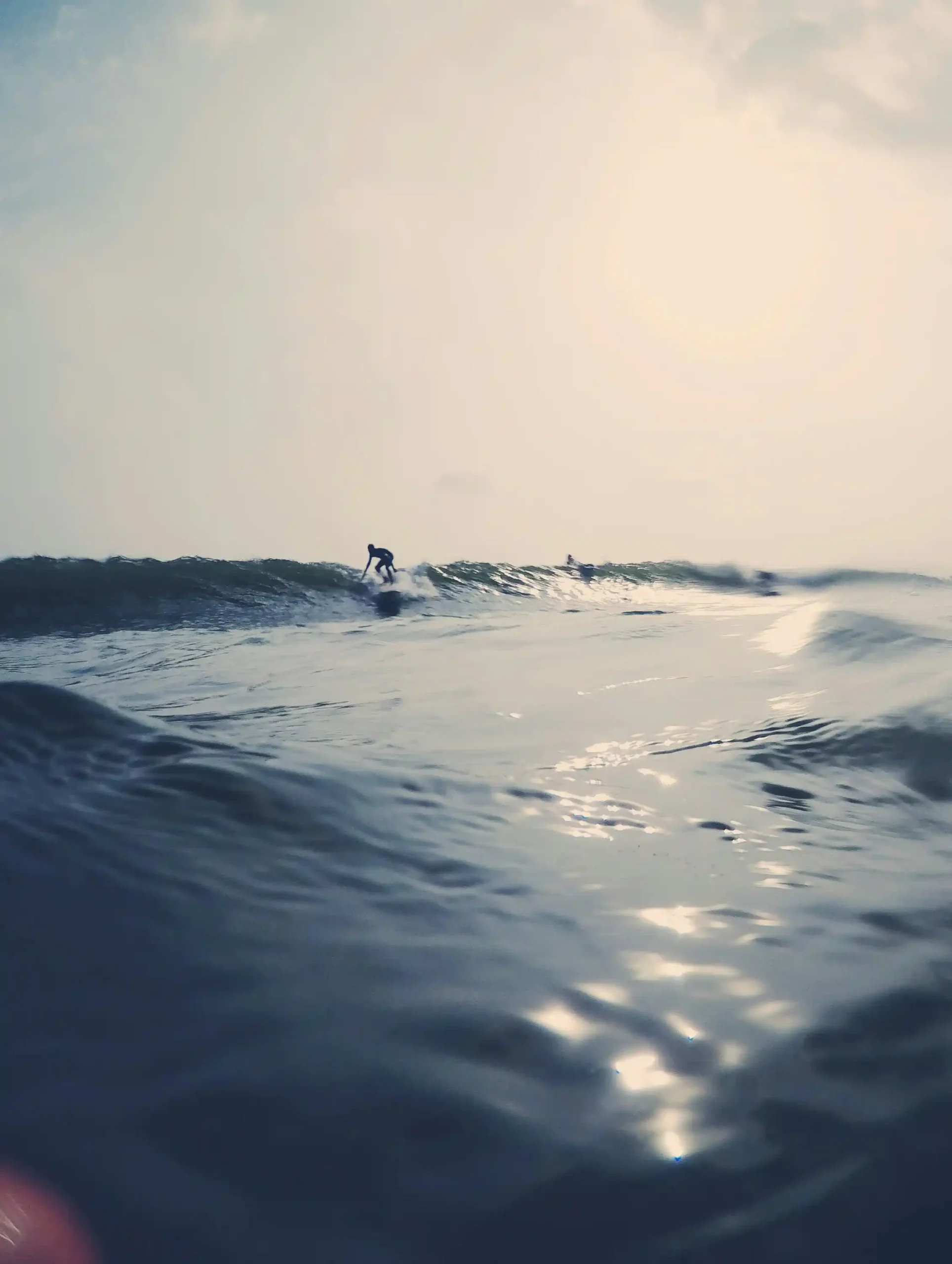
Discover the excitement of learning to surf in Weligama Bay, one of Sri Lanka’s most popular destinations for beginners, where gentle whitewater waves, a broad sandy beach and experienced local instructors create an excellent environment for your first surfing experience.
Located along Sri Lanka’s southern coast, Weligama is renowned for its accessible beach break and welcoming surf culture. Unlike the shallow reef breaks found at many nearby surfing locations, its main bay offers a sandy-bottom environment where beginners can develop confidence, practise balance and learn the fundamentals of riding waves.
With surf schools, beachfront cafés and accommodation conveniently located around the bay, Weligama is an excellent destination for international travellers looking to try surfing for the first time.
Explore our Weligama Destination Guide for more information about the surrounding area.
Location: Weligama Bay, Southern Province, Sri Lanka
Best for: Complete beginners and developing surfers
Surf break: Sandy-bottom beach break
Main surf season: November–April
Best months: December–March
Best time of day: Early morning
Typical lesson duration: 75–90 minutes
Beginner lessons: From approximately LKR 5,000–6,000 at selected local schools
Board rental: From approximately LKR 1,000 per hour
Beach entrance: Free
Suggested stay: 2–4 days for lessons and practice
Gentle tropical waves for first-time surfers
Why Learn to Surf in Weligama?
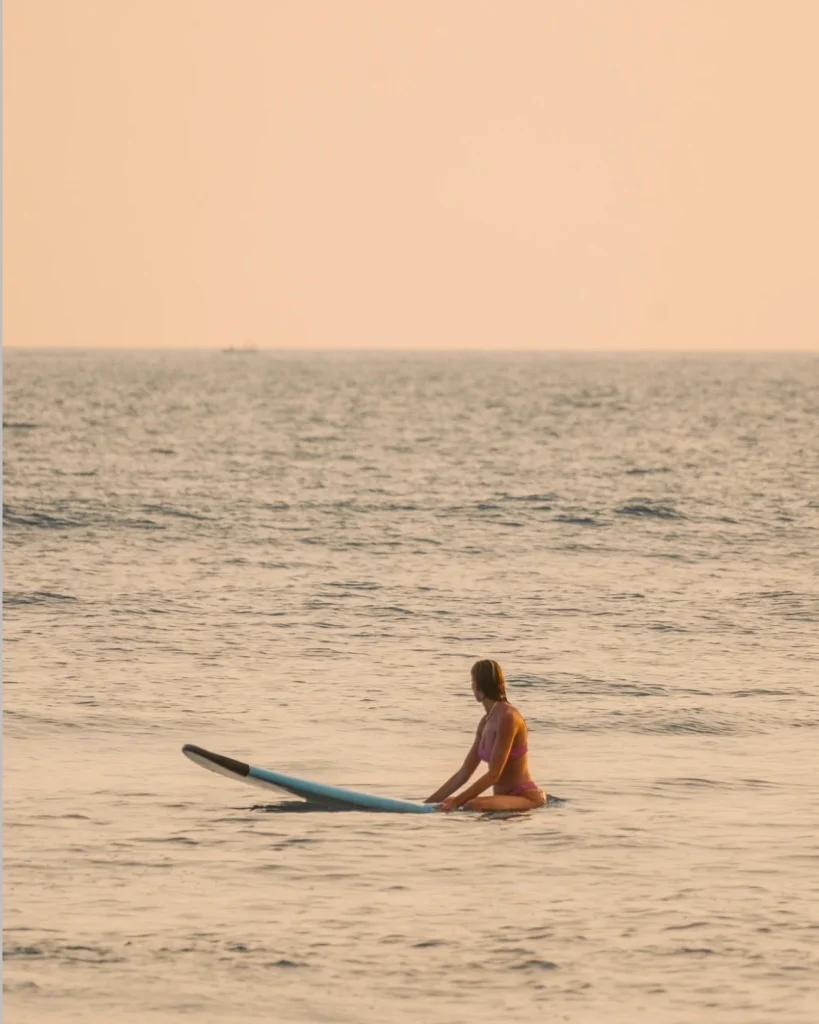
Weligama is one of Sri Lanka’s most rewarding locations for anyone learning to surf.
Photography: @its.me.tini/Instagram
Its spacious bay offers a sandy-bottom beach break, creating conditions that are generally more approachable than the powerful reef waves found along other parts of the southern coastline.
The beach is particularly well suited to beginner lessons because waves often break into manageable whitewater, allowing new surfers to practise standing and balancing without immediately entering deeper water.
A Beginner-Friendly Beach Break
A beach break is a wave that breaks over sand rather than coral or rock.
This makes Weligama’s main bay an attractive learning environment, although sandy beaches can still develop strong currents and powerful waves.
Beginners usually begin in the whitewater, where waves have already broken and continue travelling towards the shore.
These smaller, foamy waves provide opportunities to practise the basic movements involved in surfing.
As confidence improves, instructors can gradually introduce students to catching suitable unbroken waves.
An Established Surfing Destination
Weligama has a well-developed surfing community, with numerous surf schools and equipment-hire businesses operating along the beachfront.
Visitors can choose between private lessons, small-group instruction and longer coaching packages.
The convenient location of restaurants, accommodation and transport services also makes it easy to organise several surfing sessions during a short stay.
For travellers experiencing surfing for the first time, this combination of accessible waves and local instruction is one of Weligama’s greatest advantages.
Best Season and Surf Conditions in Weligama
Weligama’s main surfing season generally runs from November to April, when Sri Lanka’s southern coastline experiences more favourable weather and winds.
December to March is particularly popular for beginner surfing.
November to April
During the main season, Weligama receives regular swell while northern and northeastern winds often help create cleaner waves.
The bay’s sandy bottom allows waves to break in different locations according to the shape of the sandbanks.
Conditions vary with swell size, tides and wind direction, so the most suitable lesson area can change throughout the day.
For complete beginners, smaller whitewater waves are generally preferable to larger, faster-breaking surf.
May to September
The southwest monsoon typically brings stronger winds, increased rainfall and more unsettled sea conditions to Sri Lanka’s southern coastline.
Surfing remains possible on suitable days, but conditions are generally less consistent for beginner lessons.
Travellers planning a dedicated surfing holiday during these months may prefer destinations along Sri Lanka’s eastern coast, including Arugam Bay.
Best Time of Day
Early morning is often the most comfortable time for a beginner lesson.
Temperatures are cooler, winds may be lighter and waves can be cleaner before stronger daytime breezes develop.
Late afternoon can also offer suitable surfing conditions, depending on the swell, tide and wind.
A reputable instructor should select the lesson time according to the conditions rather than following the same schedule every day.
Choosing a Surf School and Your First Lesson
Weligama has numerous surf schools catering to complete beginners.
Choosing a suitable instructor is important for developing good technique, understanding ocean safety and building confidence in the water.
How to Choose a Surf School
Look for a surf school that provides:
- Experienced instructors with suitable surf-teaching and rescue training.
- Small groups or individual supervision.
- Well-maintained beginner surfboards and leashes.
- A clear explanation of ocean safety.
- Instruction suited to your swimming ability and experience.
- Transparent lesson prices and equipment inclusions.
Ask how many students each instructor supervises.
Smaller groups generally provide more opportunities for individual feedback and correction.
Private or Group Lessons?
Private lessons provide individual attention and allow instructors to adapt the teaching pace to your ability.
They can be particularly useful for nervous beginners, children and travellers who prefer personalised coaching.
Small-group lessons offer a social introduction to surfing and may provide better value.
Choose a group with similar experience levels and enough instructors to supervise participants safely.
What Happens During Your First Surf Lesson?
A typical beginner lesson lasts approximately 75–90 minutes, depending on the school.
The session should begin on the beach with an introduction to equipment and safety.
Your instructor will explain how to:
- Carry and position your surfboard.
- Attach and use the leash correctly.
- Lie on the board and paddle.
- Position your body for balance.
- Perform a basic pop-up movement.
- Fall safely and protect your head.
- Recognise suitable waves and follow instructions in the water.
After practising on land, beginners enter an appropriate shallow-water area.
The instructor may initially help position the board and select suitable whitewater waves.
As the lesson progresses, the focus shifts towards paddling, timing and standing with increasing independence.
Surf Lesson Prices and Board Hire
Weligama offers a variety of lesson packages, from affordable local instruction to more specialised coaching.
Prices depend on the surf school, lesson length, group size and services included.
Typical Advertised Prices
The following are examples of published local rates in 2026:
| Service | Approximate price |
|---|---|
| Small-group beginner lesson, 75 minutes | LKR 5,000 per person |
| Private beginner lesson, 75–90 minutes | LKR 6,000 per person |
| Surfboard rental, 1 hour | LKR 1,000 |
These are indicative prices advertised by selected operators rather than standard charges across Weligama. Other schools may charge more, particularly for specialised or premium coaching.
What Is Included in a Surf Lesson?
Beginner lessons commonly include:
- Surfboard rental.
- A suitable leash.
- A rash vest.
- Instruction and supervision.
- Basic ocean-safety guidance.
Some schools also offer photography, video analysis or additional independent practice time.
Check whether these services are included or charged separately.
Is It Better to Book a Surf Package?
Travellers planning several lessons may benefit from a multi-session package.
These can offer better value than booking each lesson separately.
However, choose a programme appropriate to your experience and available time.
A few well-structured lessons with regular feedback are more valuable than spending long periods in the water without improving your technique.
Beginner Surfboards and Essential Equipment
Using suitable equipment makes the first surfing experience safer and more enjoyable.
Choosing a Beginner Surfboard
Most first-time surfers learn on a large, buoyant soft-top surfboard.
These boards provide additional stability, making paddling and standing easier.
Their softer construction is also generally more forgiving during falls than a conventional hard surfboard.
The instructor should select the board according to your height, weight and ability.
Beginners should prioritise stability and control rather than choosing the smallest available board.
Surfboard Leashes
A leash attaches the surfboard to your ankle and helps prevent the board from drifting away after a fall.
Check that the leash is properly secured and free from visible damage.
Never wrap the leash around your fingers or hands.
Even with a leash, surfboards can move forcefully in breaking waves, so maintain sufficient space from other surfers.
What to Wear
Weligama’s tropical water temperatures mean that a full wetsuit is generally unnecessary.
Comfortable swimwear and a rash vest are suitable for most beginner sessions.
A rash vest helps reduce skin irritation from the board and offers additional protection from sunlight.
Apply water-resistant sunscreen before entering the water.
Avoid loose jewellery and accessories that may become caught in equipment.
Beginner Surfing Safety in Weligama Bay
Although Weligama is widely regarded as a beginner-friendly surfing destination, ocean conditions require careful attention.
Waves, currents, water depth and other surfers can create hazards even close to shore.
Swimming Ability
Beginners should be comfortable swimming and remaining calm in the water before taking a surf lesson.
You do not need to be a competitive swimmer, but basic swimming ability and water confidence are important.
Tell your instructor about your swimming experience before booking.
Anyone who cannot swim should not assume that a shallow-water surf lesson is automatically suitable.
Rip Currents
Rip currents are strong movements of water that can carry swimmers and surfers away from the shore.
They can occur along sandy beaches, including locations that appear relatively sheltered.
Before entering the sea, ask your instructor about currents and the safest practice area.
If caught in a rip current:
- Remain calm and avoid swimming directly against it.
- Stay with your surfboard for flotation.
- Raise your arm and call for assistance.
- If able, move parallel to the shoreline until free of the current.
- Return towards the beach when conditions allow.
If you are struggling, conserve energy and signal for help rather than exhausting yourself.
Falling Safely
Falling is a normal part of learning to surf.
When falling from your board, avoid diving head-first into the water.
Protect your head with your arms and remain aware of nearby surfers.
Do not attempt to stand immediately in shallow, turbulent water without checking the depth and surrounding conditions.
Your instructor should demonstrate safe falling techniques before the first session.
Surfing After Heavy Rain
Heavy rainfall can affect water quality when surface runoff enters the sea.
After substantial rain, coastal water may contain debris or increased levels of pollution.
Avoid entering visibly contaminated water or areas near drainage outfalls.
If the water is unusually discoloured or contains debris, postpone your session until conditions improve.
Sun Protection and Hydration
The tropical sun can be intense, even during cloudy weather.
Wear suitable sun protection and drink water before and after surfing.
Avoid prolonged sessions without rest, particularly when learning during the warmer part of the day.
Surf Etiquette and Crowded Conditions
Weligama can become busy during the main surfing season, particularly in areas used by multiple surf schools.
Understanding basic surfing etiquette is important for avoiding collisions and respecting other surfers.
Keep Control of Your Board
Always maintain awareness of where your board is pointing.
Do not allow it to collide with other surfers or swimmers.
Avoid paddling directly in front of someone riding a wave.
When falling, protect your head and remain aware that the board may move towards you.
Respect Wave Priority
A surfer already riding a wave generally has priority over someone attempting to catch the same wave.
Avoid dropping in front of another surfer.
As your skills develop, learn how wave priority works and how to paddle back towards the lineup without obstructing riders.
Give Other Beginners Space
Large beginner boards require room for safe manoeuvring.
Choose practice areas with sufficient separation between surfers.
Follow your instructor’s directions when the beach becomes crowded.
Respect local surfers, instructors and other beach users.
How Long Does It Take to Learn Surfing?
Learning to surf is a gradual process, and progress varies considerably between individuals.
Some beginners manage to stand during their first lesson, while others require several sessions to develop balance and confidence.
Standing briefly on a board is an exciting milestone, but surfing involves more than getting to your feet.
Building Your First Skills
Early lessons usually focus on:
- Paddling and positioning.
- Catching whitewater waves.
- Standing with balance.
- Controlling direction.
- Stopping and falling safely.
- Understanding waves and currents.
After developing these fundamentals, surfers can begin practising on small unbroken waves under suitable supervision.
When Can You Surf Independently?
Before hiring a board for independent surfing, you should be able to paddle, catch appropriate waves, control the board and recognise conditions that exceed your ability.
You should also understand basic priority rules and safe entry and exit procedures.
Ask your instructor to assess your readiness rather than assuming you can surf independently after one successful lesson.
Progressing to Midigama
Once you can catch and ride unbroken waves confidently, the nearby coastline provides more challenging surfing opportunities.
Midigama is known for its reef breaks, including Lazy Left, Lazy Right, Coconuts and Rams.
These waves require stronger paddling, positioning and board-control skills than Weligama’s beginner beach break.
Local coaching is particularly valuable when making the transition to reef surfing.
Explore our Midigama Surf Breaks Intermediate and Advanced Guide.
How to Get to Weligama Bay
Weligama is located along Sri Lanka’s southern coastline, between Ahangama and Mirissa.
The town is connected to the country’s coastal transport network by railway, road and local bus services.
From Colombo
Travellers can reach Weligama by taking a coastal train towards Matara or other southern destinations.
The railway journey passes through popular coastal towns, including Galle.
Some services stop at Weligama Railway Station.
A private vehicle provides another convenient option, particularly for travellers carrying luggage or surf equipment.
From Galle
Galle is connected to Weligama by coastal trains, local buses and road transport.
The journey passes several established southern coastal destinations.
A private car or tuk-tuk can take visitors directly to their chosen accommodation or surf school.
From Mirissa
Mirissa is located a short distance east of Weligama.
Travellers staying in Mirissa can visit Weligama for beginner surf lessons without changing accommodation.
Tuk-tuks and local buses are convenient options for travelling between the two towns.
From Matara
Weligama is accessible from Matara by coastal train, bus or private vehicle.
Local buses operate along the main coastal road, making the journey practical for independent travellers.
Getting from Weligama Station to the Beach
Weligama Railway Station is located within the town.
Depending on your destination, the main surfing beach can be reached on foot or by tuk-tuk.
Surf schools operate along different sections of the bay, so confirm your meeting point when arranging a lesson.
Beach Facilities and Nearby Attractions
Weligama is a well-established beach destination with a wide range of facilities for visitors.
Beach Access and Surf Facilities
Weligama Beach is free to enter.
Travellers do not need to book a surfing lesson to enjoy the public shoreline.
Surf schools and rental businesses provide boards and equipment, while beachfront cafés and restaurants offer refreshments.
Changing facilities, showers and storage arrangements are generally associated with individual surf schools or accommodation providers.
Confirm what is available before your lesson.
Where to Stay
Accommodation around Weligama ranges from small guesthouses and surf hostels to boutique properties and larger hotels.
Staying close to the main bay is convenient for early-morning lessons.
Travellers who prefer quieter surroundings can consider accommodation away from the busiest sections of the beachfront.
Two to four days provide an enjoyable introduction to surfing, allowing time for several lessons, recovery and exploring the surrounding area.
Kushtarajagala
Kushtarajagala is one of Weligama’s most important historical landmarks.
The ancient rock-carved Bodhisattva statue provides a fascinating glimpse into Sri Lanka’s Buddhist artistic heritage.
Explore our Kushtarajagala Weligama Cultural Site Visitor Guide.
Taprobane Island
Taprobane Island is a privately owned island located just offshore in Weligama Bay.
Its distinctive white villa, tropical gardens and literary history make it an interesting coastal landmark.
Visitors can admire the island from the public shoreline.
Read our Taprobane Island Weligama Viewpoint and History Guide.
Is Weligama Worth Visiting for Beginner Surfing?
Weligama Bay is one of Sri Lanka’s most rewarding destinations for first-time surfers, combining accessible sandy-bottom waves, experienced local instructors and a welcoming coastal atmosphere.
Whether you want to try a single lesson or develop your surfing skills over several days, Weligama offers an excellent introduction to the excitement of riding waves.