
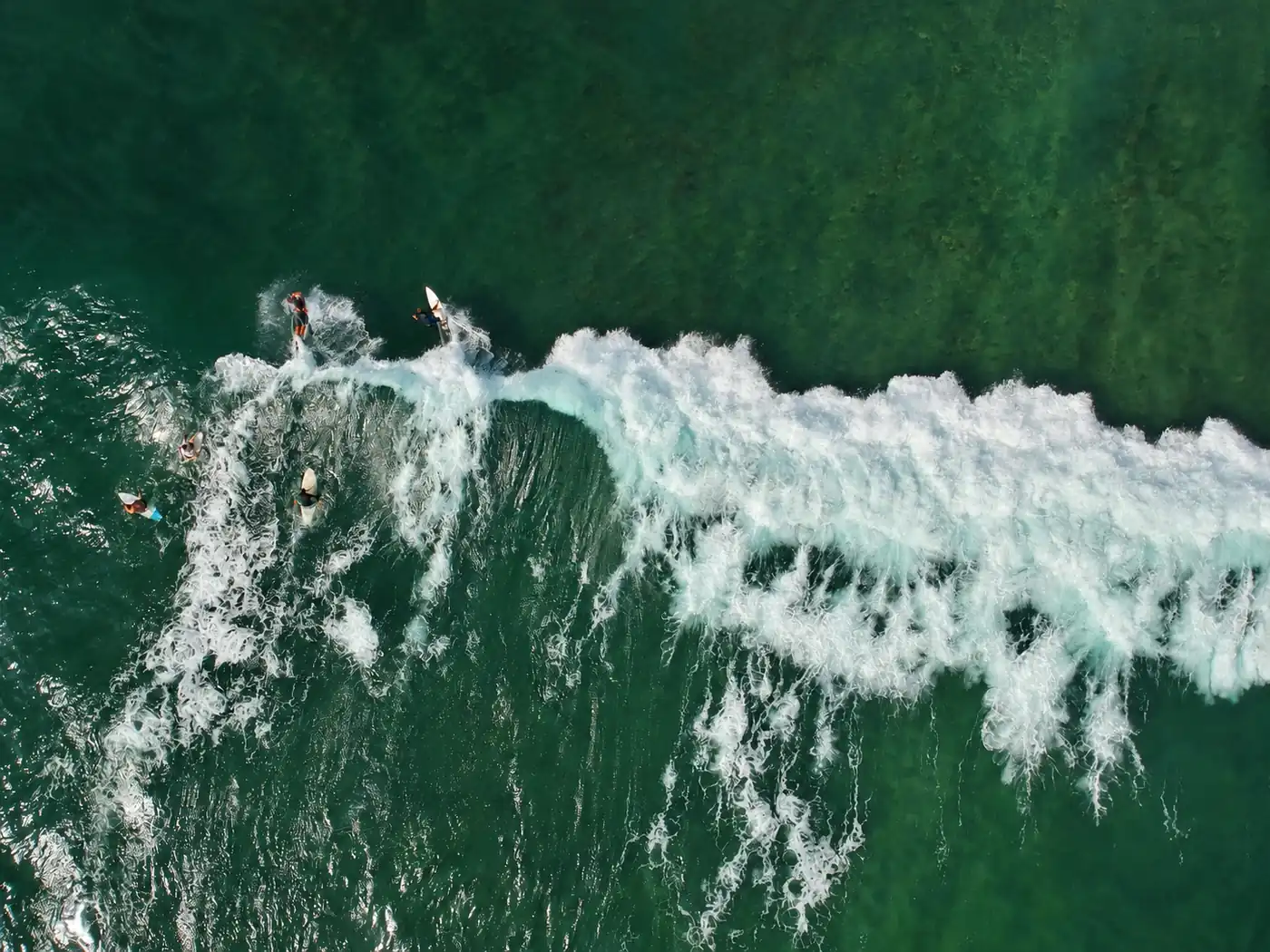
Discover Midigama, one of Sri Lanka’s most exciting surfing destinations, where powerful reef breaks, consistent Indian Ocean swells and a relaxed coastal atmosphere attract intermediate and advanced surfers.
Located just west of Weligama, Midigama is home to several recognised surf breaks, including Lazy Left, Lazy Right, Rams, Coconuts and Plantations. Each offers a different wave experience, from longer, more forgiving reef rides to fast, hollow sections requiring advanced surfing skills.
For surfers ready to progress beyond beginner beach breaks, Midigama provides opportunities to improve technique, explore different wave conditions and experience Sri Lanka’s established surfing culture.
Explore our Weligama Destination Guide for more information about the surrounding coastline.
Location: Midigama, approximately 5 km west of Weligama
Best for: Intermediate and advanced surfers
Main surf season: November–April
Best surfing months: December–March
Best time of day: Early morning, depending on conditions
Wave types: Predominantly reef breaks
Main surf breaks: Lazy Left, Lazy Right, Rams, Coconuts and Plantations
Getting there: Train, tuk-tuk, bus or private vehicle
Recommended stay: 2–4 nights for a dedicated surf visit
Powerful reef waves along tropical shores
Why Surf in Midigama?
Midigama is one of the south coast’s most rewarding destinations for surfers seeking waves beyond the beginner-friendly beach breaks of Weligama.
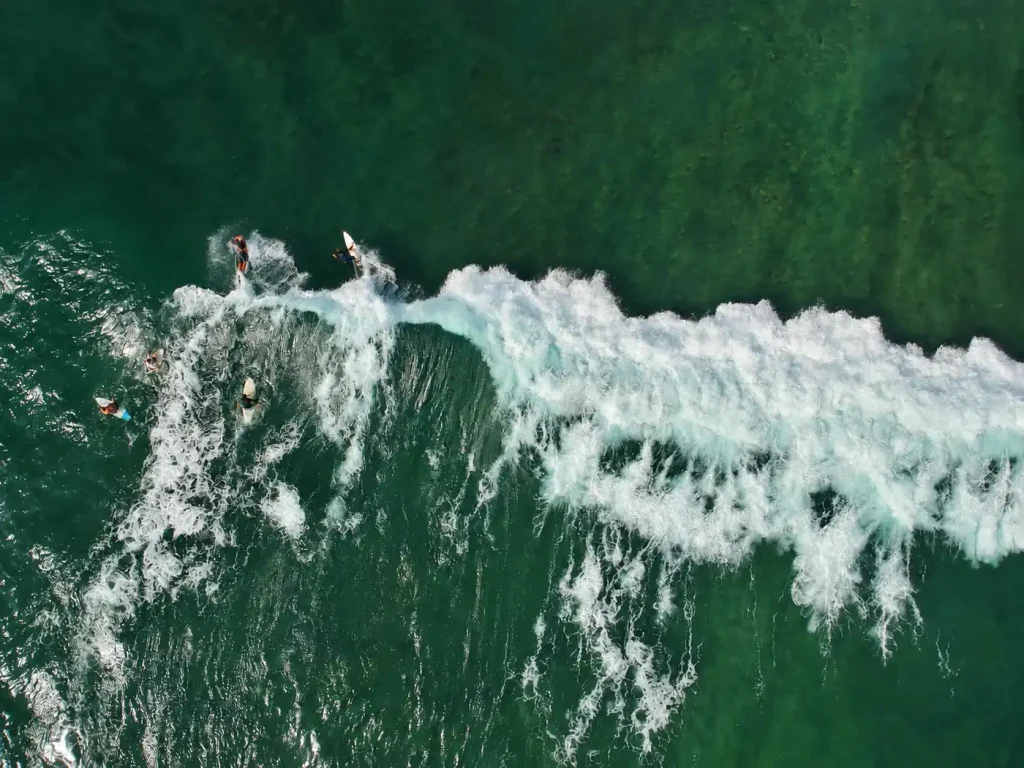
The village sits along a coastline shaped by reefs, rocky outcrops and natural wave formations.
These underwater features produce several distinctive surf breaks within a relatively short distance.
Unlike Weligama Bay, where waves generally break over sand, Midigama’s reef breaks require greater awareness of water depth, take-off position, currents and safe entry points.
Who Is Midigama Suitable For?
Midigama is particularly attractive to surfers who can already catch unbroken waves independently.
Intermediate surfers can develop their turning technique, positioning and wave selection at suitable breaks such as Lazy Left, Lazy Right and Plantations.
More experienced surfers are drawn to demanding waves such as Rams, where fast take-offs and hollow sections create a more technical surfing experience.
Complete beginners should generally begin at Weligama Bay before considering Midigama’s reefs.
Surfers progressing towards reef breaks should be comfortable paddling independently, controlling their boards, turning and understanding wave priority.
Local coaching is particularly valuable for a first reef session.
Best Season and Surf Conditions in Midigama
Midigama’s main surfing season generally runs from November to April, when Sri Lanka’s southern coastline experiences more favourable winds and surf conditions.
The period from December to March is particularly popular, with consistent swell opportunities and regular offshore winds.
November to April
During the main season, south and southwest swells provide waves across Midigama’s reef breaks.
Northern and northeastern winds often create cleaner conditions, particularly during the morning.
However, each break responds differently to swell direction, wave height and tide.
Smaller conditions can make some reef breaks more approachable, while larger swells can produce powerful waves unsuitable for less experienced surfers.
May to September
The southwest monsoon generally brings stronger winds, more unsettled seas and less reliable conditions for surfing along this section of the southern coast.
During these months, Sri Lanka’s eastern coastline, particularly Arugam Bay, usually offers better seasonal surfing opportunities.
Best Time of Day
Early morning is often the most rewarding time to surf Midigama.
Winds are frequently lighter, temperatures are cooler and some breaks may be less crowded than later in the day.
Afternoon sessions can also be enjoyable when wind and swell conditions remain favourable.
The ideal tide depends on the particular break and the size of the swell.
Before paddling out, assess the conditions rather than relying on a fixed surfing schedule.
Best Surf Breaks in Midigama
Midigama’s appeal comes from the variety of waves found along a compact stretch of coastline.
Some reef breaks offer relatively gentle, peeling waves during smaller swells, while others are fast, powerful and suitable only for experienced surfers.
Midigama Surf Break Comparison
| Surf break | Wave characteristics | Recommended level |
|---|---|---|
| Lazy Left | Longer left-hand reef wave | Intermediate |
| Lazy Right | Generally mellow right-hand reef wave | Intermediate |
| Rams | Fast, hollow, predominantly right-hand reef break | Advanced |
| Coconuts | Powerful reef break with left and right sections | Intermediate–advanced |
| Plantations | Predominantly right-hand reef wave, with occasional lefts | Intermediate–advanced |
These classifications describe typical conditions. Larger swells, shallow water and changing currents can make any break significantly more challenging.
Lazy Left
Lazy Left is one of Midigama’s most recognisable surf breaks.
The wave breaks towards the left over a relatively deep reef, creating opportunities for longer rides and controlled turns.
During suitable smaller conditions, it can be an enjoyable location for intermediate surfers developing their reef-surfing skills.
The wave may provide a relatively gentle take-off before continuing along the reef.
However, increasing swell can produce faster sections and a more demanding ride.
Lazy Left is popular with visiting surfers and can become crowded during the main season.
Best suited to: Intermediate surfers comfortable catching unbroken waves and maintaining control around other surfers.
Lazy Right
Lazy Right is located close to Lazy Left and provides a right-hand alternative.
The wave is generally considered one of Midigama’s more approachable reef breaks during suitable conditions.
Its relatively mellow sections can provide opportunities for improving turns, wave selection and positioning.
Longboarders and intermediate shortboarders may find the wave particularly enjoyable when the swell is manageable.
Despite its name, Lazy Right remains a reef break.
Surfers must understand the entry and exit points, reef depth and currents before entering the water.
Best suited to: Intermediate surfers progressing towards more technical reef waves.
Rams Surf Break
Rams is one of Midigama’s most challenging and celebrated surf breaks.
Known primarily for its powerful right-hand wave, Rams produces fast take-offs, steep sections and the potential for hollow barrels.
The wave breaks over shallow reef, leaving considerably less room for mistakes than the more forgiving breaks nearby.
When conditions are suitable, experienced surfers may enjoy fast, technical rides that demand precise positioning and confident board control.
The shallow reef presents a significant hazard during falls.
Rams is not an appropriate location for beginners or surfers who are still developing basic wave-catching skills.
Best suited to: Advanced surfers experienced in shallow reef breaks, powerful waves and fast take-offs.
Coconuts Surf Break
Coconuts, also known as Coconut Point, is another well-known reef break along the Midigama coastline.
The wave can produce both left-hand and right-hand sections, with powerful faces and occasional hollow sections.
Its A-frame characteristics create opportunities for surfers to choose different directions depending on the swell and available peaks.
Coconuts can provide rewarding rides for experienced intermediate and advanced surfers.
However, rocky access, shallow reef sections and changing water levels require careful preparation.
A suitable paddle-out route is particularly important for visitors unfamiliar with the area.
Best suited to: Confident intermediate and advanced surfers comfortable navigating reef conditions.
Plantations Surf Break
Plantations is a popular reef break offering a different experience from the faster and shallower waves at Rams.
It generally produces right-hand waves, although left-hand sections can also develop depending on the swell.
The relatively broad reef can create enjoyable opportunities for turns and longer rides.
During manageable conditions, Plantations can be a suitable progression break for intermediate surfers who are developing confidence over reef.
Larger swells can make the wave more powerful and technically demanding.
Best suited to: Intermediate and advanced surfers seeking workable reef waves and opportunities to improve turning technique.
Understanding Swell, Wind and Tide
Successful reef surfing requires an understanding of how ocean conditions influence each wave.
Midigama’s surf breaks respond differently to changing swell direction, wind and water depth.
Swell Direction and Size
Southern and southwestern swells are important for generating waves along this section of Sri Lanka’s coast.
The size and period of the swell influence wave power and how breaks perform.
A small swell may produce gentle waves at one reef while leaving another almost flat.
Larger swells can create powerful waves and challenging currents.
Wind Conditions
Offshore winds generally help maintain cleaner wave faces.
Early-morning northern and northeastern winds are often favourable during the main season.
Strong onshore winds can make waves less organised and more difficult to surf.
Tide and Reef Depth
Tides influence the depth of water above the reef and can significantly change the character of a wave.
Some breaks perform well during particular tide stages, while others work across a wider range.
A low tide can expose shallow reef and increase the consequences of falling.
Higher tides may create more water over the reef but can also change wave shape and currents.
The safest conditions depend on the specific break and swell.
Assessing Conditions Before Surfing
Before entering the water, check:
- Swell height, direction and period.
- Wind strength and direction.
- Tide level and water depth.
- Current strength and direction.
- Safe entry and exit locations.
- Reef, rock and sea-urchin hazards.
- Crowding and the position of other surfers.
Spend time watching the break from shore and ask an experienced local surf instructor about unfamiliar conditions.
Reef Safety and Responsible Surfing
Midigama’s reefs create excellent waves, but they also introduce hazards that differ from surfing over sand.
Understanding these risks is essential for enjoying a safe surfing experience.
Shallow Reef and Rocks
Many Midigama breaks contain coral, rock and irregular underwater formations.
Falling in shallow water can cause cuts, abrasions and more serious injuries.
Avoid diving head-first when falling from a surfboard.
Protect your head with your arms, stay aware of the water depth and avoid standing on the reef.
Sea Urchins
Sea urchins may be found around rocky and reef environments.
Their spines can cause painful injuries when stepped on or touched.
Avoid placing your hands or feet into underwater crevices.
Reef shoes can provide some protection when entering or leaving the water over rocky surfaces, but they do not eliminate the risks of surfing shallow reef.
If injured, clean the wound and seek medical attention for deep punctures, retained spines or signs of infection.
Safe Entry and Exit
Before paddling out, identify an appropriate entry point and understand how to return safely.
Some locations have channels or sandy access areas that help surfers avoid the shallowest sections.
Do not assume that the most direct route is the safest.
Avoid crossing living coral and take care when walking over slippery rocks.
Know Your Limits
Choose waves appropriate to your current ability rather than your intended progression.
A reef break that feels manageable during small surf may become dangerous when swell increases.
If conditions exceed your experience, choose another break or postpone the session.
Surfing with a knowledgeable local guide is especially valuable when exploring an unfamiliar reef for the first time.
Surf Etiquette and Crowded Lineups
Midigama has an established surfing community, and several popular breaks become busy during the main season.
Understanding surf etiquette helps keep the experience enjoyable for everyone.
Wave Priority
At a surf break, the surfer closest to the breaking section of the wave generally has priority.
Avoid dropping in on someone who is already riding.
Do not paddle around other surfers repeatedly to claim priority.
Wait for an appropriate wave and allow other surfers space to complete their rides.
Respect Local Surfers
Midigama’s local surf community plays an important role in the area’s surfing culture.
Visiting surfers should respect established lineups and communicate politely with others in the water.
Avoid unnecessary arguments or aggressive behaviour.
Managing Crowded Conditions
Reef breaks often concentrate surfers around specific take-off zones.
Crowding can increase the risk of collisions, particularly when surfers have different levels of experience.
Remain aware of other surfers and keep control of your board.
If a break becomes too crowded or difficult, consider another location with more manageable conditions.
Surfboard Hire and Local Coaching
Surfboard rental and professional coaching are available around Midigama, Ahangama and Weligama.
Choosing suitable equipment and instruction can make a significant difference when progressing to reef breaks.
Choosing the Right Surfboard
Your surfboard should match your ability and the characteristics of the wave.
Intermediate surfers often benefit from a board that provides sufficient stability and paddling power while allowing controlled turns.
A funboard or mid-length can be useful during the transition from beginner waves to more technical surf.
Advanced surfers may prefer shorter performance boards suited to faster take-offs and steeper wave faces.
Avoid changing to a significantly smaller board solely because you are moving to a more advanced surf location.
Surfboard Rental
Surf shops and local accommodation providers may offer short-term and daily board hire.
Rental prices vary depending on the board, duration and provider.
Before hiring, inspect the board, fins and leash for damage.
Check whether repairs or replacement costs are covered by the rental arrangement.
Why Local Coaching Is Valuable
An experienced local instructor can help identify the most suitable break for your ability.
They can explain safe entry routes, wave positioning, take-off areas and potential hazards.
Coached sessions are particularly worthwhile for surfers moving from Weligama’s sandy bay to Midigama’s reef environment.
Choose an instructor familiar with the specific break and the conditions on the day.
How to Get to Midigama
Midigama is located approximately 5 kilometres west of Weligama, between Weligama and Ahangama on Sri Lanka’s southern coastline.
The village is accessible by train, bus, tuk-tuk and private vehicle.
From Weligama
A tuk-tuk is one of the easiest ways to reach Midigama from Weligama.
The short road journey follows the southern coastal route.
Tuk-tuks are particularly convenient for surfers carrying boards, provided the equipment can be transported securely.
Agree on the fare before travelling.
By Train
Midigama has its own railway station on Sri Lanka Railways’ Coast Line.
The station is located between Ahangama and Weligama.
Coastal trains connect the area with destinations including Galle, Matara and Colombo, although not every service stops at Midigama.
Check the stopping pattern before travelling.
From Ahangama and Galle
Midigama can also be reached by road from Ahangama and Galle.
Buses operate along the coastal route, while tuk-tuks and private transfers provide more flexible access.
Travellers carrying large surfboards may find private transport more convenient than public buses.
Getting Between Surf Breaks
Several of Midigama’s surf breaks are located within a relatively compact coastal area.
Walking may be convenient for some locations, although access routes and shoreline conditions vary.
A tuk-tuk is useful when travelling between breaks or carrying surf equipment.
Always identify the appropriate access point before entering the water.
Where to Stay and Nearby Surfing Destinations
Midigama offers a relaxed coastal atmosphere, with guesthouses, surf camps and small accommodation providers catering to visiting surfers.
Staying close to the surf breaks is convenient for early-morning sessions and checking conditions before entering the water.
Travellers seeking a wider selection of restaurants and services may prefer staying in neighbouring Weligama or Ahangama.
Midigama or Weligama?
Weligama Bay is particularly suitable for beginners because its broad sandy beach provides an accessible environment for lessons and early skill development.
Midigama is more appropriate for surfers who can already catch unbroken waves and are ready to experience reef conditions.
For travellers still developing their technique, Weligama provides a useful foundation before progressing to Midigama.
Explore our Learning to Surf in Weligama Bay Guide.
Midigama or Ahangama?
Ahangama offers a wider coastal area with surf breaks, cafés, restaurants and accommodation.
It is particularly attractive to surfers who want access to several different breaks and a more developed selection of coastal facilities.
Midigama offers a more compact collection of recognised reef waves and a quieter village atmosphere.
Both locations are suitable bases for intermediate and advanced surfers during the main southern surf season.
How Long Should You Stay?
Two to four nights provide a useful amount of time for exploring Midigama’s surf breaks and nearby coastal areas.
Dedicated surfers may prefer a longer stay to experience a wider range of swell and wind conditions.
Travellers based in Weligama or Ahangama can also visit Midigama for individual surf sessions.
Is Midigama Worth Visiting for Surfing?
Midigama is one of Sri Lanka’s most rewarding surf destinations for intermediate and advanced surfers.
Its variety of reef breaks, established surf culture and convenient location near Weligama and Ahangama make it an excellent choice for travellers seeking more challenging waves along the southern coast.
With suitable conditions, responsible surfing practices and local knowledge, Midigama offers a memorable opportunity to develop surfing skills and experience some of the region’s most distinctive waves.