
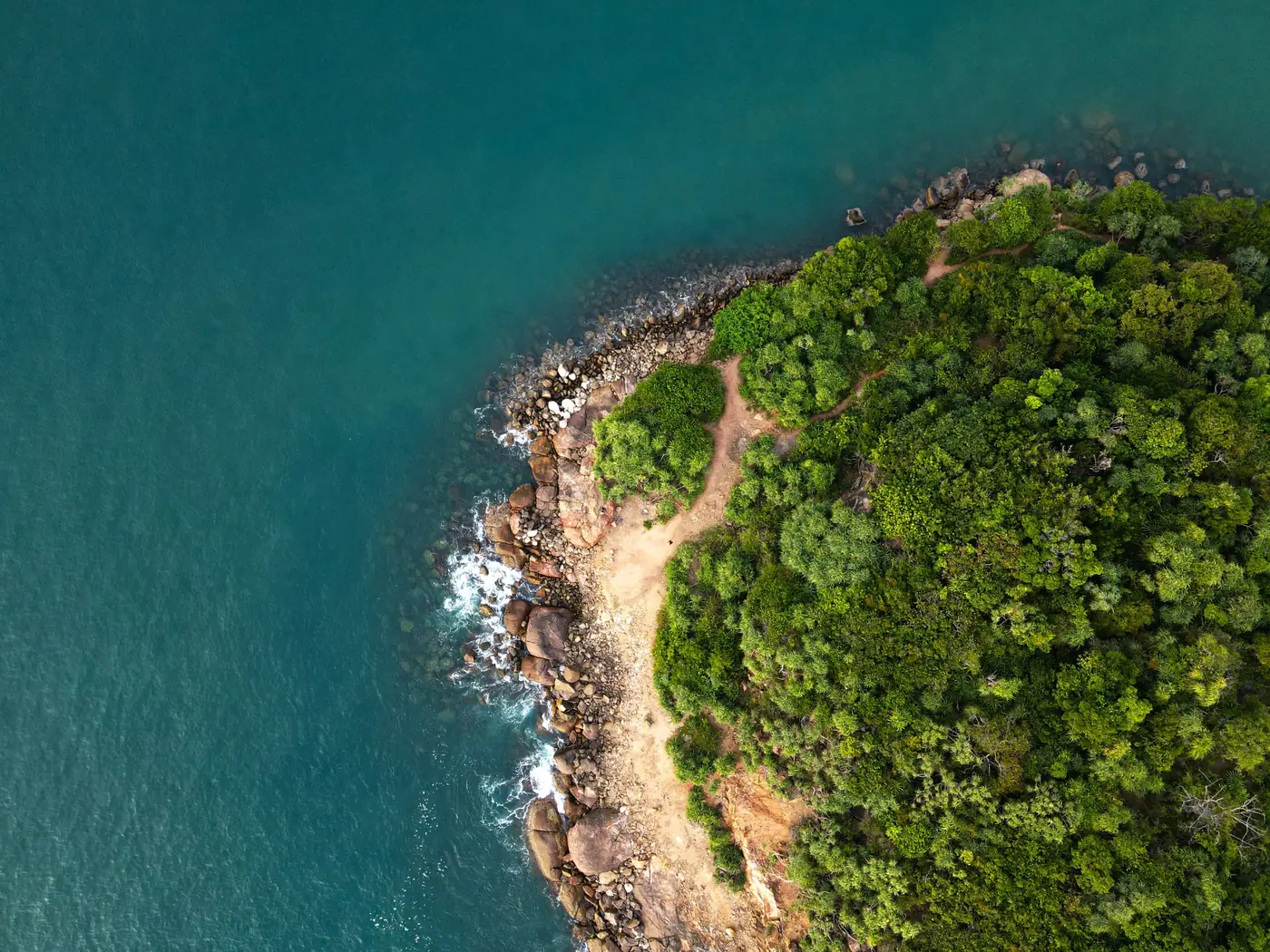
Discover Jungle Beach, a beautiful forest-framed cove on Sri Lanka’s southern coast, where golden sand meets turquoise waters beneath the tropical greenery of Rumassala Hill.
Located near Unawatuna and Galle, Jungle Beach offers a different atmosphere from the busy beachfront of Unawatuna Bay. Its sheltered setting, scenic walking trails and opportunities for swimming and snorkelling make it an attractive destination for travellers seeking a more natural coastal experience.
The surrounding Rumassala headland adds to the appeal, with protected marine habitats, tropical vegetation and the nearby Japanese Peace Pagoda.
For more information about the surrounding area, explore our Unawatuna Destination Guide.
Location: Rumassala Hill, Unawatuna, near Galle
Best for: Swimming, snorkelling, nature walks and coastal photography
Time needed: Approximately 2–4 hours
Best season: December–April
Best time of day: Early morning
Entrance fee: Free
Access: Walking trail or tuk-tuk followed by a short walk
Facilities: Small beach cafés or vendors, with limited amenities
A forest-framed cove beside turquoise water
Why Visit Jungle Beach?
Jungle Beach is one of the most attractive natural coastal spots around Unawatuna.
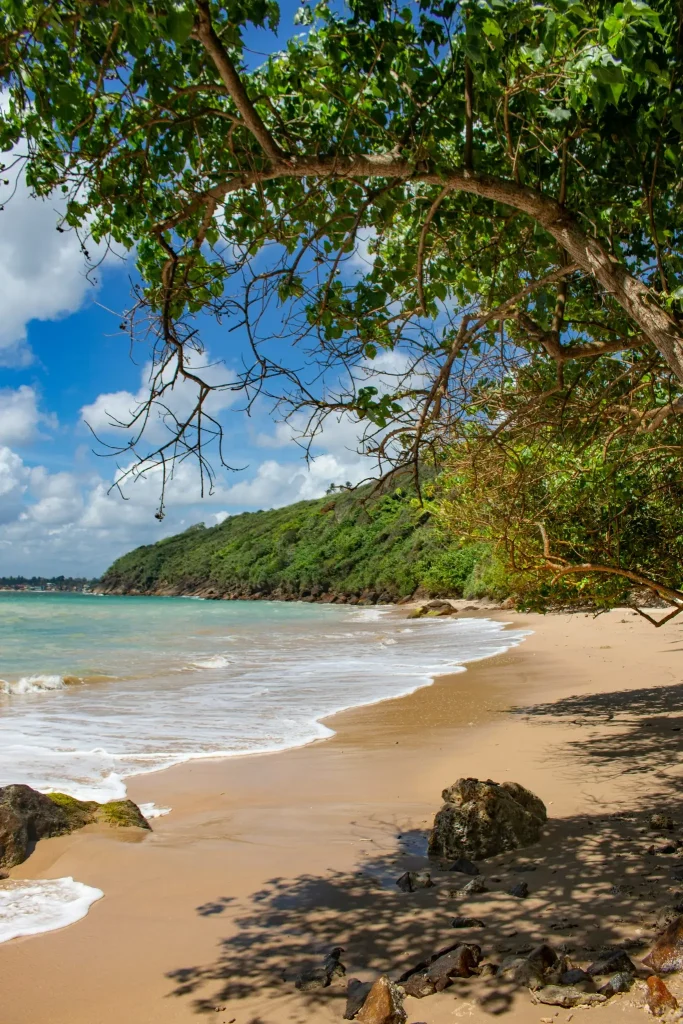
Unlike the larger and more developed Unawatuna Beach, this small sandy cove sits beneath the forested slopes of Rumassala Hill.
The surrounding vegetation creates a beautiful contrast with the turquoise water, while rocky sections of the coastline support marine life.
Visitors come here to relax on the sand, enjoy the tropical scenery and swim when sea conditions are suitable.
The walk through Rumassala is another highlight, providing an opportunity to experience the headland’s natural environment before reaching the beach.
Although Jungle Beach is often described as a hidden paradise, it has become a popular attraction. Weekends and holiday periods can bring considerable crowds.
For the most enjoyable experience, visit early in the morning when the cove is generally quieter and the surrounding forest is cooler.
Where Is Jungle Beach and How to Get There?
Jungle Beach is located on the Rumassala headland, between Unawatuna and Galle Harbour.
The beach is approximately 3 kilometres from central Unawatuna, although the distance and journey time depend on the starting point and route.
Visitors can approach the area on foot or travel by road towards Rumassala before following a short path down to the sand.
Walking from Unawatuna
Walking to Jungle Beach is one of the most scenic ways to experience Rumassala.
Established routes pass through tropical vegetation and connect the Unawatuna area with the headland.
Allow approximately 20–45 minutes from central Unawatuna, depending on your starting point, chosen path and walking pace.
Some sections are steep, rocky or uneven.
Wear footwear with good grip, carry drinking water and avoid walking along unfamiliar cliff-edge routes.
After rainfall, soil and exposed rocks can become slippery.
Getting There by Tuk-Tuk
A tuk-tuk is the easiest option for visitors who prefer to avoid the longer walk.
Drivers can take you towards recognised access points near Rumassala, from where a short downhill walk leads to the beach.
The final walk generally takes approximately 5–15 minutes, depending on the drop-off point.
Agree on the tuk-tuk fare before travelling.
For a convenient return journey, arrange a collection time and location with your driver.
From Galle
Travellers staying in Galle can reach the Rumassala area by tuk-tuk or private vehicle.
The journey is relatively short, making Jungle Beach an easy coastal excursion from Galle Fort and the surrounding city.
Visitors can also travel to Unawatuna by local bus and continue towards Rumassala using a tuk-tuk or walking route.
Best Time to Visit Jungle Beach
Jungle Beach can be visited throughout the year, but the southern coast experiences seasonal changes in rainfall, waves and sea conditions.
December to April
December to April generally provides the most favourable conditions for enjoying Jungle Beach.
During this period, the southern coastline typically experiences more settled weather, with opportunities for calmer seas and better underwater visibility.
These months are particularly attractive for travellers interested in swimming and snorkelling.
January to March is often a rewarding period for beach activities, although actual sea conditions vary from day to day.
May to September
The southwest monsoon brings increased rainfall, stronger swells and more unsettled conditions to Sri Lanka’s southern coastline.
During this period, swimming and snorkelling may become unsuitable, particularly around rocky areas or exposed sections of the beach.
The surrounding greenery remains beautiful, making Rumassala an appealing destination for nature walks when the weather is favourable.
Best Time of Day
Early morning is the best time for visitors who prefer a quieter beach experience.
Arriving before the main daytime crowds provides a better opportunity to enjoy the scenery and find a comfortable place on the sand.
Late afternoon can also offer attractive natural light, although visitors returning through the forest should allow enough time to complete the walk before darkness.
Swimming at Jungle Beach
Jungle Beach can provide enjoyable swimming opportunities when the sea is calm.
Its small cove offers some shelter from the open ocean, particularly during favourable weather.
However, sheltered surroundings do not guarantee safe swimming conditions.
Choosing a Safe Swimming Area
Before entering the water, observe the waves and currents.
Avoid areas where waves break heavily against rocks or where the water appears to move strongly along the shoreline.
Stay within a comfortable distance of the beach and avoid swimming alone.
Do not venture into deeper water without suitable swimming experience.
Rocks and Underwater Hazards
The cove contains rocky sections that can become slippery or difficult to see beneath the surface.
Be careful when entering or leaving the water, especially near exposed rocks.
Avoid jumping or diving from rocks because underwater depth and submerged obstacles may be difficult to judge.
Boat Activity
Small boats sometimes approach or operate near Jungle Beach.
Stay clear of boat landing and departure areas.
Never swim across an active boat route, and remain alert to approaching vessels when visibility is poor.
Swimming with Children
Families can enjoy Jungle Beach, but children require close supervision.
The shoreline may have uneven sections, changing water depth and slippery rocks.
Young children should remain within arm’s reach of a supervising adult when entering the sea.
Choose a sheltered area with gentle conditions, and leave the water if waves or currents become stronger.
Snorkelling and Marine Life at Jungle Beach
The coastline around Rumassala contains rocky reef habitats and coral formations that support marine life.
During calm conditions, Jungle Beach can offer enjoyable snorkelling opportunities for visitors who are comfortable in the water.
What Can You See While Snorkelling?
Suitable rocky sections around the cove may support small reef fish and other marine animals.
Visitors may observe colourful fish moving around submerged rocks and patches of reef habitat.
Underwater visibility depends on weather, wave activity and sediment in the water.
The most rewarding snorkelling areas are not necessarily directly in front of the busiest section of the beach.
Where to Snorkel
Snorkelling is generally more interesting around suitable rocky areas where marine life finds shelter.
However, these areas also present greater risks from waves and underwater obstacles.
Enter the water only when conditions are calm, and avoid swimming close to rocks during stronger swells.
For travellers unfamiliar with the coastline, a reputable local snorkelling operator can provide equipment and guidance.
Responsible Snorkelling
Coral reefs are delicate ecosystems that can be damaged by physical contact.
Never stand on coral, kick it with fins or break pieces from the reef.
Avoid collecting shells, coral or marine animals.
Maintain a respectful distance from fish and other wildlife.
Do not feed marine animals or disturb their natural behaviour.
For the best experience, snorkel slowly, observe the surrounding environment and allow marine life to move naturally.
Rumassala Sanctuary and Coastal Biodiversity
Jungle Beach lies within the wider Rumassala coastal landscape, an area recognised for its ecological importance.
Rumassala Sanctuary was declared on 3 January 2003, protecting approximately 171 hectares of coastal and marine habitat.
The protected area includes nearshore coral reefs and sections of the forested headland.
Marine Conservation
The coastal waters around Rumassala support coral reefs, rocky habitats and a variety of marine fish.
These habitats provide food, shelter and breeding areas for different marine species.
Protecting the reefs is important for maintaining the health and biodiversity of the surrounding marine environment.
Visitors can contribute by avoiding coral damage, keeping the sea free of litter and choosing responsible snorkelling activities.
Forest and Wildlife
Rumassala’s forested slopes contain a variety of plant species, including trees of botanical and medicinal importance.
The headland also provides habitats for birds and smaller wildlife.
Walking through the area offers opportunities to appreciate the transition between tropical vegetation and coastal habitats.
Stay on established paths, avoid disturbing animals and do not remove plants or natural materials.
The surrounding biodiversity is an important part of Jungle Beach’s character, extending beyond its sandy shoreline.
Entrance Fee and Beach Facilities
Jungle Beach has no general entrance fee.
Visitors can access the public beach without purchasing a tourist admission ticket.
Separate charges may apply for parking, transport, food, sun loungers or other commercial services.
Food and Drinks
Small cafés and beach vendors may provide refreshments near the cove.
However, facilities are more limited than those available at Unawatuna Beach.
Bring drinking water, particularly when walking through Rumassala during warmer weather.
For a wider selection of restaurants and cafés, return to Unawatuna or continue towards Galle.
Toilets and Changing Facilities
Jungle Beach is a relatively small natural beach rather than a fully developed coastal resort.
Do not depend on finding dedicated public changing rooms, showers or toilets.
Arriving prepared in suitable beach clothing can make the visit more comfortable.
What to Bring
Useful items for a visit include:
- Drinking water.
- Sunscreen and a hat.
- Comfortable walking shoes or sandals with good grip.
- Swimwear and a lightweight towel.
- Snorkelling equipment, if planning to explore the water.
- A small waterproof bag for essentials.
- Cash for transport and refreshments.
Carry only what you need for the beach.
Avoid leaving passports, electronic devices or other valuables unattended while swimming.
Visiting Jungle Beach with Children
Jungle Beach can be a rewarding experience for families, particularly those who enjoy nature and outdoor activities.
The forest approach, small sandy cove and surrounding scenery provide an enjoyable change from the busier Unawatuna Beach.
However, the final access path can be uneven, and the beach has fewer facilities than the main bay.
For families with younger children, taking a tuk-tuk close to a recognised access point is generally more convenient than completing the longer hillside walk.
Bring drinking water, snacks, sun protection and suitable footwear.
Supervise children carefully around rocks, forest paths and the shoreline.
Families who prefer easy access to restaurants, toilets and a broader sandy beach may find Unawatuna’s main bay more convenient for an extended beach day.
Photography and Responsible Beach Visiting
Jungle Beach is particularly attractive for coastal photography.
The contrast between the sandy shoreline, turquoise water and dense tropical vegetation creates beautiful compositions.
Best Photography Opportunities
Some of the most attractive views are found along the established approach paths, where the headland’s greenery opens towards the sea.
Wide-angle photographs can capture the shape of the cove and the surrounding coastline.
Early morning often provides softer light and fewer people in the background.
When photographing swimmers or local families, respect their privacy and ask permission before taking close-up images.
Protecting the Beach
Jungle Beach’s natural setting is one of its greatest attractions.
Take all rubbish away, including plastic bottles, packaging and cigarette ends.
Avoid damaging vegetation or stepping onto fragile coastal habitats.
Do not feed monkeys, birds or other wildlife.
Keep music and unnecessary noise to a minimum, particularly along forest trails.
These simple practices help preserve the area’s natural environment for local communities, wildlife and future visitors.
Nearby Attractions Around Rumassala
Jungle Beach is conveniently located near several of Unawatuna’s most rewarding attractions.
Japanese Peace Pagoda
The Japanese Peace Pagoda stands on Rumassala Hill overlooking the Indian Ocean and Galle Harbour.
Built in 2005, the white Buddhist stupa is dedicated to peace, compassion and non-violence.
Its elevated setting provides beautiful coastal views and a peaceful cultural experience.
The pagoda and Jungle Beach can easily be combined during the same visit.
Explore our Japanese Peace Pagoda Unawatuna Visitor Guide.
Unawatuna Beach
Unawatuna Beach is one of Sri Lanka’s most popular southern coastal destinations.
Its broad sandy bay is surrounded by restaurants, accommodation and beachfront cafés.
Compared with Jungle Beach, Unawatuna offers more convenient facilities and easier access for travellers who want to spend an entire day beside the sea.
Read our Unawatuna Beach Swimming and Visitor Guide.
Rumassala Headland
Rumassala is known for its forested landscape, coastal viewpoints and biodiversity.
Established walking routes provide opportunities to enjoy the tropical vegetation and scenery overlooking the surrounding coastline.
Visitors can appreciate the wider natural environment while exploring the Japanese Peace Pagoda and Jungle Beach.
Is Jungle Beach Worth Visiting?
Jungle Beach is a rewarding coastal escape for travellers who enjoy natural scenery, forest walks and swimming or snorkelling when conditions are favourable.
Its attractive cove and convenient location near Rumassala’s Japanese Peace Pagoda make it one of Unawatuna’s most enjoyable short excursions.