
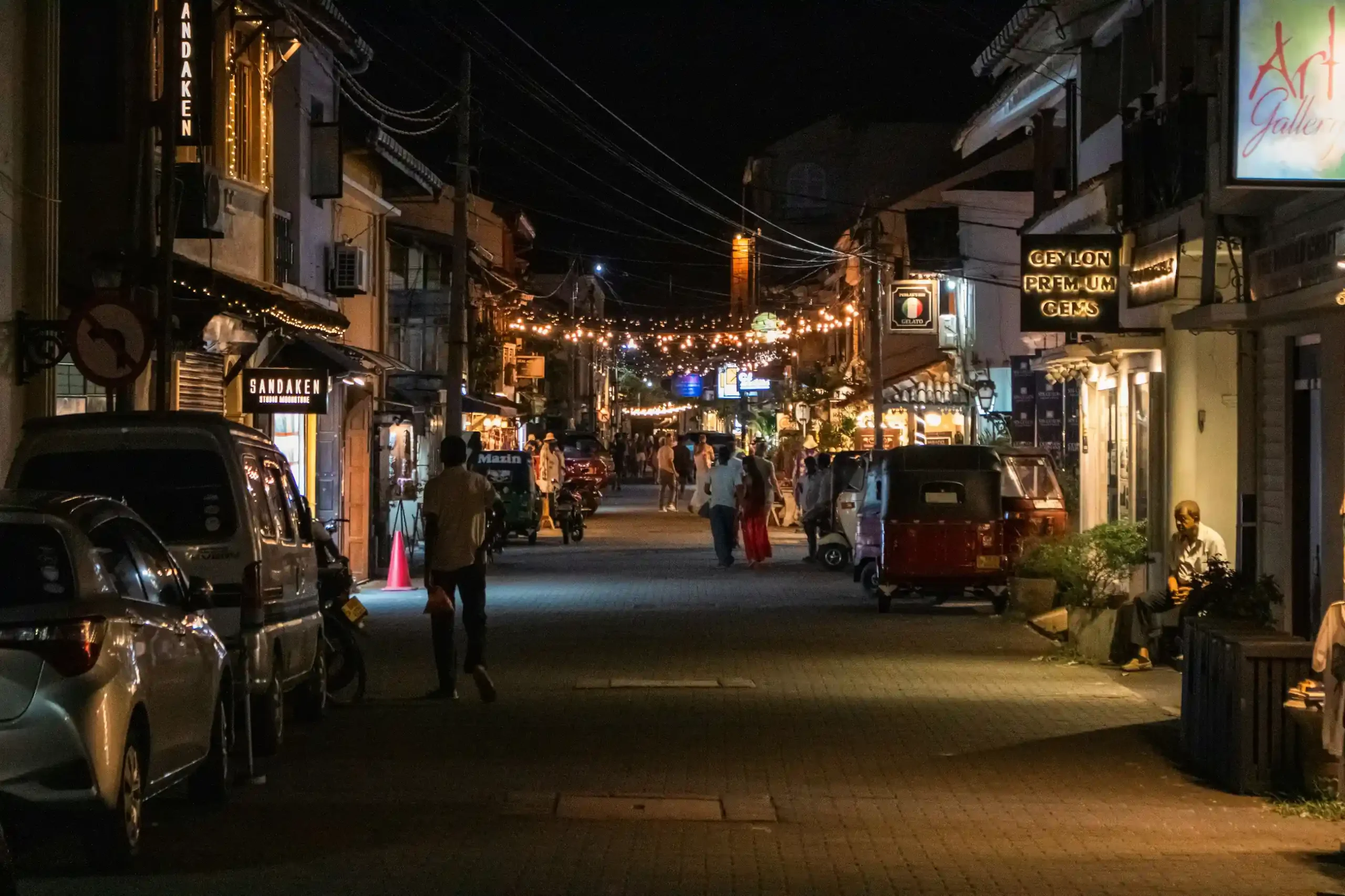
Explore the inner streets of Galle Fort through historic churches, adapted colonial buildings, verandas, courtyards, places of worship, cafés and everyday neighbourhood life within Sri Lanka’s UNESCO-listed fortified city.
Area: Inner Galle Fort
Best for: Architecture, culture, street photography and local atmosphere
Time needed: Around 2–3 hours for relaxed exploration
Best time: Morning or late afternoon
Living streets behind historic fortified walls
Why Explore the Inner Streets of Galle Fort?
The ramparts explain how Galle Fort was defended. The streets inside them explain how the fortified town actually lived and evolved.
Church Street, Pedlar Street and the smaller lanes around them contain churches, a mosque, homes, hotels, restaurants, shops, courtyards and historic civic buildings within a compact urban area.
The most interesting part is not simply identifying individual landmarks.
It is seeing how buildings created during different periods have continued to change as Portuguese, Dutch, British and Sri Lankan communities used the Fort for different purposes.
Walk slowly enough to notice the architecture above modern shopfronts and behind garden walls. Much of Galle’s World Heritage value is found in these everyday details.
Why the Streets Matter to Galle’s UNESCO Status
Galle Fort is protected internationally not only because of its ramparts and colonial monuments.
The street plan and surviving residential architecture are equally important.
The Dutch-style urban grid was adapted to local conditions, while buildings incorporated features better suited to Sri Lanka’s climate and way of life.
Shaded verandas, overhanging roofs, internal courtyards, narrow plots and thick walls became part of a distinctive streetscape combining European planning with South Asian architectural traditions.
This means an ordinary-looking row of historic houses can be just as relevant to understanding Galle as a famous lighthouse or bastion.
How to Read a Galle Fort Street
Look beyond ground-floor cafés, boutiques and hotel entrances.
Pay attention to the width of individual properties, rooflines, shutters, verandas, walls and the spaces between the street and the interior of the building.
Many properties occupy long, relatively narrow plots extending away from the street.
Behind the front façade, internal courtyards historically helped bring light and air deeper into the property.
These features reveal how buildings were adapted to a tropical coastal climate rather than functioning exactly like comparable houses in Europe.
Verandas Were Designed for the Climate
Galle Fort’s verandas are not simply decorative architectural features.
Deep covered spaces help shade walls and windows from strong sun while offering protection from heavy tropical rain.
They also create a transition between the public street and the more private interior of a house.
Supported by columns and sheltered beneath overhanging roofs, these verandas became one of the defining elements of the Fort’s streetscape.
Once you begin noticing them, the relationship between architecture and climate becomes much clearer.
Internal Courtyards
Courtyards are another important feature of traditional properties inside Galle Fort.
They bring daylight and ventilation into buildings that may otherwise extend deeply away from the street.
The courtyard also creates a more private outdoor space protected from the activity outside.
You will not be able to see every historic courtyard because many belong to private homes, hotels or businesses.
Respect that privacy rather than walking through entrances simply because an attractive courtyard is visible from the street.
Thick Walls, Shutters and High Roofs
Historic buildings around the inner Fort use several features that make practical sense in Galle’s warm coastal climate.
Substantial walls help moderate heat, while timber shutters control light and ventilation.
High roofs and shaded openings help warm air move through interior spaces.
These practical adaptations are part of what makes Galle’s architecture more than a direct copy of European colonial building styles.
Church Street
Church Street is one of the strongest places to see different historical periods within a short distance.
Religious buildings, civic architecture, hotels and residential properties sit along the same street, making it particularly useful for understanding how the Fort evolved rather than remaining frozen in one century.
Take your time here instead of treating the street merely as a connection between larger attractions.
Dutch Reformed Church — Groote Kerk
The Dutch Reformed Church, commonly known as Groote Kerk, is one of Galle Fort’s most important historic religious buildings.
The present church dates from 1755 and represents the Dutch colonial period within the Fort.
Its relatively restrained architectural character contrasts with some of Galle’s later religious buildings.
Inside, historic memorial elements and the atmosphere of the church provide another perspective on the European communities that once lived within the fortified town.
Remember that Groote Kerk remains a religious building. Enter quietly, keep voices low and treat the interior as a place of worship rather than a photography set.
Why Groote Kerk Matters Architecturally
Groote Kerk is useful because it allows visitors to move from domestic streetscape into formal public architecture without leaving the same neighbourhood.
The church shows how religious institutions formed part of the planned Dutch town alongside houses, administrative buildings, warehouses and military structures.
This relationship between different types of buildings is one reason Galle works best when explored as an urban ensemble rather than as a collection of unrelated attractions.
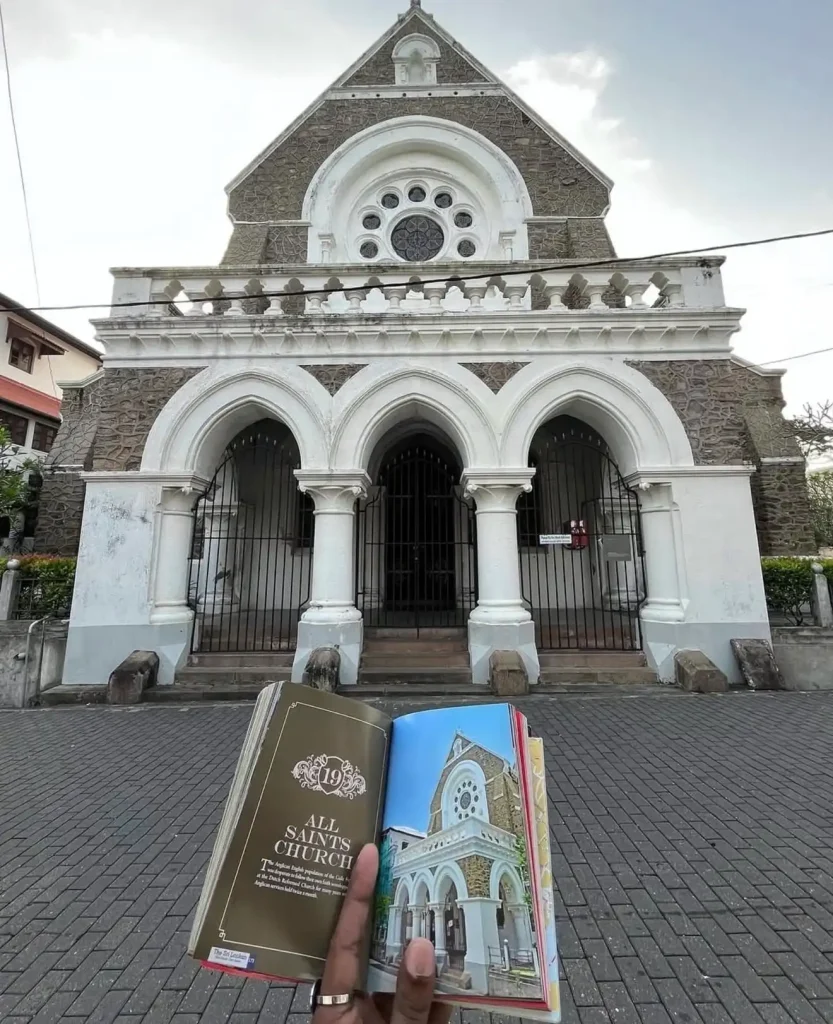
All Saints’ Church
All Saints’ Church represents a later British layer of Galle Fort’s history.
Photgraphy:@ushan_rk/Instagram
The 19th-century Anglican church has a noticeably different architectural character from the Dutch Reformed Church nearby.
Seeing the two within the same area makes Galle’s historical layering particularly easy to understand.
The buildings were created under different colonial administrations and reflect different architectural preferences, yet both became part of the same evolving urban landscape.
During religious services, give worshippers privacy and avoid walking around the interior solely for sightseeing.
Why Comparing the Two Churches Is Useful
You do not need detailed knowledge of European architecture to notice the differences between Groote Kerk and All Saints’ Church.
Look at their exterior forms, windows, proportions and decorative treatment.
The contrast provides a simple visual reminder that “colonial Galle” was not one single architectural period.
The Fort continued changing long after the Dutch strengthened its walls.
Pedlar Street
Pedlar Street is one of the best-known commercial streets inside Galle Fort.
Today it contains cafés, restaurants, boutiques, galleries, guesthouses and small hotels within historic buildings.
The modern businesses are not separate from the heritage story.
They demonstrate adaptive reuse — older buildings being given new functions rather than being abandoned or preserved without practical use.
Look above contemporary signs and shop windows to see the older structure that remains underneath.
What Is Adaptive Reuse?
Adaptive reuse means retaining a historic building while allowing it to serve a new purpose.
A former house may become a hotel, restaurant, gallery or shop while preserving important aspects of its original architecture.
This can help historic buildings remain maintained and economically useful.
Good adaptation respects the scale, façade and important architectural character of the building rather than hiding the heritage beneath an entirely new appearance.
Pedlar Street provides many opportunities to notice how old and new uses coexist.
Pedlar Street Is More Than Shopping
It is easy to experience Pedlar Street only through its shops and cafés.
Look beyond the commercial frontage and the street becomes much more interesting.
Notice upper windows, old wall proportions, narrow property widths, tiled roofs and verandas.
The modern businesses show how a historic city continues to function rather than becoming a collection of empty preserved buildings.
Shopping Inside Galle Fort
Pedlar Street and neighbouring lanes contain jewellery shops, clothing boutiques, craft stores, galleries and souvenir businesses.
There is no need to shop simply because you are walking through a commercial street.
Browse slowly and compare several places if you are interested in crafts or clothing.
For expensive jewellery or gemstones, use an established seller, request clear documentation and keep your receipt.
A high-value purchase should never be rushed because you feel pressured by limited holiday time.
Cafés Inside Historic Buildings
One appealing feature of the inner Fort is the ability to stop for food or a drink inside adapted heritage buildings.
Look beyond the menu and notice how the property itself has been reused.
Older courtyards, verandas and thick walls often remain visible even where interiors have been modernised.
A café break can therefore become another opportunity to appreciate the architecture rather than simply a pause from sightseeing.
Do Not Stay Only on the Busiest Streets
Pedlar Street is useful, but it does not represent the entire inner Fort.
Quieter roads such as Rampart Street, Leyn Baan Street and smaller connecting lanes reveal more residential buildings, religious sites and everyday neighbourhood activity.
The contrast between busy commercial streets and quieter residential areas is part of contemporary Galle.
The Fort has always changed according to trade, government and the needs of the people living inside it.
Meeran Jumma Mosque
Meeran Jumma Mosque near the seaward side of the Fort is one of the area’s most distinctive religious buildings.
Its presence is an important reminder that Galle’s cultural history cannot be explained only through Portuguese, Dutch and British Christian heritage.
Muslim communities have long formed part of Galle’s trading and urban life.
The mosque remains an active place of worship.
Dress modestly, keep entrances clear, ask before entering and never photograph worshippers closely without permission.
Religious Diversity Inside the Fort
One of the most interesting aspects of walking inner Galle Fort is encountering different religious traditions within a relatively small area.
Churches and the mosque exist alongside homes, businesses and civic buildings rather than inside isolated religious compounds.
This reinforces the fact that Galle developed as a diverse port town shaped by trade and successive communities.
Approach each place of worship according to its own traditions instead of treating every historic religious building as an identical tourist attraction.
Residential Galle Fort
Many doors and windows inside Galle Fort belong to private homes.
This can be easy to forget because the entire neighbourhood is visually historic and highly photographed.
Do not enter residential courtyards, peer through open windows or photograph directly inside homes.
A beautiful doorway remains somebody’s entrance rather than an unrestricted photography location.
Schools and Everyday Life
Children attend school inside Galle Fort, residents receive deliveries and vehicles move through streets that tourists may experience primarily as heritage scenery.
Keep entrances clear and give normal daily activity priority.
The continued residential and civic use of the Fort contributes to its authenticity as a living urban settlement.
Street Photography
Galle Fort is excellent for architectural and street photography.
Doorways, verandas, bicycles, tiled roofs, textured walls and changing light create strong compositions without needing staged portraits.
Early morning is particularly useful for quieter streets and cleaner architectural frames.
Late afternoon brings warmer light but also more visitors.
Use the streetscape itself as the subject rather than assuming identifiable residents should automatically appear in your photographs.
Photography and Privacy
Always ask before taking a close portrait of an identifiable person.
Be particularly careful around children and people entering or leaving places of worship.
Do not use a long lens to photograph people inside homes or private courtyards.
The historic character of the neighbourhood does not remove the privacy of the people who live there.
Commercial Photography
Ordinary non-commercial visitor photography inside Galle Fort does not carry a heritage photography charge.
Commercial and professional photography or filming requires the relevant permissions.
This applies especially to organised fashion shoots, advertisements, commercial productions and larger professional setups.
Morning in the Inner Fort
Morning reveals a quieter and more residential side of Galle Fort.
Temperatures are more comfortable, streets are generally less crowded and architectural details are easier to notice before the busiest visitor period.
It is particularly good for travellers interested in street photography or the everyday use of the neighbourhood.
Late Afternoon
Late afternoon brings softer light onto façades and shaded verandas.
The streets gradually become busier as visitors move through the Fort and residents emerge during the cooler part of the day.
The warm light can make old walls, shutters and rooflines particularly attractive for photography.
Why the Inner Streets Work Well at Midday
The streets are generally more comfortable than the exposed ramparts during the strongest midday heat.
Buildings, verandas and narrow lanes provide intermittent shade.
This makes the inner Fort particularly suitable when you want to remain active without spending several continuous hours on sun-exposed walls.
Walking Conditions
The inner Fort is generally easy to explore on foot.
Distances are short and there is no hiking terrain.
However, historic streets and pavements can include uneven surfaces, kerbs and steps.
Comfortable footwear is useful, particularly if you are also exploring the ramparts on the same day.
Accessibility
The inner streets are generally easier for travellers with limited mobility than the elevated ramparts.
Most of the neighbourhood can be experienced at street level.
Individual heritage buildings, shops and religious sites may still contain steps, raised thresholds or narrow entrances.
A shorter street-based exploration can provide a substantial Galle experience without requiring a full circuit of the walls.
Is Inner Galle Fort Too Touristy?
Some sections are highly visitor-oriented, particularly around the busiest restaurants, boutiques and hotels.
That does not make the historic town meaningless.
Galle has been shaped by commerce for centuries, and modern hospitality and retail are another stage in the changing use of its buildings.
The key is not to experience only the commercial surface.
Look at the architecture, explore quieter streets and recognise the homes, schools and religious institutions that continue to function alongside tourism.
Responsible Visiting
Keep residential entrances and business deliveries clear.
Dress appropriately when entering religious buildings and give worshippers priority.
Ask before photographing people closely and respect private houses and courtyards.
Do not damage walls, doors or architectural features for photographs.
Galle Fort remains valuable precisely because historic architecture and everyday urban life continue to exist together.
Are Church Street and Pedlar Street Worth Exploring?
Yes. The inner streets are essential if you want to understand why Galle Fort is more than a collection of ramparts and colonial monuments.
Church Street reveals several layers of religious and architectural history, while Pedlar Street demonstrates how historic buildings continue to evolve through modern commercial use.
The quieter streets around them add residential life, mosques, courtyards and architectural details that are easy to miss during a rushed visit.
Together, they reveal the part of Galle that cannot be understood from the Fort walls alone.