Location: Rumassala side of Unawatuna, near Galle
Best for: Small-cove beach time, walking and simple snorkelling
Time needed: Around 2–4 hours
Access: By path or road; the final approach can be uneven
Why Visit Jungle Beach?
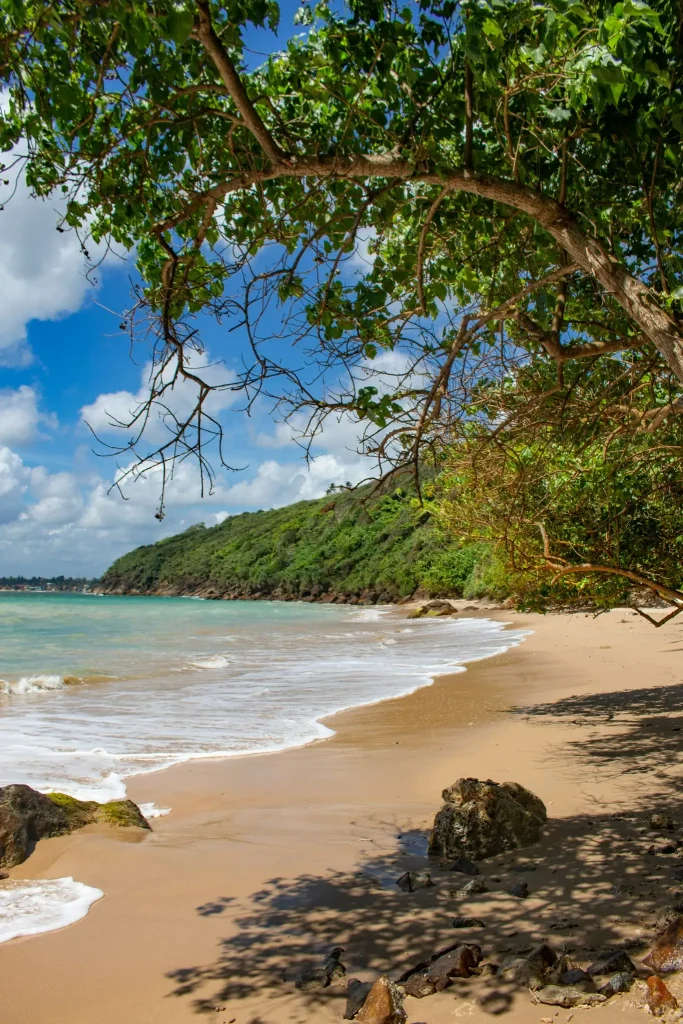
Jungle Beach offers a very different experience from Unawatuna’s main bay.
The small sandy cove sits below Rumassala and is reached through the green headland, with the surrounding area known for coral, marine life and coastal biodiversity.
It is often described as a hidden beach, but that can now be misleading.
Jungle Beach is well known and can become busy during popular times, particularly at weekends and during holiday periods.
Visit for the forest approach, compact cove and quieter setting rather than expecting to have the beach entirely to yourself.
Where Is Jungle Beach?
Jungle Beach sits on the Rumassala side of the coast between Unawatuna and the Galle Harbour area.
From Unawatuna, the practical journey is relatively short.
You can approach by road and tuk-tuk or walk through Rumassala Headland depending on where you are staying and how much walking you want to do.
Walking to Jungle Beach
The walk through Rumassala is one of the main reasons to visit Jungle Beach.
The route passes through green vegetation and can be steep or uneven in places.
Wear footwear with good grip and carry drinking water.
After rain, leaves, soil and rocks can become slippery, so avoid improvised shortcuts near cliff edges.
Getting to Jungle Beach by Tuk-Tuk
If you do not want to complete the full walk, take a tuk-tuk towards one of the recognised Jungle Beach access points and walk the final section.
Agree the tuk-tuk or driver cost before travelling.
Confirm where the driver will collect you later, particularly if you plan to stay until late afternoon.
Small roads around Rumassala can be confusing, and waiting transport may not always be available at quieter access points.
A pre-arranged return journey is especially useful near sunset.
Swimming at Jungle Beach
Jungle Beach can be suitable for swimming when conditions are calm.
However, the sea must always be assessed on the day.
Look for swell, currents and wave action around the rocks before entering the water.
Do not assume the cove is automatically safe simply because it is smaller than Unawatuna’s main beach.
Stay within your swimming ability and keep young children closely supervised.
Snorkelling at Jungle Beach
The Rumassala coastline is associated with coral reefs and marine life.
Simple snorkelling may be possible when visibility and sea conditions are good.
However, reef condition varies, and the best coral is not necessarily directly offshore from the busiest part of Jungle Beach.
Never stand on coral or kick it with your fins.
If you want a dedicated snorkelling experience, use a reputable local operator rather than swimming far offshore alone.
Rumassala Marine Sanctuary
The marine environment around Rumassala has formal conservation importance.
Rumassala Marine Sanctuary is one of Sri Lanka’s marine protected areas, with the reef area having been declared a marine sanctuary in 2003.
That protected status should influence how visitors behave around the reef.
Do not collect coral, marine animals or shells from sensitive reef areas.
How Crowded Does Jungle Beach Get?
Jungle Beach can become crowded during weekends and busy holiday periods.
Because the cove is relatively small, even a moderate number of visitors can make it feel full quickly.
Arrive early if you want a quieter experience.
If the beach is already very busy, enjoy the Rumassala walk and scenery rather than forcing a crowded swimming session.
Keeping Your Valuables Safe
Do not leave valuables unattended while swimming.
Jungle Beach is smaller and more informal than Unawatuna’s main bay and has fewer secure facilities.
Carry only what you need and consider using a waterproof pouch for essential items.
Leave passports and unnecessary electronics at your accommodation.
Food and Water
Facilities around Jungle Beach can be limited and may change over time.
Bring drinking water even if small vendors are operating when you visit.
Do not rely on finding a full restaurant, changing room or extensive beach facilities.
For a longer meal, return to Unawatuna or continue towards Galle.
Sun and Shade
The cove has natural shade in some areas, but do not assume you will remain protected from the sun throughout your visit.
Use sunscreen and carry a hat.
The forest walk can also feel surprisingly hot and humid once the sea breeze disappears.
Early morning is usually the easiest time for both walking and enjoying the water.
Photography at Jungle Beach
Some of the best photographs come from the approach to Jungle Beach, where the green Rumassala vegetation meets the small coastal cove.
Avoid climbing unstable rocks or stepping into fragile vegetation simply to find a cleaner angle.
Ask permission before taking close photographs of local families or swimmers.
If you plan to use a drone, check current aviation and protected-area restrictions before flying.
Wildlife and Biodiversity
The wider Rumassala area is known for birds, plants and marine life.
Treat wildlife sightings as a bonus rather than something guaranteed.
Do not feed monkeys or birds if you encounter them.
Walking quietly gives you a better chance of noticing the headland’s biodiversity than playing loud music along the trail.
Combine Jungle Beach with Peace Pagoda
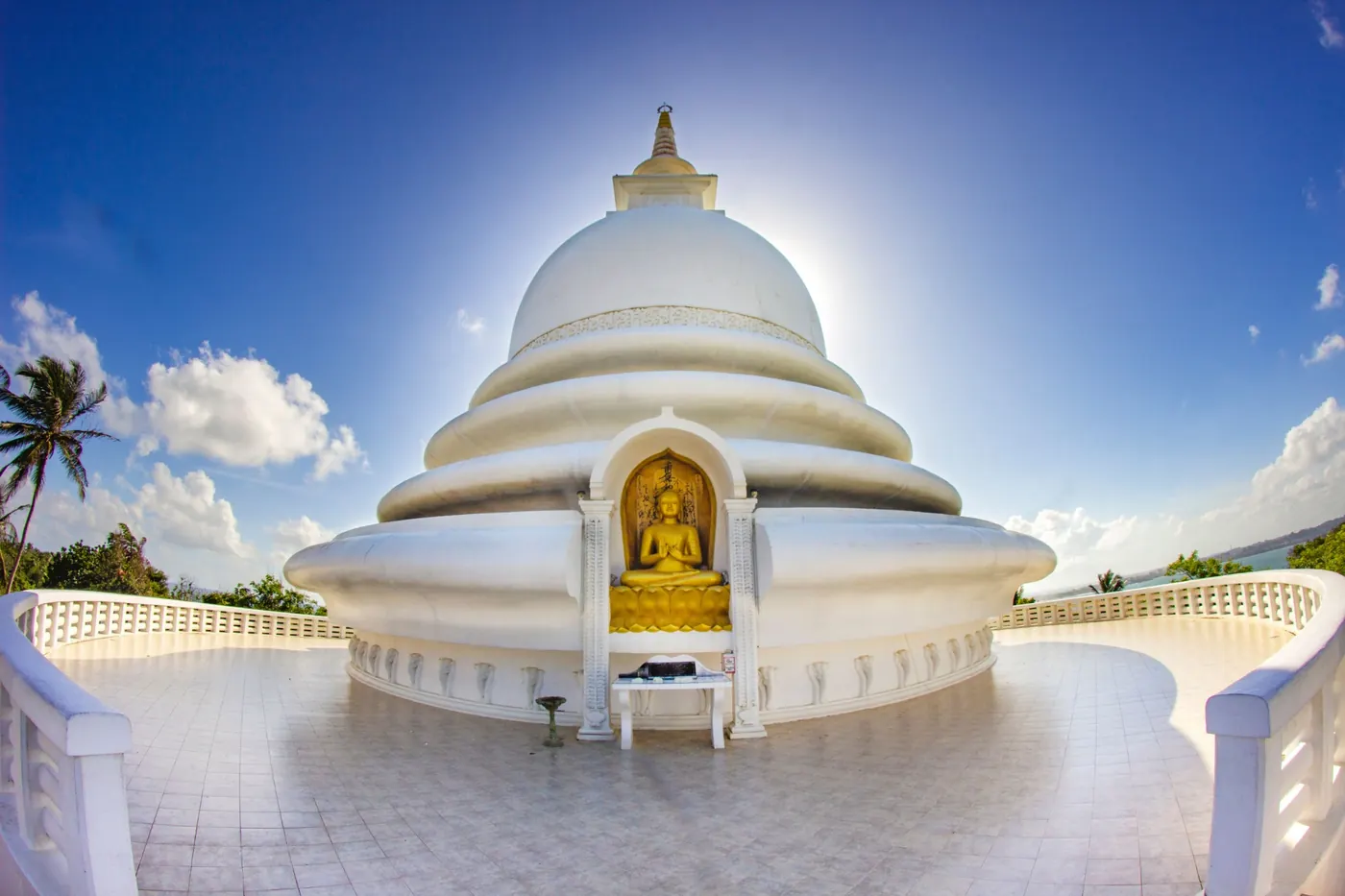
The Japanese Peace Pagoda is the most logical attraction to combine with Jungle Beach.
Visit the Peace Pagoda first, then walk or travel down towards Jungle Beach.
The combination gives you Buddhist culture, coastal viewpoints, forest scenery and beach time within a single half-day.
Carry a light layer of modest clothing for the pagoda even if Jungle Beach is your final destination.
Combine Jungle Beach with Rumassala Walk
If you enjoy walking, make Jungle Beach one stop within a broader Rumassala Headland route.
Use established paths and connect the Peace Pagoda, recognised viewpoints and Jungle Beach rather than attempting to follow the cliff edge continuously.
Rumassala’s environmental appeal extends beyond the beach itself, so the experience becomes more rewarding when you explore the wider headland.
Visiting Jungle Beach with Children
Families can visit Jungle Beach, although the logistics are slightly more difficult than at Unawatuna’s main beach.
The path can be slippery, facilities are limited and keeping belongings secure while everyone swims may be inconvenient.
Using road access is generally easier with younger children.
Keep the visit relatively short if the cove becomes crowded.
For an easy full-day family beach experience, Unawatuna’s main bay is usually the simpler choice.
A Practical Jungle Beach Half-Day
Early Morning – Start at Rumassala
Start early and reach Rumassala or the Japanese Peace Pagoda before the strongest heat develops.
Late Morning – Walk to Jungle Beach
Continue towards Jungle Beach using an established path.
Take time to enjoy the forest approach rather than treating the walk simply as transport to the beach.
Beach Time
Spend around one or two hours at the cove.
Swim or snorkel only if sea conditions are suitable.
Lunch – Return to Unawatuna
Return to Unawatuna for lunch and a more relaxed afternoon.
Jungle Beach works best as part of a half-day rather than as an entire day’s itinerary.
Is Jungle Beach Worth Visiting?
Yes, particularly if you combine it with Rumassala or the Japanese Peace Pagoda.
Jungle Beach offers a smaller and greener setting than Unawatuna’s main bay, with the forest approach forming an important part of the experience.
However, do not expect complete seclusion.
The beach is well known, can become busy and is best enjoyed early in the day or as one stop within a broader Rumassala outing.